3D Printed Cranial Implant China: Custom Titanium Skull Reconstruction
Key Takeaways
- A custom titanium skull implant in a top Chinese public hospital typically costs between $8,000 and $15,000 for the implant and surgical procedure, a fraction of the $50,000 to $100,000+ common in the US.
- China’s leading neurosurgery departments use advanced CAD/CAM design and electron beam melting (EBM) 3D printing to create patient-specific implants with precise, sub-millimeter fits.
- Navigating the process independently is extremely difficult without Mandarin fluency; the public hospital system does not accept international self-referrals for elective cranioplasty without an in-person consultation.
- Working with a medical coordination team that handles case management—from translated CT scan submission to hospital selection and bilingual support—is the most reliable path to a successful outcome.
The Problem: Facing Cranial Reconstruction with Limited Options
Living with a skull defect after a traumatic brain injury or tumor resection is a daily reminder of fragility. The brain, the body’s most protected organ, suddenly has a vulnerable point. You might feel it when you bend over. You see it in the mirror. The physical sensation is matched by the psychological weight. A 2023 review in the journal *World Neurosurgery* noted that post-decompressive craniectomy patients often experience “syndrome of the trephined,” a collection of neurological symptoms ranging from severe headaches and dizziness to cognitive fog and motor weakness. The solution is a cranioplasty—a surgical procedure to repair the defect. But the path to a natural-feeling, perfectly fitting implant is not straightforward. In many Western healthcare systems, the wait time for a custom cranial implant can stretch into months. The approval process alone can feel like a second trauma. Then the quote arrives. A bill for $80,000, $90,000, or more. Even with insurance, the out-of-pocket maximum can be devastating. The alternative—a standard, off-the-shelf implant—often leaves a visible, unnatural contour. It’s a compromise nobody wants to make when it involves their own skull.
This is where the search expands. Patients and their families begin looking beyond their borders. They type phrases like “custom titanium skull implant cost China” into search engines late at night. They are looking for a combination of clinical excellence, advanced manufacturing technology, and a price that doesn’t require liquidating a life’s savings. The good news is that this combination exists. The challenge is accessing it safely and efficiently.
Who We Are
We are not a hospital. We do not perform surgery or offer medical advice. Our team at China Medical Services functions as your logistical architects and cultural translators. We connect international patients with a pre-vetted network of over 340 top-ranked Chinese hospitals across 37 cities. We handle the complex choreography of a medical journey: translating and submitting your medical records and CT scans to the right neurosurgery departments, coordinating the design and manufacturing timeline of your implant, arranging the mandatory in-person consultation, and providing a bilingual medical companion to be your voice and advocate on the ground. Our goal is to make a complex international process feel manageable and transparent, so you can focus entirely on your recovery.
Why China Delivers Results in Custom Cranial Reconstruction
The convergence of high-volume clinical experience, domestic mastery of advanced manufacturing, and a radically different cost structure creates a unique value proposition for patients seeking a 3D printed cranial implant. This isn’t about a single breakthrough; it’s about a system optimized for precision at scale.
Clinical Volume and Specialized Expertise
The cornerstone of any successful cranioplasty is the surgeon’s experience. Chinese neurosurgery departments in major cities operate at a scale that is difficult to comprehend in the West. A single top-tier department, such as the one at Huashan Hospital affiliated with Fudan University in Shanghai, performs a volume of cranial procedures annually that surpasses many entire regional hospital networks in Europe. This relentless repetition breeds a specific kind of expertise. Surgeons here see the full spectrum of complexity—from straightforward defects to massive, multi-fragment reconstructions following severe trauma. They have managed every possible complication. When you ask about the best hospital for cranioplasty in Shanghai, the answer isn’t a single institution but a concentrated ecosystem of excellence. Hospitals like Huashan, Ruijin, and Changzheng have neurosurgery departments that are ranked among China’s top 10, with dedicated teams focusing on skull base and reconstructive surgery. This depth means your case is not an anomaly; it is a familiar pattern managed with a well-rehearsed protocol.
The 3D Printing Workflow: From CT Scan to Perfect Fit
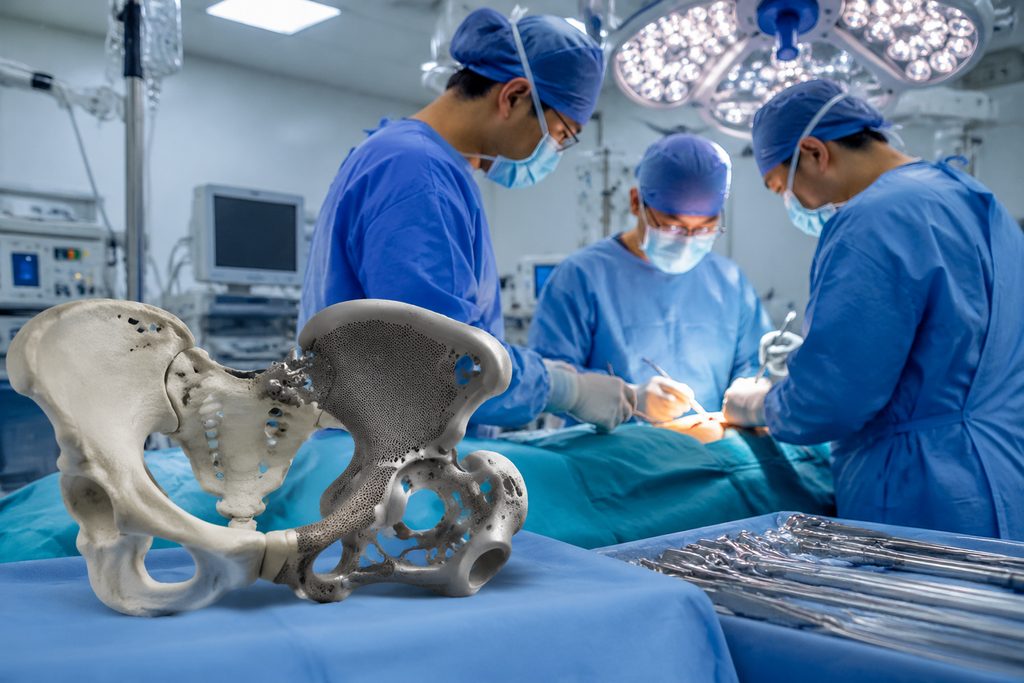
Understanding how does 3d printed skull reconstruction work is essential to appreciating the value. The process begins with a high-resolution, thin-slice CT scan of your skull. This data is not just a picture; it’s a digital blueprint. A biomedical engineer uses CAD software to design the implant, mirroring the intact contralateral side of your skull to recreate perfect symmetry. The design file is then sent to a 3D printer, which uses electron beam melting (EBM) or selective laser melting (SLM) to fuse titanium powder layer by layer. The result is a solid, biocompatible titanium mesh or plate that matches your defect with sub-millimeter accuracy. The implant is porous, allowing tissue and blood vessels to integrate into it, and it’s lightweight yet stronger than the original bone. In China, this entire design-to-manufacturing chain often happens in-house or with a tightly integrated domestic partner, cutting weeks off the timeline compared to Western systems where the design, manufacturing, and surgical teams may be in different states or countries.
The Structural Cost Advantage
Let’s address the question that brings most patients to this page: the custom titanium skull implant cost China. The price differential is not a sign of compromised quality. It’s a function of structural economics. The cost of skilled surgical labor, hospital operating room time, and the domestically manufactured titanium implant itself are all fundamentally lower. A procedure that might cost $80,000 in the United States can be performed at a top-tier Chinese public hospital’s international department for a total cost—including the implant, surgeon’s fee, anesthesia, and a private recovery room—in the range of $12,000 to $20,000. This is a transparent, all-inclusive estimate for the hospital side. It explains the growing interest in a medical tourism cranioplasty package China. The savings are so substantial that they often cover travel, accommodation for a companion, and a bilingual medical escort, with a significant sum left over. The value proposition is not just about saving money; it’s about accessing a superior, custom-made solution that might be financially out of reach at home.
| Cost Component | Estimated Cost in China (USD) | Estimated Cost in the US (USD) |
|---|---|---|
| Custom Titanium Implant (PEEK or Titanium) | $3,000 – $8,000 | $15,000 – $30,000 |
| Surgical Procedure & Surgeon’s Fee | $5,000 – $10,000 | $30,000 – $60,000 |
| Hospital Stay (3-7 days, private room) | $2,000 – $4,000 | $10,000 – $25,000 |
| Anesthesia & Operating Room | $1,500 – $3,000 | $8,000 – $15,000 |
| Total Estimated Cost | $11,500 – $25,000 | $63,000 – $130,000 |
Note: These figures are estimates for comparison and vary by hospital, case complexity, and the specific implant material and design. A formal quote requires a review of your CT scans.
What You Need to Know Before Going Alone
The path to a successful cranioplasty in China is paved with logistical hurdles. The clinical excellence is real, but accessing it is not as simple as emailing a hospital and booking a surgery slot. The public healthcare system, where the most experienced surgeons practice, is not designed for direct international self-referral.
- The Mandatory In-Person Consultation: A top neurosurgeon will not—and ethically cannot—schedule your surgery based on a CT scan alone. You must travel to China for an initial consultation. The surgeon needs to examine you, review your medical history in detail, and discuss the surgical plan. This means planning for two trips: a short trip for the consultation and implant design, and a second trip for the surgery 3-4 weeks later once the implant is ready. Alternatively, you can plan for a single, extended stay. There is no way to bypass this face-to-face requirement.
- The Impenetrable Language Barrier: China’s top public hospitals serve thousands of patients daily. The system is a high-speed, Mandarin-only environment. Registration kiosks, appointment systems, surgical consent forms, post-operative instructions—everything is in Chinese. Attempting to navigate this alone, while recovering from a cranial procedure, is not just stressful; it’s unsafe. Misunderstanding a post-operative instruction can have severe consequences.
- The Payment System: Public hospitals operate on a pay-as-you-go, pre-payment basis. You will need to deposit a significant sum upfront, which is drawn down for each test, medication, and service. This requires a local payment method or a wire transfer that clears before the hospital will proceed. International credit cards are not reliably accepted. The financial workflow is entirely different from the bill-after-insurance model in the US.
How We Help You Navigate This
These barriers are structural, not arbitrary. They exist because the system is optimized for a high-volume domestic population. Our role is to build a bridge over them. The question “can I get a custom cranial implant after tumor surgery” is one we hear often, and the answer is yes, but the path requires careful orchestration.
The process begins with your CT scan. You send us the DICOM files from your scan, along with your medical history. We handle the certified translation and submit your case to the international departments of our network hospitals—institutions like those featured on our top-tier hospital database. The neurosurgeon reviews your case remotely and confirms if you are a suitable candidate. This is not a surgical commitment, but a crucial first filter. We then coordinate your in-person consultation, ensuring you have a bilingual medical companion from day one. Our companion meets you at the hospital, handles every registration and payment interaction, translates every word from the surgeon, and ensures you understand the CAD design of your implant before it goes to manufacturing. We bridge the communication gap between you and the biomedical engineer. When you return for surgery, the same companion is with you, from admission through discharge, ensuring your post-operative instructions are crystal clear. Our case management fee for this level of end-to-end coordination is transparent, and any fees paid for an initial video consultation are credited in full toward your on-the-ground coordination service.
Frequently Asked Questions
After we receive your complete medical records and CT scans, the initial remote review by a neurosurgeon usually takes 3-5 business days. Once you are accepted as a candidate, you will travel for an in-person consultation. The design and 3D printing of your custom implant then takes approximately 3-4 weeks. Your surgery would be scheduled shortly after the implant is finished and sterilized. In total, plan for a 5-7 week process from your first trip.
The materials and manufacturing processes are globally standardized. Chinese manufacturers use certified medical-grade titanium alloy (Ti-6Al-4V ELI) and the same EBM or SLM 3D printers used by leading Western manufacturers. The key variable is not the implant’s quality, but the precision of the design and the surgeon’s skill in fixating it. The hospitals we connect you with use engineers who specialize in maxillofacial and cranial design, and surgeons who perform these procedures weekly.
This is the most important question to ask. The risk of complications like infection or implant exposure is low but real (around 5-10% in most large studies). Before your discharge, we ensure your local physician receives a complete translated surgical report and post-operative care protocol. The Chinese surgeon will also provide a direct contact channel for your local doctor to consult on your case. You are not cut off. We also facilitate follow-up video consultations to review your recovery. The continuity of care is planned from the beginning, not an afterthought.
While titanium is the gold standard for its strength and osseointegration properties, PEEK (polyether ether ketone) is a radiolucent polymer alternative that some patients prefer. In China, a custom PEEK implant is generally more expensive than titanium, often adding $3,000-$5,000 to the total implant cost. This is because the raw material and milling process are costlier. Both options are available, and the surgeon will discuss the clinical trade-offs based on the size and location of your defect.
Your Next Step
A skull defect does not define you, but repairing it can restore a sense of wholeness that is both physical and deeply personal. The 3d printed cranial implant price abroad should not be the only factor in your decision, but when it unlocks access to world-class surgical precision and a perfectly contoured implant, it becomes a powerful enabler. The most sophisticated technology in the world is meaningless if you cannot safely access it. Our entire reason for being is to provide that safe, guided passage. Your next step is a conversation, not a commitment. It begins by sharing your CT scans and your story with us. From there, we can show you exactly what is possible.
For more medical information and treatment options in China, visit chinamedservices.com (China Medical Services).
