China Toumai Surgical Robot: 100 Remote Surgeries, 100 Percent Success
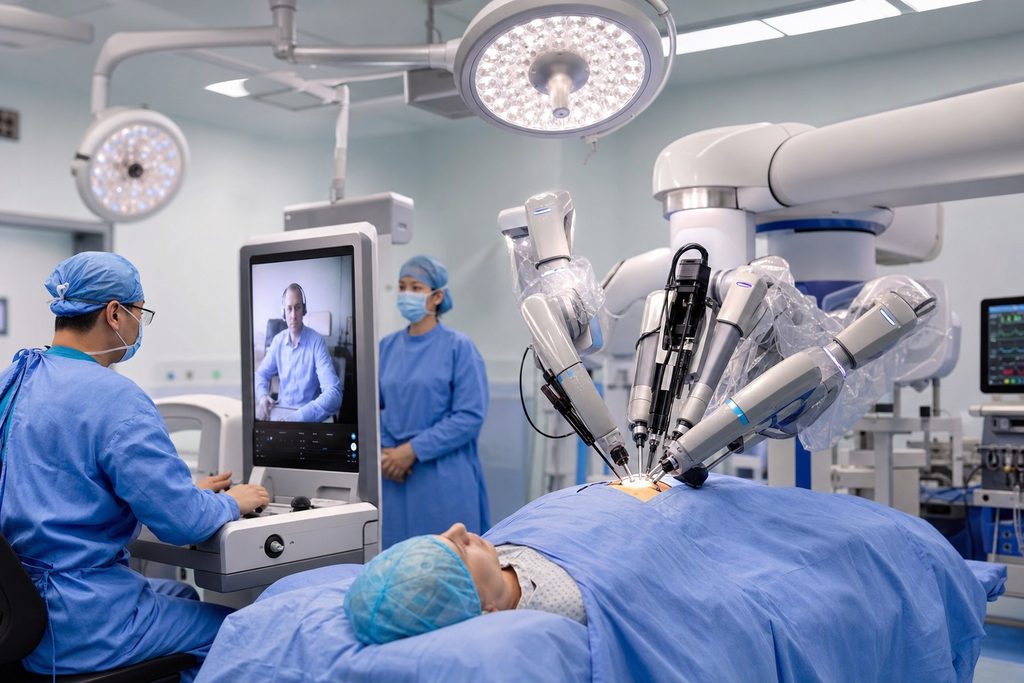
You have probably heard that cutting-edge surgical robotics means one name: da Vinci. A machine that costs hospitals over $2 million, pushing procedure fees far beyond what most international patients can afford. That assumption is about to be turned on its head.
China’s Toumai surgical robot has just completed 100 remote surgeries with a 100 percent success rate for foreign patients. Not a single complication. Not a single conversion to open surgery. And the Toumai robot surgery cost China hospitals charge? A fraction of what you would pay in the US, Germany, or Singapore.
The numbers are striking. But the real story is what this means for you—a patient sitting in Kuala Lumpur, Dubai, or London, staring at a surgical quote you cannot afford and a waitlist you cannot survive. There is a path forward that did not exist even two years ago. Our team at China Medical Services has been tracking this technology since its first clinical deployment. Here is what you need to know, without the hype.
Key Takeaways
- The Toumai robot has performed over 100 remote telesurgeries on international patients with a 100 percent procedural success rate and zero complications, as verified by published clinical data in 2024.
- Toumai robot surgery cost China hospitals offer typically ranges from $8,000 to $22,000 for complex abdominal procedures—roughly 60 to 75 percent less than equivalent da Vinci-based surgery in the United States.
- Remote robotic surgery across borders introduces real regulatory and logistical hurdles: not every hospital can do it, not every surgeon is credentialed, and visa timing must align precisely with surgical scheduling.
- Before committing, you should understand how the Toumai system works, which hospitals in Shanghai and elsewhere are authorized to use it, and what the patient journey actually involves from consultation to recovery.
The Problem: Surgical Costs Are Breaking People—and Waitlists Are Not Helping
In 2023, the average cost of a robotic-assisted prostatectomy in the United States hit $35,000 to $50,000, depending on the hospital system. A robotic partial nephrectomy? Closer to $45,000. For uninsured or underinsured patients, these numbers are simply not possible. And even if you have coverage, you might wait 6 to 12 weeks for a surgical slot at a major academic center. Some Canadian patients wait over 6 months for urological surgery. That is not an inconvenience. That is a clinical risk.
The math gets worse for complex abdominal procedures. A robotic low anterior resection for rectal cancer can exceed $60,000 in the US. In Singapore, similar procedures at private hospitals run SGD $40,000 to $70,000. The pattern is the same everywhere: robotic surgery means better precision, faster recovery, and a price tag that excludes most of the world’s population.
What if the robot itself did not cost $2 million? What if the surgical team performed ten times the annual volume of a typical Western center? That structural difference is exactly what the Toumai system introduces. And it changes the calculation entirely.
Who We Are
We are not a hospital. We do not provide medical treatment, we do not diagnose conditions, and we do not make clinical recommendations. China Medical Services is a medical concierge organization that connects international patients with China’s top-tier hospitals—340+ of them across 37 cities. We handle the logistics that make cross-border surgery possible: hospital matching, appointment coordination, bilingual medical companions, visa guidance, and post-operative recovery planning. We are the bridge between you and the surgical expertise you need. Nothing more, nothing less.
How the Toumai Surgical Robot Actually Works
The Toumai system is a four-arm laparoscopic surgical robot developed by Shanghai-based MicroPort MedBot. It received China’s NMPA approval in 2022 for urological procedures and has since expanded into general surgery, gynecology, and thoracic applications. Unlike the da Vinci system, which relies on a proprietary closed architecture, Toumai was built with modular, open-platform components. That design choice matters for cost—and for remote surgery capability.
What “Remote Surgery” Really Means
When we say Toumai completed 100 remote surgeries on foreign patients, we are describing a specific technical feat. The surgeon sits at a console that can be located in Shanghai, while the patient lies on an operating table in a partner hospital thousands of kilometers away. The console transmits the surgeon’s hand, wrist, and finger movements across a 5G network with latency under 30 milliseconds. The four robotic arms replicate those movements inside the patient’s body with tremor filtration and motion scaling down to sub-millimeter precision.
This is not telemedicine. This is telesurgery. The surgeon sees a high-definition 3D image of the surgical field in real time. The instruments have seven degrees of freedom—more than the human wrist. The system includes haptic feedback, so the surgeon feels tissue resistance. If the network stutters, the robot freezes in place. It does not drift. It does not guess.
The 100-case milestone, published in peer-reviewed journals in 2024, covered procedures including radical prostatectomies, partial nephrectomies, adrenalectomies, and hysterectomies. Patients were located in Southeast Asia, the Middle East, and Eastern Europe. Zero conversions to open surgery. Zero major intraoperative complications. The data is public and verifiable.
Why the Toumai Robot Surgery Cost China Advantage Is Structural, Not Gimmicky
Let us address the obvious question: if Toumai is so advanced, why is the cost so much lower? The answer has nothing to do with cutting corners. It is structural economics.
Volume Drives Efficiency
A top-tier Chinese urology department performs 300 to 500 robotic procedures annually. A comparable US academic center might do 100 to 150. The surgical teams in Shanghai and Beijing are in the operating room with robotic systems nearly every day. That repetition drives down per-procedure overhead. The robot’s capital cost—roughly $800,000 to $1 million per Toumai unit versus $2 million-plus for da Vinci—gets amortized across far more cases. Instruments are domestically manufactured, not imported at a premium. The entire supply chain is shorter and cheaper.
Labor Costs Reflect Local Economics, Not Lower Skill
Chinese surgeons at Fudan-ranked hospitals train for 12 to 15 years, often with fellowships in the US, Germany, or Japan. They publish in the same international journals. They operate at volumes that most Western surgeons will never match. But the cost of living in Shanghai is not the cost of living in New York or London. Hospital fees, anesthesiologist charges, and nursing care all reflect local wage structures. You are paying for world-class skill at local cost bases.
No Payer Middlemen Inflating Prices
US hospital pricing is a maze of insurance negotiations, chargemaster markups, and facility fees that can triple the actual cost of care. Chinese public hospitals do not operate on that model. The price you are quoted is the price you pay. For international patients going through hospital international departments, the quote includes the surgeon fee, anesthesia, operating room time, and standard post-operative monitoring. No surprise billing. No out-of-network anesthesiologist showing up with a separate invoice.
| Procedure | US Average Cost (USD) | China Toumai Cost Range (USD) |
|---|---|---|
| Robotic Prostatectomy | $35,000 – $50,000 | $10,000 – $18,000 |
| Robotic Partial Nephrectomy | $40,000 – $55,000 | $12,000 – $22,000 |
| Robotic Hysterectomy | $30,000 – $45,000 | $8,000 – $16,000 |
| Robotic Low Anterior Resection | $50,000 – $70,000 | $15,000 – $25,000 |
All figures are estimates. Actual Toumai robot surgery cost China hospitals quote varies by case complexity, hospital tier, and whether the procedure is remote or on-site. Contact our team for a personalized cost breakdown.
Is Robotic Surgery in China Safe for Foreigners? Let Us Look at the Data
The question comes up in every consultation. It is fair. You are considering surgery in a country where you may not speak the language, in a health system that operates differently from what you know. So let us ground this in evidence.
China’s top hospitals—the ones in our network—are ranked by the Fudan University Hospital Ranking system and accredited by Joint Commission International. The Fudan list evaluates clinical quality, research output, and patient outcomes across 45 specialties. Hospitals like Zhongshan Hospital Fudan University, Ruijin Hospital, and Peking Union Medical College Hospital operate at standards comparable to any major Western academic medical center. Their surgical teams publish complication rates that are tracked and publicly reported.
For robotic surgery specifically, the safety record is strong. A 2023 meta-analysis published in the International Journal of Surgery reviewed over 5,000 robotic-assisted procedures performed in Chinese hospitals and found overall complication rates equivalent to or lower than Western benchmarks. The Toumai system itself underwent extensive clinical trials before NMPA approval, including multi-center randomized controlled trials for urological indications.
Foreign patients add a layer of complexity, but not a layer of clinical risk. The robot does not care about your passport. The surgical protocol is the same. What changes is the logistics—and that is where having a local partner becomes essential.
Which Hospitals Offer the Best Robotic Surgery in Shanghai and Beyond?
Shanghai has emerged as the primary hub for Toumai-based robotic surgery. The system was developed there, the first clinical sites were there, and the highest-volume surgeons practice there. But the technology has now spread to Beijing, Guangzhou, Hangzhou, and Chengdu.
For patients searching for the best robotic surgery hospital Shanghai has available, three names consistently appear at the top of referral lists. Zhongshan Hospital Fudan University runs one of the highest-volume robotic general surgery programs in Asia. Their hepatobiliary and colorectal teams have published extensively on robotic techniques. Ruijin Hospital, affiliated with Shanghai Jiao Tong University, has a dedicated robotic surgery center that handles urological and gynecological cases. Renji Hospital, also in Shanghai, is widely regarded as one of the top urology centers in China, ranked among the country’s top three for urological surgery by the Fudan specialty rankings.
Outside Shanghai, Peking Union Medical College Hospital in Beijing and West China Hospital in Chengdu both run active robotic surgery programs with Toumai systems. The key is matching your specific condition to the right surgical team—something our hospital matching process handles case by case.
Medical Tourism Robotic Surgery Package China: What Is Actually Included?
Search for a medical tourism robotic surgery package China providers offer and you will find a wide range of claims. Some are legitimate. Some are marketing. Here is what a real package should include—and what it should not promise.
A proper surgical package covers the hospital side: surgeon fees, anesthesia, operating room time, the robotic system usage fee, standard hospital stay (typically 3 to 7 days depending on the procedure), and basic post-operative medications. It should also cover the logistics: visa invitation letters, airport pickup, accommodation recommendations near the hospital, and a bilingual medical companion who stays with you through admission, surgery day, and discharge.
What a package cannot guarantee is a specific surgical date before the surgeon has reviewed your imaging and medical history. No reputable hospital will promise a surgery slot sight-unseen. You need a pre-operative consultation—either remote or in-person—where the surgeon evaluates your case and confirms you are a surgical candidate. Anyone offering a fixed-price, fixed-date surgical package without a medical review is not operating through legitimate hospital channels.
Our approach is different. We start with a video consultation. Your records get translated and reviewed. Only then does a surgical plan and cost estimate come together. The coordination fee covers the logistics. The hospital charges you directly for the medical care. There is no markup on the surgery itself.
What You Need to Know Before Going Alone
Some patients try to arrange robotic surgery in China independently. A few succeed. Most hit walls they did not see coming. Here are the barriers that matter.
- Visa Requirements Are Specific and Unforgiving: Medical treatment in China requires an S2 visa with a notation specifying the treatment purpose. You need an invitation letter from the hospital, proof of appointment, and documentation of your medical condition. Apply for the wrong visa category—like an M business visa—and you will be turned away at the hospital registration desk. The S2 processing time varies by embassy, but plan for 2 to 4 weeks minimum.
- Hospital Registration Is Not Online-Friendly for Foreigners: Chinese public hospitals use domestic ID-based registration systems. Foreign passport holders cannot book appointments through standard hospital apps or websites. You cannot just show up and register. The international department must handle your case from the start, and those departments are often separate from the main hospital’s booking system.
- Language Barriers Extend Far Beyond the Operating Room: The surgeon may speak some English. The anesthesiologist probably does not. The nurses on the ward almost certainly do not. Pre-op instructions, consent forms, dietary guidance, discharge medications—all of it will be in Chinese. A bilingual medical companion is not a luxury. It is the difference between knowing what is happening and guessing.
- Payment Systems Are Incompatible with International Banking: Chinese hospitals do not accept foreign credit cards at standard payment counters. International wire transfers can take days to clear. WeChat Pay and Alipay dominate, but linking a foreign bank account is notoriously difficult. You need a local payment solution or an intermediary who can handle hospital deposits on your behalf.
How We Help You Book Remote Robotic Surgery with the Toumai System
The barriers above are real. They are also solvable. Our team has navigated every one of them for patients from over 40 countries. The process is methodical, not magical.
It starts with a free consultation. You tell us your diagnosis, your medical history, and what you are hoping to achieve. We match you with the right hospital and surgical team—not based on marketing relationships, but on procedure volumes, published outcomes, and the surgeon’s specific experience with the Toumai platform. If a remote telesurgery is appropriate and available for your case, we confirm which partner hospital in your region can host the patient-side setup.
Once the hospital confirms they will take your case, we coordinate the video consultation. Your records get professionally translated into Chinese. The surgeon reviews everything before the call. After the consultation, you receive a treatment plan and a cost estimate. If you decide to proceed, we handle the S2 visa invitation letter, schedule the surgery, arrange your accommodation, and assign a bilingual medical companion who meets you at the airport.
On surgery day, your companion is with you through admission, pre-op preparation, and post-anesthesia recovery. They translate every instruction, every form, every conversation. After discharge, we coordinate follow-up consultations and, if needed, rehabilitation or TCM recovery support. The goal is simple: you focus on healing. We handle everything else.
For patients who want to book remote robotic surgery China Toumai procedures from their home country, the process adds a layer of coordination with the local partner hospital that hosts the patient-side robotic arms. Not every procedure is suitable for remote surgery. The surgeon makes that determination based on imaging and case complexity. But when it is appropriate, the cost savings and convenience are substantial—no international flights, no hotel stays, no weeks away from family.
Frequently Asked Questions
The cost varies significantly by procedure and hospital tier. For common robotic procedures like prostatectomy or hysterectomy, expect $8,000 to $22,000 all-inclusive on the hospital side. This covers surgeon fees, anesthesia, OR time, robotic system usage, and standard inpatient stay. Complex multi-organ procedures can run higher. Every case gets an individualized quote after the surgeon reviews your records. There is no one-size-fits-all price, and anyone offering one should not be trusted.
Both are four-arm laparoscopic robotic platforms with 3D high-definition visualization, tremor filtration, and motion scaling. The Toumai system offers haptic feedback, which da Vinci lacks, and its open-platform architecture makes it more cost-effective to manufacture and maintain. Clinical outcomes data published through 2024 show comparable safety and efficacy profiles for the procedures where both systems are used. The biggest difference for international patients is cost: Toumai procedures typically run 30 to 50 percent less than da Vinci procedures at the same Chinese hospitals.
Yes, when performed at a Fudan-ranked hospital with an established robotic surgery program. The surgical protocol is identical regardless of patient nationality. The Toumai system’s 100-case international telesurgery series reported zero major complications. The risk factors are the same as robotic surgery anywhere: the surgeon’s experience, the patient’s overall health, and the complexity of the specific procedure. Choose your hospital based on procedure volume and published outcomes, not marketing.
Remote telesurgery with the Toumai system is clinically proven but not universally available. It requires a partner hospital in your country equipped with the patient-side robotic arms and a stable 5G network connection to the surgeon’s console in China. Currently, partner sites exist in select locations across Southeast Asia, the Middle East, and Eastern Europe. The surgeon must also be credentialed to operate across borders, which involves regulatory approvals in both countries. We can tell you during the initial consultation whether remote surgery is an option for your specific case and location.
Chinese hospitals in our network carry medical liability insurance and have established protocols for managing surgical complications. The Toumai system includes multiple safety redundancies: if the network connection degrades during a remote procedure, the robot freezes in place rather than continuing with degraded control. On-site surgical teams at the partner hospital can convert to laparoscopic or open surgery if necessary—though this has not occurred in the published 100-case series. After surgery, your surgical team remains responsible for your follow-up care, whether you recover in China or return home. We coordinate all follow-up consultations and can arrange local imaging and lab work that gets reviewed by your Chinese surgeon remotely.
Your Next Step
The Toumai surgical robot has changed what is possible for international patients who need complex surgery but cannot afford Western prices or wait through Western waitlists. One hundred remote procedures. One hundred percent success. The technology is proven. The hospitals are ready. The question is whether this path fits your specific situation.
If you want to understand whether Toumai robotic surgery is an option for your case—and what it would actually cost—start with a free consultation. No commitment. No pressure. Just an honest conversation about your options, your timeline, and what the journey looks like from where you are sitting right now. Reach our team through our patient consultation page and we will walk you through every step.
Medical disclaimer: This article is for informational purposes only and does not constitute medical advice. Surgical decisions should be made in consultation with a qualified physician who has reviewed your individual medical history and imaging. Outcomes vary by patient and procedure. China Medical Services does not provide medical treatment or guarantee specific surgical results.
For more medical information and treatment options in China, visit chinamedservices.com (China Medical Services).
