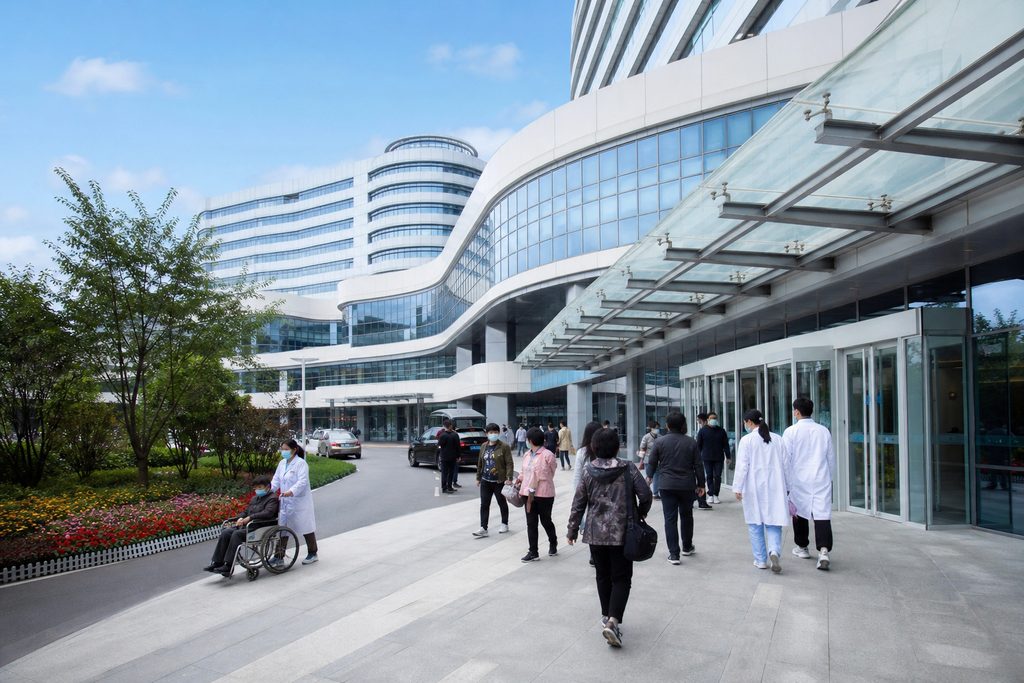
Harbin Cardiology Hub: High-Volume Interventional Care at HMU Second Hospital
Key Takeaways
- Harbin Medical University Second Hospital performs over 8,000 interventional cardiology procedures annually, placing it among the highest-volume centers in Northeast China.
- The cash-pay price for a drug-eluting heart stent at this hospital typically runs between $5,000 and $8,000 USD, a fraction of the $30,000+ common in the United States.
- Navigating the public registration system requires a Chinese ID or in-person queuing; international patients cannot pre-book standard outpatient slots from overseas without a local coordinator.
- Understanding the difference between the standard public pathway and the hospital’s VIP International Department is the single most important factor in planning a smooth trip.
The Problem: When a Cardiac Diagnosis Meets a Six-Month Waitlist
What do you do when your cardiologist recommends an angiogram, but the next available slot is 14 weeks away? That question keeps a lot of people up at night. In Canada, the median wait time from a general practitioner referral to cardiac surgery stretched to 27.4 weeks in 2023, according to the Fraser Institute. In the UK, the NHS reported that over 380,000 people were on the cardiology waiting list, with many waiting longer than the 18-week target for non-emergency procedures.
Waiting feels like gambling. A blockage that looks stable on a stress test can rupture without warning. The anxiety of watching a calendar while living with angina erodes quality of life in ways that are hard to measure. Patients start wondering if there is another option. Not a magical cure. Just a legitimate, safe pathway to get the procedure done now rather than six months from now.
Who We Are
We are not a hospital. Our team does not perform stent placements or interpret echocardiograms. We are a medical concierge organization that connects international patients with China’s top-tier hospitals. We handle the logistics that stand between you and the care you need: hospital matching, appointment coordination through official hospital international departments, bilingual medical companions who stay by your side, and visa guidance. For patients looking at the heart stent cost China Harbin option, we translate the numbers, the process, and the paperwork into a clear plan. We do not sell access. We provide case management through channels the hospitals themselves have built for international patients.
Why Harbin Medical University Second Hospital Delivers Results
Clinical Volume That Builds Muscle Memory
There is a straightforward relationship in interventional cardiology: the more procedures a center does, the better its outcomes tend to be. A landmark study published in The New England Journal of Medicine found that hospitals performing more than 400 percutaneous coronary interventions (PCIs) annually had significantly lower mortality rates than low-volume centers. Harbin Medical University Second Hospital operates in a different league entirely. The cardiology department handles over 8,000 interventional procedures each year. That is roughly 30 to 35 cases per working day.
Volume on that scale changes things. It means the cath lab team has seen virtually every anatomical variation, every tricky lesion, every unexpected reaction. When a complex chronic total occlusion shows up on the screen, the operator is not encountering a rare puzzle. It is Tuesday. This is why some international patients searching for the best cardiology hospital northeast China land on this institution. The numbers back up the reputation.
Technology Deployed at Scale
The cardiac catheterization labs here are not running outdated equipment. The hospital has invested heavily in intravascular imaging: intravascular ultrasound (IVUS) and optical coherence tomography (OCT) are used routinely, not reserved for special cases. These imaging tools let the interventionalist see the arterial wall in cross-section, measure the plaque precisely, and confirm that the stent is fully expanded and apposed against the vessel wall. Studies have shown that IVUS-guided stenting reduces the risk of stent thrombosis and target-vessel revascularization by roughly 40% compared to angiography-guided stenting alone.
The hospital also operates a hybrid operating room that allows cardiologists and cardiac surgeons to work side by side. That matters when a planned PCI runs into trouble and needs immediate surgical backup. It is not common. But when it happens, having a cardiac surgeon scrubbed in next door rather than across campus changes the outcome.
Cost Advantage Without Quality Compromise
Let us address the obvious objection directly. A heart stent that costs $30,000 to $50,000 in the United States and $5,000 to $8,000 at HMU Second Hospital sounds too good to be true. The price gap makes people suspicious. Is the stent a different product? Are the doctors less trained? Is the sterilization protocol different?
No. The structural reasons for the cost gap are straightforward. Chinese hospital systems operate on radically different labor economics. A senior interventional cardiologist’s salary in China, while high by local standards, does not approach the multi-million-dollar compensation packages common in American cardiology groups. Hospital administrative overhead is lower. Malpractice insurance costs are a fraction of what US physicians pay. Pharmaceutical and device pricing is negotiated nationally. None of these factors have anything to do with clinical quality. The drug-eluting stents used here are the same brands — Abbott, Boston Scientific, Medtronic — implanted in catheterization labs in Boston or Berlin.
For patients researching the Harbin Medical University Second Hospital international patient price, the math is simple. Even after adding round-trip flights, a two-week hotel stay, and coordination service fees, the total cost rarely exceeds 30% of the US cash price. That is not a marketing claim. It is arithmetic.
What You Need to Know Before Going Alone
Honesty matters more than enthusiasm. Coming to Harbin for cardiac care is a legitimate option, but it has real friction points that can derail an unprepared traveler.
- Visa Requirements: Medical treatment in China requires an S2 visa with the purpose of medical treatment clearly noted. This is not a tourist visa and not an M business visa. The hospital must provide an official invitation letter and a treatment confirmation document. Applying without these documents leads to rejection. Processing typically takes 5 to 10 business days, and you cannot enter China on a tourist visa and then switch to medical treatment without violating the terms of entry.
- Payment Systems: HMU Second Hospital’s standard public registration system operates on China’s domestic payment infrastructure. WeChat Pay and Alipay dominate. International credit cards are not accepted at the public outpatient counters. The hospital’s International Department can process wire transfers and some international cards, but this must be arranged before you arrive. Walking in with a Visa card and expecting to pay for a stent procedure will not work.
- Language and Navigation: Harbin is a major city, but English fluency among frontline hospital staff is limited. Signage in the public areas is almost entirely in Chinese. Registration kiosks require Chinese-language input. Even finding the correct building on a campus that handles over 10,000 outpatient visits daily is disorienting without a guide who knows the layout.
How We Help You Navigate This
These barriers exist for structural reasons, not because anyone is trying to make things difficult. A public hospital serving a domestic population of millions has no operational reason to build an English-language patient intake system. Our role is to bridge that gap.
Before you travel, we collect your medical records, translate them into clinical Chinese, and submit them through the hospital’s official International Department channel. This is not a backdoor. It is the pathway the hospital has designated for overseas patients. We confirm the appointment date, the estimated length of stay, and the pre-procedure tests required. We handle the invitation letter for your S2 visa application.
When you land in Harbin, a bilingual medical companion meets you at the airport. This person stays with you through registration, pre-procedure consultations, the procedure day itself, and discharge. They translate in real time. They know which floor the ECG lab is on and which window processes international patient payments. They handle the friction so you can focus on recovery.
After discharge, we coordinate follow-up communication with the treating physician and help arrange any necessary documentation for your home cardiologist. The goal is continuity. Not a one-off procedure in a foreign country with no bridge back to your regular care.
How Safe Is Interventional Cardiology in China?
The safety question deserves a direct answer. Patients typing how safe is interventional cardiology in China into a search bar are not being paranoid. They are being responsible.
China’s top-tier hospitals operate under accreditation standards that are comparable to international norms. Many, including several in Harbin, have pursued JCI accreditation or adhere to China’s own rigorous hospital grading system. HMU Second Hospital is a Grade A, Class 3 hospital — the highest classification in China’s Ministry of Health system. The cardiology department contributes to national PCI registries that track complication rates, mortality, and long-term outcomes. These data are published in peer-reviewed journals, not hidden in internal reports.
The major safety variable is not the technical skill of the operators. It is the communication gap. A complication during a PCI — coronary dissection, no-reflow phenomenon, access site bleeding — is manageable when the team can communicate with the patient and each other clearly. When language barriers slow down recognition or response, manageable problems can escalate. This is precisely why having a medically fluent interpreter in the room matters. Not for comfort. For safety.
What Does It Actually Cost to Book Cardiac Catheterization in China?
Patients trying to book cardiac catheterization China pricing need real numbers, not vague ranges. Here is a breakdown based on HMU Second Hospital’s International Department pricing as of the most recent available data:
| Procedure | Estimated Cost (USD) | Notes |
|---|---|---|
| Diagnostic coronary angiogram | $1,500 – $2,500 | Includes cath lab fees, contrast, physician fee |
| PCI with one drug-eluting stent | $5,000 – $8,000 | Includes stent device, balloon, guidewires, imaging |
| PCI with two drug-eluting stents | $8,000 – $12,000 | Additional stent cost is incremental |
| IVUS or OCT imaging add-on | $800 – $1,200 | Strongly recommended for complex lesions |
| Hospital stay (per night, private room) | $150 – $300 | International Department ward |
| Bilingual medical companion (full day) | from $200 | Includes airport transfer coordination and in-hospital translation |
These numbers reflect the hospital’s international patient channel pricing. The standard public pathway is cheaper — sometimes by 30% to 40% — but comes with the registration and language barriers described above. For international patients, the International Department pathway is the realistic option.
The heart stent cost China Harbin figure of $5,000 to $8,000 for a single-vessel PCI compares favorably to the $28,000 to $50,000 cash price at US hospitals, as reported by the Healthcare Bluebook and FAIR Health consumer databases. Even top-ranked private hospitals in Thailand and India typically charge $10,000 to $15,000 for the same procedure with the same stent brands.
How This Compares to Other Top Heart Surgery Hospitals in China
Harbin is not the only option. Patients searching for top heart surgery hospitals China for foreigners will also encounter Fuwai Hospital in Beijing, Zhongshan Hospital in Shanghai, and West China Hospital in Chengdu. Each has distinct strengths.
Fuwai Hospital is the global volume leader, performing over 14,000 cardiac surgeries annually. Its reputation in complex congenital heart disease and valve surgery is unmatched. But Fuwai is in Beijing, where the cost of lodging and logistics runs higher than in Harbin. Zhongshan Hospital in Shanghai offers similarly elite cardiology care with the advantage of a more internationalized city infrastructure. West China Hospital in Chengdu handles massive volume and has a well-organized international department.
HMU Second Hospital occupies a specific niche. It is the dominant cardiac center in Northeast China, a region with a population of over 100 million people and extremely high rates of cardiovascular disease driven by diet, climate, and genetic factors. The cardiologists here see advanced, complex coronary disease at a frequency that even many top-tier centers in warmer climates do not match. For a patient with diffuse multivessel disease or a chronic total occlusion, that experience matters.
The trade-off is location. Harbin is cold. Winter temperatures routinely drop below -20°C (-4°F). The city is less cosmopolitan than Shanghai or Beijing. English is less widely spoken. These are not reasons to avoid Harbin, but they are reasons to plan carefully. Our team has helped patients navigate all four of these hospitals, and the right choice depends on the specific diagnosis, the patient’s mobility, and their tolerance for a less Westernized environment.
Frequently Asked Questions
No. This is not how the process works. The hospital requires an in-person consultation with the interventional cardiologist before scheduling the procedure. Pre-procedure tests — ECG, echocardiogram, blood work, possibly a CT coronary angiogram — must be completed and reviewed. The cath lab schedule is booked in advance. A realistic timeline from arrival to procedure is 5 to 10 days, assuming no unexpected findings that require additional workup.
HMU Second Hospital’s cath labs are equipped with full resuscitation capability and surgical backup. The hybrid operating room means that if a PCI complication requires emergency bypass surgery, the transition can happen without moving the patient to a different floor. Complication rates for PCI at high-volume Chinese centers are comparable to international benchmarks — roughly 1% to 2% for major adverse events. That is not zero. No honest provider would claim zero. But the systems to manage complications are in place.
Most will, provided the records are properly translated and include the key technical details: stent brand and model, vessel treated, lesion characteristics, procedural complications, and discharge medications. We provide a translated discharge summary formatted to match what Western cardiologists expect to see. Some home cardiologists may want to repeat an echocardiogram or stress test post-procedure. That is standard practice and not a reflection on the quality of the Chinese care.
Yes. The drug-eluting stents used at HMU Second Hospital are sourced from the same multinational manufacturers — Abbott’s Xience series, Boston Scientific’s Synergy, Medtronic’s Resolute — that supply hospitals in North America and Europe. China also produces domestically manufactured drug-eluting stents that have undergone rigorous clinical trials and are approved by the National Medical Products Administration. You can discuss stent selection with the interventionalist during the pre-procedure consultation.
Your Next Step
A cardiac diagnosis forces hard decisions under pressure. Waiting too long carries risk. Traveling for care carries a different kind of risk. The right answer depends on your specific anatomy, your overall health, and your tolerance for navigating an unfamiliar system. What we can tell you is that the clinical quality at HMU Second Hospital is real, the cost savings are substantial, and the logistical barriers are solvable with proper planning.
If you want to understand whether this option fits your situation, our team is here to walk through the details. No pressure, no sales pitch. Just an honest conversation about what is possible.
Learn more about how we coordinate care at our patient coordination page. If you are still comparing options, our overview of China’s top-ranked hospitals may help you weigh alternatives. For a deeper look at cardiac care specifically, see our cardiac surgery and cardiology rankings.
For more medical information and treatment options in China, visit chinamedservices.com (China Medical Services).
