Nepali Patient Medical Service to China: Kathmandu Cross-Border Treatment Support
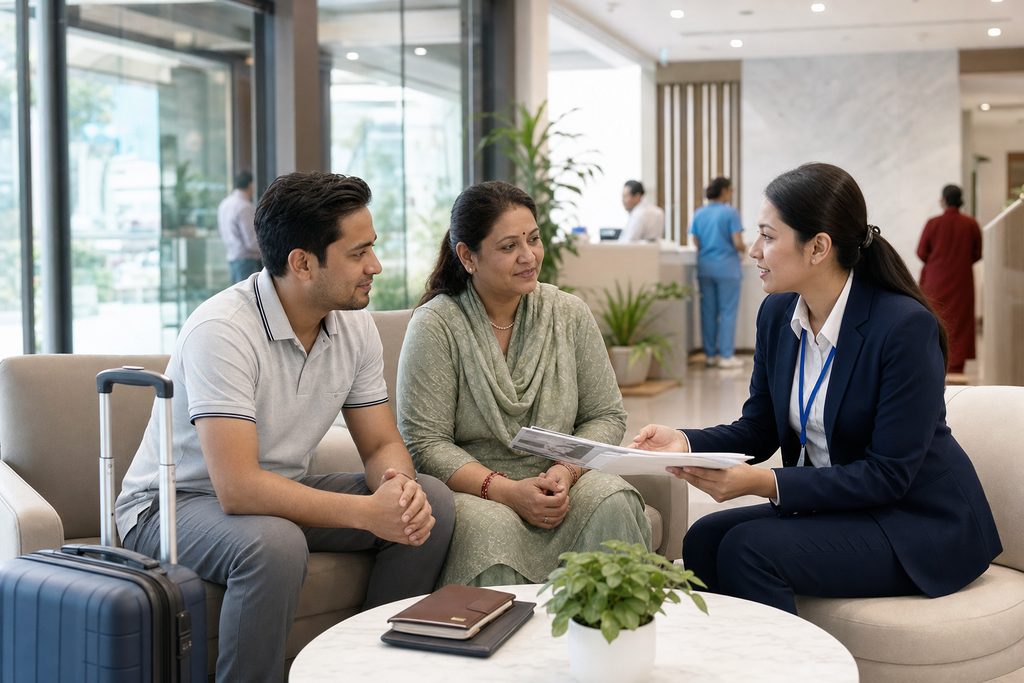
When 34-year-old Anjali from Pokhara received a diagnosis requiring complex cardiac care, her family in Kathmandu started calling every major hospital in the city. The wait for the specific surgical specialist was six months. They then looked to Delhi. The cost estimate, without complications, hovered around $28,000. The family had resources, but they were burning through them fast. It was Anjali’s brother who asked a different question: “What about heading north?”
That question brings us here. Crossing a border for healthcare is not a casual decision. It is heavy with logistics, language barriers, and the weight of trusting a system you do not understand. Our team handles the architecture of that journey. We are not a hospital. We do not provide medical treatment or clinical diagnoses. We are your logistical architects—we bridge the gap between you and China’s top-tier medical expertise.
Key Takeaways
- China’s top-tier hospitals handle surgical volumes that are simply unmatched—Fuwai Hospital alone performs over 14,000 cardiac surgeries annually, driving down the Nepal patient medical treatment China cost to a fraction of Western prices.
- Accessing the best hospital in China for Nepali patients requires navigating a system where public outpatient doors are closed to remote booking; the real entry point is the hospital’s official international VIP channel.
- The S2 visa is the only legal pathway for medical travel from Nepal to China; using a tourist (L) or business (M) visa for treatment will result in denied care and potential legal issues.
- Language is the biggest clinical risk—top Chinese surgeons rarely speak English, making a bilingual medical escort not a luxury but a safety requirement for accurate translation of symptoms and post-op instructions.
The Problem: The Real Cost of Waiting in Kathmandu
Nepal’s healthcare system has made remarkable strides, but the reality for complex tertiary care is a bottleneck of specialist availability. For oncology, advanced orthopedics, or pediatric congenital conditions, the gap between diagnosis and treatment can stretch from months to over a year. This is not a criticism of Nepal’s dedicated doctors. It is a math problem. A population of 30 million served by a limited pool of sub-specialists creates a queue that disease does not respect.
For many families, the default solution is India. And for good reason—it is close, and the medical ties are deep. But the economics have shifted. A cardiac bypass in a reputable Indian private hospital now frequently exceeds $25,000. A complex orthopedic implant surgery can hit $20,000. These are life-altering sums that often require selling property or taking on crushing debt. That financial strain is the pain point we see families from Kathmandu wrestling with. They are seeking clinical quality without financial ruin.
Who We Are
We are a medical concierge team rooted in China’s hospital ecosystem. Our database spans over 340 top-ranked hospitals across 37 cities, representing the top 5% of China’s 35,000+ medical institutions as ranked by the Fudan University hospital rankings and JCI accreditation. We do not treat patients. We clear the path. We translate medical records into Mandarin clinical terminology, secure appointments through official hospital international departments, arrange S2 medical visa invitation letters, and place a bilingual medical companion at your side for every consultation. We exist because the distance between a diagnosis in Kathmandu and a surgical suite in Shanghai is filled with friction. We remove it.
Why China Delivers Results for Nepali Patients
The structural advantages of China’s top-tier hospitals are not marketing—they are a function of scale and specialization that smaller healthcare markets simply cannot replicate. For Nepali patients evaluating the Nepal patient medical treatment China cost, the value proposition rests on three pillars.
Clinical Volume Drives Better Outcomes
Mastery in surgery is a numbers game. A top Chinese orthopedic surgeon specializing in joint replacement completes 200 to 500 procedures annually. The average US surgeon performs roughly 65. In cardiac care, the gap is even more extreme. Fuwai Hospital in Beijing runs the world’s largest cardiovascular center, logging over 14,000 cardiac surgeries per year. This is not just impressive—it is clinically significant. Studies consistently link high surgical volume with lower complication rates and shorter recovery times. When you choose the best hospital in China for Nepali patients for a specific condition, you are often choosing a team that has seen your exact case hundreds of times that year alone.
Technology and Efficiency at Scale
A public hospital in Shanghai’s top tier might see 10,000 outpatient visits in a single day. This sounds chaotic. And it can be, if you walk through the public entrance alone. But that volume funds a diagnostic machine park that is relentlessly modern. 3T MRI, PET-CT, and robotic surgery platforms like the da Vinci Xi are standard in the international departments we work with. The workflow is designed for speed. A patient coming from Kathmandu can often have a full diagnostic workup—bloods, advanced imaging, specialist consultation—completed within 48 hours. That compressed timeline is a structural feature of a system that never sleeps, not a sign of rushed care. It means you get to a treatment plan faster.
Cost Advantage Without Quality Compromise
Let’s address the obvious question. How can the Nepal patient medical treatment China cost be so much lower than in India or the West? A cardiac bypass that costs $28,000 in India or over $120,000 in the US typically ranges from $12,000 to $20,000 in a top Chinese public hospital’s international wing. This is not a discount rack. The cost structure is fundamentally different. China’s labor economics mean surgical team fees are lower. Hospital systems operate on high-volume, lower-margin models. The equipment is the same global brand names. The implants are the same FDA or CE-certified products. What you are not paying for is the massive administrative overhead and malpractice insurance premiums that inflate Western bills. The quality of the implant and the skill of the surgeon are the constants. The price tag is the variable.
What You Need to Know Before Going Alone
Honesty is our operational principle. Coming to China for medical treatment is a high-reward path, but it is littered with genuine barriers that can stop a solo traveler cold. Here is what you are up against if you try to figure out how to go to China for medical treatment from Nepal independently.
- Visa Requirements: You cannot use a tourist visa. The correct visa is an S2 visa, endorsed specifically for medical treatment. To get it, you need an official invitation letter from the hospital’s international department. This letter is not a generic PDF. It must include your passport details, diagnosis, and treatment plan. Family members accompanying you also need their own S2 visas. Walking into the Chinese Visa Application Service Centre in Kathmandu without this precise documentation means your application will be rejected. We handle this invitation process directly with the hospital.
- Payment Systems: China runs on a digital wallet ecosystem. WeChat Pay and Alipay dominate. Foreign credit cards, even Visa and Mastercard, are frequently declined at hospital cashiers. Public hospitals require a substantial upfront deposit before admission—often 50,000 to 100,000 RMB—and they expect it paid through local systems. If your card fails at the counter, you are stuck. We guide families through setting up the right payment rails or facilitating the transfer before you leave Kathmandu.
- Medical Coding and Insurance: Chinese hospitals do not use ICD-10 coding in the way international insurers expect. Your discharge summary and invoices will be in Mandarin, formatted for a domestic system. Filing a claim for reimbursement from a Nepali or international insurer requires a complete translation and re-coding of those documents. Without this, you are paying out of pocket with no hope of recovery. We provide certified, insurer-ready documentation packages.
How We Help You Navigate This
These barriers exist for structural reasons—they are not signs of a broken system, but of a self-contained one. Our job is to translate that system for you. The journey from Kathmandu to a Chinese hospital suite follows a sequence we have refined over hundreds of patient cases.
Before you travel, we start with your medical records. You send us your diagnostic reports, imaging, and histopathology slides from your doctor in Nepal. Our team translates these into clinical-grade Mandarin and presents them to the relevant specialist at a hospital matched to your condition. We secure a written treatment plan and cost estimate. We then arrange the official invitation letter that unlocks your S2 medical visa China from Kathmandu application. We advise on flights and accommodation near the hospital—often within walking distance.
During treatment, a bilingual medical companion meets you at the hospital entrance. This person is not a translator on a phone app. They are a trained escort who handles registration, queues at the cashier, navigates you to the correct imaging suite, and sits beside you in the consultant’s office. They ensure the surgeon hears your exact symptoms, and you hear the surgeon’s exact instructions. No filtering. No guesswork.
After discharge, we compile your medical records, translate them into English, and format them for your insurer. We also coordinate follow-up video consultations with the same specialist. For patients exploring comprehensive cancer treatment packages China for international patients, this continuity is critical—oncology is a marathon, not a sprint, and the post-treatment monitoring phase is where outcomes are secured.
Frequently Asked Questions
You can walk into a public hospital’s general outpatient hall. You will face a queue of thousands, registration forms entirely in Chinese characters, and a junior triage doctor who will not have your records. You will not see the senior specialist you researched. The specialist you want works in the international medical center or VIP department—a separate facility within the same hospital. That department does not accept walk-ins. It requires a pre-arranged appointment with medical records reviewed in advance. A China medical tourism agency Nepal like ours is the mechanism that opens that door.
You have the right to pause. Our coordination fee covers the appointment and translation. If you want a second opinion from another Chinese hospital, we arrange it. If you want to take the diagnosis back to your doctor in Kathmandu for discussion, we compile the records and send you home. There is no lock-in. The clinical decision is always yours and your family’s, made with your trusted advisors.
We secure a written cost estimate from the hospital’s international department before you book a flight. This covers the surgeon’s fee, anesthesia, implant (if applicable), operating theater, and an estimated number of inpatient days. It is a fixed-price package for the core procedure. Variables like an extended ICU stay due to an unforeseen complication are not in the package—and we are transparent about that. But the baseline cost is locked. You arrive knowing the number.
Yes. One or two immediate family members can accompany you. They apply for an S2 visa with the same hospital invitation letter, noting their relationship to you. We include their details in the documentation package. They will not be admitted to the operating room, but they can stay with you in a private inpatient suite and be present for all consultations.
Your Next Step
The decision to seek treatment abroad is already a heavy one. The logistics should not make it heavier. Whether you are comparing the Nepal patient medical treatment China cost against other destinations, or trying to figure out how to go to China for medical treatment from Nepal for a family member, clarity is the first thing you need. Our team provides that clarity without pressure. We review your medical records, match you with a hospital from our network of 340+ top-ranked institutions, and lay out a transparent path forward—from visa to discharge. If you are ready to explore what is possible, start with a conversation. You can learn more about how we work on our patient support services page.
For more medical information and treatment options in China, visit chinamedservices.com (China Medical Services).
