Brain Tumor Surgery China UK: Options When the NHS Says Inoperable
The Short Answer
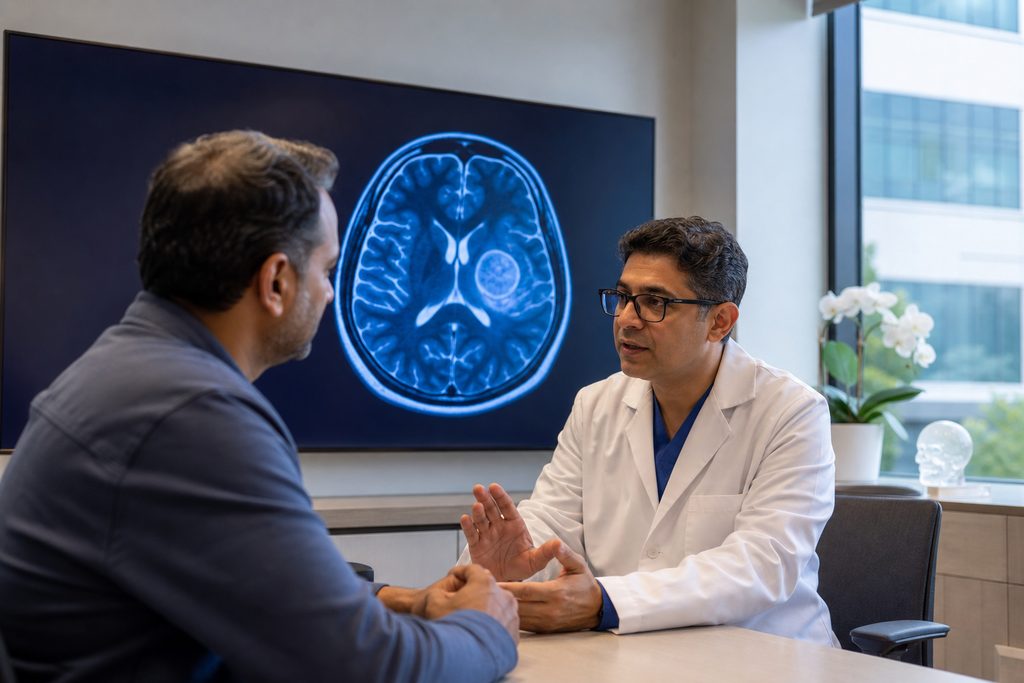
When 54-year-old David from Manchester heard “inoperable” from his NHS consultant, the word landed like a door slamming shut. His glioblastoma was positioned in a way that made resection too risky, they said. The wait for a second opinion stretched into months. His family started searching. That search led them to a different question: what if “inoperable” here is not the same everywhere?
The direct answer is that some brain tumors deemed inoperable by the NHS can be surgically addressed in China. This is not a promise. It is a statement of fact based on differing surgical philosophies, higher case volumes at specialized centers, and access to advanced intraoperative technologies. But it depends entirely on the tumor’s specific location, type, and your overall health. What one system considers too dangerous, another may view as a calculated risk worth taking. The key is getting your case evaluated by a neurosurgical team that handles thousands of these cases annually, not dozens.
Who This Is Right For — and Who It Isn’t
Let’s be blunt. Traveling internationally for brain surgery is not for everyone. The patients who typically benefit are those with a clear, recent MRI and a tumor that a Chinese neurosurgical team, after reviewing the images, believes has a reasonable chance of safe resection. You need to be medically stable enough to fly. You need a support person who can travel with you. And you need the financial resources to cover surgery, travel, and a minimum three-to-four-week stay.
This path is generally not suitable for patients with diffuse, highly infiltrative tumors where even aggressive surgery offers no meaningful survival benefit. If you are medically unstable, unable to tolerate a long-haul flight, or if the tumor has progressed to a point where any intervention would be futile, staying home and pursuing palliative care is the more compassionate choice. We say this plainly because a credible service tells you when not to come. Also, if your primary motivation is to avoid all costs, this route is not for you. While the brain tumor surgery cost China is significantly lower than private UK or US rates, it is not free, and the NHS will not reimburse you for overseas elective surgery.
The Options, Compared
When the NHS cannot operate, you are not without choices. The landscape breaks down into four main paths. Each has a different risk profile, timeline, and financial commitment.
| Pathway | Typical Wait | Estimated Cost (USD) | Key Trade-off |
|---|---|---|---|
| NHS second opinion (different trust) | 4–12 weeks | Covered by NHS | Same system constraints; may confirm original decision |
| Private neurosurgery in UK | 1–4 weeks | $40,000–$80,000+ | Fast, familiar, but financially devastating for most |
| Private neurosurgery in Germany/Turkey | 1–3 weeks | $25,000–$55,000 | Closer to home; variable quality and follow-up coordination |
| Neurosurgery at a top Chinese public hospital (international/VIP channel) | 2–4 weeks after case acceptance | $18,000–$35,000 | High volume, advanced tech; language barrier and distance from UK |
The Chinese route stands out for one reason that doesn’t show up in a price column: case volume. A neurosurgeon at a major Chinese center may perform more complex tumor resections in a month than a UK surgeon does in a year. That repetition matters. For the patient who has been told “too risky,” the calculation shifts. You are not just buying a lower price. You are buying access to hands that have navigated your exact problem hundreds of times. But you are also far from home, in a system that does not speak your language without help.
Why “Inoperable” Is Not a Universal Verdict
The word “inoperable” feels absolute. It rarely is. What it actually means is: “The risk of causing unacceptable neurological damage during resection outweighs the expected benefit, given our current surgical tools and experience.” Change the tools or the experience level, and the equation can shift.
Chinese neurosurgery departments at top-tier hospitals have invested heavily in technologies that push the boundary of what is resectable. Intraoperative MRI (iMRI) allows surgeons to scan the brain mid-surgery and check if they’ve removed all visible tumor. Awake craniotomy with cortical mapping lets them test brain function in real time, identifying and sparing critical areas for speech and movement. Fluorescence-guided surgery makes tumor cells glow, helping distinguish cancerous tissue from healthy brain. These technologies exist in the UK too, but they are concentrated in fewer centers with longer queues. In China, the sheer patient volume means these tools are in near-constant use, and the surgical teams have refined their protocols across thousands of cases. A tumor wrapped around the motor cortex may genuinely be inoperable in one setting and operable in another. The only way to know is to have your scans reviewed by the team that would actually hold the scalpel.
What It Costs: A Real Breakdown
The brain tumor surgery cost China varies by hospital tier, tumor complexity, and length of stay. Here is what UK patients can realistically expect for a craniotomy and tumor resection at a top-ranked public hospital’s international or VIP department.
| Cost Component | Estimated Range (USD) | Notes |
|---|---|---|
| Surgical package (surgeon, anesthesiologist, OR, basic consumables) | $14,000–$25,000 | Varies by tumor location and complexity; awake craniotomy on the higher end |
| Hospital stay (7–14 days, VIP ward) | $3,000–$7,000 | Single room with space for a family member; ICU days cost more |
| Pre-op imaging and diagnostics | $1,000–$2,500 | MRI with contrast, functional MRI if needed, full blood workup |
| Post-op rehabilitation (2 weeks, optional) | $2,000–$5,000 | Inpatient rehab with physiotherapy and speech therapy if required |
| Service coordination (bilingual support, hospital liaison) | $800–$1,200 | Case management, appointment scheduling, interpretation during key consultations |
| Total estimated range | $20,800–$40,700 | Does not include flights, accommodation outside hospital, or visa fees |
These figures are based on public hospital international departments. Private international hospitals like United Family or Jiahui may charge 1.5 to 2 times as much but offer a fully English-speaking environment and direct insurance billing. The numbers above do not include flights (budget $1,500–$2,500 round-trip for two people from the UK), accommodation before and after hospitalization, or meals. A realistic all-in budget, including travel and a one-month stay, lands between $30,000 and $50,000. That is still roughly one-third to one-half of what private neurosurgery costs in the UK, and a fraction of US prices.
Practical Considerations: From Manchester to a Chinese Operating Room
The logistics of getting brain surgery abroad are not trivial. Here is what you actually need to handle, in the order you will face it.
Medical records come first. You need your most recent contrast-enhanced MRI on a CD or USB drive, not just the printed report. The surgical team will want to see the raw DICOM files. You also need a formal referral letter or summary from your NHS consultant, pathology reports if a biopsy was done, and a list of all current medications. If any of this is missing, the evaluation stalls before it starts.
Visas are next. For medical treatment in China, UK citizens apply for an S2 visa. This is a short-stay visa for private affairs, and medical treatment falls under that category. You will need an invitation letter from the Chinese hospital confirming your treatment arrangement. Your accompanying family member applies for the same S2 category. Do not apply for an M visa — that is for commercial and trade activities, and using it for medical purposes can cause problems at the border. Visa processing typically takes one to two weeks once you have the hospital documents in hand.
Payment is upfront and in full before admission. Chinese public hospitals do not bill international patients after the fact. You will need to wire the estimated surgical deposit or pay by credit card upon registration. UK private medical insurance rarely covers elective overseas surgery, so assume you are self-paying. Some international insurance plans with worldwide coverage may reimburse you, but you must confirm this before committing. Get it in writing from your insurer.
Language is the daily friction you cannot ignore. Even at top hospitals with international departments, not every nurse, orderly, or technician speaks English. The neurosurgeon may speak functional English but will conduct detailed consent discussions in Mandarin. This is where a bilingual medical companion becomes essential — not a luxury. They sit with you during consultations, translate consent forms accurately, explain post-op instructions, and handle the thousand small interactions that make a hospital stay bearable or unbearable.
Follow-up after returning to the UK requires planning. Your Chinese surgical team will provide a detailed discharge summary, imaging, and recommendations. But your ongoing care — stitch removal, rehabilitation, monitoring for recurrence — falls back to the NHS. You need to arrange a handover with your UK GP and neurologist before you leave. Most NHS consultants will accept a patient back for follow-up after overseas surgery, but the relationship works better if you are transparent about your plans from the start. Do not surprise them when you return with a fresh craniotomy scar and a CD of Chinese MRI scans.
Frequently Asked Questions
Sometimes, yes. “Inoperable” is a clinical judgment based on the surgeon’s experience, available technology, and institutional risk tolerance. A different surgical team with higher case volumes and advanced intraoperative tools may reach a different conclusion. But not every tumor becomes operable elsewhere. Diffuse intrinsic pontine gliomas (DIPG) and some highly infiltrative glioblastomas remain genuinely unresectable regardless of where you go. The only way to know is to have your specific scans reviewed by the surgical team that would operate on you.
For a craniotomy and tumor resection at a top-ranked public hospital’s international department, budget $30,000 to $50,000 total. This includes the surgical package, hospital stay, pre-op diagnostics, coordination services, flights for two people, and a month of basic accommodation. The surgical procedure itself typically ranges from $14,000 to $25,000. Costs rise with tumor complexity, the need for awake craniotomy, or an extended ICU stay. Private international hospitals charge more but offer a more Western-style experience.
This is the question every patient and family should ask. The surgical consent process in China is thorough — you will be informed of all material risks before signing. Top-tier Chinese neurosurgery departments have complication rates comparable to major Western centers. But complications can and do happen anywhere. If a complication occurs, you will receive standard medical management at the hospital. You will not be abandoned. However, you are far from home, and if a prolonged ICU stay or additional surgeries are needed, your costs will increase beyond the initial estimate. You should also understand that medical malpractice litigation in China is a different legal landscape than in the UK. We recommend discussing realistic contingency plans with your family before traveling.
No. The NHS does not reimburse patients who choose to have elective surgery abroad, even if the NHS itself was unable to provide the treatment. The S2 route — a formal EU/EEA scheme for cross-border healthcare reimbursement — does not apply to China. You are self-paying. Some patients explore crowdfunding or family loans. A small number of UK private insurers with worldwide coverage may reimburse, but this is the exception, not the rule. Check your policy carefully and get pre-authorization in writing before committing to anything.
Start with objective rankings rather than marketing brochures. The Fudan University Hospital Rankings publish a reputable specialty reputation list for neurosurgery each year. Hospitals consistently ranked among China’s top 10 for neurosurgery include Huashan Hospital of Fudan University in Shanghai, Beijing Tiantan Hospital, and West China Hospital in Chengdu. Each has particular strengths — Tiantan is one of the world’s highest-volume neurosurgery centers, while Huashan is renowned for its neurosurgical research and complex case management. The best hospital for you depends on your tumor type, location, and what technology you need. A written second opinion that reviews your scans and provides a treatment recommendation is the most reliable way to determine fit — it costs a few hundred dollars and gives you a concrete basis for deciding whether to travel.
Your Next Step
Facing a brain tumor diagnosis that the NHS cannot treat surgically is terrifying. The search for alternatives is exhausting and time you do not feel you have. What we have laid out here is not a guarantee — it is a map. Some patients who follow this path find that their tumor is genuinely operable in Chinese hands. Others learn, after an honest review of their scans, that the NHS verdict was correct. Both outcomes have value. Clarity is worth the effort.
Our team at China Medical Services does not perform surgery and does not offer medical advice. We handle the logistics that make an informed decision possible: connecting you with the right neurosurgery department for a written second opinion or video consultation, coordinating hospital appointments, arranging bilingual support during your stay, and navigating the visa and travel practicalities. If you want to know whether your tumor can be operated on in China, the first step is simple — send us your most recent MRI and let the surgeons who would hold the scalpel give you their honest assessment. There is no obligation, and the consultation fee is credited toward coordination if you proceed. You have already done the hardest part: refusing to accept a closed door. Now let’s find out if another one is open.
For more medical information and treatment options in China, visit chinamedservices.com (China Medical Services).
