Gastric Sleeve Recovery: A Realistic Timeline and What to Expect
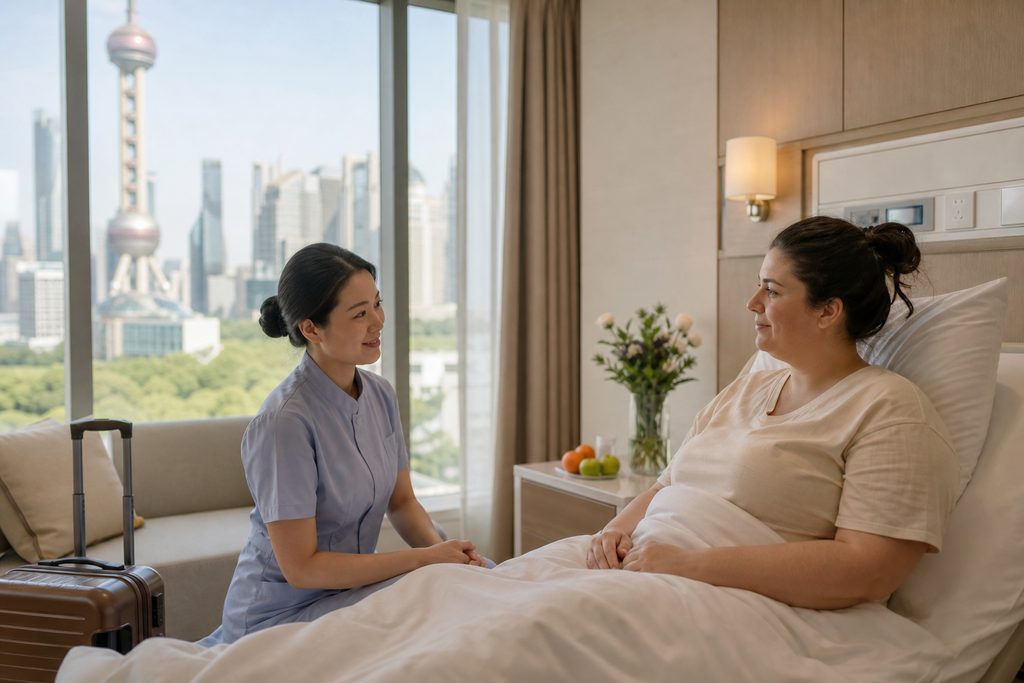
What Is Recovery Like After a Gastric Sleeve? A Week-by-Week Guide for International Patients
A gastric sleeve removes roughly 75–80% of your stomach, leaving a narrow banana-shaped tube that can hold only a few ounces at a time. Recovery is not just about the incisions healing — it is about relearning how to eat, drink, and read your body’s signals. If you are researching gastric sleeve cost China alongside recovery expectations, you are asking the right questions in the right order. The surgery itself takes about 60–90 minutes. The recovery, however, unfolds over months, and the first six weeks matter most.
Most patients fly home 10–14 days after surgery. But flying home is not the same as being recovered. This guide walks through the real timeline — pain levels, diet stages, energy, work, and the practical logistics of recovering in another country.
Key Takeaways
- Most patients stay in China for 10–14 days after surgery before flying home; the first 72 hours are the most uncomfortable, not the most dangerous.
- A typical gastric sleeve in a top-tier Chinese hospital costs $8,000–$15,000, compared to $15,000–$25,000 in the US or UK private systems.
- The recovery timeline follows four strict diet stages over 6–8 weeks: clear liquids, full liquids, purees, soft foods — skipping stages is the most common cause of complications.
- Pain after gastric sleeve is usually moderate (4–6 on a 10-point scale), driven by gas and incisions, not internal organ pain; most patients stop prescription painkillers by day 5–7.
- Full energy recovery takes 4–6 weeks. Returning to a desk job at week 3 is common; physical labor needs 6–8 weeks.
The Problem: Recovering Far From Home Without a Clear Roadmap
The gastric sleeve cost China typically ranges from $8,000 to $15,000 depending on hospital tier, surgeon seniority, and whether you use a public hospital’s international department or a private international hospital. The same procedure in the United States averages $15,000–$25,000 before insurance, and in the UK privately it runs £10,000–£15,000. In Australia, expect AUD $20,000–$28,000.
Why the difference? Chinese hospital labor costs are structurally lower. A senior bariatric surgeon’s professional fee, the anesthesiology team, and the nursing staff all cost less in China than in Western systems — not because they are less qualified, but because the entire medical economy operates at a different cost base. The equipment, however, is the same: laparoscopic towers, stapling devices, and energy platforms from the same global manufacturers used in US and European operating rooms.
One important note: the price difference does not mean you are getting a discount version of surgery. It means the market price for the same service is lower. That is a structural economic fact, not a quality signal.
International Patient Infrastructure
Shanghai and Beijing now have dedicated international medical departments within major public hospitals, plus a growing network of private international hospitals like United Family and Jiahui that operate with English-speaking staff and JCI accreditation. For bariatric patients, this means you can have a bilingual coordinator during pre-op consultations, an English-speaking nurse during your hospital stay, and translated discharge documents. That infrastructure reduces one of the biggest recovery risks for foreign patients: miscommunication about diet stages and warning signs.
Gastric Sleeve Recovery Timeline: What to Expect Week by Week
This is the section most patients search for when they type how long is recovery after gastric sleeve surgery into Google. The honest answer is that full recovery takes about six to eight weeks, but the intensity drops sharply after the first two.
Days 0–2: Hospital Stay and the Hardest Hours
You will wake up with five or six small incisions across your upper abdomen, each closed with surgical glue or dissolvable stitches. There may be a drain. The pain is real but manageable — most patients describe it as severe soreness in the abdominal wall, plus sharp shoulder pain from the carbon dioxide gas used to inflate the abdomen during laparoscopy. That shoulder pain confuses people. It is referred pain from the diaphragm, not a heart problem.
You will not eat. You will sip water — slowly, in tiny amounts. Walking starts within hours of surgery. Nurses will get you up, because walking reduces the risk of blood clots and helps move the gas out. Expect to walk short laps around the ward by day one.
Discharge from a Chinese hospital typically happens on day 2 or 3, provided you are tolerating clear liquids, passing gas, and your pain is controlled with oral medication.
Days 3–7: The First Week Out of Hospital
This is the most psychologically difficult stretch. You are out of the hospital but nowhere near normal. Your diet is clear liquids only: water, broth, sugar-free gelatin, diluted electrolyte drinks. You must sip constantly to avoid dehydration, because your new stomach cannot hold enough volume to catch up if you fall behind.
Pain should be trending down. Many patients stop prescription opioids by day 5 and manage with acetaminophen. Your energy will be low. Napping is not laziness — it is recovery. Walk a little more each day. Do not lift anything over 10 pounds (4.5 kg).
If you are recovering in China, this is the week your bilingual medical companion earns their fee. They can translate the discharge instructions into plain English, arrange follow-up wound checks, and handle the pharmacy run for your medications. You focus on sipping and walking.
Weeks 2–3: Full Liquids and the Flight Home
Most international patients are cleared to fly home between day 10 and day 14. Before you board, your surgeon will want to see you once for a wound check and a final review of your diet progression. Assuming no complications — no fever, no increasing pain, no vomiting — you get the green light.
On the flight: wear compression stockings, walk every two hours, and keep sipping water. Dehydration is the biggest risk during long-haul travel after bariatric surgery. Your stomach holds less than half a cup at a time, so you need to drink continuously, not occasionally.
At home, you move to full liquids: protein shakes, thin yogurt, cream soups with no chunks. Protein becomes your job now. Aim for 60–80 grams per day, which almost always requires protein supplementation. Missing this target is why some patients feel weak, lose hair, and heal slowly.
Weeks 3–4: Purees and Soft Foods
Your stomach is healing, but it is still swollen. Pureed foods — eggs, fish, beans, cooked vegetables — go down slowly. You will learn what “full” feels like now: a pressure in your chest, a runny nose, maybe a sneeze. Stop eating the moment you feel it. Overeating causes nausea, vomiting, and stretching the staple line.
This is when patients ask is gastric sleeve recovery painful abroad, and the honest answer is that by this stage, surgical pain is mostly gone. What remains is the discomfort of eating too fast or too much, and that happens at home or abroad equally. The location does not change the physiology.
Weeks 4–6: Soft Foods and Returning to Work
Most desk workers return to work at week 3 or 4. Physical jobs need 6–8 weeks. By week 6, you should be eating soft solid foods — tender meats, cooked vegetables, soft fruits — in small, frequent meals. You will likely be cleared for light exercise: walking, swimming, stationary cycling. No heavy lifting until week 6–8.
Months 2–6: The Real Weight Loss Phase
The sleeve is not a magic trick. It is a tool. The first six months are when most patients lose 40–60% of their excess weight, but that depends on following the diet stages, hitting protein targets, and building an exercise habit. Your stomach will stretch slightly over time, from roughly 100–150 mL capacity to 200–300 mL. That is normal and expected. It is not failure.
How to Choose a Bariatric Team in China: What the Numbers Mean
If you are comparing weight loss surgery packages China price across hospitals, price alone is a poor decision criterion. A package that is $2,000 cheaper but lacks post-operative follow-up support will cost you more in stress and risk than it saves.
The best bariatric surgeons in Shanghai are concentrated in a handful of institutions. Shanghai’s Ruijin Hospital, Zhongshan Hospital, and Huashan Hospital all have dedicated metabolic and bariatric surgery units. Beijing’s Peking Union Medical College Hospital and Beijing Friendship Hospital run established programs. These are public hospitals with international departments — meaning you get the clinical expertise of a top-tier public institution with the language support of an international service layer.
Private international hospitals in Shanghai, such as United Family and Jiahui, offer a different experience: Western-style rooms, English-speaking staff throughout, direct insurance billing. The trade-off is price — expect to pay 1.5 to 2 times the public hospital international department rate.
When evaluating packages, ask these questions directly:
- Does the quoted price include the surgeon’s fee, anesthesiology, hospital stay, operating room, and all consumables, or are those billed separately?
- How many sleeve gastrectomies does this surgeon perform per year? (Look for at least 50–100.)
- What is the hospital’s leak rate? (International benchmarks are 0.5–1.5% for sleeve gastrectomy.)
- What follow-up is included after discharge — wound checks, dietitian calls, emergency contact?
- Who do I call at 2 a.m. if something feels wrong, and do they speak English?
| Cost Component | China (Public Hospital Int’l Dept) | China (Private Int’l Hospital) | United States | United Kingdom (Private) |
|---|---|---|---|---|
| Gastric sleeve (all-inclusive) | $8,000–$15,000 | $15,000–$25,000 | $15,000–$25,000 | £10,000–£15,000 |
| Hospital stay (2–3 nights) | Included | Included | Included | Included |
| Follow-up wound checks | Usually included | Included | Varies by insurance | Usually included |
| Bilingual coordination | $300–$800 (companion service) | Included | N/A | N/A |
| Dietitian consultations (3–6 months) | $100–$300 per session | Often bundled | Often covered | Often included |
Prices vary by hospital and case complexity. The figures above reflect typical ranges for international patients as of 2026, not guaranteed quotes.
Practical Considerations: Recovering in China as a Foreign Patient
Recovering from gastric sleeve surgery in a foreign country is not the same as a domestic patient’s experience. The medical care may be excellent, but the logistics are yours to manage.
Visa: Foreign patients traveling to China for medical treatment use an S2 visa, which is issued for short-term private affairs including medical treatment. Hospitals provide a medical treatment confirmation letter and appointment documentation to support the application. Family members accompanying you also apply for S2 visas. Processing times vary by embassy, so start at least 4–6 weeks before your planned surgery date. The S2 visa is not a guarantee of entry — the final decision rests with the Chinese consulate reviewing your documents.
Payment: Chinese public hospitals require prepayment for surgical procedures. International departments accept major credit cards and sometimes international bank transfers, but do not assume your US or European health insurance will be accepted at the point of service. Most international patients pay out of pocket and seek reimbursement from their insurer afterward. Private international hospitals like United Family have direct billing arrangements with many international insurers — that is one reason their prices are higher.
Language: Even in Shanghai and Beijing, the majority of hospital staff outside international departments speak limited English. Your surgical team may speak some English, but the nursing staff, pharmacy, and billing office often will not. This is where a bilingual medical companion changes the experience — handling registration, translating discharge instructions, coordinating follow-up appointments, and being reachable when something is unclear.
Follow-up after returning home: Your Chinese surgeon will expect you to have follow-up with a bariatric team in your home country at 1 month, 3 months, 6 months, and 12 months. Arrange this before you travel. Not all Western bariatric programs accept patients who had surgery abroad, so confirm a follow-up plan in writing before booking your flight.
A note on our coordination service: we are not a hospital and we do not provide medical advice. We help international patients navigate the Chinese hospital system — from matching you with an appropriate bariatric program to arranging bilingual support during your recovery. The decision to have surgery, and the surgery itself, belongs to you and your medical team.
Frequently Asked Questions
How painful is gastric sleeve recovery, really?
Most patients rate the pain at 4–6 out of 10 in the first 48 hours, dropping to 2–3 by day five. The pain is muscle soreness from the incisions plus gas pain in the shoulders. It is uncomfortable, not unbearable, and it responds well to standard pain medication. By the end of week two, most patients are off all painkillers.
When can I fly home after gastric sleeve surgery in China?
Most surgeons clear patients for international flights 10–14 days after surgery, provided there are no complications. You will need a final wound check before departure. On the flight, wear compression stockings, walk every two hours, and sip water continuously to avoid dehydration.
What are the warning signs of a complication during recovery?
Fever above 38°C (100.4°F), increasing abdominal pain rather than decreasing, vomiting that will not stop, rapid heart rate, or shortness of breath are all reasons to seek immediate medical attention. A gastric leak, while rare (0.5–1.5%), most commonly occurs in the first 7–10 days. If you are still in China, contact your surgical team immediately. If you have returned home, go to the nearest emergency department and tell them you had a recent sleeve gastrectomy.
Will
For more medical information and treatment options in China, visit chinamedservices.com (China Medical Services).
