Why Chinese Hospitals Push Early Walking After Surgery: Faster Recovery, Lower Risk
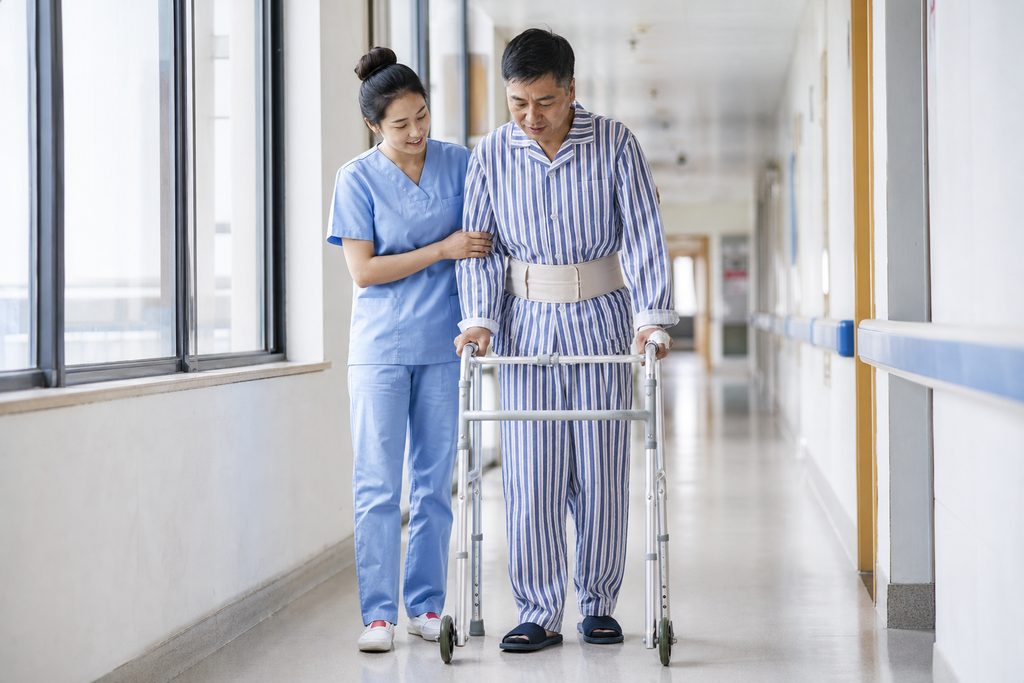
When 54-year-old David emerged from a total knee replacement at a Shanghai orthopedic center, he expected the usual: days of bed rest, a slow climb back to mobility. What he got instead shocked him. A physiotherapist stood at his bedside four hours post-op, ready to help him stand. Not sit. Stand. And take steps. David’s experience is not an outlier. It is the standard of care in China’s top-ranked hospitals, and the cost of early walking program after surgery China is typically bundled into the surgical package, not billed as a separate line item. That is the short answer. But the real question is why this approach is so aggressively pursued — and whether it is safe for someone traveling from abroad.
Why Chinese Hospitals Push Early Walking After Surgery: The Short Answer
Chinese surgeons get patients walking within 4 to 6 hours after major joint replacement. For abdominal surgeries, the target is often the morning after the procedure. The reasoning is straightforward: early ambulation slashes the risk of deep vein thrombosis, pneumonia, and muscle atrophy. Data from the Chinese Journal of Orthopaedics shows that hospitals implementing Enhanced Recovery After Surgery protocols — which include immediate postoperative mobilization — report a 30% reduction in length of stay and a measurable drop in pulmonary complications. This is not about rushing patients out the door to free up beds. It is about clinical outcomes.
That said, this protocol is not applied blindly. The timing and intensity are adjusted based on the patient’s preoperative condition, the type of anesthesia used, and the specific procedure performed. No one is forced to walk. But the expectation is set early: movement is medicine.
Who This Is Right For — and Who It Isn’t
Early walking protocols work remarkably well for most elective surgery patients. But they are not universal. Knowing where you fit matters before you book a flight.
Good candidates typically include:
- Patients undergoing elective joint replacement (hip, knee) who were mobile before surgery
- Those having laparoscopic abdominal procedures (gallbladder, hernia, gynecologic)
- Cardiac surgery patients once hemodynamically stable, usually within 24 hours
- Spine surgery patients with stable fixation, cleared by the surgeon
Patients for whom early mobilization may be delayed or modified:
- Those with intraoperative complications or significant blood loss
- Patients with unstable fractures requiring non-weight-bearing restrictions
- Individuals with severe osteoporosis where a fall would be catastrophic
- Anyone with uncontrolled postoperative pain that cannot be managed with oral medication
Surgeons at hospitals like Peking Union Medical College Hospital and West China Hospital assess each case individually. The protocol is a goal, not a rigid rule.
The Options, Compared
When international patients ask “why do Chinese hospitals make you walk after surgery,” the answer becomes clearer when you compare the standard recovery pathway in China against what is typical in other regions. The differences are stark.
| Factor | China (Top-Tier Public Hospital) | United States | Western Europe |
|---|---|---|---|
| First mobilization after knee replacement | 4–6 hours post-op | Day 1 post-op (often afternoon) | Day 1 post-op |
| Physiotherapy sessions per day (inpatient) | 2–3 sessions | 1–2 sessions | 1–2 sessions |
| Typical length of stay (knee replacement) | 3–5 days | 1–3 days (outpatient trend) | 3–7 days |
| DVT prophylaxis emphasis | Mechanical (early walking) + pharmacological | Primarily pharmacological | Mechanical + pharmacological |
| Inpatient rehab intensity | High; family often present to assist | Moderate; early discharge to home PT | Moderate to high |
The table reveals something important. The U.S. has moved toward very early discharge — sometimes within 24 hours for joint replacement — but the in-hospital mobilization intensity in China is higher. Chinese hospitals keep patients slightly longer but pack more rehabilitation into each inpatient day. For an international patient, this means you are not abandoned to figure out recovery alone at a hotel. You get structured, supervised movement before you leave the hospital.
Is Early Ambulation After Hip Replacement Safe in China?
The question “is early ambulation after hip replacement safe in China” comes up frequently in our consultations. The concern is understandable. Standing on a newly reconstructed hip hours after surgery sounds alarming. But the evidence supports it — when done correctly.
A 2022 study published in the Journal of Arthroplasty examined over 1,200 primary total hip replacements performed at a major Chinese joint center. Patients mobilized within 6 hours of surgery showed no increase in dislocation rates compared to those who waited until the next day. The dislocation rate in both groups was under 1%. What did differ: the early-mobilization group had a significantly shorter hospital stay and lower rates of ileus — the sluggish bowel function that plagues patients who lie still for too long.
Three factors make this safe in a Chinese hospital setting:
First, the surgical technique matters. Most hip replacements in top Chinese orthopedic centers use the direct anterior approach or a modified posterolateral approach with robust soft-tissue repair. These techniques provide inherent stability that makes early weight-bearing less risky.
Second, supervision is constant. A physiotherapist or trained nurse is physically present during the first several walking attempts. The patient is not handed a walker and left to figure it out.
Third, pain control is aggressive but multimodal. Epidural or nerve blocks are common, reducing the need for systemic opioids that cause dizziness and nausea. A patient who is not groggy is a patient who can walk safely.
Still, there are limits. Patients with a body mass index over 40, those with significant preoperative muscle weakness, or those who had complex revision surgery may be held back until the surgeon gives clearance. The protocol bends to the patient, not the other way around.
What Fast-Track Surgery Recovery in China Actually Costs
When patients ask about the “fast track surgery recovery China price,” they are usually asking about the total package — surgery plus the accelerated rehabilitation protocol. The answer depends heavily on the hospital tier and whether you go through the public international department or a private facility.
For a total knee replacement at a top-tier public hospital’s international department, the all-inclusive surgical package — including the implant, operating room fees, anesthesia, inpatient stay with enhanced recovery protocol, and in-hospital physiotherapy — typically runs from $12,000 to $20,000. At a private international hospital like United Family or Jiahui, the same procedure ranges from $25,000 to $40,000.
Compare that to the United States, where a total knee replacement averages $35,000 to $50,000 without complications, and the value proposition sharpens. But price is not the only variable.
What is included in the Chinese hospital package:
- The implant itself (prosthesis cost)
- Operating room and anesthesia
- Inpatient stay (typically 3–5 days for joints)
- Daily physiotherapy sessions during admission
- Postoperative imaging and lab work
- Nursing care and mobilization assistance
What is generally not included:
- Preoperative medical clearance and testing (often done before travel)
- Accommodation for family members
- Post-discharge rehabilitation (outpatient physiotherapy)
- Complication management beyond the standard package
- Translation and coordination services
If you want to book enhanced recovery surgery package Shanghai, the process starts with a remote consultation. Our team sends your imaging and medical history to the orthopedic department at a hospital like Shanghai Sixth People’s Hospital or Zhongshan Hospital. The surgical team reviews your case and provides a written opinion with a proposed treatment plan and cost estimate. This written second opinion costs from $300 to $500. If you proceed with surgery, that amount is credited in full toward the coordination service fee within 90 days.
How Soon Chinese Surgeons Get You Walking After Knee Replacement
“How soon do Chinese surgeons get you walking after knee replacement” is not a question with a single answer. It depends on the surgeon, the hospital, and your own condition. But the range is narrow.
At Fuwai Hospital for cardiac cases, sternotomy patients are often sitting in a chair within 12 hours and walking the halls by the next morning. For orthopedic procedures at hospitals in our network, the timeline for knee replacement usually looks like this:
Day of surgery: You will be asked to sit up at the edge of the bed and dangle your legs within 2 to 4 hours after arriving in the recovery room. If your blood pressure is stable and pain is controlled, you will stand with assistance and take a few steps. This is not a stroll down the hallway. It is a supervised test of stability.
Postoperative day 1: Two to three physiotherapy sessions. You will walk 20 to 50 meters with a walker. You will start range-of-motion exercises. The goal is to bend the knee to 90 degrees before discharge.
Postoperative day 2–3: Walking distance increases. Stair climbing is introduced if your home environment requires it. You transition from intravenous to oral pain medication.
Discharge (day 3–5): You must be able to get in and out of bed independently, walk at least 50 meters with a walker, and manage stairs if needed. Discharge criteria are functional, not calendar-based.
This timeline is faster than what many Western patients expect. But it is not reckless. It is the result of a system that prioritizes early movement as a core medical intervention, not an optional extra.
Practical Considerations: Documentation, Payment, and Follow-Up
Planning for surgery abroad means confronting logistics that have nothing to do with the operating room. Here is what to prepare.
Medical records. Chinese surgeons will want your complete history: preoperative imaging (X-rays, MRI, CT scans), blood work, cardiac clearance if you are over a certain age, and a list of current medications. All documents must be translated into Chinese. Our team handles this as part of the coordination service. Without complete records, the remote consultation cannot proceed.
Visa. The appropriate visa for medical treatment in China is the S2 visa, annotated for private affairs including medical treatment. Your accompanying family member also applies for an S2. You will need an invitation letter from the hospital and proof of your consultation or surgical booking. Processing times vary by embassy. Plan for at least three to four weeks.
Payment. Public hospitals in China require prepayment. You will deposit a lump sum upon admission, and the hospital draws from it daily. Any surplus is refunded at discharge. Private international hospitals may accept direct insurance billing, but public international departments generally do not. You pay upfront and seek reimbursement from your insurer afterward. Confirm with your insurance provider before traveling that overseas surgery is covered and what documentation they require.
Language. International departments have English-speaking coordinators. But the physiotherapist who gets you walking on day one may not speak fluent English. A bilingual medical companion — available from $200 per day — bridges that gap during the critical first days of mobilization. They translate instructions, explain exercises, and make sure you understand what is being asked of you before you take each step.
Follow-up after returning home. Chinese surgeons will provide a discharge summary in English and a rehabilitation protocol. You will need a local physiotherapist or orthopedic surgeon to take over your care once you are home. Some Chinese hospitals offer postoperative video consultations at $100 to $300 to check your progress and answer questions. This is worth arranging before you leave.
Frequently Asked Questions
No. The protocol is a goal, not a demand. Pain is assessed before every mobilization session. If your pain is not adequately controlled, the session is modified or postponed. The medical team will adjust your pain management regimen and try again later. You are never forced to do anything that feels unsafe.
Fall risk is taken seriously. A physiotherapist or nurse is beside you, often with a gait belt, during the first several sessions. The environment is cleared of obstacles. You will use a walker or crutches. Falls do occasionally happen, but the rate is low in supervised settings. If a fall occurs, immediate assessment for injury follows. This is one reason the protocol insists on supervision — not independence — in the early hours.
In Chinese public hospital international departments, the rehabilitation sessions during your inpatient stay are included in the surgical package. You are not billed per physiotherapy visit while admitted. In countries where inpatient physiotherapy is billed separately, those charges can add $500 to $1,500 to a hospital stay. The bundled model in China means the cost of early walking program after surgery China is effectively absorbed into the overall surgical fee, which is already lower than in many Western countries.
Enhanced Recovery After Surgery protocols are standard at most top-tier public hospitals and private international facilities in major cities. Smaller regional hospitals may not have the physiotherapy staffing to support aggressive early mobilization. When we match patients to hospitals, we confirm that the facility has a dedicated inpatient rehabilitation team and experience with international patients. Not every hospital is appropriate. That is part of the vetting process.
Your Next Step
The decision to travel abroad for surgery is never just about the procedure itself. It is about the entire recovery arc — and in China, that arc starts with standing up hours after you leave the operating room. The evidence supports it. The safety record, when protocols are followed, is strong. And the cost structure makes it accessible in a way that surprises many Western patients.
We are not a hospital. We do not diagnose or treat. Our team at China Medical Services connects international patients with the right surgical teams, handles the logistics of records and translation, and ensures someone is at your bedside speaking your language when the physiotherapist says it is time to stand. If you are considering joint replacement, cardiac surgery, or another major procedure and want to understand whether a Chinese hospital’s enhanced recovery pathway fits your situation, send us your case details. We will review your records, recommend appropriate hospitals, and provide a transparent cost estimate — without pressure, without promises we cannot keep, and with the honest information you need to make a clear decision.
For more medical information and treatment options in China, visit chinamedservices.com (China Medical Services).
