Early Physio After Surgery in China: Why Rehab Starts Days, Not Weeks, Sooner
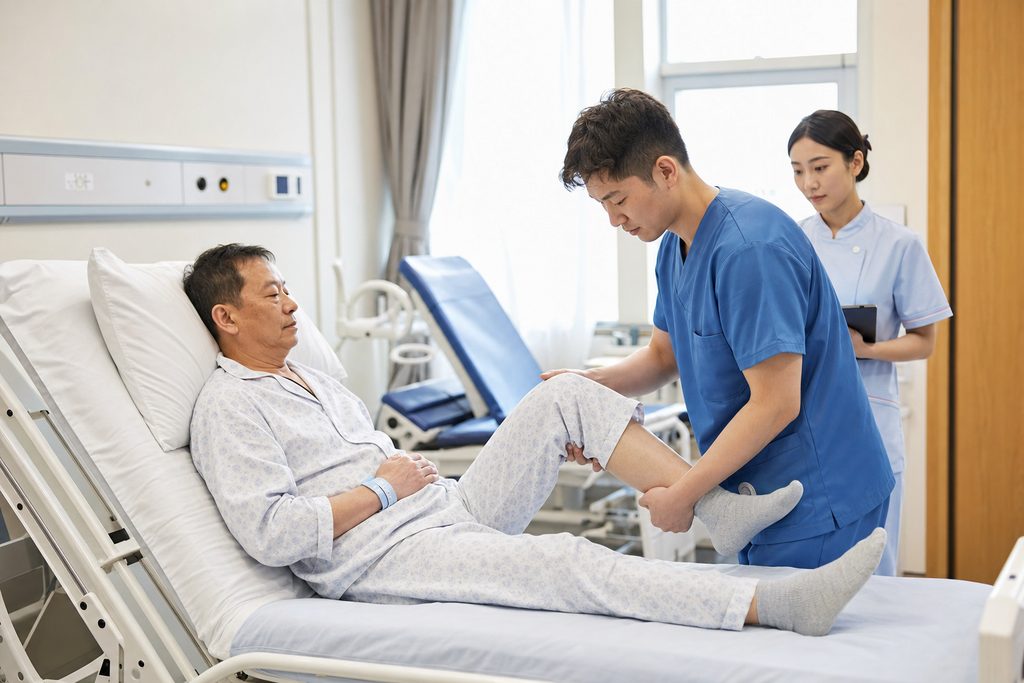
When 58-year-old Linda from Manchester booked her knee replacement, her surgeon back home told her to expect a physiotherapist to visit her bed on day two. Maybe day three if the ward was busy. She flew to Shanghai instead. A therapist had her standing — with support, wincing but vertical — six hours after she left the operating theatre. That gap isn’t a scheduling quirk. It’s a deliberate clinical philosophy that runs through China’s top-tier hospitals, and it’s one of the quiet reasons international patients keep making the trip.
Chinese Post-Op Physio Starts Earlier Than Western Hospitals: The Short Answer
In most Chinese tertiary hospitals with international departments, post-operative physiotherapy begins within 24 hours of surgery. For joint replacements, the first mobilization often happens the same day. This contrasts with protocols in many Western systems, where rehab typically starts 24 to 72 hours post-op — and sometimes longer if staffing is stretched.
The difference is not about technology. It’s about staffing ratios, ward design, and a clinical culture that treats early mobilization as non-negotiable rather than optional. A 2023 study published in the *Journal of Orthopaedic Surgery and Research* found that patients who began physiotherapy within 12 hours of total knee arthroplasty had significantly shorter hospital stays and better range-of-motion outcomes at six weeks compared to those who started at 48 hours. Chinese protocols lean hard into that evidence.
Caveat: earlier is not universally better. Patients with unstable cardiovascular status, uncontrolled post-op pain, or certain neurological conditions should not be mobilized aggressively. The model works because Chinese hospitals triage carefully — and because they staff to make it possible.
Who This Is Right For — and Who It Isn’t
Early physio protocols suit a specific patient profile. Knowing whether you fit it matters more than the flight details.
Typically good candidates:
– Elective orthopedic patients: knee and hip replacements, ACL reconstructions, spinal decompressions
– Cardiac surgery patients who are hemodynamically stable within 12 hours
– Patients with strong pre-op mobility and no major comorbidities
– Those willing to endure discomfort early for faster functional gains later
– Anyone whose home-country rehab wait times would delay recovery by weeks
Who should think twice:
– Patients with poorly controlled diabetes or hypertension that complicates wound healing
– Those on anticoagulants requiring careful bridging — early movement increases bleed risk if not managed precisely
– Anyone with post-operative delirium or cognitive impairment that makes following physio instructions unsafe
– Patients whose primary motivation is cost savings alone — early rehab is intensive, not passive, and demands active participation
The protocol is a tool, not a promise. If you’re not ready to work hard on day one, the timing advantage evaporates.
The Options, Compared
Rehab pathways differ dramatically by country and hospital tier. Here’s what patients actually face.
| Factor | China Top Public (International Dept) | China Private International | US Academic Medical Center | UK NHS Trust |
|---|---|---|---|---|
| First mobilization (joint replacement) | 6–24 hours | 12–24 hours | 24–48 hours | 24–72 hours |
| Daily physio sessions (inpatient) | 2–3 sessions | 1–2 sessions | 1–2 sessions | 1 session |
| Average acute stay (knee replacement) | 4–7 days | 3–5 days | 1–3 days (then home or SNF) | 2–4 days |
| Inpatient rehab package cost | $2,000–4,500 | $3,500–6,000 | $8,000–15,000 (hospital only) | Covered by NHS (non-residents pay £5,000+) |
| Outpatient physio (per session) | $30–80 | $60–120 | $150–350 | £50–100 (private) |
| Language barrier without companion | Significant | Minimal | None (for English speakers) | None (for English speakers) |
The Chinese public international department hits a sweet spot: early mobilization with high session frequency, at roughly one-third to one-fifth the cost of US inpatient rehab. The trade-off is language and the need to navigate a system that doesn’t run on English by default. Private international hospitals like United Family or Jiahui eliminate the language problem but charge more — still well below US rates.
For patients whose home system would discharge them to a skilled nursing facility for rehab, the Chinese model keeps them in the acute hospital longer but with aggressive daily therapy. That continuity — same surgical team, same floor, same therapists — reduces handoff errors and keeps the recovery curve steep.
Why Does China Start Rehab Sooner After Operation? The Staffing Reality
This is the section that answers the question Western patients actually mutter under their breath: *is it safe to move that early, or is this just cost-cutting to free up beds?*
The evidence favors safety — when done right. A 2022 meta-analysis in *The Lancet* covering 17 randomized trials found no increase in adverse events with mobilization within 24 hours of major abdominal surgery, provided patients were appropriately screened. The Chinese hospitals that international patients access — the top 5% ranked by Fudan University‘s hospital ratings — follow protocol-driven early mobilization, not ad-hoc rushing.
The real enabler is staffing density. A typical orthopedic ward in a Fudan-ranked hospital runs a nurse-to-patient ratio of roughly 1:4 to 1:6 during day shifts, with dedicated physiotherapists assigned to the surgical floor rather than rotating across the entire hospital. That means a therapist can see a post-op knee patient three times in one day without walking 20 minutes between buildings.
Contrast that with a UK NHS trust where one physio might cover two wards and prioritize the most acute cases first. The clinical will is there. The staffing math often isn’t.
Chinese hospitals also design wards with early mobilization in mind. Corridors have continuous handrails. Physio gyms sit on the same floor as patient rooms in newer international wings. These are not glamorous features — they’re infrastructure decisions that remove friction from the “should we get them up?” conversation.
None of this means Chinese rehab is universally superior. It means the system is configured to deliver what the evidence says works. For a patient flying in from abroad, that configuration matters more than the hospital’s reputation on paper.
Early Physio After Surgery in China Cost: What You’ll Actually Pay
Let’s talk numbers. The early physio after surgery in China cost breaks into three buckets: the inpatient rehab bundled with your surgical stay, the dedicated physio sessions you might add, and the outpatient continuation if you stay in-country.
Inpatient physio (bundled): For most surgical packages at international departments of public hospitals, daily physiotherapy is included in the room and nursing charges. You’re not billed per session. A total knee replacement package at a hospital like Peking Union Medical College Hospital‘s international department runs roughly $12,000–18,000 all-in for a 5–7 day stay, with 2–3 daily physio sessions baked into that figure. The equivalent surgery in the US would cost $35,000–50,000 for the hospital portion alone, with physio billed separately at $150–350 per session.
Dedicated one-on-one physio (add-on): If you want additional private sessions beyond the standard protocol, expect $40–80 per session at a public hospital international wing. Private international hospitals charge $80–150. These are cash prices — no insurance coding games, no surprise bills three months later.
Outpatient physio after discharge: If you stay in China for 2–4 weeks of outpatient rehab before flying home, budget $600–1,200 total for 3–5 sessions per week at a public hospital. Private clinics run $1,500–2,500 for the same period. Some patients book a post-op rehabilitation package China price that bundles accommodation near the hospital with daily physio — these run $3,000–6,000 for a two-week stay, depending on the city and hospital tier.
What’s not included: your flight, visa fees, accommodation if not bundled, medications, and any complication-related extended stay. Travel insurance that covers medical tourism is patchy — most standard policies exclude planned overseas surgery. You’ll want a specialist medical tourism policy or you’ll be self-paying for anything beyond the quoted package.
How Soon Can I Start Physiotherapy After Knee Replacement in Beijing? A Day-by-Day Timeline
This is the question patients type into Google at 2 a.m., and it deserves a concrete answer. Here’s what the first five days look like at a top Beijing orthopaedic hospital, based on actual protocols we see coordinated for international patients.
Day 0 (surgery day): You leave the operating theatre. Once the spinal or general anaesthetic clears — typically 4–6 hours — a physiotherapist arrives at your bedside. The goal is not walking. It’s sitting on the edge of the bed, standing with a walker for 30–60 seconds, and maybe taking two steps. Continuous passive motion (CPM) machines may start later that evening, gently flexing and extending the knee while you’re supine.
Day 1: Two physio sessions. Morning: transfer from bed to chair, stand with walker, walk 5–10 meters with assistance. Afternoon: repeat with more distance, add seated knee flexion exercises. The therapist checks for any signs of excessive swelling or wound drainage that would signal slowing down.
Day 2: Three sessions. Walking 20–50 meters per session. Stair practice begins if you’ll need stairs at your accommodation. The physio gym session introduces stationary cycling with zero resistance — just rocking the pedals back and forth to maintain range of motion.
Day 3–4: Sessions increase in duration, not frequency. You’re walking 100+ meters, practicing stairs independently, and doing resisted exercises. The surgeon checks the wound and clears you for discharge planning.
Day 5–7 (discharge window): Most knee replacement patients discharge between day 5 and 7, walking with a walker or cane, able to manage stairs, and with a written home exercise program. If you’re staying in China for outpatient rehab, you transition to daily or alternate-day physio sessions at the hospital’s outpatient department.
This timeline assumes no complications — no infection, no excessive pain blocking participation, no cardiac events. It’s aggressive but not reckless. The key variable is your pre-op fitness. Patients who did prehabilitation — strengthening exercises before surgery — move through this timeline faster and with less pain. If you arrive deconditioned, the same protocol will be modified.
Book early physiotherapy program China hospital coordination typically requires 2–4 weeks of lead time. The surgical slot and the physio team need to be aligned before you arrive. Last-minute bookings risk getting the surgery without the dedicated rehab staffing that makes the early protocol work.
Fast Track Post-Surgery Rehab China Medical Tourism: What the Packages Actually Include
The term “fast track” gets thrown around loosely. In the context of Chinese medical tourism, a genuine fast track post-surgery rehab China medical tourism program means four things are coordinated before you land:
1. Pre-admission physio assessment: Your records — imaging, surgical plan, pre-op mobility status — are reviewed by the rehab team before you arrive. They design your day 0–3 protocol in advance, not reactively.
2. Dedicated physio staffing: The package guarantees a named physiotherapist assigned to your case, not whoever is on rotation. This person sees you from day 0 through discharge and often into outpatient follow-up.
3. Rehab-friendly room placement: You’re placed in a room close to the physio gym, on a floor with continuous handrails, and near the nursing station for rapid response if you need help during independent mobilization.
4. Outpatient continuation plan: Before discharge, your outpatient physio schedule for the next 2–4 weeks is booked. No gaps. No “call this number and hope they have a slot.”
Packages that genuinely include all four elements cost more — typically $1,500–3,000 above the base surgical package — but the value is in the seamlessness. The alternative is arriving for surgery, getting excellent inpatient physio, then hitting a wall at discharge because no outpatient slots are available and you’re stuck in a hotel room losing the gains you just fought for.
Practical Considerations: Records, Visas, and the Language Barrier
Planning early physio in China isn’t just about picking a hospital. The logistics matter as much as the clinical protocol.
Medical records: Chinese hospitals require translated, notarized surgical summaries and pre-op imaging before confirming a rehab-only admission. If you’re having surgery and rehab in the same hospital, the records flow internally. If you’re transferring post-op from a hospital in another country — a less common but possible scenario — expect a 5–10 business day review process before acceptance.
Visa: Medical treatment in China requires an S2 visa, endorsed for medical purposes. Your hospital or coordinating service provides the invitation letter. Processing takes 1–3 weeks depending on your home country’s Chinese embassy workload. Family members accompanying you also apply for S2 visas. Do not apply for an M visa — that’s for commercial and trade activities, not medical treatment.
Payment: Public hospital international departments typically require a deposit of 50–100% of the estimated package cost before admission, paid via wire transfer or, increasingly, international credit card. Private international hospitals may accept direct insurance billing from a handful of global insurers. Most patients self-pay and seek reimbursement from their insurer afterward — get pre-authorization in writing before you travel.
Language: In a public hospital international department, surgeons and senior physiotherapists often speak functional medical English. Ward nurses and junior physio staff may not. The physio session where you’re standing for the first time, in pain, trying to understand instructions in a language you don’t speak — that’s when a bilingual medical companion shifts from nice-to-have to essential. Private international hospitals run in English by default, but you pay for that convenience.
Follow-up after returning home: The weak point of any medical tourism rehab program. Your Chinese physio team will provide a detailed written program and, in some hospitals, video recordings of your exercises. But once you’re home, continuity depends on finding a local physio willing to follow another team’s protocol. Some Chinese hospitals offer video follow-up consultations ($100–300) to check your progress and adjust exercises. Book these before you leave China.
Frequently Asked Questions
Is it safe to start physio the same day as major surgery?
For appropriately screened patients, yes. Early mobilization within 24 hours of surgery is supported by multiple randomized trials and is standard practice in enhanced recovery after surgery (ERAS) protocols used worldwide. Chinese hospitals do not mobilize patients who are hemodynamically unstable, in uncontrolled pain, or showing signs of surgical complications. The key word is “appropriately screened” — the protocol is safe because the screening is strict, not because the mobilization is cautious.
What if I can’t tolerate the pain of early physio?
Pain management is integral to the protocol, not an afterthought. Chinese hospitals typically use multimodal analgesia — a combination of nerve blocks, non-opioid medications, and opioids only when necessary — to keep pain at a level where mobilization is possible. If pain is genuinely blocking participation, the physio session is modified or postponed. The protocol adjusts to the patient; the patient is not forced to fit the protocol. That said, early physio after joint surgery is uncomfortable by design. The question is whether the pain is manageable, not whether it’s absent.
What happens if a complication arises during early rehab?
The physiotherapist stops the session and escalates to the surgical team immediately. Because you’re still in the acute hospital — not a separate rehab facility — the surgeon who operated on you is minutes away, not a phone call and an ambulance ride away. This co-location is one reason Chinese hospitals are comfortable with aggressive early mobilization. The safety net is physically close.
Can I arrange only the rehab in China, after surgery in my home country?
It’s possible but logistically harder than having surgery and rehab in the same Chinese hospital. You’ll need translated surgical records, clearance from the operating surgeon that you’re fit to travel, and a Chinese hospital willing to accept a post-op transfer. The review process takes longer, and some hospitals decline outright because
For more medical information and treatment options in China, visit chinamedservices.com (China Medical Services).
