Special Needs Child Care During Your China Treatment Trip: A Practical Family Guide
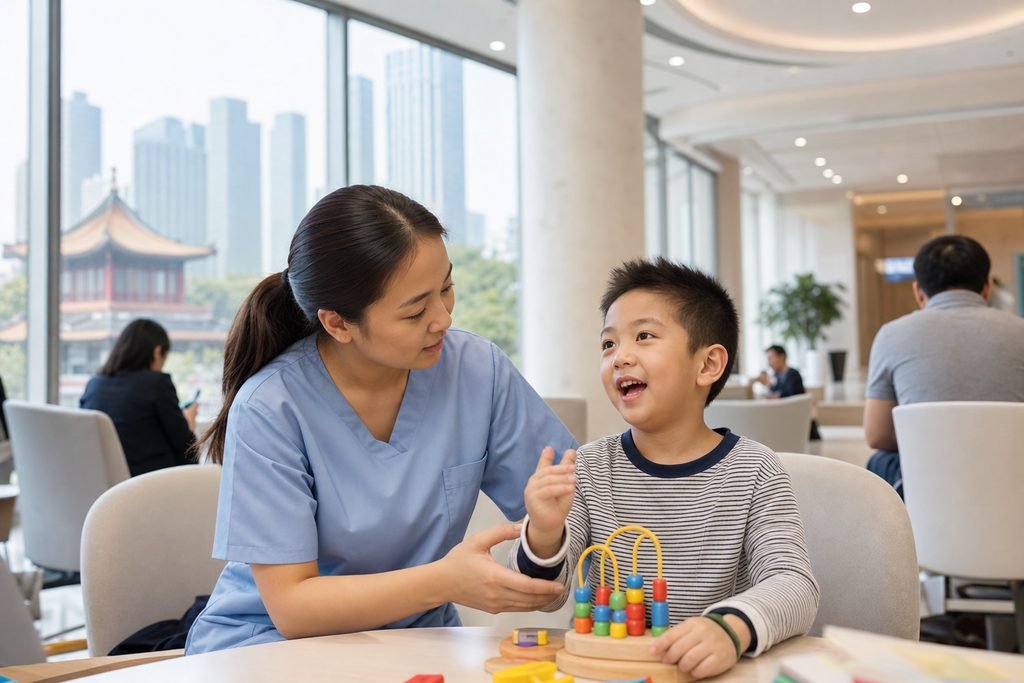
When Sarah, a 38-year-old mother from Manchester, was diagnosed with a condition requiring complex orthopedic surgery, her first thought wasn’t about the operation itself. It was about her 7-year-old son, Leo. Leo has severe autism and requires constant, predictable care. The idea of navigating a foreign hospital system while ensuring Leo didn’t experience a sensory-triggered crisis felt impossible. She’s not alone. For the approximately 1 in 36 children in the U.S. diagnosed with autism spectrum disorder, according to the CDC, and the millions more with other physical or developmental needs, a parent’s medical trip isn’t a solo journey. It’s a family operation with logistical challenges that standard medical tourism packages rarely address. Planning for special needs child care during medical treatment China is not a sidebar detail; it’s the central pillar that determines whether a trip is feasible at all.
Key Takeaways
- China’s top-tier private international hospitals in cities like Shanghai and Beijing have dedicated family liaison staff, but specialized respite care for disabled children is not a standard, bookable package—it requires bespoke, advance coordination.
- Service apartments and hotels near major medical clusters (e.g., Shanghai’s Xuhui District, Beijing’s Chaoyang District) offer more space and kitchen facilities than standard hotel rooms, which is often critical for a child’s routine.
- The single biggest barrier is not cost, but the pre-trip paperwork: translating a child’s care plan, behavioral triggers, and medical history into Chinese for a local caregiver is essential and often overlooked.
- You are not booking a babysitter. You are assembling a temporary, professional care protocol in a foreign country. This requires a different mindset and timeline than your own medical scheduling.
The Problem: Standard Medical Travel Leaves the Most Vulnerable Family Member Behind
Most international patient services are built around a single, able-bodied adult. The workflow is linear: airport pickup, hotel check-in, hospital consultation, procedure, recovery, departure. Throw a child with a sensory processing disorder, a physical disability, or a complex medical regimen into that sequence, and the model falls apart. A child who elopes, has a severe meltdown in a quiet hospital lobby, or requires a g-tube feeding at a specific time cannot simply be slotted into a generic itinerary.
The stress is quantifiable. A 2023 study in the Journal of Pediatric Nursing found that parents of children with developmental disabilities report clinically elevated stress levels during routine medical appointments, with that stress multiplying exponentially in unfamiliar environments. You aren’t just worried about your own surgery. You’re calculating whether the recovery ward will allow your child to stay, if the hotel room door has a chain lock they can’t reach, and who will watch them during the three hours you’re under anesthesia. The absence of a clear, trustworthy child care plan is the primary reason many families abandon the idea of traveling for a needed procedure.
Why China’s Hospital Ecosystem Can Support This—With the Right Strategy
The solution doesn’t exist off-the-shelf, but the raw materials do. China’s healthcare infrastructure in first-tier cities has evolved rapidly, and the private international hospital sector understands the expectations of expatriate and traveling families. You just need to know where to look and what to ask for.
Private International Hospitals: The First Line of Defense
Public Chinese hospitals, even the renowned ones in our top-ranked hospital database, operate at a scale that can be overwhelming. A single-day outpatient volume of 10,000 people is common. For a child with autism, this environment can be genuinely traumatic. Private international hospitals like United Family Healthcare (with locations in Beijing, Shanghai, and Guangzhou) and Jiahui Health in Shanghai are built on a different model. They have English-speaking staff, quieter environments, and, critically, family medicine departments accustomed to coordinating care for entire households.
You can directly ask their international patient center: “Can you provide a private waiting room for my child during my pre-op tests?” or “Is there a pediatric nurse available to sit with my disabled child during my procedure?” These are not unreasonable requests. They are logistical questions that a hospital with JCI accreditation is structured to handle. The cost for a private duty nurse for a child, where available, starts from approximately $25-35 per hour, but this must be arranged weeks in advance, not on the day of.
The Serviced Apartment Advantage Over Hotels
A standard hotel room is a cage for a restless, anxious child. When searching for hotels with special needs child care near Beijing hospitals, you should actually be searching for serviced apartments. Beijing’s Chaoyang district, home to the United Family Hospital main campus and near many embassies, is dense with properties like Ascott and Fraser Suites. These offer one- and two-bedroom layouts with full kitchens and washing machines. The ability to prepare a child’s safe foods, control the sensory environment, and maintain a bedtime routine in a separate living area is not a luxury—it’s a clinical necessity for maintaining stability. In Shanghai, properties in the former French Concession or near the Fenglin medical zone in Xuhui offer similar setups. A two-bedroom serviced apartment typically ranges from $120 to $250 per night, often comparable to a single room in a Western-style business hotel but with triple the functional space.
How to Arrange Special Needs Childcare in Shanghai Hospital Settings: A Step-by-Step Protocol
This is the hardest scenario and the one that requires the most rigorous planning. The caregiver you hire must have a sealed envelope with your child’s translated medical history, your insurance information, a consent-to-treat form signed by you, and the address of the nearest international-standard emergency department. The best-case setup is having your surgery at a hospital that also has a 24/7 pediatric emergency department, so your child can be brought to the same campus. Hospitals like Beijing United Family and Shanghai Jiahui have this capability.
Generally, no. Your international health insurance may cover your procedure, but the child care component is almost always an out-of-pocket expense treated as a travel or custodial cost, not a medical one. Some families have successfully used funds from a special needs trust or a flexible spending account, but this requires pre-approval from the plan administrator. Budget for it as a separate, non-reimbursable line item. The silver lining is that the overall cost of surgery in China, often 1/5 to 1/10 of the U.S. price, can free up the family budget to afford this high-quality, private child care that would be financially crushing at home.
You don’t find them on an app. You go through institutional channels. Start with the international patient center at your hospital. Simultaneously, contact the major private international clinics and ask for their social work or family services department. Expatriate-focused agencies that place nannies and governesses sometimes have candidates with special needs experience. The interview must be a working interview—a paid, two-hour session where you observe the caregiver interacting with your child while you’re present. Trust is built in that observation, not in a CV.
Your Next Step
Planning a medical trip with a special needs child is a project, not an afterthought. The core insight is that you need two parallel plans—one for your medical journey, one for your child’s daily stability—that intersect at critical points like the surgical day. Our team at China Medical Services specializes in building these complex, family-centered logistics. We don’t provide the child care ourselves, but we connect you with the hospital social workers, vetted agencies, and apartment providers who can, while we handle your medical coordination from initial consultation to discharge. You walk into the hospital knowing exactly where your child is and who is with them. That peace of mind is not a luxury. It’s a prerequisite for healing.
Frequently Asked Questions
Yes. The hospitals used for international patients are JCI-accredited and follow the same international safety standards as top hospitals in the US and Europe. Surgical teams perform high volumes of procedures — often more than their Western counterparts — which studies show leads to better outcomes.
Costs vary by procedure and hospital, but international patients typically save 40-80% compared to US prices — even when factoring in travel and accommodation. A consultation with our team will give you an exact, all-inclusive quote with no hidden fees.
Send us your existing medical reports to get started. We handle everything from hospital selection and appointment scheduling to visa assistance and post-operative recovery planning. Your medical records are reviewed by the specialist before you even book a flight.
For more medical information and treatment options in China, visit chinamedservices.com (China Medical Services).
