Take Wound Photos for Remote Assessment by China Team: A Complete Protocol
Take Wound Photos for Remote Assessment by China Team: The Short Answer
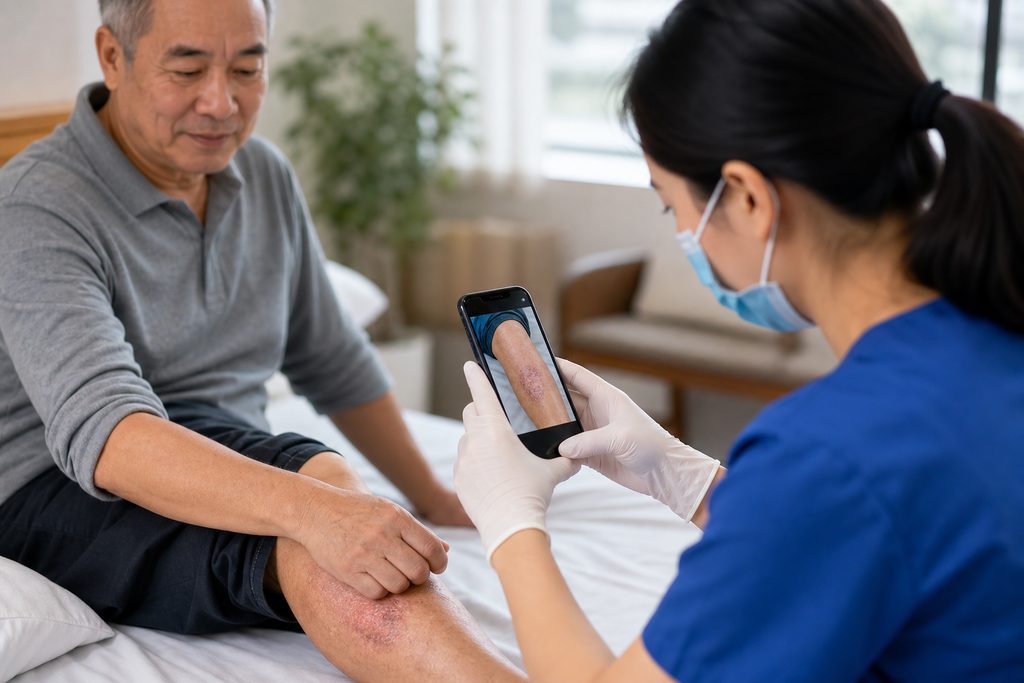
Yes, a China medical team can assess your wound via photo. Our organization coordinates this daily. The remote wound assessment service China cost starts from $100 for a written opinion and reaches $500–$800 for a live video consultation with a top-tier specialist. But a photograph is not a physical examination. The quality of the assessment depends entirely on the quality of the images you send. A blurry, poorly lit snapshot wastes your money and the specialist’s time. A methodical set of images, taken under the right conditions, allows a senior wound care surgeon at a hospital like Ruijin Hospital or West China Hospital to give you a substantive, actionable opinion. This article is your protocol for getting it right.
Who This Is Right For — and Who It Isn’t
A remote wound assessment fills a specific gap. It is not a replacement for emergency care. It works brilliantly for some situations and fails dangerously for others. Knowing which camp you fall into is the first decision you make.
Typically a good candidate:
- You have a chronic wound — a diabetic ulcer, a pressure injury, or a venous stasis ulcer — that has stalled despite months of conventional treatment back home.
- You are considering traveling to China for advanced wound closure but want a candid pre-travel opinion on whether your case is suitable before booking a flight.
- You have a post-surgical wound that is not healing cleanly and you want a second opinion on the current management plan.
- Your local doctor has recommended a procedure or graft that you want validated by a high-volume Chinese burn or reconstructive surgery unit.
Not a good candidate:
- You have an acute wound with active, pulsatile bleeding. Hang up and call emergency services. A photo assessment cannot stop a hemorrhage.
- You have signs of deep-space infection — fever, rigors, rapidly spreading redness with streaks. You need intravenous antibiotics and possibly surgical debridement within hours, not a written report in 48 hours.
- The wound involves exposed bone, tendon, or hardware with obvious purulence. This requires hands-on surgical exploration.
- You are seeking a prescription. A remote assessment from a Chinese team provides a medical opinion, not a prescription valid in your home country.
Being blunt about who should not use this service is what makes the rest of this guidance credible. We turn away cases every week because the patient needs a local emergency department, not a telemedicine consult.
The Options, Compared
Not all remote wound assessments are equal. The level of specialist you access, the depth of the report you receive, and the interactive component vary significantly. Here is what the remote wound assessment service China cost landscape looks like across our coordinated service tiers.
| Service Tier | What You Get | Specialist Level | Price (USD) | Turnaround |
|---|---|---|---|---|
| Written Second Opinion | Analysis of your photos + existing records; structured written report with findings and suggested direction | Attending surgeon, top-tier public hospital wound care or burn unit | $300–$500 | 3–5 business days |
| Video Consultation | Live discussion with the specialist; you can show the wound in real time, answer questions, and ask your own | Senior attending or associate chief physician, university-affiliated hospital | $500–$800 | Scheduled within 5–7 business days |
| Multidisciplinary Team (MDT) Review | Joint evaluation by wound surgeon + endocrinologist or vascular surgeon + rehabilitation specialist; consolidated report | Three or more specialists from a single institution | $1,500–$2,000 | 7–10 business days |
Which column suits you depends on complexity. A straightforward stalled diabetic foot ulcer with good vascular supply usually needs only the written second opinion. A complex post-traumatic wound with exposed structures and multiple failed grafts benefits from the MDT review. The video consultation is ideal when the specialist needs to ask you dynamic questions — “Does it hurt more when you elevate it or when you stand?” — that a static photo set cannot answer.
One mechanism worth understanding upfront: any fee you pay for a remote consultation is credited in full toward our on-the-ground coordination service if you later travel to China for treatment within 90 days. The credit applies to the coordination fee only, never to hospital treatment charges. It means the remote assessment is not a sunk cost if you decide to move forward.
How to Take Wound Photos for Chinese Doctor Consultation: The Protocol
You do not need a macro lens or a ring flash. A smartphone released in the last five years is sufficient. What matters more is cleanliness. Wipe your lens with a microfiber cloth. A greasy lens smeared with fingerprint oil produces a soft-focus glow that obscures wound edge detail — exactly what the specialist needs to see most sharply.
Natural daylight through a window, indirect, no direct sun casting shadows across the wound bed. If daylight is not available, use two lamps placed at 45-degree angles to the wound, one on each side. The goal is even, shadowless illumination. A single overhead ceiling light creates a bright spot in the center and dark troughs at the wound edges. The specialist will reject those images and ask for a reshoot, costing you days.
Do not send one photo. Do not send twenty. Send exactly these four, labeled clearly.
1. The Orientation Shot. Stand back far enough that the specialist can identify the anatomical location. Is this the lateral malleolus? The plantar surface of the first metatarsal head? The sacrum? Include a recognizable joint or landmark in the frame. If the wound is on the foot, show the whole foot. If on the lower leg, include the knee or ankle. This context matters for understanding pressure points and vascular territories.
2. The Close-Up, Perpendicular. Position the camera lens parallel to the wound surface, not at an angle. Fill about 60% of the frame with the wound and immediate periwound skin. The specialist needs to see the wound edges, the base, any undermining, and the condition of the surrounding tissue. This is the money shot. Take it twice to ensure sharp focus.
3. The Ruler Shot. Place a clean disposable ruler or a standardized wound measurement sticker next to the wound, in the same plane. Take the perpendicular close-up again with the ruler visible. Do not hold the ruler at an angle or press it into the wound. The specialist uses this to measure length, width, and to calibrate their eye for depth estimation. Without a scale reference, size estimates are guesses.
4. The Periwound Skin Detail. Zoom in slightly on the skin immediately surrounding the wound — the 2–3 centimeters of tissue at the edges. Is it macerated? Erythematous? Indurated? This skin tells the story of drainage management, infection, and tissue viability. A wound that looks clean in the close-up may be surrounded by angry, inflamed skin that changes the entire assessment.
Timing and Consistency
Take the photos immediately after a dressing change, before applying any new topical agent. Creams, ointments, and silver dressings alter the wound’s appearance. If this is a follow-up assessment, replicate the same lighting and positioning from your previous photo set. Serial comparison is how a specialist judges whether a wound is truly healing or merely looking different under different photographic conditions.
What the Remote Wound Assessment Service China Cost Includes — and Excludes
The fee you pay covers the specialist’s time reviewing your images and records, the formulation of a written or verbal opinion, and our team’s coordination of the entire process — translation of your medical history into clinical Chinese, transmission of the specialist’s report back to you in English, and scheduling of any live video component. It does not include a prescription, a guaranteed admission to a Chinese hospital, or a treatment plan that overrides your local doctor’s management. The report is a consultative opinion, not a directive.
The online wound care consultation China price varies by the seniority of the specialist and whether you need a single opinion or a multidisciplinary review. Specialist time in China’s public hospitals is a scarce resource. A chief physician at a top-tier burn unit may see 80–100 outpatients in a morning session. The fee you pay reserves a dedicated, unhurried block of their attention — typically 30 to 45 minutes for a video consultation, far more than an in-person clinic visit allows.
If you later travel to China for treatment, the coordination fee we charge for on-ground support — booking appointments, providing a bilingual medical companion, arranging hospital registration — is reduced by the full amount you paid for the remote assessment. This credit applies once, within 90 days, to the coordination service only. Hospital charges for surgery, dressings, and inpatient care are separate and paid directly to the hospital.
Practical Considerations: Records, Language, and Follow-Up
Before you send wound photos to a Chinese specialist for evaluation, gather your supporting documents. The specialist will want to see your relevant bloodwork — HbA1c if diabetic, albumin and prealbumin if nutrition is a concern, any recent wound cultures with sensitivity results, and vascular studies if available. An ankle-brachial index or a duplex ultrasound report transforms a wound assessment from a surface-level opinion to a physiologically grounded one.
Language is our problem, not yours. All records you send are translated into clinical Chinese by our team before the specialist reviews them. The specialist’s report comes back to you in English. During a video consultation, a bilingual medical interpreter is on the line — not a general translator, but someone who understands wound care terminology in both languages. You speak directly to the specialist. The interpreter bridges the gap without editorializing.
Visa is a separate logistical thread. If the remote assessment leads to a decision to travel for treatment, the applicable visa category is the S2 short-stay private affairs visa, with the hospital’s invitation letter and treatment confirmation as supporting documents. We guide you through the documentation requirements, but the visa decision rests with the Chinese embassy or consulate in your country. No organization can guarantee visa approval.
Follow-up after you return home is an under-discussed topic. Chinese wound care teams are often willing to continue remote monitoring for a period after discharge, especially for complex closures that require staged dressing changes. Clarify this arrangement before you leave China. A weekly photo check-in with the surgeon who closed your wound can catch a developing problem weeks before your local follow-up appointment.
Frequently Asked Questions
Can a China medical team assess my wound via photo if I haven’t had any prior imaging or bloodwork?
They can, but the assessment will be limited to what is visible on the surface. A wound is not just a hole in the skin — it is a manifestation of underlying physiology. Without knowing your vascular status, your nutritional reserves, and your glycemic control, the specialist can describe the wound’s appearance and suggest general principles of care. They cannot tell you why it is not healing or predict how it will respond to a specific intervention. Send whatever lab and imaging results you have, even if they are months old. Something is better than nothing. If you have no records at all, mention this upfront so the specialist can set expectations accordingly.
What if the specialist says I need to come to China for treatment — but I cannot afford to travel?
The report you receive is still valuable. It contains a diagnosis, a proposed treatment direction, and often specific recommendations — the type of debridement needed, a suggested dressing regimen, a timeline for reassessment. You can take this report to your local wound care team and ask: “Can we implement this plan here?” Sometimes the answer is yes, partially. A Chinese burn surgeon might recommend a particular enzymatic debridement agent that is available internationally. Or they might suggest a negative-pressure wound therapy protocol that your local team can replicate. The remote assessment is not an all-or-nothing proposition that requires travel. It is intelligence you can use wherever you are treated.
How do I send wound pictures to a Chinese specialist for evaluation securely?
We use encrypted file transfer for all patient materials. After you initiate a consultation request, you receive a secure upload link. You do not email photos as unencrypted attachments. You do not send them via WhatsApp or WeChat for a clinical consultation. The images and records are stored on HIPAA-equivalent compliant servers and are accessible only to the coordinating team and the reviewing specialist. After the consultation is complete and the report is delivered, you can request deletion of your files. This is a standard part of our data handling protocol, not an afterthought.
Is an online wound care consultation from China recognized by my insurance or my local doctor?
Insurance recognition depends entirely on your policy. Some international health insurance plans reimburse for out-of-network second opinions; many do not. We provide a detailed invoice with service codes that you can submit to your insurer, but we cannot guarantee reimbursement. As for your local doctor: reactions vary. Some are grateful for a specialist opinion from a high-volume Chinese unit. Others are territorial. We recommend framing it as a second opinion you sought for your own peace of mind, not as a challenge to their management. The report is yours. You decide who sees it.
Your Next Step
A remote wound assessment from a Chinese specialist team is a low-risk, relatively low-cost way to answer a single question: is it worth getting on a plane? For chronic wounds that have defied local treatment, the answer is often yes — China’s top burn and wound units manage case volumes that are simply not seen in most Western centers, and their clinical pattern recognition reflects that volume. Our team at China Medical Services handles the logistics: hospital matching, records translation, consultation scheduling, and the secure transfer of your images. We do not provide medical advice, and we are not a healthcare provider. We are the bridge between you and the specialist who can give you a straight answer. If you are ready to learn whether your wound warrants the trip, start with a photo.
For more medical information and treatment options in China, visit chinamedservices.com (China Medical Services).
