Home Treatment Failed? How to Access Urgent Medical Treatment in China
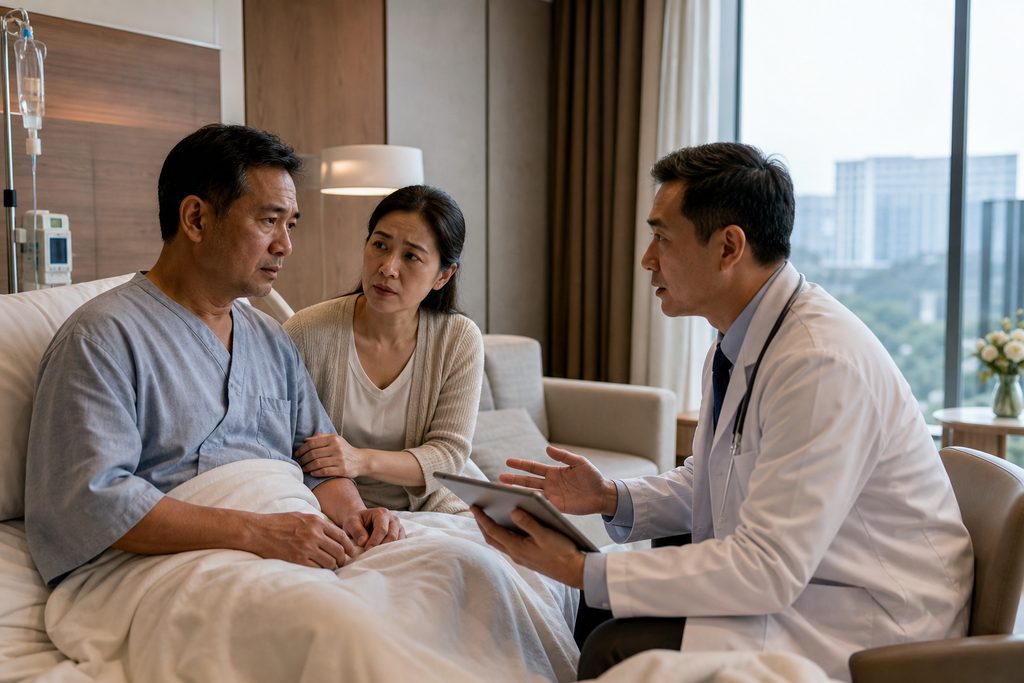
When 47-year-old Sarah finished her third round of treatment in Manchester, her oncologist sat her down with a look she’d learned to dread. The protocol hadn’t worked. The next option at home carried a 14-week wait just for the initial consultation. Sarah had resources, a supportive family, and a refusal to accept a timeline that felt like surrender. Within ten days, she was sitting in a consultation room at a Shanghai hospital ranked among China’s top five for her condition, reviewing a treatment plan that her local team later called “aggressive but entirely rational.” She isn’t an outlier. For patients facing a dead-end at home, urgent medical treatment China after failed home treatment has become a structured, navigable pathway—not a desperate leap into the unknown.
The Short Answer
Yes, you can access urgent medical treatment in China after home treatment fails. The pathway exists, and it moves faster than most patients expect. A written second opinion from a top-tier Chinese specialist typically takes 5–7 business days. An in-person consultation can often be coordinated within two weeks. But—and this matters—this is not about walking into a public hospital and queuing. The system works through international medical departments and VIP channels that bypass the standard outpatient bottleneck. Without that coordination, a foreign patient arriving alone at a Chinese public hospital will face the same crush as 20,000 local patients that day.
Who This Is Right For — and Who It Isn’t
We see patients at a specific inflection point. The home system has offered its best shot, and it wasn’t enough. They’re not looking for a miracle. They’re looking for a legitimate alternative that their own doctors haven’t exhausted.
A good candidate typically fits this profile:
- Has a confirmed diagnosis and complete medical records, including imaging and pathology reports
- Has undergone at least one line of standard treatment that did not achieve the expected result
- Is medically stable enough for international travel—this is a hard requirement, not a suggestion
- Understands that a second opinion may confirm the home team’s approach, and that’s also a valuable outcome
- Has realistic expectations about what a different medical system can and cannot offer
This pathway is not right for someone who:
- Is in acute crisis requiring immediate ICU-level intervention
- Cannot travel due to pain, respiratory instability, or risk of thrombosis on a long-haul flight
- Has not yet completed the standard diagnostic workup—Chinese specialists need the same data any competent oncologist or surgeon requires
- Is seeking treatments not supported by published evidence, expecting access to therapies that exist only in rumor
Being honest about who should not get on a plane is what protects patients. We’ve advised people to delay travel. Sometimes the right move is stabilizing first, then reassessing.
The Options, Compared
When home treatment fails, patients face a fork with more branches than they realize. The table below compares the genuine alternatives—not hypotheticals, but what’s actually available to an international patient right now.
| Option | Time to Specialist Opinion | Estimated Cost (USD) | Key Limitation |
|---|---|---|---|
| Wait for home-country next-line therapy | 8–16 weeks (public system) | Varies by insurance | Disease may progress during wait |
| Private second opinion at home | 2–4 weeks | $800–3,000 | Same therapeutic options, same drug approvals |
| Written second opinion from Chinese top-tier hospital | 5–7 business days | $300–500 | Non-binding; requires full records in English |
| Video consultation with Chinese specialist | 7–10 business days | $500–800 | Cannot prescribe; opinion only |
| In-person consultation + treatment coordination in China | 2–3 weeks | $800–1,200 (coordination only) | Requires travel; hospital treatment costs separate |
The written second opinion is the most underused tool in this table. It costs less than most people spend on flights to test the waters, and it gives both the patient and the Chinese specialist a structured starting point. If the opinion says “we can offer something different,” the investment in travel becomes justified. If it says “your home team’s plan is sound,” you’ve saved yourself a trip and gained peace of mind.
What “Failed Home Treatment” Actually Means to a Chinese Specialist
This is the section that can’t be copy-pasted into any other article. Because the phrase “failed home treatment” triggers a specific clinical question in the Chinese hospital system that differs from what a Western patient might assume.
In major Chinese academic hospitals—the ones on the Fudan ranking that we work with—oncologists and surgeons think in terms of treatment lines differently. A patient who has “failed” first-line therapy at home may still be eligible for protocols that aren’t yet standard in their home country. Not because the science is secret. Because drug approval timelines and clinical practice guidelines diverge.
Take a real example without naming the patient. A woman with platinum-resistant ovarian cancer had exhausted options in Canada. Her written second opinion from a gynecologic oncology team in Beijing identified a combination regimen that was in Phase III trials in North America but already in routine use at that Chinese center based on Asian clinical data. Her home oncologist reviewed the protocol, agreed it was reasonable, and supported her travel. She received six cycles. That was two years ago.
Another case: a man with recurrent glioblastoma whose German team had nothing left to offer. The Chinese neurosurgery department proposed awake craniotomy with intraoperative MRI guidance—a technique available at only a handful of centers worldwide, but performed routinely at that particular hospital. He flew to Shanghai. The surgery achieved near-total resection. He bought time.
These are not guarantees. They are pattern recognition. When a patient arrives with complete records and a clear treatment history, a Chinese specialist can rapidly identify whether their institution has something materially different to offer. Sometimes the answer is no. That honesty is part of what makes the system credible.
What It Costs
Let’s put numbers on the table. The figures below reflect the range we’ve seen across our 340+ partner hospitals. They vary by institution tier, specialist seniority, and case complexity. These are coordination and professional fees—hospital treatment charges are separate and billed directly by the hospital.
- Written second opinion from a top-tier specialist: $300–500. This covers the specialist’s time reviewing your records and producing a structured written analysis. It is for reference only, not a prescription.
- Video consultation with a top specialist: $500–800. A live discussion where you can ask questions directly. Same limitation: opinion only.
- Multidisciplinary team (MDT) video consultation: $1,500–2,000. Multiple specialists review your case together. Useful when your condition crosses specialty boundaries.
- In-person specialist consultation coordination: $800–1,200. We handle the appointment, the interpreter, and the logistics so you walk into the consultation room prepared.
- VIP end-to-end coordination: $5,000–8,000. Comprehensive logistics for patients who want everything managed—airport pickup, accommodation, all appointments, bilingual companion throughout.
Here’s the mechanism that makes the remote-first approach financially rational. Any fee you pay for a written second opinion or video consultation is credited in full toward on-the-ground coordination if you proceed to treatment in China within 90 days. It’s a one-time credit applied to our coordination fee—never to hospital treatment charges. That means you can test the waters remotely for what amounts to a fully refundable deposit against future coordination.
What about the actual treatment costs? A cardiac bypass that runs $120,000+ in the United States typically costs $12,000–20,000 at a top Chinese public hospital’s international department. A course of radiation therapy that bills at $50,000+ abroad might run $8,000–15,000. These are ballpark figures. The hospital provides a formal quotation after reviewing your case—never before.
Practical Considerations: Records, Visas, and What Happens After
That happens. Not rarely. When it does, you’ve spent a few hundred dollars and gained something valuable: certainty. You know you didn’t leave a viable option unexplored. The peace of mind from a confirming second opinion is not a failed outcome. It’s closure that lets you move forward without the nagging “what if.”
The hospitals we work with are drawn from the Fudan University Hospital Ranking, which evaluates China’s 35,000+ hospitals and identifies the top 100. We cover the top 5% of that universe. The ranking methodology evaluates clinical reputation and research output across 45 specialties. Hospitals like Peking Union Medical College Hospital, Fuwai Hospital (which performs over 14,000 cardiac surgeries annually—the highest volume globally), and Zhongshan Hospital Fudan University are not marketing constructs. They are institutions where complex cases concentrate. You can browse the full list by specialty on our departments page.
The cost of alternative therapy in a Shanghai hospital varies widely by institution type. At a public hospital’s international department, a complex surgical procedure might range from $15,000–30,000. At a private international hospital, the same procedure could run $40,000–80,000. The public option is still a fraction of US prices. The private option offers Western-style amenities and direct insurance billing. Neither is “cheap” in absolute terms, but both represent significant savings relative to cash-pay rates in the US or UK. A formal quotation comes only after the hospital reviews your specific case.
You can, but “last minute” means something specific. We’ve coordinated in-person consultations within 10 days for patients with complete records and a clear clinical question. But you cannot book a surgery date from abroad without the specialist first examining you in person. That is a universal rule in Chinese public hospitals. The sequence is: remote evaluation → in-person consultation → treatment plan → scheduled procedure. Compressing that timeline requires experienced coordination and a patient who arrives prepared.
Your Next Step
When home treatment fails, the clock feels like an enemy. But the worst move is rushing toward the wrong solution. The best move is a structured, low-cost first step that either opens a door or closes one definitively. That step is a written second opinion. It costs $300–500. It takes about a week. And it gives you something you don’t have right now: a clear answer from a top-tier Chinese specialist about whether there’s a reason to get on a plane.
We are not a hospital. We do not diagnose, treat, or make clinical recommendations. What we do is connect you with the right specialist at the right institution and handle every logistical barrier between you and that consultation. Our team has coordinated care across 340+ top-ranked hospitals in 37 Chinese cities. We know which departments have capacity, which specialists handle international cases, and how to move things forward without false promises.
If you’re ready to find out whether China has something different to offer, start with a free consultation. Tell us your diagnosis, what you’ve tried, and what you’re hoping for. We’ll tell you honestly whether this pathway makes sense for your situation. No pressure. No sales pitch. Just a clear-eyed assessment from people who do this every day. Request your free consultation here.
Frequently Asked Questions
Yes. The hospitals used for international patients are JCI-accredited and follow the same international safety standards as top hospitals in the US and Europe. Surgical teams perform high volumes of procedures — often more than their Western counterparts — which studies show leads to better outcomes.
Costs vary by procedure and hospital, but international patients typically save 40-80% compared to US prices — even when factoring in travel and accommodation. A consultation with our team will give you an exact, all-inclusive quote with no hidden fees.
Send us your existing medical reports to get started. We handle everything from hospital selection and appointment scheduling to visa assistance and post-operative recovery planning. Your medical records are reviewed by the specialist before you even book a flight.
For more medical information and treatment options in China, visit chinamedservices.com (China Medical Services).
