Health Screening in China: Executive Check-Up Costs & Full Body Scans for Expats
Health Screening in China: The Short Answer
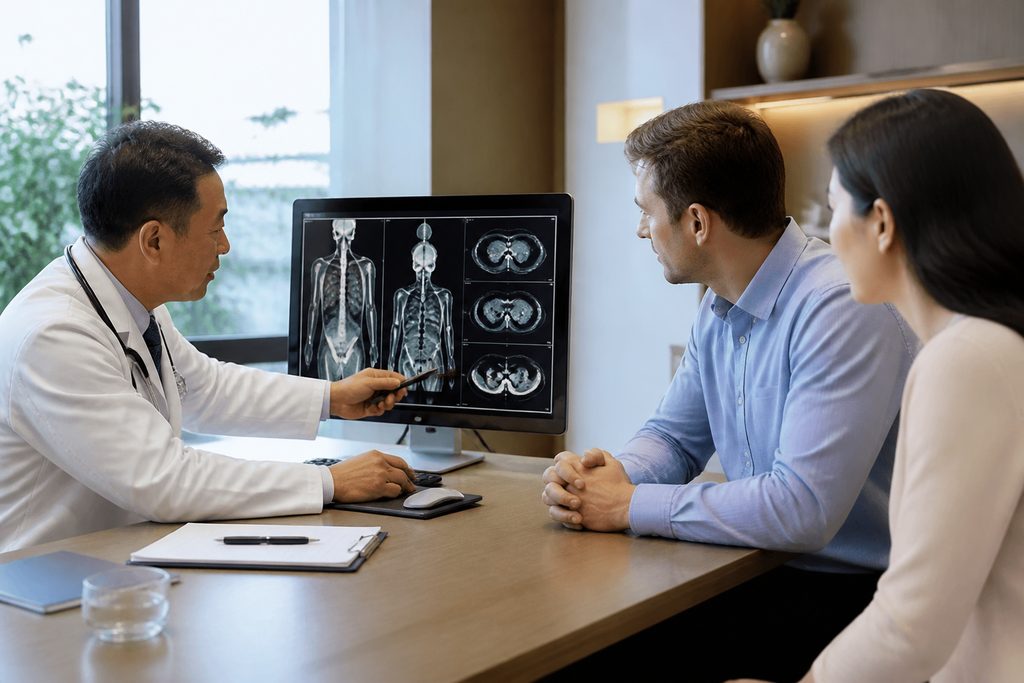
A comprehensive executive health screening in China costs between $300 and $3,000+. That’s the headline number most people search for. The range is wide because it spans basic wellness panels at public hospital international departments to full-day VIP executive physicals with cardiac CT, whole-body MRI, and same-day specialist consultations. You can walk into a clinic in Shanghai, Beijing, or Guangzhou and complete a battery of tests that would cost $5,000 to $15,000 in the US or Europe. The imaging equipment is new. The throughput is staggering. But the experience is different from what you may expect at home. Knowing which package fits your risk profile, and which hospital can deliver results you can actually take back to your doctor abroad, makes the difference between a useful investment and an expensive stack of paper.
Who This Is Right For — and Who It Isn’t
Executive screening in China works best for a specific profile. You’re a busy professional who wants a concentrated health audit in a single morning. You don’t have chronic symptoms that need a diagnostic workup. You want to rule things out, not chase something down.
Good candidates typically include:
- Expats living in Asia who want an annual physical more thorough than what their home country offers at the same price point.
- International travelers combining a medical stop with a business trip to Shanghai, Beijing, or Shenzhen.
- People with a family history of cancer or heart disease who want advanced imaging (low-dose lung CT, coronary calcium scoring, full abdominal ultrasound) without a 6-month wait.
- Anyone who values efficiency — these programs are built for speed. Results often come back the same day.
This is probably not right for you if:
- You have an active symptom — chest pain, unexplained weight loss, a lump. Screening is for asymptomatic people. You need a diagnostic consultation, not a package.
- You need your results to be immediately actionable within a specific national health system. A Chinese hospital’s lab reference ranges and report format may not be accepted by your GP back home without translation and reinterpretation.
- You cannot handle a high-volume hospital environment. Even VIP wings sit inside massive public institutions. The lobby may feel overwhelming if you’re used to boutique private clinics.
- You have severe claustrophobia or cannot lie still for 45 minutes in an MRI. Chinese facilities have modern scanners, but open-bore options are not universal.
The Options, Compared
Not all executive check-ups are created equal. The Chinese market segments into three clear tiers. The table below shows what you get at each level, with realistic executive health screening China price ranges.
| Feature | Basic Wellness Panel | Standard Executive | VIP Comprehensive |
|---|---|---|---|
| Typical Price (USD) | $300 – $600 | $800 – $1,500 | $2,000 – $3,500+ |
| Duration | 2 – 3 hours | 4 – 5 hours | Full day, sometimes split across 2 days |
| Blood Work | CBC, metabolic panel, lipids, liver/kidney function | Above + tumor markers (CEA, AFP, CA19-9, PSA for men, CA-125 for women), thyroid panel, HbA1c | Above + expanded tumor marker panel, vitamin levels, heavy metal screen, genetic cancer risk (optional add-on) |
| Imaging | Chest X-ray, abdominal ultrasound | Low-dose chest CT, full abdominal ultrasound, thyroid ultrasound, carotid Doppler | Whole-body MRI (or brain + spine + abdomen MRI), coronary CT angiography (calcium scoring), DEXA bone density, endoscopy (upper GI + colonoscopy under sedation) |
| Cardiac | Resting ECG | ECG + stress test (treadmill) | ECG + stress echo + coronary CTA |
| Gender-Specific | None | Women: breast ultrasound, Pap smear. Men: prostate ultrasound. | Women: mammography or breast MRI, pelvic MRI. Men: prostate MRI. |
| Consultations | 1 general physician summary (15 min) | 1 internal medicine specialist summary (30 min) | Cardiology, gastroenterology, gynecology/urology, and nutritionist — same-day consults with report synthesis |
| Report Delivery | 3 – 5 working days | Same day or next day | Same day, with English translation and digital DICOM files on USB |
| Best For | Young, healthy individuals; baseline check | 40+ with family history; the most common expat choice | High-risk profile; those who want the most data in one visit |
The Standard Executive tier hits the sweet spot for most international patients. You get the high-value imaging — low-dose CT instead of X-ray, tumor markers, a stress test — without the cost and time of a full-body MRI. The VIP tier makes sense if you’re over 50 with a strong family history, or if you simply want the psychological certainty of a clean whole-body scan. One thing to note: endoscopy under sedation is routine in China and remarkably efficient. You can have both upper GI and colonoscopy in a single session. In many Western countries, that same procedure pair requires two separate appointments months apart.
What Does a Full Body Scan Include in Beijing? A Walk-Through of a Typical VIP Check-Up
Let’s be concrete. Here’s what actually happens when you book a VIP comprehensive package at a top-tier Beijing hospital’s international medical center — say, Peking Union Medical College Hospital (PUMCH) or China-Japan Friendship Hospital. This is not a theoretical list. This is the flow our team coordinates for clients.
7:30 AM — Arrival and Registration. You’re met at the international wing entrance. A bilingual coordinator handles registration with your passport. You change into a provided gown. A locker stores your belongings.
7:45 AM — Blood Draw. 8 to 12 vials drawn. This covers everything from complete blood count to tumor markers to infectious disease screening. You’ve been fasting since 10 PM the night before. After the draw, you’re handed a light breakfast — congee, eggs, fruit — in a private lounge. No waiting in a public cafeteria.
8:15 AM — Imaging Block Begins. You move through stations. Low-dose chest CT takes 5 minutes. Full abdominal ultrasound — liver, gallbladder, pancreas, spleen, kidneys — takes 20 minutes. Thyroid and carotid ultrasound add another 15. The sonographer is silent and fast. A radiologist reviews images in real time. If anything looks unclear, they repeat the scan immediately. No callback appointment two weeks later.
9:30 AM — Cardiac Suite. Resting ECG first. Then a stress echocardiogram on a treadmill with a cardiologist present. If your package includes coronary CT angiography, you’ll get a beta-blocker to slow your heart rate, then a quick contrast-enhanced scan. Coronary calcium scoring is computed on the spot.
11:00 AM — Endoscopy (if selected). You change into a procedure gown. IV sedation is administered by an anesthesiologist. Upper GI endoscopy and colonoscopy are performed back-to-back by a gastroenterologist. You’re in recovery by 11:45 AM. A preliminary verbal summary is given before you leave. Biopsy results, if any polyps were removed, come back in 3-5 days.
1:00 PM — Specialist Consultations. You meet with an internal medicine specialist who has already reviewed your morning results. Cardiology follows. If you’re a woman, gynecology with breast imaging review. If a man, urology with prostate assessment. Each consultation is 20-30 minutes. They’re not rushed. They’re sequential.
3:00 PM — Final Report Synthesis. The lead physician walks you through every finding. You receive a bound report in English, plus a USB drive with all DICOM imaging files. You can hand this directly to your doctor at home.
Total time: roughly 7-8 hours. Total cost: $2,500-$3,200 depending on whether endoscopy and coronary CTA are included. The same protocol at a private London or New York clinic would run $8,000-$15,000 and take 3-5 separate visits spread over weeks.
What It Costs: Breaking Down Full Body Check Up Packages in Shanghai
Shanghai has the densest concentration of international-friendly screening centers in China. Full body check up packages Shanghai cost varies by hospital tier, not just by test list. Here’s the real breakdown.
At a public hospital international department — Huashan Hospital International Medical Center, Ruijin Hospital VIP Wing, or Zhongshan Hospital International — a Standard Executive package runs $800 to $1,200. This includes low-dose chest CT, full abdominal ultrasound, tumor markers, stress ECG, and same-day specialist summary. English report included. Payment is by cash, UnionPay, or international credit card. They do not direct-bill foreign insurance. You pay upfront and claim reimbursement.
At a private international hospital — Jiahui Health, United Family Shanghai, or ParkwayHealth — the same package costs $1,500 to $2,500. The tests are identical. The equipment is often the same brand (Siemens, GE, Philips). What you’re paying for: a hotel-like environment, guaranteed English fluency at every touchpoint, direct insurance billing with major international carriers, and a less hurried pace. For someone with anxiety about navigating a Chinese hospital, even a VIP one, the premium is worth it.
The VIP Comprehensive tier at public international departments hits $2,500-$3,500. At private hospitals, $3,500-$5,000+. The price drivers are whole-body MRI (the machine time alone is expensive), endoscopy with anesthesia, and coronary CTA. One hidden cost: if a scan finds something suspicious, the screening package does not cover the follow-up diagnostic workup or treatment. That’s billed separately. A screening is a snapshot, not a treatment plan.
Is Health Screening in China Reliable for Foreigners? The Honest Answer
The short answer: yes, at the right hospitals. The longer answer requires separating the equipment from the interpretation.
China’s top-tier hospitals use the same imaging hardware you’d find at Mayo Clinic or Charité Berlin. Siemens, GE, Philips. The machines are often newer because Chinese hospitals refresh equipment frequently. The technicians run these machines all day, every day. A CT technologist at a busy Shanghai hospital may scan 80-100 patients daily. That volume breeds technical proficiency. The images are high quality. You can take the DICOM files anywhere in the world and a radiologist will read them without issue.
The variability is in report interpretation and communication. Chinese radiologists write concise reports. They may not elaborate on incidental findings the way a Western radiologist would. A 3mm lung nodule might be noted as “benign appearance, suggest follow-up in 12 months” without the lengthy differential diagnosis paragraph you’d get in the US. That’s not inaccuracy. That’s stylistic difference. But it can feel incomplete.
Lab reference ranges also differ. Chinese labs use local population norms. Your “normal” cholesterol or PSA level might sit at a different cutoff than your home country’s guidelines. A finding flagged as borderline in China might be firmly normal in Europe, or vice versa. This is why we always recommend having a physician in your home country review the results, not just relying on the Chinese report in isolation.
For expats specifically, the private international hospitals — United Family, Jiahui, Raffles — bridge this gap. Their reports follow Western formatting conventions. Their physicians are often trained abroad. They understand what a GP in London or Sydney needs to see. The trade-off is higher cost, as noted above.
So, is health screening in China reliable for foreigners? The data is reliable. The interpretation requires context. Choose a hospital that provides English reports with detailed findings, not just a checkbox summary. Ask for raw DICOM imaging files. Take everything back to your regular doctor. Used this way, a Chinese executive screening is a powerful, cost-effective tool. Used in isolation without follow-up, it’s a missed opportunity.
How to Book a Comprehensive Health Check-Up in China for Expats
The booking process is straightforward in theory, but the friction points are real. Here’s the practical path.
Step 1: Choose your hospital and package. Browse the international medical center websites for major hospitals in your target city. Most have English-language pages listing their executive screening packages with test items and prices. If you’re unsure which tier fits your age and risk profile, a brief pre-consultation with a coordinator can save you from overbuying or underbuying.
Step 2: Contact the international department directly — or use a coordinator. Public hospital international departments accept direct bookings by phone or email. The challenge is response time. Some reply within 24 hours. Others take a week. If you’re trying to book comprehensive health check up China for expats on a tight timeline, a local coordinator who knows the department’s scheduling rhythm can secure a slot faster than you can going solo.
Step 3: Provide basic health information. You’ll be asked about age, medical history, current medications, allergies (especially to contrast dye or sedation agents), and any specific concerns. This determines which add-ons are appropriate. If you want endoscopy, you’ll need to stop certain medications (blood thinners, aspirin) days in advance. The hospital will give you prep instructions.
Step 4: Arrange payment. Public hospital international departments typically require upfront payment by cash, UnionPay, or international card (Visa/Mastercard, with a 2-3% surcharge common). Private international hospitals can direct-bill major insurers — check with your carrier beforehand. Get a pre-authorization if your policy requires it.
Step 5: Show up fasting. No food or drink (except water) for 8-12 hours before your appointment. If you’re doing endoscopy, the bowel prep regimen starts the day before. Follow it exactly. An incomplete prep means a wasted colonoscopy.
Step 6: Receive results and plan follow-up. You’ll leave with a preliminary summary and receive the full report within days. Schedule a follow-up call with your home physician to review findings. If anything needs further investigation, you can pursue that in China or at home — but don’t let the report sit unread.
One point worth stating plainly: you cannot just walk into a public hospital in China and get an executive screening the same day without a prior booking. These are scheduled programs with dedicated staff and equipment slots. Plan at least one to two weeks ahead. During Chinese public holidays, especially Chinese New Year and Golden Week in October, availability tightens considerably.
Practical Considerations: Records, Visas, and Payment
A few logistics that trip people up.
Medical records. Bring any prior imaging reports or lab results from the past two years. If you had a suspicious lung nodule noted on a previous CT, the radiologist here needs that baseline to compare. Without it, they can only describe what they see now, not whether it’s changed. That limits the value of the screening.
Visa. For a standalone executive screening trip, an S2 visa is the appropriate category — it covers short-term private affairs including medical treatment. You’ll need an invitation letter from the hospital or a coordinating entity. Processing typically takes 4-7 business days at your local Chinese embassy or consulate. Do not apply for an M visa. That’s for commercial and trade activities, not medical visits. If you’re combining screening with business meetings, your visa category depends on your primary purpose of travel — consult the embassy for guidance.
Payment methods. China’s payment ecosystem is dominated by WeChat Pay and Alipay, which are difficult for short-term visitors to set up without a
Frequently Asked Questions
Yes. The hospitals used for international patients are JCI-accredited and follow the same international safety standards as top hospitals in the US and Europe. Surgical teams perform high volumes of procedures — often more than their Western counterparts — which studies show leads to better outcomes.
Costs vary by procedure and hospital, but international patients typically save 40-80% compared to US prices — even when factoring in travel and accommodation. A consultation with our team will give you an exact, all-inclusive quote with no hidden fees.
Send us your existing medical reports to get started. We handle everything from hospital selection and appointment scheduling to visa assistance and post-operative recovery planning. Your medical records are reviewed by the specialist before you even book a flight.
For more medical information and treatment options in China, visit chinamedservices.com (China Medical Services).
