Brain Tumor Surgery at Beijing Tiantan: Our Complete Neurosurgery Companion Service
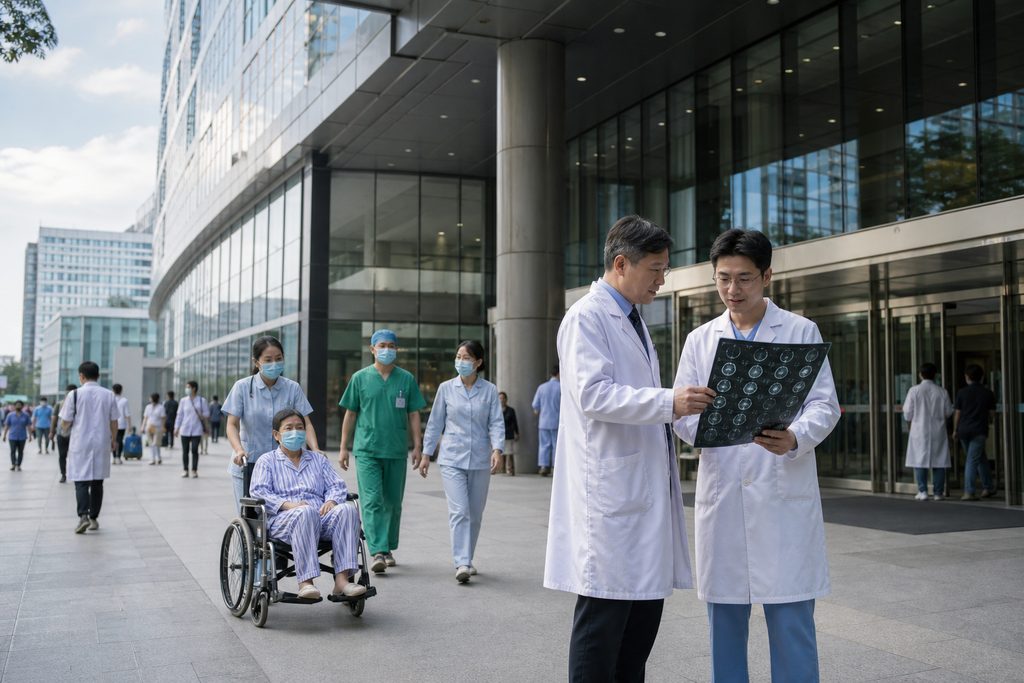
While a patient in the United States might face a bill exceeding $100,000 for a craniotomy, the same procedure at a high-volume center like Beijing Tiantan Hospital can range from $25,000 to $45,000. We are talking about a facility that performs over 15,000 neurosurgical procedures annually. The volume gap is staggering, and it directly impacts surgical precision.
Key Takeaways
- Beijing Tiantan Hospital performs more neurosurgeries annually than any other center globally, with over 15,000 cases per year driving exceptional subspecialist expertise.
- The brain tumor surgery cost at Beijing Tiantan Hospital for international patients typically ranges from $25,000 to $45,000—a fraction of Western prices without sacrificing clinical technology.
- Language barriers and complex hospital workflows make independent navigation nearly impossible; a coordinated companion service handles registration, imaging queues, and real-time translation.
- Recovery timelines depend heavily on tumor location, but having a structured post-operative plan before you leave your home country prevents critical gaps in care.
The Problem: Facing a Diagnosis When the Clock Is Ticking
Hearing “you have a brain tumor” stops time. And then the second shock hits: the system moves slowly. In Canada, the median wait time between referral and neurosurgery stretches to approximately 33 weeks, according to the Fraser Institute’s annual survey of specialist wait times. For a growing lesion, that delay isn’t just stressful—it changes the surgical landscape. The tumor doesn’t pause while you sit on a list.
Many patients we speak with have already been told they need surgery but face a three-to-six-month queue. Others have received a quote that their insurance won’t fully cover, leaving them with a $50,000 out-of-pocket gap. They start searching for alternatives. That search often leads to questions about surgical volume. A surgeon who does 30 glioma resections a year operates differently than one who does 300. The hands know the variations. The team anticipates complications before they unfold. This isn’t speculation—it’s the logic behind every high-volume center’s outcomes data.
Why Beijing Tiantan Hospital Delivers Neurosurgical Results That Rival Any Western Center
Numbers matter in brain surgery. Tiantan’s neurosurgery department handles over 15,000 procedures each year. To put that in perspective, a busy US academic medical center might perform 2,000 to 3,000 neurosurgeries annually. The sheer repetition means subspecialists exist here who only operate on skull base meningiomas, or only on brainstem gliomas. That narrow focus is rare. It is also what drives complication rates down. A 2018 study published in Neurosurgery analyzing over 16,000 cranial tumor resections found that high-volume surgeons had significantly lower in-hospital mortality rates than low-volume surgeons. Tiantan’s surgeons operate at the extreme end of that volume curve.
The hospital runs 42 neurosurgery operating rooms. Forty-two. Most Western centers run six to twelve. This capacity is why the wait time for surgery, once a case is accepted and scheduled, can be measured in days or a few weeks—not months. The bottleneck isn’t the OR. The bottleneck is making sure your case is reviewed by the right subspecialist and that your records are prepared correctly on the front end.
Intraoperative Technology on Par with Top US Centers
There is a persistent assumption that lower cost means older equipment. Walk into Tiantan’s neurosurgery wing and you will find intraoperative MRI suites, 3D exoscope systems, and multimodal neuronavigation platforms. Awake craniotomy with cortical mapping is standard for lesions near eloquent cortex. The hospital integrates diffusion tensor imaging tractography into surgical planning as routine practice, not an occasional upgrade. These are the same tools you would expect at Mayo Clinic or Charité in Berlin. The difference is how often they are used. A neurosurgeon who performs 200 awake craniotomies annually develops an instinct for the mapping rhythm that a surgeon performing 20 cannot replicate.
How Safe Is Brain Tumor Surgery in China? The Data Behind the Question
This is the question every patient asks us. It is the right question. The answer requires looking past anecdotes to institutional data. Tiantan Hospital reports a gross total resection rate exceeding 95% for certain pituitary adenoma subtypes treated via the endoscopic endonasal approach. Their published series on brainstem cavernous malformations—historically considered among the highest-risk neurosurgical procedures—show outcomes that have shifted the global conversation about when to operate on these lesions.
Safety infrastructure matters too. The hospital’s neuro-intensive care unit is staffed by neurointensivists, not general ICU physicians. Post-operative imaging is available 24 hours a day. The pathology department runs a dedicated neuropathology service with molecular subtyping that informs adjuvant treatment decisions. These are not extras. They are the difference between a good outcome and a complication caught too late.
What the Brain Tumor Surgery Cost at Beijing Tiantan Hospital Actually Looks Like for International Patients
Let’s address the financial question directly. The brain tumor surgery cost at Beijing Tiantan Hospital varies by tumor type, surgical approach, and length of stay. For a standard craniotomy with a five-to-seven-day inpatient stay, international patients should budget between $25,000 and $45,000. Complex skull base procedures requiring extended ICU monitoring can reach $55,000 to $65,000. These figures cover the hospital charges: OR time, anesthesia, imaging, pathology, medications, and bed charges. They do not include pre-operative evaluation, travel, accommodation, or post-discharge rehabilitation.
Compare this to the United States, where a craniotomy for tumor resection averages $100,000 to $150,000 in total hospital charges, often with a $30,000 to $50,000 surgeon fee billed separately. The United Kingdom’s private sector quotes £30,000 to £50,000 for a comparable procedure. Tiantan Hospital’s neurosurgery price for foreigners reflects China’s structural cost advantages: lower labor costs across the surgical team, high patient throughput that spreads fixed equipment costs, and a hospital business model that does not inflate charges to negotiate with insurers. You pay the hospital directly. There is no insurance network middleman adding a margin.
| Procedure | Beijing Tiantan (USD) | United States (USD) | United Kingdom Private (USD) |
|---|---|---|---|
| Standard Craniotomy (Glioma/Meningioma) | $25,000–$45,000 | $100,000–$150,000 | $40,000–$65,000 |
| Endoscopic Pituitary Tumor Resection | $20,000–$30,000 | $60,000–$90,000 | $30,000–$45,000 |
| Awake Craniotomy with Cortical Mapping | $35,000–$50,000 | $120,000–$180,000 | $55,000–$80,000 |
| Skull Base Tumor Resection | $45,000–$65,000 | $150,000–$250,000 | $70,000–$110,000 |
All figures are estimates for international patients paying out-of-pocket. Final costs depend on tumor complexity, length of stay, and any necessary adjuvant procedures. Hospital charges only; surgeon and anesthesia fees are typically bundled into the quoted package.
Recovery After Brain Tumor Removal in China: A Week-by-Week Roadmap
What is recovery time after brain tumor removal in China? The answer depends on the tumor’s location and the surgical corridor used. A convexity meningioma resected through a straightforward craniotomy can mean discharge in five days. A brainstem glioma resection requires a longer ICU stay and a slower trajectory. Here is what a typical recovery looks like for an uncomplicated supratentorial tumor resection at Tiantan Hospital.
Days 1–3: Neuro-ICU monitoring. You wake up in a dedicated neurological intensive care unit. Hourly neurological checks. A post-operative CT or MRI within 24 hours confirms the extent of resection. Pain is managed with intravenous medication. The neurointensivist team watches for any sign of edema, hemorrhage, or neurological change. Family members are not permitted to stay overnight in the ICU, but our bilingual companion team provides regular updates to your family in the waiting area or at their hotel.
Days 4–7: Step-down unit and mobilization. You transfer to a regular neurosurgery ward bed. The physiotherapy team starts mobilization—sitting at the edge of the bed, then walking to the bathroom with assistance. The surgical drain, if placed, is usually removed by day three. Staple or suture removal happens around day seven. By the end of this week, most patients are walking independently, eating normally, and beginning to think about discharge logistics.
Weeks 2–4: Early convalescence. Many international patients choose to stay in Beijing for one to two weeks after discharge before flying home. This allows for a follow-up appointment with the surgical team, removal of any remaining sutures, and a final imaging check. Flying is generally safe two weeks post-craniotomy, but your surgeon will clear you based on the presence of any residual intracranial air. We coordinate this follow-up visit and arrange a translated discharge summary and imaging files on a USB drive for your home physician.
Months 1–3: Returning to life. Fatigue is the most common complaint. The brain heals slowly. Most patients can return to desk work within four to six weeks. Physical labor takes longer. Driving requires neurological clearance and depends on seizure risk. If adjuvant radiation or chemotherapy is needed, that planning begins once the final pathology report is available, typically two to three weeks after surgery. We can facilitate a video consultation with Tiantan’s neuro-oncology team to discuss next steps without requiring a return trip to Beijing.
How to Book Brain Surgery at Beijing Tiantan Hospital Without Getting Lost in the System
Tiantan Hospital sees over 10,000 outpatients daily across all departments. The neurosurgery clinic alone handles hundreds of patients each morning. Without Chinese language skills and an understanding of the hospital’s workflow, a foreign patient can spend days just trying to get the right imaging uploaded to the right workstation. This is not a criticism. It is the reality of a high-throughput public hospital that was not designed with international patients in mind.
The process we follow for patients seeking brain tumor treatment abroad with full service in China starts with a remote case evaluation. You send us your MRI images (DICOM format), pathology slides if a biopsy has been done, and a summary of your clinical history. We translate these materials into Chinese and submit them to the relevant subspecialist at Tiantan’s international medical department. A written second opinion, priced from $300 to $500, comes back within five to seven business days. It tells you whether the surgeon believes the tumor is resectable, what approach they recommend, and what the anticipated risks and recovery look like.
If you decide to proceed, we coordinate a video consultation with the surgical team. This is your chance to ask questions directly, with a medical interpreter on the line. The fee for this top-specialist video consultation ranges from $500 to $800. Critically, if you later travel to China for surgery, that consultation fee is credited in full toward our on-the-ground coordination service. You are not paying twice. You are building trust incrementally.
Once the surgical plan is confirmed, we handle the hospital appointment coordination, which starts from $300. We secure your admission date, confirm the estimated hospital charges, and provide a detailed breakdown of what is included and what is not. We also guide you through the S2 visa application process. The S2 visa is the short-stay category used for private affairs, including medical treatment in China. You will need an invitation letter from the hospital and proof of your appointment. We ensure those documents are correct before you submit your application. We never guarantee visa approval—that decision rests with the embassy—but we have guided patients through this process from over 30 countries.
When you arrive in Beijing, our bilingual medical companion meets you at the airport. Over the following days, they accompany you to every appointment: pre-operative labs, anesthesia clearance, the final surgical consent discussion. They translate in real time. They know which window handles registration, which floor houses the MRI suite, and how to read the queue number display. Their presence turns a disorienting experience into a manageable one. The companion service starts at $300 per day and covers everything from registration to discharge paperwork.
Practical Considerations: Documents, Payments, and What Happens When You Fly Home
You will need a few things in order before we can submit your case. A complete set of brain MRI images with and without contrast, in DICOM format on a CD or uploaded to a secure portal. If a biopsy has been performed, the pathology slides and the formal pathology report. A summary letter from your treating neurosurgeon or neurologist outlining your diagnosis, symptoms, and any prior treatments. Your current medication list. A copy of your passport photo page.
Payment for hospital services is made directly to Tiantan Hospital’s international department. They accept wire transfers and major credit cards. The hospital requires a deposit before admission, typically 80% of the estimated total. The remaining balance is settled at discharge. Our coordination fees are paid separately to China Medical Services. We are not a billing intermediary for the hospital. You see exactly what the hospital charges, and you pay the hospital directly.
Insurance reimbursement depends on your policy. Most international health insurance plans that cover treatment abroad will reimburse hospital charges from a facility like Tiantan, but you will likely need to pay upfront and file for reimbursement. We provide itemized invoices and translated medical records to support your claim. Check with your insurer before committing. Some policies exclude out-of-network international care. Others cover it but at a reduced rate. Know your policy’s fine print.
After you return home, continuity of care matters. We arrange for your discharge summary, operative note, pathology report, and post-operative imaging to be translated into English and provided in both printed and digital formats. Your local neurosurgeon or neurologist receives a complete package. If questions arise—a medication adjustment, a new symptom—we can coordinate a follow-up video consultation with your Tiantan surgical team. The relationship does not end when you board the plane.
Frequently Asked Questions
Can I choose my surgeon at Beijing Tiantan Hospital?
You can express a preference based on the subspecialist who reviews your case. The international medical department assigns your case to the team most experienced with your specific tumor type and location. If you request a particular surgeon whose published work you have followed, we communicate that request. The hospital makes the final assignment based on the surgeon’s availability and subspecialty match. We have found that trusting the department’s internal matching process usually yields the best result—they know who is best suited for a given brainstem glioma versus a convexity meningioma.
What if a complication occurs during or after surgery?
Tiantan Hospital manages complications in-house. Their neuro-ICU is equipped to handle post-operative hemorrhage, cerebral edema, infection, and neurological deterioration. The surgical team remains involved throughout the ICU stay. If a complication requires a longer hospitalization than planned, the hospital will adjust the estimated charges accordingly. We stay in communication with your family throughout. Our companion team remains available to translate during family meetings with the medical team. We also help coordinate communication with your insurance company if the extended stay affects your reimbursement claim.
Is the pathology diagnosis reliable? Should I get a second read at home?
Tiantan’s neuropathology department runs molecular diagnostics including IDH mutation status, 1p/19q co-deletion, MGMT promoter methylation, and other markers relevant to the WHO classification of central nervous system tumors. Their pathologists see an extraordinary volume of brain tumor specimens. That said, we always recommend that patients have their pathology slides and blocks sent to their home institution for a confirmatory read. Having two independent pathology reviews strengthens confidence in the diagnosis and the adjuvant treatment plan. We facilitate the transfer of pathology materials.
How soon can I schedule surgery after the remote consultation?
Once the surgical team accepts your case and you confirm your intent to proceed, admission can typically be arranged within two to four weeks. This timeline accounts for hospital bed availability, OR scheduling, and your own travel and visa arrangements. Urgent cases with documented rapid tumor growth may be prioritized.
For more medical information and treatment options in China, visit chinamedservices.com (China Medical Services).
