Cancer Treatment at Fudan Shanghai Cancer Center: Our Full Coordination Guide
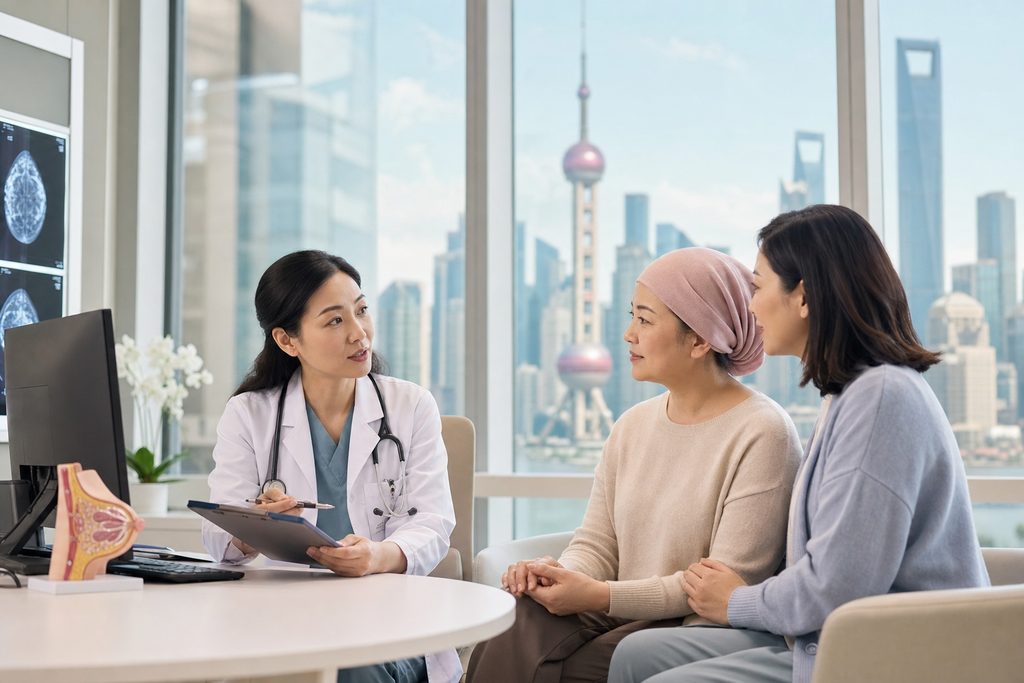
When 42-year-old Michael first heard the diagnosis, he had no idea where to start looking for treatment outside his home country. His oncologist in Manchester had laid out the standard protocol. Surgery, then chemo. The waiting list for the specific robotic procedure he needed stretched past eight weeks. He started searching. He found forums discussing the sheer surgical volume at certain Asian cancer centers. One name kept surfacing: Fudan University Shanghai Cancer Center. But the gap between reading a hospital’s reputation and actually walking through its doors as a foreigner felt like a chasm. Who do you call? How do you send records? What if you arrive and nothing is ready?
That gap is exactly what our team handles. We don’t provide medical care. We provide the logistical spine that lets you access it. The cancer treatment cost at Fudan University Shanghai is a fraction of what patients face in the US or UK, but the real question isn’t just the price tag. It’s whether the pathway is navigable. This guide breaks down that pathway without glossing over the friction points.
How This Actually Works, Step by Step
The process starts with paper. Not a phone call to a doctor.
You send us your existing diagnostic materials. Pathology reports, imaging studies on a CD or via a secure link, blood work, and any clinical notes from your current physician. Our team translates these documents into clinical Chinese. Not machine translation. We use medical translators who understand oncology terminology. A mistranslated pathology subtype can derail a treatment plan before it starts.
We submit the translated dossier to the hospital’s International Medical Department. This is the official channel. We don’t contact individual professors directly or try to bypass the system. The department reviews the materials and determines if your case is appropriate for their services. This review typically takes three to five business days.
What comes back is a preliminary assessment. It might say the case fits their expertise and they’re willing to schedule a video consultation. It might request additional imaging or a specific biopsy stain not included in the original package. Or it might honestly state that your particular cancer subtype isn’t their strongest focus and suggest another center. We relay this to you verbatim.
If the assessment is positive, the next step is a remote consultation. You choose between a written second opinion or a live video conference with the relevant specialist team. The written opinion costs from $300–500. A video consultation with a top specialist runs from $500–800. These fees are not hospital charges. They cover the coordination, translation, and the specialist’s time.
During the video consult, you speak directly with the oncologist. We provide a medical interpreter on the line. The doctor reviews your images on screen, asks about your symptom history, and proposes a treatment framework. This is not a binding contract. It’s a clinical conversation. You’ll learn whether they recommend surgery first or neoadjuvant chemotherapy, what specific surgical approach they favor, and how many cycles of therapy they’re proposing.
After the consult, you receive a written summary in English. If you decide to proceed with treatment in Shanghai, we shift into on-the-ground coordination mode. We help schedule the initial in-person consultation, arrange the S2 visa invitation letter from the hospital, and book a bilingual medical companion for your first visit. The hospital will not finalize a surgery date until their specialists have examined you in person. That’s non-negotiable.
Why International Patients Choose This Specific Center
Fudan University Shanghai Cancer Center isn’t just another large hospital. It’s consistently ranked among China’s top institutions for oncology in the Fudan Hospital Ranking’s specialty reputation list. The center handles an extraordinary patient volume. The pathology department alone reviews over 50,000 cases annually. For a patient with a rare sarcoma subtype, that matters. The pathologist looking at your slides has likely seen two dozen cases just like yours this year.
The center’s surgical oncology departments perform procedures at a scale that’s hard to grasp. Thoracic surgeons there complete over 8,000 lung cancer resections annually. Breast surgeons handle more than 6,000 cases. Volume correlates with outcomes in complex cancer surgery. Multiple large-cohort studies have established this relationship. A 2019 analysis in the Annals of Surgery found that hospitals performing more than 20 esophagectomies annually had significantly lower 30-day mortality rates. Fudan’s thoracic team performs hundreds.
This volume also drives technical adoption. The center was an early adopter of robotic-assisted surgery platforms for rectal and gynecologic cancers. Their radiation oncology department operates multiple linear accelerators and offers intensity-modulated radiation therapy with daily image guidance. These are standard techniques in top Western centers. The difference here is throughput. Machines run extended hours. Wait times for radiation planning and initiation are measured in days, not weeks.
For international patients specifically, the center has a dedicated International Medical Service wing. The staff there speak English. The environment is calmer than the bustling public outpatient halls. Appointments are scheduled rather than first-come-first-served. This is the channel we coordinate through. It’s the best oncology hospital Shanghai for foreigners who lack Mandarin fluency and need a structured process.
A Realistic Timeline
Here’s what the calendar actually looks like. These are ranges we’ve observed across dozens of cases. Your specific timeline depends on document completeness, hospital scheduling, and visa processing speed at your local Chinese embassy.
| Stage | What Happens | Typical Duration |
|---|---|---|
| Document Collection | You gather all existing records, imaging CDs, and pathology slides. We provide a checklist. | 3–7 days |
| Translation & Dossier Prep | Our medical translators convert your records to clinical Chinese and compile the submission package. | 2–4 business days |
| Hospital Preliminary Review | The International Medical Department assesses your case and determines next steps. | 3–5 business days |
| Remote Consultation Scheduling | We align your availability with the specialist’s schedule. This often takes the longest. | 5–10 business days |
| Video Consultation | You speak with the oncologist via secure video link with a medical interpreter. | 1 hour |
| Decision & Visa Processing | You decide to proceed. We request the hospital invitation letter. You apply for an S2 visa. | 2–4 weeks |
| Travel & First In-Person Visit | You arrive in Shanghai. Our companion meets you. You see the specialist for physical examination. | 1–2 days after arrival |
| Pre-Treatment Workup | Additional imaging, blood work, possibly repeat biopsy. The hospital needs its own baseline. | 3–7 days |
| Treatment Initiation | Surgery scheduled or first chemotherapy cycle administered. | 1–2 weeks after workup |
The total from first contact to treatment initiation runs roughly six to ten weeks. Some cases move faster. A patient with a complete, well-organized record set and a straightforward surgical need might be in the operating room within five weeks. A complex case requiring multidisciplinary review and additional molecular testing will take longer.
What Can Go Wrong — and What Happens Then
Records arrive incomplete. This happens in roughly one in five cases. A critical immunohistochemistry stain is missing. The pathology report mentions a tumor but doesn’t specify the grade. The imaging CD is corrupted or in a proprietary format the Chinese PACS system can’t read. When this happens, we don’t guess. We send you a specific list of exactly what’s missing and why it matters. You go back to your home oncologist and request those specific items. This adds one to three weeks.
The specialist recommends a different approach than you expected. You came convinced you needed surgery. The Fudan oncologist reviews your scans and recommends neoadjuvant chemotherapy first to shrink the tumor. This can be disorienting. You’re not obligated to accept the recommendation. But you should understand the reasoning. We ensure the interpretation captures the clinical logic clearly. You can also seek a second opinion from another center. Our oncology department rankings include multiple top-tier hospitals.
Visa processing stalls. Chinese embassy processing times vary by country. Some embassies process S2 visas in under a week. Others take a month. We can’t control the embassy. We can ensure you submit a complete application package with the hospital invitation letter, treatment plan summary, and proof of financial means. Missing documents are the most common cause of delays.
The hospital requests a repeat biopsy. This frustrates patients. You already have a diagnosis. Why repeat it? Chinese hospitals often want tissue processed in their own pathology lab for several reasons. Different staining protocols, different molecular testing platforms, and the simple reality that they’re legally responsible for the treatment decision. They want their own pathologist’s name on the report. This adds time and cost.
Treatment costs exceed the initial estimate. The quote you received was based on the information available at the time. A longer-than-expected hospital stay, an unexpected complication, or a change in drug regimen can shift the numbers. We provide updated cost breakdowns as the treatment plan evolves. No one likes surprises. We flag potential cost increases early.
Understanding the Real Cost Structure
The cancer treatment cost at Fudan University Shanghai varies enormously by cancer type, stage, and treatment modality. A straightforward thyroidectomy for papillary thyroid cancer might cost $5,000–8,000 total. A complex esophagectomy with a multi-week hospital stay can reach $25,000–35,000. These are hospital charges only. They don’t include our coordination fees, travel, accommodation, or post-operative care.
Chemotherapy costs depend on the drugs. Generic platinum-based regimens are inexpensive. A cycle of cisplatin plus pemetrexed might cost $800–1,500. Immunotherapy agents like pembrolizumab are expensive everywhere. A single dose can cost $3,000–5,000 even in China. The question “how much does chemotherapy cost in China” has no single answer. It depends entirely on the protocol.
Radiation therapy is relatively affordable. A full course of IMRT for a head and neck cancer typically runs $8,000–15,000. That’s roughly one-fifth to one-tenth of the US cost for equivalent technology.
Surgical costs include the surgeon’s fee, anesthesiology, operating room time, and inpatient stay. A robotic-assisted radical prostatectomy might total $15,000–22,000. A laparoscopic colectomy, $10,000–18,000. These are ballpark figures. The hospital provides a formal cost estimate after reviewing your case in detail.
Our coordination fees are separate and transparent. A full end-to-end coordination package, including document translation, remote consultation setup, visa support, airport transfer, and bilingual companion services for the initial treatment phase, ranges from $5,000–8,000. Less comprehensive support starts from $300 for individual services. Any consultation fee you pay is fully credited toward coordination services if you proceed to treatment within 90 days.
Practical Considerations: Records, Visa, and Follow-Up
The S2 visa is the correct category for medical treatment in China. It’s a short-term private affairs visa. The hospital’s International Medical Department provides an invitation letter that you submit with your application. Your accompanying family member also applies for an S2. Processing times vary. Apply early. The visa typically allows a 30 to 90-day stay and can be extended once inside China if treatment requires more time.
Bring everything. Original pathology slides, not just digital images. The paraffin blocks if your home hospital will release them. Every imaging CD. A printed summary of your treatment history including dates, drug names, and dosages. A list of every medication you currently take, with generic names. Your home oncologist’s contact information. These details prevent delays.
Payment is straightforward. The hospital accepts international credit cards, wire transfers, and UnionPay. Cash in Chinese yuan works for smaller amounts. Carry multiple payment methods. A single card can hit a daily limit at an inconvenient moment.
Language is the invisible barrier. Even in the International Medical Department, not every nurse or technician speaks English. The specialist speaks English during your consultation. The phlebotomist drawing your blood probably doesn’t. Our bilingual companion fills this gap. They’re present for every appointment, translating instructions, clarifying medication schedules, and making sure you understand what’s happening next.
Follow-up after you return home matters. The Fudan team provides a detailed discharge summary and treatment report in English. They typically recommend follow-up imaging at specific intervals. You’ll need a local oncologist willing to receive these reports and continue your surveillance. We help facilitate the handoff. The Fudan specialists are generally available for follow-up video consultations if new questions arise.
Frequently Asked Questions
Is Fudan Shanghai Cancer Center good for international patients?
It depends on what you need. If you need a center with deep oncology expertise, high surgical volumes, and access to advanced radiation technology, it’s excellent. The International Medical Department is structured to serve foreign patients. If you need a fully English-speaking environment where every staff member from receptionist to radiologist communicates fluently, a private international hospital might feel more comfortable. But those hospitals don’t match Fudan’s case volume or subspecialty depth. You’re trading some convenience for clinical firepower. For complex or rare cancers, that trade-off usually makes sense.
Can I book cancer treatment at Shanghai Cancer Center directly?
You can try. The hospital’s International Medical Department accepts direct inquiries. You’d need to send your records, arrange translation yourself, and navigate scheduling across time zones. Many patients find the process manageable. Many find it overwhelming while also managing a cancer diagnosis. Our role is to handle the friction points. We don’t control the hospital. We don’t guarantee faster access. We handle the logistics so you focus on treatment decisions.
What if the treatment doesn’t work?
Cancer treatment outcomes are uncertain everywhere. No reputable center guarantees results. Fudan’s oncologists discuss prognosis honestly during the consultation. If first-line treatment fails, they may offer second-line options, clinical trials, or palliative care. You always retain the right to seek treatment elsewhere. Your medical records from Fudan are yours. We help you obtain complete copies for transfer to another provider.
Are there medical tourism packages for cancer treatment in China?
Some agencies market “cancer treatment packages” with fixed prices and glossy brochures. We don’t. Cancer isn’t a packaged commodity. Your treatment plan depends on your specific pathology, stage, molecular markers, and response to initial therapy. A package that quotes a flat fee for “breast cancer treatment” is ignoring the difference between a lumpectomy plus radiation and a mastectomy plus reconstruction plus chemotherapy. We help you navigate the real, individualized process. The cost reflects what actually happens, not a pre-printed menu.
Your Next Step
The decision to pursue cancer treatment far from home is never simple. The logistics can feel like a second full-time job at a moment when you have no bandwidth to spare. That’s the problem we exist to solve. We are not doctors. We don’t offer medical advice or promise outcomes. We are a team of coordinators, translators, and patient advocates who know how to bridge the gap between a patient in London or Dubai and a specialist in Shanghai.
If you’re considering treatment at Fudan University Shanghai Cancer Center, or if you’re not sure which Chinese cancer center fits your diagnosis, start with a conversation. Send us your records. We’ll review them, recommend the most appropriate center, and lay out a realistic timeline and cost estimate. No commitment. No pressure. Just clarity on what the path looks like.
You can reach our team through the consultation page to begin. We respond within one business day.
The hardest step is the first one. You’ve already started looking. The rest is logistics. We handle logistics.
For more medical information and treatment options in China, visit chinamedservices.com (China Medical Services).
