Sun Yat-sen University Cancer Center: International Patient Oncology Guide
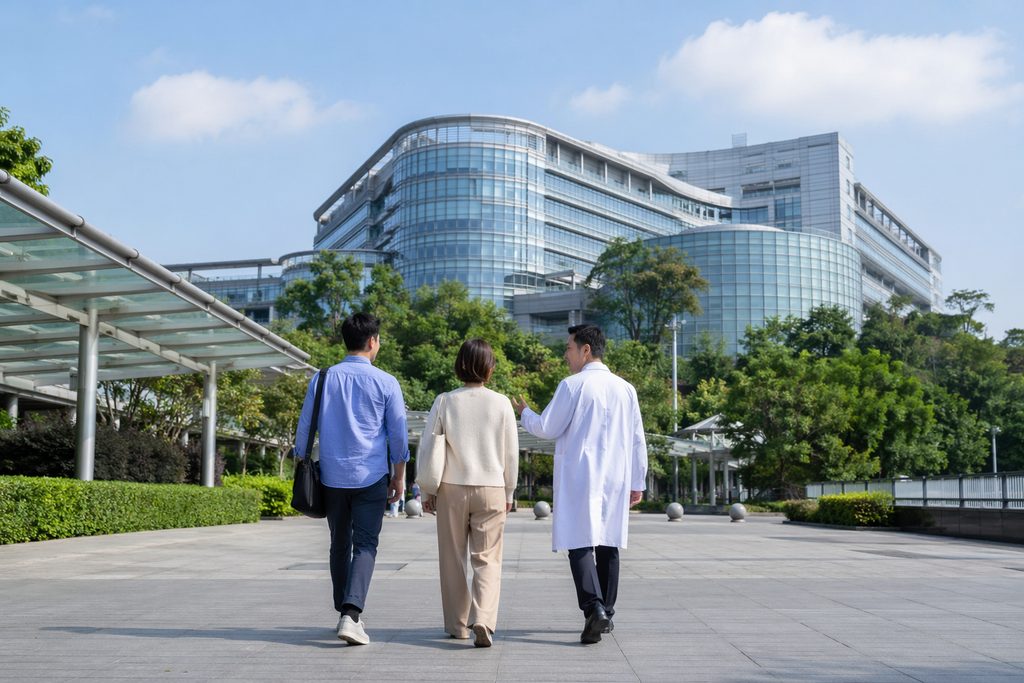
Sun Yat-sen University Cancer Center: The Short Answer
For a foreign patient, getting cancer treatment at the Sun Yat-sen University Cancer Center (SYSUCC) in Guangzhou is entirely possible, but it does not work like booking a hotel. You cannot simply call the main hospital switchboard and reserve a surgery slot. The center is one of China’s largest oncology hubs, treating over 130,000 inpatients annually, and its public outpatient clinics operate on a same-day queuing system designed for the domestic population. For international patients, the realistic path involves a structured, remote evaluation first — typically a written second opinion or a video consultation — followed by on-the-ground coordination through the hospital’s official International Healthcare Center. This process allows the clinical team to review your records, confirm they can help, and then schedule your visit. The key point: access is not instant, but it is systematic, and the clinical volume means the teams here have seen and treated cases that many Western oncologists encounter only a handful of times in a career.
Who This Is Right For — and Who It Isn’t
Traveling across continents for cancer care is a serious decision. It makes sense for some people. It is a mistake for others. Being honest about the distinction matters.
Typically a good candidate:
- You have a confirmed diagnosis and complete medical records (imaging, pathology, treatment history) ready to share for remote review.
- Your condition is stable enough for international air travel — you are not in an acute crisis requiring immediate emergency intervention.
- You are seeking access to specific techniques, clinical trial options, or surgical volumes that are unavailable or have long wait times in your home country.
- You are looking at a treatment plan that, in your home system, carries a financially catastrophic price tag, and you are exploring the cost differential at a high-volume center like SYSUCC.
- You have a family member or will engage a bilingual coordinator who can handle the logistical friction of a non-English-first hospital environment.
Probably not a good candidate:
- You do not yet have a firm diagnosis and are hoping to show up for a full diagnostic workup from scratch. The system is built to treat confirmed disease, not to be a first-stop screening clinic for undifferentiated symptoms.
- You require continuous, real-time communication in English with every nurse and resident on the ward. The International Healthcare Center provides English-speaking coordination, but the broader hospital runs in Mandarin and Cantonese.
- Your condition is rapidly deteriorating, and you cannot safely endure a long-haul flight followed by a multi-day evaluation and scheduling process before active treatment begins.
- You expect a private, hotel-like inpatient suite. The VIP and international wards are comfortable and private, but they are clinical units inside a massive public institution, not a luxury spa.
The Options, Compared
When an international patient considers SYSUCC, they are usually weighing it against other pathways. The table below lays out the practical differences, not the marketing claims.
| Factor | SYSUCC (International Pathway) | Private Cancer Center in Bangkok or Singapore | Major US Academic Cancer Center |
|---|---|---|---|
| Remote pre-evaluation | Required; written second opinion or video consult before travel | Often available; may be more marketing than clinical triage | Rarely offered as a standalone service for new international patients |
| Annual inpatient volume | 130,000+ (single-site, all oncology) | Typically under 10,000 | Varies; top centers 25,000–50,000 across all specialties |
| Subspecialty depth | Dedicated departments for nasopharyngeal, liver, lung, colorectal, gastric, breast, gynecologic, hematologic cancers, plus pediatric oncology | General oncology; may refer complex subspecialty cases out | Strong; but individual surgeon volumes for specific procedures often lower than SYSUCC |
| Language environment | International center staff speak English; ward and clinic staff primarily Mandarin/Cantonese | English widely spoken throughout | English throughout |
| Cost for a 4-week radiotherapy course (self-pay) | $6,000–$15,000 | $12,000–$25,000 | $35,000–$70,000+ |
| Visa category | S2 (short-stay private affairs, medical purpose) | Medical visa or visa exemption (varies by nationality) | B-2 or medical treatment visa |
If your primary concern is clinical depth and cost, and you can handle the logistics, SYSUCC is the strongest of these three options. If seamless English communication is non-negotiable and budget is secondary, a private center in Singapore may fit better. The US option remains the right choice if you need care within a system you already know and your insurance covers it.
What Types of Cancer Does Sun Yat-sen University Cancer Center Treat
SYSUCC is not a general hospital with an oncology wing. It is a dedicated cancer center, and its departmental structure reflects that. The center organizes around tumor types, not just treatment modalities, which means a patient with liver cancer sees a team that does nothing but liver cancer — hepatobiliary surgeons, medical oncologists, interventional radiologists, and radiation oncologists all sitting in the same clinical unit.
The major departments include nasopharyngeal carcinoma (NPC), where SYSUCC is arguably the world’s highest-volume center given the regional prevalence of NPC in southern China. The liver cancer and hepatobiliary surgery department handles hepatocellular carcinoma at a scale few Western centers match, including complex resections and interventional therapies. The thoracic surgery and lung cancer unit manages one of the largest annual volumes of minimally invasive lung resections in Asia. Colorectal surgery, gastric cancer surgery, breast oncology, gynecologic oncology, urologic oncology, and hematologic malignancies including bone marrow transplantation each have dedicated wards and specialist teams. There is also a pediatric oncology department that treats solid tumors and hematologic cancers in children.
For a foreign patient wondering “is Sun Yat-sen University Cancer Center good for international patients” with a rare or complex diagnosis, the answer often comes down to case volume. A surgeon who performs 300 Whipple procedures a year operates differently than one who performs 30. The center’s international pathway exists precisely because this volume attracts patients from outside China who cannot access that level of subspecialty concentration at home.
Sun Yat-sen University Cancer Center International Patient Price: What It Costs
The question every patient eventually asks: how much does cancer treatment cost at Sun Yat-sen Cancer Center? The honest answer is that no one can quote a precise figure without seeing your records. Cancer treatment is not a fixed-price menu item. That said, we can provide realistic ranges based on the international patient pathway pricing at this and comparable Chinese top-tier oncology centers.
For a written second opinion from a SYSUCC specialist, expect $300–$500. This involves our team translating and submitting your existing records, the specialist reviewing them, and a written report coming back with treatment direction. A video consultation with a senior specialist runs $500–$800. For complex cases requiring multidisciplinary input — a tumor board reviewing your scans and pathology — an MDT video consultation ranges from $1,500 to $2,000.
On the treatment side, a typical course of intensity-modulated radiation therapy (IMRT) for a head and neck or pelvic malignancy runs $6,000–$15,000 depending on fractions and technique. A major cancer surgery — a liver resection, a colorectal procedure, a lung lobectomy — typically falls between $8,000 and $22,000 for the hospital and surgical fees on the international/VIP ward. Chemotherapy costs are highly regimen-dependent; a standard 4-cycle adjuvant chemotherapy course might run $4,000–$12,000 depending on the drugs used and whether they are generic or newer targeted agents. Immunotherapy and targeted therapy are the wild cards — drugs like PD-1 inhibitors have Chinese-manufactured options that cost a fraction of the Western equivalents, but the exact price depends on the specific agent and dosing schedule.
These figures are self-pay rates for the international patient pathway. They are not insurance-negotiated rates, because most international patients at Chinese public hospitals pay out of pocket and seek reimbursement from their home insurer afterward. The hospital requires prepayment — a deposit is placed before admission, and costs are drawn down against it. If your balance runs low mid-treatment, you will be asked to top it up. This is standard practice across Chinese public hospitals and catches some Western patients off guard.
Any remote consultation fee you pay — for the written second opinion, the video consult, or the MDT — is credited in full toward on-the-ground coordination if you proceed to treatment within 90 days. You do not pay twice.
Practical Considerations: Records, Visas, and the Daily Reality
Getting your records right before you travel is the single most important step. The remote evaluation team needs: a formal diagnosis report, all imaging on CD or via secure upload (DICOM format is ideal), pathology slides or reports (the actual pathology blocks may be requested for re-reading at SYSUCC), a detailed treatment history including drug names, doses, and dates, and a summary from your current oncologist explaining where things stand and what question you want SYSUCC to answer. Incomplete records are the number one reason international evaluations stall. Our team handles the certified translation of these documents into Chinese — clinical terminology requires a translator who understands oncology, not a generalist.
The visa is an S2 visa, annotated for private affairs with a medical purpose. You will need an invitation letter and supporting documentation from the hospital’s International Healthcare Center. The S2 allows a stay of up to 180 days; if your treatment plan extends beyond that, an S1 visa for longer-term private affairs applies. Family members accompanying you also apply for S2 visas. This is not a tourist visa, and it is not an M visa — M is for commercial and trade activities and has nothing to do with medical treatment. Consulates require the hospital documentation to process an S2 for medical purposes, and we coordinate directly with the international center to obtain the correct paperwork.
On the ground, expect a large, busy hospital campus. The International Healthcare Center provides a buffer — English-speaking coordinators who handle registration, guide you to the right departments, and facilitate communication with your clinical team. But when you are on the ward, the nurses and junior doctors will likely speak to you in Mandarin or Cantonese unless a coordinator is present. Having a bilingual medical companion for the full duration of your inpatient stay is not a luxury; it is the difference between understanding what is happening to you and feeling lost in a system that moves fast and assumes local norms.
Payment is by card or wire transfer to the hospital. The international center will provide a detailed cost estimate before you travel, and you will place a deposit upon admission. Keep every receipt and every page of your discharge summary — your home insurer will need them, and so will your follow-up oncologist. After you return home, continuity of care depends on a clean handoff. The SYSUCC team will provide a discharge report and treatment summary in Chinese; we arrange certified English translation so your home oncologist knows exactly what was done, what drugs were administered, and what surveillance plan is recommended.
Frequently Asked Questions
You cannot book a public outpatient appointment from overseas. The public registration system is same-day, in-person, and designed for domestic patients. What you can do is initiate a remote evaluation through the International Healthcare Center — written second opinion or video consultation. Once the clinical team reviews your case and agrees to accept you, the international center schedules your admission or specialist consultation and issues the visa support documents. The appointment is confirmed before you book your flight. This is the only reliable pathway for a foreign patient.
The center is clinically excellent — ranked among China’s top oncology hospitals in the Fudan specialty reputation rankings, with subspecialty depth and case volumes that are genuinely world-class. But the patient experience for a non-Chinese speaker depends entirely on whether you have a competent bilingual intermediary. The International Healthcare Center provides coordination in English, and your attending physician may speak some English, but the day-to-day ward environment is Mandarin and Cantonese. If you arrive alone expecting an English-first experience, you will struggle. If you arrive with a bilingual companion or coordinator, the clinical quality is fully accessible to you.
This is the hardest question, and it deserves a straight answer. If a complication arises while you are still in Guangzhou, the SYSUCC team manages it — they are the treating hospital and they are responsible for your care during admission. If a complication or recurrence occurs after you return home, SYSUCC’s direct responsibility ends. Your home oncologist takes over. This is why the discharge handoff — translated records, treatment summary, surveillance plan — matters so much. The SYSUCC team can be available for a follow-up video consultation to discuss your case with your home oncologist, but they will not be writing prescriptions or ordering scans across borders. You are transferring care back to your home system, and that transition must be planned from the start.
For cancer specifically, Sun Yat-sen University Cancer Center is the dedicated oncology powerhouse. It is not the only option — Nanfang Hospital and the First Affiliated Hospital of Sun Yat-sen University also have strong oncology departments — but SYSUCC concentrates the highest volume and the deepest subspecialty teams in one place. For a foreign patient with a confirmed cancer diagnosis, it is the most logical starting point. For more general medical needs or if you are comparing hospitals across China, our top-ranked hospitals database organizes options by city and specialty so you can see the full landscape before deciding.
Your Next Step
If you have a cancer diagnosis and are considering SYSUCC, the first move is not to buy a plane ticket. It is to get your records in front of the right clinical team and get a straight answer about whether they can help. Our role is to make that evaluation happen — we translate and submit your records, coordinate the remote consultation, and if you decide to proceed, we handle the logistics on the ground in Guangzhou from visa documentation to bilingual accompaniment. We are not a hospital, we do not employ doctors, and we never offer medical advice or make promises about treatment outcomes. What we do is remove the friction so you can focus on your health. To start the process, request a free consultation — we will review your situation and map out the specific steps for your case.
For more medical information and treatment options in China, visit chinamedservices.com (China Medical Services).
