Shanghai Ninth Hospital Craniofacial Surgery: Cost, Safety, and How to Book
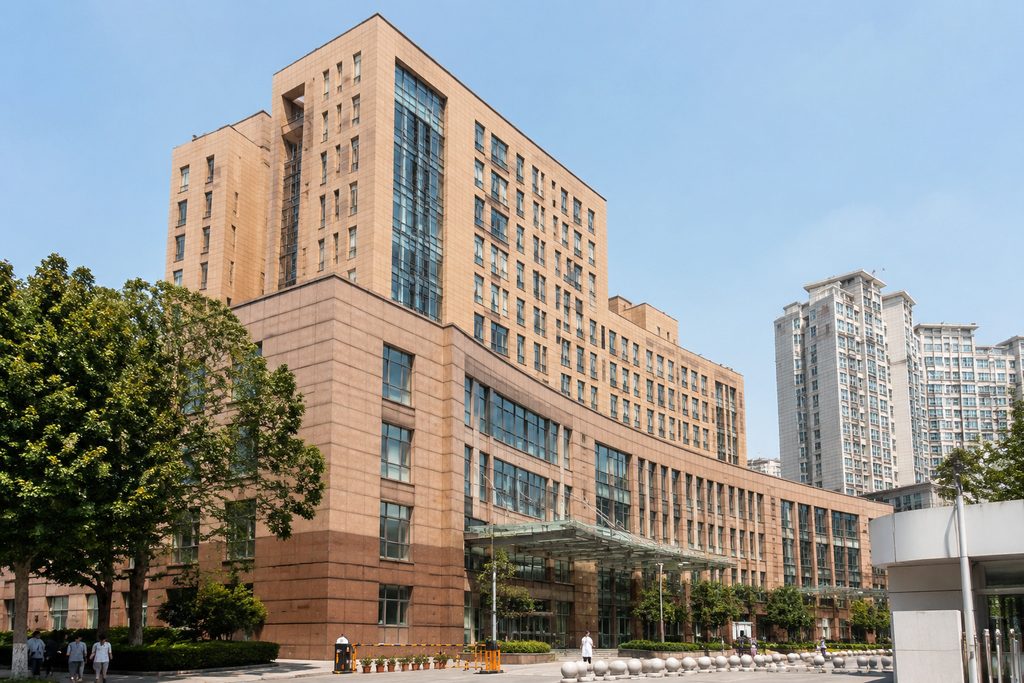
When 34-year-old Elena from Barcelona first started researching options for her son’s complex craniosynostosis correction, the quotes she received locally made her stomach drop. The waiting list stretched past 14 months. The surgeon she wanted wasn’t taking new cases. She started typing desperate searches into Google at 2 a.m., and one of them was about the craniofacial surgery cost Shanghai Ninth People’s Hospital. She had heard rumors about the volume of cases treated there. She needed facts, not marketing.
Our team fields inquiries like Elena’s every week. The pattern is almost always the same: a family has a diagnosis, they face a long wait or prohibitive cost at home, and they’ve stumbled across data showing that Shanghai Ninth People’s Hospital handles an extraordinary volume of craniofacial cases. The numbers are not a secret. The Department of Plastic and Reconstructive Surgery here performs over 4,000 craniofacial procedures annually, making it one of the highest-volume centers on the planet. Volume matters in surgery. It correlates with team familiarity and streamlined protocols.
But volume doesn’t answer the practical questions. What does it actually cost? Is the safety record transparent? How do you even start the process from another continent? Those are the gaps we will fill here.
How This Actually Works, Step by Step
The path from a Google search to a hospital bed in Shanghai is less chaotic than most people assume. It just has a specific sequence that must be respected.
First, you cannot simply email the hospital’s public registration desk and book a surgery slot. The public outpatient system at any Chinese public hospital, including Shanghai Ninth, operates on a same-day queue system. You show up, you take a number, you see the doctor. Surgery is scheduled only after that in-person consultation.
For international patients, the route is different. You begin with a remote evaluation. You send the existing medical records—CT scans, MRI images, clinical photographs, genetic testing reports if relevant—to a coordinating team that translates them into clinical Chinese and submits them through the hospital’s International Medical Center channel. A relevant specialist reviews the file. This is not a casual glance. It is a formal written second opinion, and the fee for this step typically runs from $300 to $500 for a top-tier specialist at this institution.
The written opinion will tell you whether the case is accepted, what the proposed surgical approach is, and a preliminary treatment plan. Only after this step can dates be discussed. This is the point where many families feel a shift from helplessness to having a concrete option.
If you decide to proceed, the next phase involves scheduling. The hospital’s international department coordinates a consultation slot, and later a surgery date, based on the surgeon’s availability. You will need an S2 visa, which is the short-stay category used for private medical treatment in China. Processing times vary by embassy, but four to six weeks is a realistic window to budget. Do not book flights until the visa is in your passport.
Once you land, a bilingual medical companion handles the logistics: hospital registration, payment deposits, pre-operative testing navigation, and translation during the surgical consent process. You are not left to figure out a massive Chinese public hospital on your own.
Understanding the Real craniofacial surgery cost Shanghai Ninth People’s Hospital
Let’s put numbers on the table. The craniofacial surgery cost Shanghai Ninth People’s Hospital varies significantly by case complexity, but we can give you the range that our team has observed for international patients going through the hospital’s VIP and International Medical Center channels.
A routine single-suture craniosynostosis correction typically falls between $18,000 and $28,000. A complex midface advancement, like a Le Fort III osteotomy with distraction, can run from $35,000 to $55,000. A comprehensive monobloc procedure or a full cranial vault remodeling for a syndromic case—think Crouzon or Apert syndrome—often lands in the $45,000 to $70,000 range.
These are the all-in hospital charges for the surgical episode: operating theater, surgeon’s fee, anesthesiologist, implant materials if needed, and inpatient stay. They do not include pre-operative orthodontic work if orthognathic preparation is needed. They do not include the coordination service fees, which are separate.
For context, the same monobloc procedure in a major North American center frequently exceeds $250,000 in facility and professional fees alone. The differential is not marginal. It is structural. The cost structure of Chinese academic medical centers, combined with the sheer volume of cases, creates a pricing reality that is fundamentally different from Western tertiary hospitals.
A Realistic Timeline
The sequence from first contact to walking out of the hospital stretches over months, not weeks. Here is what a typical timeline looks like for a family pursuing the Shanghai 9th hospital craniofacial reconstruction price and process.
| Stage | What Happens | Duration |
|---|---|---|
| Week 1–2 | Medical records gathered, translated, and submitted for remote review | 7–14 days |
| Week 3–5 | Specialist reviews file; written second opinion and preliminary plan issued | 14–21 days |
| Week 5–9 | S2 visa application submitted with hospital invitation letter; embassy processing | 4–6 weeks |
| Week 9–10 | Travel to Shanghai; in-person consultation and pre-operative workup | 3–5 days |
| Week 10–11 | Surgery and acute inpatient recovery | 5–10 days |
| Week 11–15 | Early post-operative monitoring in Shanghai; drain removal, wound checks | 2–4 weeks |
| Month 2–3 | Return home; distraction consolidation or orthodontic follow-up continues locally | Ongoing |
The hidden waiting step that catches people off guard is the document translation and specialist review window. You cannot rush a craniofacial surgeon’s pre-operative planning. They need to study the CT data in their own 3D software. They may request additional imaging. This back-and-forth takes the time it takes.
What Can Go Wrong — and What Happens Then
Craniofacial surgery carries real risks, and a center that claims otherwise should lose your trust immediately. The question is not whether complications occur. The question is how they are caught and managed.
Infection rates in clean craniofacial cases at high-volume centers run around 2% to 4%. Shanghai Ninth’s published data in the *Journal of Craniofacial Surgery* aligns with this range. The hospital maintains a dedicated craniofacial ICU step-down unit, which means post-operative neurological monitoring happens with nurses who see these cases daily, not once a month.
Cerebrospinal fluid leak is a known risk in procedures that cross the anterior cranial fossa. If it occurs, the standard protocol is lumbar drainage and, in persistent cases, endoscopic repair. The hospital has in-house neurosurgery and ENT teams that co-manage these patients. This is not a standalone plastic surgery department operating in isolation.
What if the distraction device fails? Distractors can break. The manufacturer’s local rep is typically on call, and replacement components are available within 24 hours in Shanghai. This is a logistical reality that matters. In a city with a less developed medical device supply chain, a broken distractor could mean a multi-week delay.
The hardest scenario is a family arriving with unrealistic expectations. A child with a severe syndromic diagnosis may need staged procedures over years, not a single operation. The remote second opinion is designed to surface this before anyone gets on a plane. Sometimes the most honest answer is, “This is a two-stage plan, and the first stage is what we can do now.” That conversation is difficult but necessary.
How Safe Is Craniofacial Surgery in China, Really?
The question “how safe is craniofacial surgery in China” deserves an answer grounded in data, not anecdotes. The volume argument is the strongest one. A surgical team that performs 200 cranial vault procedures a year has a level of rhythm that a team performing 20 simply cannot match. The anesthesia team knows the blood loss patterns. The nursing staff recognizes early warning signs. The operating room setup is optimized for efficiency.
Shanghai Ninth People’s Hospital is not a general hospital with a small craniofacial interest. It is a national center for the discipline. The department is designated as a National Key Clinical Specialty by China’s National Health Commission. The faculty includes surgeons who have trained at international craniofacial fellowships and who publish regularly in indexed journals.
Infection control standards in the International Medical Center ward meet JCI-equivalent protocols. The operating theaters use laminar airflow systems. The implant materials—resorbable plates, titanium mesh, custom PEEK implants—are sourced from the same manufacturers used in European and North American centers: Stryker, KLS Martin, Synthes.
One practical safety consideration: post-operative airway management. Children undergoing midface advancement can have compromised airways from swelling. The hospital’s policy is to keep these patients intubated overnight in the ICU with a fiberoptic scope at the bedside. Extubation happens only after a cuff-leak test confirms airway patency. This is the same protocol you would expect at a top-tier Western center.
The weak point is not the surgical safety. It is the continuity of care after you fly home. Your local orthodontist or pediatrician may never have managed a distraction protocol. You need a plan for that handoff before you leave Shanghai. The surgical team will provide a detailed discharge summary and imaging, but they cannot manage your child’s local follow-up.
Finding the Best Craniofacial Surgeon China Offers for Your Specific Case
Searching for the “best craniofacial surgeon China” is the wrong framing. Craniofacial surgery is a team sport. You are not hiring a single pair of hands. You are accessing a system: the surgeon, the orthodontist, the geneticist, the speech pathologist, the ICU team.
At Shanghai Ninth, the craniofacial team is led by senior surgeons who sub-specialize. One group focuses on congenital cranial deformities. Another on post-traumatic reconstruction. Another on orthognathic and distraction osteogenesis. The question to ask is not “who is the best” but “which team within the department handles cases most similar to mine.”
The remote second opinion process answers this. Your file is triaged to the sub-specialty group that matches the diagnosis. If your child has hemifacial microsomia requiring a mandibular distraction, the file goes to the team that does dozens of those a year. If it is a complex syndromic craniosynostosis, it goes to the cranial vault team.
Practical Considerations: Records, Visa, Payment, and Recovery Abroad
The records requirement is stringent. You will need a thin-slice CT scan (1mm cuts or less) in DICOM format, preferably within three months of the planned surgery date. You will need clinical photographs from multiple angles. If a genetic syndrome is involved, the molecular diagnosis report matters. All documents must be in English or accompanied by a certified translation.
The visa category is unequivocally S2. The hospital’s International Medical Center issues an official invitation letter and treatment confirmation that you submit with the visa application. The S2 visa is typically issued for a stay of up to 180 days, which covers the surgery and the early recovery period. Family members accompanying the patient also apply for S2 visas under the private affairs provision.
Payment is pre-paid. The hospital requires a deposit before admission, typically 70% to 100% of the estimated surgical package. International wire transfer is the standard method. The hospital’s international department provides a pro-forma invoice. Keep every receipt. Your insurance may reimburse you after the fact, but Chinese public hospitals do not direct-bill international insurers. You pay first, you claim later.
Language is the daily friction point. The surgeons may speak some English, but the floor nurses, the CT technicians, the billing office staff, and the canteen workers do not. A bilingual medical companion is not a luxury. It is the difference between knowing what is happening and being completely lost. Our team handles this from the moment you clear customs to the day you board your return flight.
Recovery time for craniofacial reconstruction abroad is not just the hospital stay. What is recovery time for craniofacial reconstruction abroad? The inpatient phase is typically 5 to 10 days. The early post-discharge monitoring in Shanghai lasts another 2 to 4 weeks. Distraction devices, if used, require a latency period of 5 to 7 days, then active distraction at home for 2 to 3 weeks, then a consolidation phase of 6 to 12 weeks. You can do the distraction at home. You cannot do the consolidation monitoring from across the ocean. The surgeon will want to see the child at least once during the consolidation phase to confirm bone formation on X-ray.
Frequently Asked Questions
Can I book craniofacial surgery Shanghai Ninth Hospital package before traveling?
You cannot book a surgery date from abroad without a prior specialist review. The sequence is fixed: remote file review first, preliminary plan second, in-person consultation third, surgery scheduling fourth. Anyone offering to lock in a surgery date sight-unseen is not following the hospital’s actual protocol. The “package” is the coordinated pathway through the International Medical Center, and it begins with the written second opinion.
How much should I budget beyond the Shanghai 9th hospital craniofacial reconstruction price?
Beyond the surgical package, budget for the following: the remote second opinion fee ($300–$500), visa application costs, round-trip flights for the patient and one accompanying family member, 4 to 6 weeks of accommodation in Shanghai (serviced apartments near the hospital run $80–$150 per night), daily living expenses, and the coordination service fee. A realistic total budget for a complex case, all-in, often lands between $55,000 and $90,000. That is a fraction of the U.S. cost but not a trivial sum.
What if something goes wrong after I return home?
The surgical team will provide a detailed discharge summary, operative notes, and post-operative imaging on a USB drive. You take this to your local craniofacial team. Shanghai Ninth’s surgeons are generally willing to do a follow-up video consultation to speak with your local doctor directly, but they cannot assume ongoing clinical responsibility from a distance. The handoff is real. You need a local provider who agrees to receive the case before you travel.
Does the hospital accept international health insurance?
The International Medical Center does not direct-bill foreign insurers. You pay the hospital directly and then submit the claim to your insurance provider for reimbursement. Before committing, contact your insurer and ask specifically about coverage for scheduled surgery at an overseas academic medical center. Get pre-authorization in writing. Some policies exclude international elective surgery entirely. Some cover it at out-of-network rates. Know this before you wire the deposit.
Your Next Step
The decision to travel across the world for a child’s craniofacial surgery is not made on a single phone call. It starts with getting the right information to the right surgical team and seeing what comes back. That is the step that costs nothing but effort.
Our organization exists to make that step straightforward. We are not a medical provider. We do not perform surgery, we do not make clinical decisions, and we do not promise outcomes. We translate records, we coordinate with the hospital’s official International Medical Center channel, and we put a competent bilingual companion at your side when you arrive. If you want to understand whether Shanghai Ninth is a real option for your family, the path begins with a remote evaluation. You can learn more about how we support international patients at China Medical Services and explore our coordination pathways on our patient services page. If the second opinion comes back with a plan that makes sense, we handle the rest. If it does not, you have clarity, and you are no worse off than you are today.
For more medical information and treatment options in China, visit chinamedservices.com (China Medical Services).
