Heart Failure Device Surgery Cost China: CRT & LVAD Implant Full Service Guide
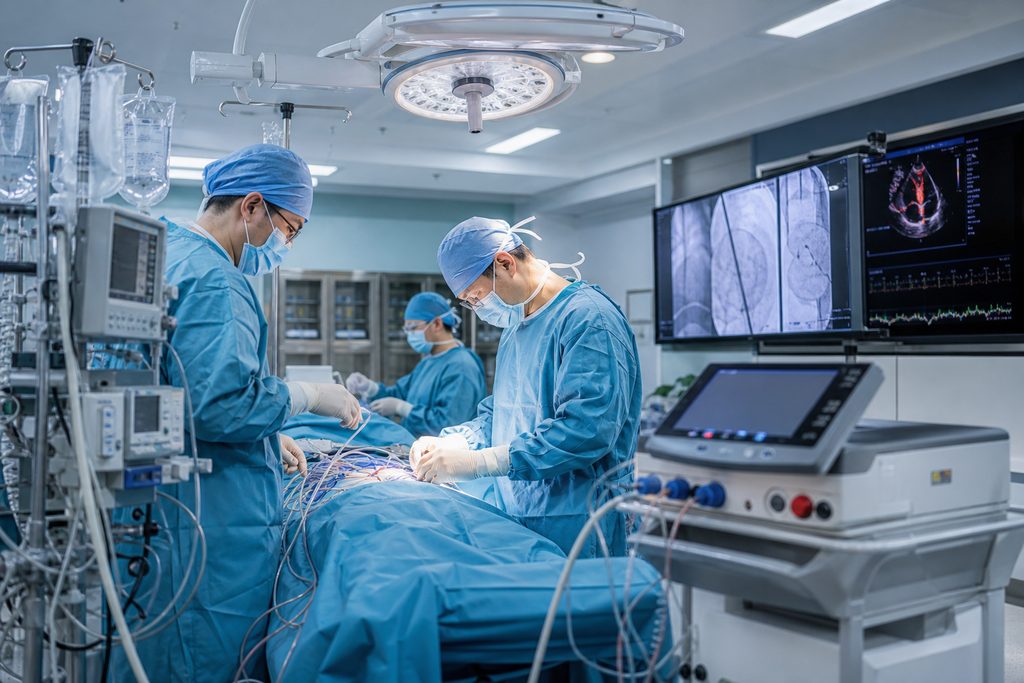
What if the heart failure treatment your cardiologist mentioned is financially out of reach at home, but clinically urgent? Heart failure affects approximately 64 million people worldwide. For patients with advanced disease, a cardiac resynchronization therapy defibrillator (CRT-D) or a left ventricular assist device (LVAD) can mean the difference between housebound survival and a functional life. But the price tags in Western systems are staggering. A CRT-D implant cost China may be one-fifth of the US price, and an LVAD surgery price abroad follows a similar pattern. This guide walks through the real numbers, the clinical infrastructure, and the practical path for an international patient considering device surgery in China.
Key Takeaways
- A CRT-D implant in a top Chinese cardiac center typically costs $25,000–$45,000, compared to $120,000–$180,000 in the United States, with comparable device technology.
- China’s highest-volume heart centers, such as Fuwai Hospital in Beijing, perform over 14,000 cardiac surgeries annually, creating deep subspecialist expertise in device implantation.
- Foreign patients cannot simply book an LVAD implant online; a legitimate pathway requires a pre-travel video consultation, in-person evaluation, and coordination through the hospital’s official international department.
- Language barriers, visa timing, and postoperative follow-up logistics are real — and manageable with methodical planning rather than last-minute arrangements.
The Problem: When a Life-Saving Device Costs More Than a House
An LVAD implantation in the United States carries a total episode cost that routinely exceeds $800,000. Even with insurance, out-of-pocket exposure can devastate a family’s finances. A CRT-D implant, while less invasive, still runs $120,000 to $180,000 in many Western hospitals. Patients with adequate clinical indications face an impossible choice: deplete retirement savings, take on crushing debt, or forgo a therapy that could add years of functional life.
Wait times compound the stress. In Canada, the median wait for non-emergent cardiac surgery stretches past three months. In the UK’s NHS, patients wait a median of 14 weeks from referral to treatment. For a patient with an ejection fraction below 25%, that wait is not just inconvenient — it is dangerous. The search for alternatives leads many families to ask a blunt question: how much does a left ventricular assist device cost in China, and can we actually access that care safely?
Why China’s Cardiac Device Programs Deliver Comparable Outcomes at a Fraction of the Cost
The cost gap is not a quality gap. It is a structural economic reality. China’s top-tier cardiac centers use the same Medtronic, Abbott, and Boston Scientific devices implanted in Minneapolis or Munich. The difference lies in labor costs, hospital operational efficiency, and a high-volume model that drives procedural speed without sacrificing sterility or technique.
Volume Creates Subspecialist Precision
Fuwai Hospital in Beijing performs more cardiac surgeries annually than any other center on the planet — over 14,000 cases. Its electrophysiology teams implant CRT devices at a weekly cadence that many Western centers achieve in a quarter. This volume breeds pattern recognition. A specialist who sees 300 CRT-D cases a year spots lead placement nuances and programming optimization opportunities that a lower-volume operator may miss. The same applies to LVAD programs. While China’s LVAD volume is smaller than its CRT volume, the centers that run these programs — Fuwai, Zhongshan Hospital in Shanghai, and West China Hospital in Chengdu — concentrate experience in dedicated heart failure teams.
Technology Parity Without the Markup
The devices themselves are identical. A Medtronic CRT-D pulse generator costs the same to manufacture whether it is implanted in Boston or Beijing. What changes is the hospital facility fee, the anesthesia professional fee, and the postoperative monitoring charges. In China’s public top-tier hospitals, these are set by government-regulated price schedules, not negotiated between insurers and hospital systems in an opaque market. That structural difference alone explains much of the CRT-D implant cost China advantage. The same device, the same manufacturer, the same sterile technique — embedded in a cost structure that has not been inflated by decades of US-style charge-master escalation.
International Patient Infrastructure Is Already Built
This is not medical tourism in its early, chaotic form. The hospitals on the Fudan-ranked Top 100 list have dedicated international departments with English-speaking coordinators, dedicated billing pathways for self-pay foreign patients, and experience managing the documentation required for an S2 visa application. They know what a pre-arrival medical summary should contain. They have protocols for postoperative hotel recovery near the hospital before a patient is cleared to fly home. The infrastructure exists — the challenge is navigating it correctly, not building it from scratch.
CRT-D vs. LVAD: Understanding the Real Options and Their Price Tags
These two device categories serve different clinical populations. A CRT-D is for patients with symptomatic heart failure, a wide QRS complex, and reduced ejection fraction who remain symptomatic despite optimal medical therapy. An LVAD is for end-stage patients — those inotrope-dependent or facing transplant listing. Mixing them up leads to wasted consultation time and incorrect cost expectations.
| Device Type | Clinical Indication | China Cost Range (USD) | US Comparison (USD) | Typical Hospital Stay |
|---|---|---|---|---|
| CRT-P (Pacemaker only) | Moderate HF, no defibrillator indication | $15,000–$25,000 | $60,000–$100,000 | 3–5 days |
| CRT-D (Pacemaker + Defibrillator) | Moderate-severe HF with arrhythmia risk | $25,000–$45,000 | $120,000–$180,000 | 5–7 days |
| LVAD (Left Ventricular Assist Device) | End-stage HF, bridge to transplant or destination therapy | $90,000–$140,000 | $500,000–$800,000+ | 3–6 weeks |
These figures include the device cost, surgeon and anesthesiologist fees, operating room charges, and standard postoperative monitoring. They exclude international travel, accommodation, and any pre-procedure consultations. The LVAD range reflects the HeartMate 3 device, which is the dominant model in Chinese LVAD programs. The CRT-D range varies with the specific pulse generator model and whether a patient requires a quadripolar lead system. Every estimate should be confirmed with a formal hospital quotation after case review — these are planning numbers, not binding prices.
Is CRT Pacemaker Surgery Safe in China for Foreigners? A Hard Look at the Data
The question “is CRT pacemaker surgery safe in China for foreigners” is really two questions: is the clinical quality acceptable, and is the patient experience safe for someone who does not speak Mandarin or understand the local system. The clinical answer is well-documented. China’s top cardiac centers report CRT implant success rates above 98%, with complication profiles — lead dislodgement, pocket infection, pneumothorax — in line with international benchmarks. Fuwai Hospital’s published data shows a cardiac resynchronization therapy response rate consistent with the CARE-HF and MADIT-CRT trial populations. The device programming follows international guidelines. The operating rooms are equipped with modern fluoroscopy and EP mapping systems.
The patient experience question deserves equal scrutiny. A foreign patient arriving at a Chinese public hospital without preparation will face a wall of noise: crowded registration halls, forms in Mandarin, and a pace of interaction that assumes local knowledge. This is not unsafe — it is disorienting. The safety solution is not to avoid the system but to enter it through the right door. The international department of a hospital like Zhongshan Hospital Fudan University provides English-language case management, appointment scheduling that bypasses the general queue, and billing in a format recognizable to international insurers. Clinical safety is strong. Navigational safety requires the correct entry point.
How to Evaluate a Hospital for Heart Failure Device Surgery in China
Your home cardiologist manages routine follow-up. CRT-D and LVAD devices transmit data remotely via home monitoring systems — the same Medtronic CareLink or Abbott Merlin.net platform used globally. The implanting center in China can be given access to review transmissions if desired. For a pocket infection or lead issue, your local electrophysiologist handles it; the hardware is identical to what they work with daily. Discuss this continuity plan with both your home cardiologist and the Chinese team before travel.
Yes. The major manufacturers — Medtronic, Abbott, Boston Scientific — supply the Chinese market with the same device models cleared by the NMPA (China’s FDA equivalent). A Medtronic Claria MRI CRT-D or Abbott HeartMate 3 LVAD in Shanghai is the same hardware implanted in Seattle or Stuttgart. Device programming follows the same international guidelines. The difference is the cost structure around the implant, not the implant itself.
The $90,000–$140,000 range reflects whether the procedure is done at a public top-tier hospital (lower end, but requires self-pay deposit and limited luxury amenities) or a private international hospital (higher end, with English-first environment and insurance billing). It also depends on case complexity — a redo sternotomy or concurrent valve procedure pushes the cost toward the upper bound. The device itself accounts for roughly 60–70% of the total.
Your Next Step
Heart failure device surgery is a major decision that should begin with clinical clarity, not a price list. The cost advantage in China is real and substantial, but it only matters if the clinical fit is right. Our team at China Medical Services connects international patients with the cardiac programs best matched to their specific clinical situation — CRT-D, LVAD, or otherwise. We coordinate the video consultation, the document translation, and the on-the-ground logistics so you can focus on the medical decision. Request a free consultation to discuss your case and determine whether a Chinese cardiac device program is a viable option for you.
Frequently Asked Questions
Yes. The hospitals used for international patients are JCI-accredited and follow the same international safety standards as top hospitals in the US and Europe. Surgical teams perform high volumes of procedures — often more than their Western counterparts — which studies show leads to better outcomes.
Costs vary by procedure and hospital, but international patients typically save 40-80% compared to US prices — even when factoring in travel and accommodation. A consultation with our team will give you an exact, all-inclusive quote with no hidden fees.
Send us your existing medical reports to get started. We handle everything from hospital selection and appointment scheduling to visa assistance and post-operative recovery planning. Your medical records are reviewed by the specialist before you even book a flight.
For more medical information and treatment options in China, visit chinamedservices.com (China Medical Services).
