Hainan 30-Day Visa-Free Medical Tourism: Boao Lecheng Access Without a Chinese Visa
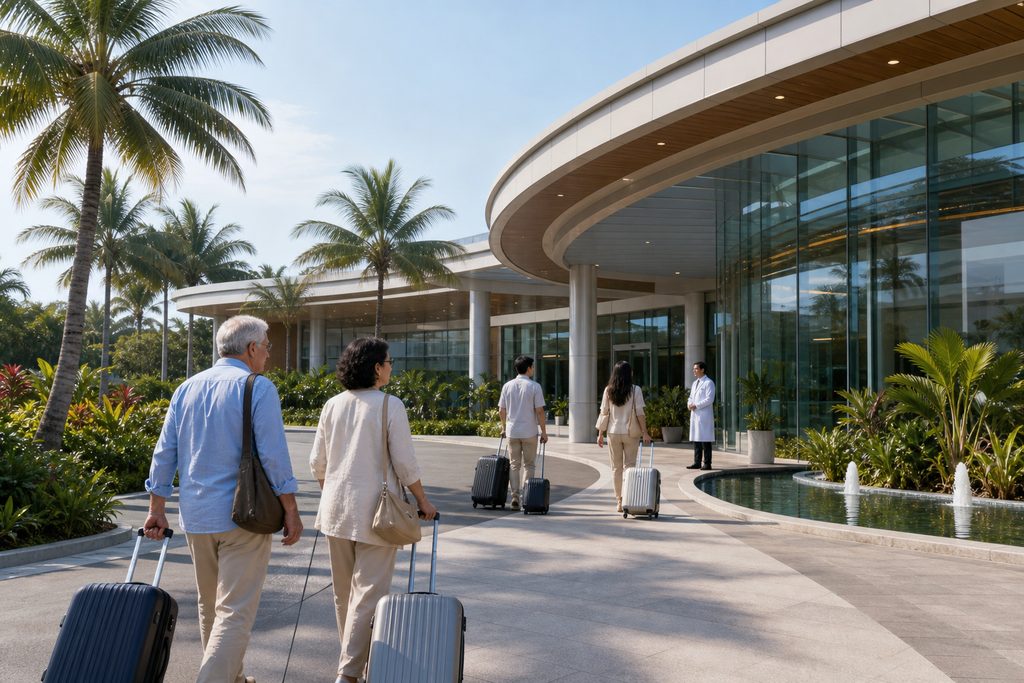
In 2018, China’s State Council granted Hainan province a policy that still surprises most Western patients: a 30-day visa-free entry for citizens of 59 countries, explicitly covering medical tourism in the Boao Lecheng International Medical Tourism Pilot Zone. No embassy visit. No S2 visa paperwork. Just a valid passport, a return ticket, and a hospital invitation letter. The question we hear most often is not about the policy itself — it is about the practical reality on the ground. Can I get treatment in Hainan without a visa? For the right patient with the right condition, the answer is yes. But the gap between policy and bedside is where things get complicated.
The Short Answer
Yes, eligible passport holders can enter Hainan for medical treatment without applying for a Chinese visa beforehand. You get 30 days. The entry is restricted to Hainan province — you cannot take a connecting flight to Beijing or Shanghai for additional consultations. The policy covers the entire Boao Lecheng zone, a 20-square-kilometer cluster of 27 licensed medical institutions running since 2013. But here is the caveat that no government brochure will tell you: the visa-free entry is only half the battle. The real work is getting a hospital inside the zone to accept your case and issue the formal invitation letter that immigration officials will ask to see. Without that letter, the visa-free policy is theoretical.
Who This Is Right For — and Who It Isn’t
The Boao Lecheng model solves a very specific problem. It is not a general-purpose medical tourism destination like Bangkok or Istanbul. The zone exists primarily to give Chinese patients and foreign visitors access to drugs, devices, and therapies approved overseas but not yet available in mainland China. If that describes your situation, the fit is natural.
Good candidates typically include:
- Patients who need a specific drug or implant already approved by the FDA or EMA but still undergoing China’s NMPA review
- Patients seeking advanced oncology treatments, ophthalmic devices, or orthopedic implants not yet on the mainland market
- Patients who can travel, undergo treatment, and complete initial recovery within 30 days
- Patients with well-documented medical records translated into English or Chinese
This path is probably not right for you if:
- Your condition requires complex multi-stage surgery with a recovery timeline measured in months
- You need access to a specific mainland specialist at a top-tier teaching hospital — Lecheng institutions are specialized, not comprehensive academic medical centers
- You have unstable cardiac, respiratory, or neurological conditions that make long-haul travel risky
- Your treatment goal is cost savings alone — while Lecheng can be less expensive than the US or Europe for certain therapies, it is not the cheapest medical tourism destination in Asia
Being honest about who should not come is what keeps our credibility intact. We would rather tell you upfront that Lecheng is the wrong fit than coordinate a trip that falls apart on arrival.
The Options, Compared
Patients considering medical tourism Boao Lecheng prices are usually weighing three distinct paths. Each has a different cost structure, regulatory environment, and treatment scope. The table below lays out the real differences.
| Factor | Boao Lecheng (Hainan) | Mainland China (Beijing/Shanghai/Guangzhou) | Thailand (Bangkok Private Hospitals) |
|---|---|---|---|
| Visa requirement | 30-day visa-free for 59 nationalities | S2 visa required; 2-4 week processing | Visa on arrival or medical visa (90 days) |
| Key advantage | Access to drugs/devices not yet NMPA-approved in China | Top-ranked specialists, high surgical volume, advanced techniques | Established medical tourism infrastructure, JCI-accredited hospitals |
| Treatment scope | Oncology, ophthalmology, orthopedics, cardiology, aesthetics | All specialties; full tertiary care | Cosmetic surgery, dental, orthopedics, cardiac, fertility |
| Cost range (USD, typical package) | $8,000–$45,000 depending on therapy and drug cost | $12,000–$60,000 for major procedures | $5,000–$30,000 for comparable procedures |
| Language barrier | Moderate; some English-speaking coordinators on-site | High; bilingual companion strongly recommended | Low; English widely spoken in private hospitals |
| Post-treatment follow-up | Limited; return to home country for ongoing care | Possible through hospital international departments | Well-established follow-up protocols for international patients |
Lecheng occupies a narrow but valuable niche. It is not competing with Bangkok on price or with Shanghai on breadth. It competes on access — getting you a therapy that is otherwise unavailable in China and prohibitively expensive or waitlisted elsewhere. If that is not your situation, one of the other two columns likely fits better.
What Treatments Are Available in Hainan Medical Zone
The zone’s entire value proposition rests on a policy called “special medical needs.” Under this framework, Lecheng institutions can import and use drugs, vaccines, and medical devices that have marketing approval in the US, EU, or Japan but have not yet cleared China’s National Medical Products Administration. This is not a loophole. It is a deliberate national pilot program designed to reduce the lag — sometimes 5 to 8 years — between Western regulatory approval and Chinese market access.
In practice, this translates to several high-demand treatment categories:
Oncology leads the list. Lecheng hospitals have administered checkpoint inhibitors, CAR-T cell therapies, and targeted agents to patients with advanced cancers — drugs that Chinese patients on the mainland could not legally access at the time. Some of these therapies carried price tags exceeding $50,000 per course, but the alternative for many patients was no treatment at all. The zone has also handled proton therapy referrals, though the actual equipment is operated by select institutions within the zone.
Cardiology and vascular intervention is another active area. Patients have received next-generation drug-eluting stents, transcatheter aortic valve replacements using devices still under NMPA review, and advanced ablation catheters for atrial fibrillation. These are not experimental procedures in the Western sense — they are proven in the US and Europe but simply not yet available 1,500 kilometers north in Shanghai.
Ophthalmology draws a steady stream of patients seeking premium intraocular lenses for cataract surgery. Multifocal and extended-depth-of-focus lenses that are standard in Germany or the US often take years to reach the mainland market. Lecheng short-circuits that wait.
Orthopedics and sports medicine round out the major categories. Custom 3D-printed implants, certain biologic therapies for osteoarthritis, and specialized joint replacement systems have all been delivered through the zone’s special import pathway.
One thing Lecheng does not offer is organ transplantation. That is explicitly outside the zone’s mandate and tightly regulated under separate national laws. Anyone promising otherwise is not operating within the legal framework.
How Does 30 Day Visa Free Medical Travel to China Work
The process sounds simple on paper. The reality has more steps than most patients expect.
First, you need a hospital inside the zone to review your medical records and agree to treat you. This is not a formality. Lecheng institutions are selective — they want cases where the special import policy genuinely applies and where the clinical picture supports a favorable risk-benefit ratio. You submit your records, imaging, pathology reports, and treatment history. The hospital’s specialists review them. If they accept, they issue an invitation letter.
Second, you book a direct flight to Haikou Meilan International Airport or Qionghai Boao Airport. You cannot transit through Guangzhou or Beijing — your first point of entry into China must be Hainan. Immigration officers at Haikou will check your passport against the 59-country list, verify the hospital invitation, and confirm your return ticket. If everything matches, you get a 30-day stay permit stamped on arrival.
Third, you proceed to the hospital. Treatment begins according to the pre-arranged schedule. The zone is compact — most hospitals are within a 30-minute drive of each other — so logistics are manageable if you have a coordinator handling transport and communication.
Fourth, you complete treatment and initial recovery within the 30-day window. This is the tightest constraint. Some patients underestimate recovery time and find themselves needing an extension. Extensions are possible in limited circumstances — the hospital can apply to the local public security bureau on your behalf — but approval is discretionary and never guaranteed. Planning your departure no later than day 25 is prudent.
The invitation letter is the linchpin. Without it, the visa-free policy does not activate. And getting that letter requires a hospital to commit to your case before you ever set foot in China. That is where a service like ours becomes relevant — not because the policy is inaccessible, but because navigating hospital intake from 8,000 miles away in a different language is genuinely difficult.
Boao Lecheng Medical Package Cost
Let us talk numbers. The phrase Boao Lecheng medical package cost gets searched often, but the answer is frustratingly variable. A package for cataract surgery with premium lenses runs $8,000–$12,000 per eye. A targeted oncology therapy course can reach $40,000–$60,000 depending on the drug, dosage, and monitoring protocol. Orthopedic procedures with custom implants fall somewhere in the $15,000–$35,000 range.
What drives the variance? Three factors dominate. The first is the cost of the imported drug or device itself — the manufacturer’s price, which Lecheng hospitals pass through with a markup. The second is the complexity of the procedure and the required hospital stay. The third is whether you need additional services like interpretation, accommodation, or post-discharge nursing.
What a typical package includes: the procedure or drug administration itself, standard hospital room charges for the prescribed stay, basic nursing care, and the hospital’s coordination fee for the special import application. Packages do not include international airfare, off-site accommodation, meals outside the hospital, or any treatment for complications that extend your stay beyond the planned duration. Always confirm inclusions in writing before transferring any payment.
Compared to US prices, the savings can be substantial. A cancer drug regimen that costs $120,000 in the United States might run $45,000 in Lecheng. But the comparison is not purely financial — the real draw is access to a therapy that is not yet available on the mainland and would require a much longer, more expensive trip to the US or Europe.
Best Hospitals in Boao Lecheng for International Patients
The zone houses 27 institutions, but only a subset actively treats international patients. The best hospitals in Boao Lecheng for international patients share a few characteristics: English-speaking coordination staff, experience with the special import application process, and a track record of managing cases from outside China.
Boao Super Hospital, backed by the government-affiliated China Health and Medical Development Foundation, is one of the larger facilities and handles a broad case mix including oncology and cardiology. Boao Evergrande International Hospital, connected to the Brigham and Women’s Hospital network in Boston, has focused on cancer care and has protocols for remote consultation with US-based specialists. The Boao International Hospital, operated by the Hainan government, serves as a general medical hub and often coordinates with mainland specialists who fly in for specific procedures.
Rumah Sakit Boao Lecheng International, a newer entrant targeting Southeast Asian and Middle Eastern patients, has invested in multilingual staff and culturally adapted patient services. Several specialized centers — an ophthalmic center, a plastic surgery hospital, and a regenerative medicine clinic — round out the options.
None of these hospitals appear on the Fudan University hospital rankings that dominate our discussions of mainland China’s top-tier institutions. Lecheng is a different ecosystem. The hospitals here are not competing on comprehensive academic reputation. They compete on speed of access to novel therapies. Judging them by the same criteria as Peking Union Medical College Hospital or West China Hospital misses the point entirely.
Practical Considerations: Documentation, Payment, and Follow-Up
Arriving in Hainan without a visa is the easy part. The hard part is everything else.
Medical records must be comprehensive and translated. Chinese hospital intake teams will want pathology reports, imaging on CD or cloud link, chronological treatment summaries, current medication lists, and a referral letter from your home physician explaining why the specific therapy available in Lecheng is indicated. Incomplete records are the single most common reason for case rejection. Our team handles document translation and formatting as part of the coordination process, but patients should understand the standard before they start gathering files.
Payment is almost entirely out-of-pocket. Lecheng hospitals do not have direct billing arrangements with Western insurance companies. You pay the hospital directly — typically via wire transfer or major credit card — and then seek reimbursement from your insurer. Some international insurance plans with strong medical tourism provisions may cover treatment in Lecheng, but you must confirm this before traveling. We have seen patients assume coverage and face denied claims because the hospital was not in-network.
Language is a real barrier. Clinical staff in Lecheng hospitals have varying levels of English proficiency. Some specialists trained overseas and communicate comfortably. Others rely on in-house interpreters whose medical vocabulary may be uneven. A bilingual medical companion — someone who understands both the clinical terminology and the hospital workflow — changes the experience from stressful to manageable. This is not a luxury service. It is a practical necessity for anyone who does not speak Chinese and is facing a serious medical procedure in an unfamiliar system.
Follow-up after returning home is the elephant in the room. Lecheng hospitals provide discharge summaries and treatment records, but ongoing care falls to your local physicians. You need a home-country doctor willing to manage follow-up for a therapy they may not have prescribed and may not be familiar with. Establish that relationship before you travel. A video consultation with the Lecheng specialist at the 3-month mark can bridge the gap — our team can coordinate this — but the day-to-day recovery happens wherever you live.
Frequently Asked Questions
Yes, if your passport is from one of the 59 designated countries — including the US, Canada, UK, Australia, most EU member states, Japan, South Korea, and several Southeast Asian and Middle Eastern nations. You must enter directly through a Hainan port, hold a hospital invitation letter, and have a confirmed return ticket within 30 days. The policy does not allow travel to mainland China. If your passport country is not on the list, you will need to apply for an S2 visa through the standard process.
This is the most uncomfortable question and the one with the least satisfying answer. Extensions are legally possible — the treating hospital can petition the local Exit-Entry Administration on your behalf — but approval is case-by-case and never guaranteed. The safest approach is to plan a treatment protocol that fits within 25 days, leaving a buffer. For therapies that genuinely require longer stays, a standard S2 visa with a 90- or 180-day duration may be the more prudent choice, even though it requires advance application at a Chinese embassy or consulate.
The products available through Lecheng’s special import pathway have regulatory approval from the FDA (United States), EMA (European Union), or PMDA (Japan). They are not unapproved in the sense of being experimental or unstudied. They are unapproved in China specifically — meaning they have not yet completed the separate NMPA review process that can take years. The clinical risk profile is the same as receiving that therapy in the US or Europe. The regulatory risk is that long-term safety data in Chinese patient populations may be limited. Your treating physician in Lecheng should discuss this distinction with you explicitly.
The imported drug or device is the dominant cost driver, and manufacturer pricing varies enormously. A next-generation intraocular lens might cost the hospital $800 to procure. A course of CAR-T cell therapy can cost $35,000 or more just for the product. Hospital fees, specialist charges, and the special import application fee add layers on top. The price you are quoted is essentially the sum of the product cost plus the clinical service cost, with no government price controls on the imported item. That is why two patients asking about medical tourism Boao Lecheng prices can receive quotes that differ by an order of magnitude.
What if something goes wrong during treatment?
Lecheng hospitals are equipped to handle routine complications within their specialty areas. A post-operative infection, an adverse drug reaction, or a cardiac event during a monitored procedure can typically be managed on-site. For complications requiring subspecialty care not available in the zone — a complex neurosurgical emergency, for example — transfer
For more medical information and treatment options in China, visit chinamedservices.com (China Medical Services).
