How We Arrange Your TCM at Dongzhimen Hospital Beijing University of Chinese Medicine: Full Guide
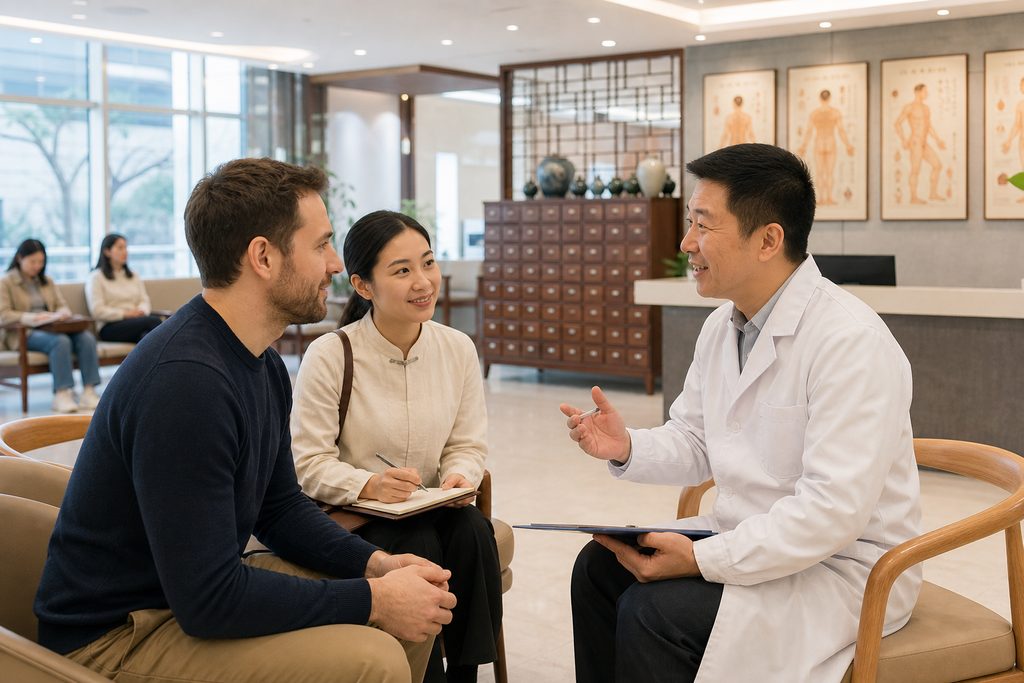
When 54-year-old Linda from Toronto finished her last round of chemotherapy, the joint pain lingered. Her oncologist had no more protocols to offer. A friend mentioned acupuncture. Linda searched online, found our site, and asked a question we hear often: can a foreigner actually access real traditional Chinese medicine at a top Chinese hospital without speaking the language? The answer is yes. But it requires a plan.
Dongzhimen Hospital TCM: The Short Answer
Dongzhimen Hospital is the primary teaching hospital of Beijing University of Chinese Medicine. It is not a wellness spa. It is a working tertiary hospital with 1,574 beds, over 40 clinical departments, and a daily outpatient volume that exceeds 8,000 visits. For international patients, getting treatment here means navigating a system built for speed and scale. Dongzhimen Hospital TCM cost varies sharply depending on whether you walk through the standard public outpatient door or coordinate through the hospital’s international department. Standard acupuncture sessions start around 200–400 RMB per visit. A full TCM treatment package for a chronic condition, coordinated through the international channel with English support, typically ranges from $2,000 to $8,000 depending on duration and complexity.
That range is wide for a reason. The standard public pathway costs less but demands Chinese fluency and patience. The international pathway costs more but removes the language barrier and compresses the timeline. Which one fits you depends on your condition, your budget, and how much uncertainty you can tolerate.
Who This Is Right For — and Who It Isn’t
Our team has coordinated TCM care for patients from over a dozen countries. Some arrive with clear expectations. Others arrive with misconceptions. Here is what we have learned about who benefits most.
Good candidates typically share these traits:
– They have a chronic condition where conventional treatment has plateaued — persistent pain, digestive disorders, post-chemotherapy fatigue, eczema, insomnia, or menstrual irregularities
– They are open to a diagnostic framework that does not rely on blood tests and imaging alone — tongue diagnosis, pulse-taking, and pattern differentiation are central here
– They can commit to a treatment course, not a single session. TCM is cumulative. Most protocols require 10–15 sessions over three to six weeks for meaningful change
– They have realistic expectations about evidence. Acupuncture has strong data for certain pain conditions. Herbal decoctions are pharmacologically active. But TCM is not a miracle cure for late-stage cancers or degenerative neurological diseases
Who should think twice:
– Anyone seeking a quick fix. TCM is slow medicine. If you have three days in Beijing and want a single transformative treatment, a spa might serve you better
– Patients on multiple Western pharmaceuticals with narrow therapeutic windows. Herbal formulas interact with drugs. The TCM physician must review your full medication list, and you need a doctor back home willing to monitor adjustments
– Those with acute surgical emergencies. Dongzhimen has an emergency department, but if you need an appendectomy, go to a general hospital. TCM hospitals treat internal medicine and rehabilitation cases, not trauma
– Patients unwilling to drink herbal decoctions. Raw herbs boiled at home are the standard delivery method. Granules and pills exist, but the strongest formulas are liquid and taste exactly as you would expect
Being clear about who should not come is what makes the rest of this guide trustworthy.
The Options, Compared
International patients at Dongzhimen face a genuine choice between three access routes. They are not equivalent.
| Factor | Standard Public Outpatient | Hospital International Department | Coordinated via Third-Party Service |
|---|---|---|---|
| Cost per acupuncture session | 200–400 RMB | 600–1,200 RMB | 600–1,200 RMB (plus coordination fee) |
| English-speaking staff | Rare. Bring a translator. | Available. Varies by department. | Guaranteed bilingual companion |
| Appointment lead time | Days to weeks. Queue on the day. | 3–7 days with pre-arrangement | 3–5 days. We handle scheduling. |
| Herbal medicine access | Full. Dispensary on site. | Full. Dispensary on site. | Full. We assist with preparation instructions. |
| Payment method | WeChat Pay, Alipay, Chinese bank card | Cash, card, some international transfers | We facilitate payment. You reimburse. |
| Post-treatment follow-up | You manage it yourself | Limited. Depends on the physician. | We coordinate remote follow-up and formula adjustments |
The standard outpatient route works for expats living in Beijing with functional Chinese. The international department works for visitors who have a clear diagnosis and a short treatment plan. The coordinated route works for patients who want someone to handle the logistics so they can focus on recovery. There is no universally right answer. But if you are flying in from abroad for a multi-week treatment course, the third column is where most of our patients land.
How Does TCM Treatment Work at Dongzhimen Hospital
The process differs from what Western patients expect. There is no single “TCM department” you walk into. The hospital organizes care by disease category, not by modality.
Your first visit is a diagnostic consultation. The physician takes your history, examines your tongue, and reads your pulse at both wrists. They may review any imaging or lab reports you bring. Then they issue a pattern differentiation — a TCM diagnosis that describes the underlying imbalance. This might sound like “liver qi stagnation with spleen deficiency” or “kidney yin deficiency with empty heat.” These are technical terms, not metaphors.
Treatment begins immediately after diagnosis. A typical session combines acupuncture (20–30 minutes with needles retained), possibly cupping or moxibustion, and a herbal prescription. The herbal formula is dispensed on site. You receive bags of dried raw herbs — bark, roots, seeds, flowers — with boiling instructions. Some patients opt for granule concentrates, which dissolve in hot water. The raw decoction is more potent.
A course runs 10–15 sessions. Frequency is typically daily or every other day for the first two weeks, then spacing out. The physician adjusts the herbal formula every 5–7 days based on your response. This is not a set-and-forget protocol. TCM at this level is iterative medicine.
For international patients, the biggest friction point is the herbal preparation. Boiling raw herbs in a hotel room is impractical. We help patients arrange for the hospital pharmacy to pre-decoct and vacuum-seal the formula into daily pouches. This costs extra — roughly 30–50 RMB per day — and solves the logistics problem entirely.
Beijing University of Chinese Medicine Treatment Packages: What You Are Really Paying For
The phrase “treatment package” requires unpacking. Dongzhimen Hospital does not sell standardized packages on a website. What exists is a treatment plan scoped by the physician after diagnosis, with costs itemized per service. When a third party quotes a package price, they are bundling the expected hospital charges with coordination services.
A typical Beijing University of Chinese Medicine treatment package for a three-week pain management course breaks down like this:
– Initial consultation with a senior TCM specialist: 300–800 RMB
– 12–15 acupuncture sessions (daily or alternate days): 7,200–18,000 RMB total
– Cupping or moxibustion add-ons per session: 100–200 RMB each
– Herbal formula (raw, pre-decocted, 21 days): 1,500–3,000 RMB
– Follow-up consultations for formula adjustment (2–3 visits): 600–2,400 RMB
Hospital-side total: roughly $1,500–$3,500 at current exchange rates. Add coordination — bilingual companion, appointment scheduling, airport transfer, visa support documents — and the all-in figure for a three-week course lands between $4,000 and $8,000.
What drives the variance? Three things. The seniority of the physician (professors with 30 years of clinical experience cost more than associate chief physicians). The complexity of your herbal formula (rare ingredients like cordyceps or ginseng can multiply the pharmacy bill). And the intensity of coordination you need (a single companion for key visits versus daily accompaniment).
None of these figures include flights, accommodation, or meals. Beijing is not cheap. Budget $100–$200 per night for a hotel near the hospital in Dongcheng District.
Is Dongzhimen Hospital Good for Foreigners
The honest answer: it depends on what “good” means to you.
Dongzhimen is academically elite. It is one of the top three TCM hospitals in China by any measure — Fudan rankings, research output, faculty credentials. The physicians here train TCM students from across the country. Many department heads hold national-level titles. If you want the most rigorous, evidence-informed TCM available in a hospital setting, this is the place.
But the hospital was built for Chinese patients. The hallways are crowded. The signage is in Chinese. The pharmacy queue can take 40 minutes. The standard outpatient process requires you to get a hospital card, load money onto it, swipe it at self-service kiosks to check in, and navigate a numbering system that resets daily. Without Chinese language skills, this is overwhelming.
The international department smooths some of this friction but not all of it. You will still encounter moments where the only person available speaks rapid Beijing Mandarin. That is where a bilingual companion changes the experience entirely — not as a luxury, but as a practical necessity.
Is Dongzhimen Hospital good for foreigners? If you have the right support, it gives you access to TCM at a level that does not exist outside China. If you walk in alone expecting a Mayo Clinic experience, you will be disoriented within ten minutes.
What It Costs: A Realistic Breakdown
Let us put numbers to the Dongzhimen Hospital TCM cost question, because vague ranges do not help anyone plan.
For a two-week course targeting chronic lower back pain with acupuncture, cupping, and herbal medicine, coordinated through the hospital’s international channel with bilingual support:
– Hospital registration and consultation fees: $80–$150
– 10 acupuncture sessions: $400–$800
– 5 cupping sessions: $100–$200
– 14-day herbal formula (pre-decocted): $200–$400
– Bilingual companion (half-day, 10 sessions): $1,500–$2,000
– Airport transfer (round-trip): $200
– Hospital appointment coordination: from $300
Total: approximately $2,800–$4,050.
For a six-week course addressing a more complex condition like post-chemotherapy recovery or autoimmune skin disease, with daily treatment and ongoing formula adjustments:
– Hospital charges: $3,000–$6,000
– Coordination and companion services: $3,000–$5,000
Total: approximately $6,000–$11,000.
These are reference points, not fixed prices. Every case is scoped individually after the physician reviews your medical history. We provide a detailed cost breakdown before you commit to anything.
A note on the traditional Chinese medicine hospital Beijing price list: there is no single published price list for international patients. Public hospital pricing in China is regulated, but the international department operates under different fee schedules. Expect to pay 1.5 to 2 times the domestic rate for English-supported services. This is standard across all top-tier Chinese hospitals, not unique to Dongzhimen.
Practical Considerations: Documentation, Visas, and Follow-Up
You cannot just show up. Preparation matters.
Medical records come first. The physician needs your full history — diagnosis reports, imaging, current medications, previous treatments, and a summary from your primary doctor. If these are not in Chinese, translation is necessary. Our team handles medical translation as part of coordination. Do not rely on Google Translate for a CT scan report.
Visa is straightforward but specific. Medical treatment in China falls under the S2 visa category, which covers short-term private affairs including medical visits. You need an invitation letter from the hospital or a supporting document from a recognized coordination entity. Processing takes one to two weeks at most Chinese embassies. Do not apply for an M visa — that is for commercial and trade activities and does not cover medical treatment.
Payment at the hospital is predominantly cash or Chinese mobile payment. International credit cards are accepted at the international department counter but not at every payment point within the hospital. We help patients navigate this by facilitating payments where needed and providing a consolidated invoice for reimbursement.
Insurance is a case-by-case matter. Most international insurers do not directly settle with Chinese public hospitals, even through the international department. You pay upfront and submit claims afterward. Some high-end policies cover TCM; many do not. Check your policy’s fine print on complementary and alternative medicine before booking a flight.
Follow-up after you return home is the part most patients underestimate. TCM is not a one-and-done intervention. Your herbal formula may need adjustment after two weeks. Your acupuncturist back home may need the treatment records. We coordinate remote follow-up consultations via video, with the physician reviewing your progress and modifying the prescription. The written second opinion service, priced from $300, can also serve as a handover document for your local practitioner.
Frequently Asked Questions
Can I book TCM treatment at Beijing University of Chinese Medicine before I arrive?
You cannot book a specific treatment protocol before a physician sees you. That would be medically irresponsible. What you can do is arrange the initial consultation, submit your medical records for pre-review, and secure a time slot with a senior specialist. We handle this. The physician will design your treatment plan after the first consultation. Anyone promising a fixed treatment protocol sight unseen is not working with a real hospital.
What if the herbal medicine makes me feel worse?
This happens. Some formulas cause mild digestive upset in the first few days as your system adjusts. More serious reactions — allergic responses, drug interactions — are less common but possible. The physician needs to know immediately. One advantage of being treated at a hospital rather than a private clinic is that you have access to emergency care on site. We also maintain a direct line to the treating physician through the coordination team, so you are not navigating a reaction alone.
How do I know the herbs are safe and not contaminated?
Dongzhimen Hospital sources herbs through its own pharmacy, which is subject to China’s pharmacopoeia standards and hospital-level quality control. The hospital is a teaching institution affiliated with a national university. Its pharmacy processes thousands of prescriptions daily. This is not a street-market operation. That said, heavy metal and pesticide contamination in Chinese herbs is a documented concern industry-wide. If this worries you, ask the physician to prescribe granule concentrates, which undergo additional processing and testing. The hospital pharmacy can provide certificates of analysis for specific batches upon request.
Is Dongzhimen Hospital good for foreigners who speak no Chinese?
The hospital is navigable with support. Without support, it is very difficult. The international department has some English-speaking staff, but coverage is inconsistent across departments. If your treatment involves multiple modalities — acupuncture in one department, herbal consultation in another, lab tests in a third — you will hit language barriers. A bilingual companion who knows the hospital layout and the workflow saves hours of confusion and ensures nothing gets lost in translation.
What happens if I need to cut my treatment short and fly home early?
You are not locked into a package. Hospital charges are per service, so you only pay for what you receive. Coordination fees for unused days are refundable according to the terms agreed upon before your trip. The herbal formula you take home can be adjusted for the remaining supply. We also arrange a discharge summary and treatment record in English so your doctor back home understands what was done and what was prescribed.
Your Next Step
Linda, the patient from Toronto, spent four weeks at Dongzhimen. She went home with less pain, a herbal formula she tapered over two months, and a treatment summary her family doctor added to her file. She also went home with a realistic understanding of what TCM can and cannot do.
Our team at China Medical Services exists to make that process possible for patients who cannot navigate it alone. We are not a hospital. We do not diagnose, prescribe, or treat. We connect you with the right physicians at China’s top TCM hospitals, handle the logistics from medical translation to appointment scheduling, and provide bilingual companions who ensure your time in Beijing is spent on treatment, not on figuring out which floor the pharmacy is on.
If you are considering TCM at Dongzhimen Hospital or another leading Beijing institution, start with a conversation. Tell us about your condition, send your records, and we will tell you honestly whether this path makes sense for you. There is no cost for the initial consultation, and no pressure to commit.
Request a free consultation and let us help you determine if TCM at Dongzhimen is the right next step.
The right treatment, at the right hospital, with the right support — that is the only way this works. And it does work, for the right patients, every day.
For more medical information and treatment options in China, visit chinamedservices.com (China Medical Services).
