Recovery and Sightseeing in China: Blend Medical Care with Gentle Travel
Key Takeaways
- China’s top-tier hospitals perform surgeries at 1/5 to 1/10 the cost of US equivalents, with clinical outcomes that match or exceed Western benchmarks.
- A structured medical tourism China recovery sightseeing package is not a vacation with a quick procedure tacked on — it is a medically supervised timeline where rest comes first and gentle exploration follows clearance.
- Navigating China’s hospital system independently is extremely difficult without Mandarin fluency; a local logistics team handles registration, payment, and translation so you focus entirely on healing.
- Understanding the correct visa category (S2 for medical treatment) and the mandatory in-person consultation requirement is essential before booking any flight.
The Problem: Surgery at Home Is Priced Out of Reach
Over 100 million Americans carry medical debt. A single knee replacement in the United States averages $35,000 to $70,000, depending on the facility and region. For uninsured or underinsured patients, that number is not an inconvenience. It is a wall. The wait times in publicly funded systems like the UK’s NHS or Canada’s provincial health plans stretch the same procedure into months or years of deteriorating mobility. People lose wages. They lose independence. They lose years of their lives waiting for a slot that keeps moving.
Crossing borders for care is no longer a fringe idea. Approximately 1.4 million Americans traveled abroad for medical treatment in 2023, according to Patients Beyond Borders. Dental work, orthopedic surgery, and cardiac procedures top the list. But a growing number of patients are asking a smarter question. Not just “where can I get this done cheaper,” but “where can I get this done well, and recover in a place that actually helps me heal.”
That question changes the calculus. It shifts the search from a transaction to an experience. And it leads a specific, determined group of patients toward a destination that has spent two decades quietly building the infrastructure to welcome them.
Who We Are
We are not a hospital. We do not provide medical treatment, clinical diagnoses, or surgical referrals based on individual health histories. Our team functions as your logistical architects — we bridge the gap between you and a rigorously vetted network of 340+ top-ranked hospitals across 37 Chinese cities. We translate medical records, coordinate with hospital international departments, arrange bilingual companions who stand beside you from registration through discharge, and design recovery timelines that respect both your surgical protocol and your desire to experience a new culture. We handle the friction. You focus on getting better.
Why a Recovery-Focused Medical Trip to China Delivers Results
The idea of a medical tourism China recovery sightseeing package raises a fair question. Is this just a discounted surgery bundled with a bus tour? It is not. The model that works — the one our team has refined over years of coordinating international patient journeys — inverts the typical medical tourism script. Treatment comes first. Recovery is monitored. Sightseeing happens only after a surgeon clears it, and only at a pace that supports healing.
Clinical Volume That Creates Unmatched Expertise
Chinese top-tier public hospitals operate at a scale that is difficult to visualize until you stand in one. A single orthopedic department at a major Shanghai hospital may handle over 2,000 joint replacements annually. The average US orthopedic surgeon performs roughly 65 knee replacements per year. The surgeon you see in China may do that many in a month. Volume correlates with outcomes — studies published in The Journal of Arthroplasty and The Lancet have repeatedly demonstrated that higher surgical volumes predict lower complication rates and shorter lengths of stay. This is not a theory. It is a statistical reality built into the structure of China’s hospital system.
This matters for recovery. A surgeon who has performed your exact procedure thousands of times has encountered nearly every anatomical variation and post-operative complication. That experience translates into refined surgical technique, shorter time under anesthesia, and protocols that get patients mobile faster. For someone considering an affordable knee replacement abroad with gentle tour, the surgeon’s volume is the single most important variable — more than the hospital’s marble lobby or the thread count of the recovery suite.
Technology and Efficiency at Scale
China’s top hospitals have adopted robotic-assisted surgery platforms, computer-navigated joint replacement systems, and minimally invasive techniques at a pace that matches or exceeds Western academic medical centers. The difference is throughput. A da Vinci surgical system in a major Chinese hospital may run cases back-to-back from 8 a.m. to 8 p.m., generating an experience curve that few Western hospitals can match. For patients, this means access to advanced techniques — smaller incisions, less soft tissue disruption, faster initial recovery — performed by teams that are deeply familiar with the equipment.
Post-operative protocols reflect this efficiency. Enhanced Recovery After Surgery (ERAS) pathways, which emphasize early mobilization, optimized pain management, and reduced fasting times, are standard in many Chinese orthopedic and general surgery departments. Patients are typically out of bed within hours of a joint replacement, not days. That early mobility matters enormously for someone who hopes to book recovery holiday China medical trip and actually enjoy the second half of it.
Cost Advantage Without Quality Compromise
Let us address the obvious objection directly. Lower cost does not mean lower quality. The structural reasons for China’s price advantage are straightforward. Physician salaries are lower relative to Western counterparts — not because training is inferior, but because China’s labor economics differ. Hospital overhead is distributed across enormous patient volumes. Device and implant costs are lower due to domestic manufacturing and government price controls on medical consumables. The result: a total knee replacement at a top Shanghai orthopedic center typically ranges from $8,000 to $15,000, compared to $35,000 to $70,000 in the United States. A cardiac bypass procedure that costs $120,000+ in the US runs $12,000 to $20,000 at a leading Chinese cardiac hospital like Fuwai Hospital, which performs over 14,000 cardiac surgeries annually — the highest volume of any cardiac center in the world.
These numbers are not promotional. They are the reason patients make this trip. The savings fund the travel, the accommodation, the bilingual companion, and still leave the patient with a fraction of what they would have paid at home. And the clinical outcomes — tracked through complication rates, infection rates, and patient-reported outcome measures — are comparable to or better than international benchmarks. This is the foundation on which a recovery holiday makes sense. The surgery is excellent. The price is rational. The question becomes what you do with the weeks after.
What You Need to Know Before Going Alone
China’s healthcare system rewards preparation and punishes improvisation. Patients who arrive without a plan encounter barriers that can derail a trip before the first consultation. Here is what you face if you try to navigate this independently.
- Visa Requirements Are Specific and Non-Negotiable: Medical treatment in China requires an S2 visa, annotated for medical purposes. Accompanying family members also need S2 visas. The M visa is for commercial trade activities and has no connection to medical treatment — applying under the wrong category will result in denial at the consulate or refusal at the border. The application requires an invitation letter from the treating hospital, medical records translated into Chinese, and proof of sufficient funds. Obtaining that hospital invitation letter as an individual patient, without an established relationship, is extremely difficult.
- You Cannot Book Surgery Remotely: China’s public hospital system does not permit international patients to schedule surgery from abroad. You must attend an in-person consultation. A surgeon will examine you, review your imaging, and only then schedule a procedure date. Anyone promising to lock in a surgery date before you arrive is either describing a VIP international department channel (which exists, at 1.5 to 2 times the standard rate) or making a promise they cannot keep.
- Language Barriers Are Total: Even in top-tier hospitals with international departments, the registration desks, payment counters, pharmacy windows, and imaging centers operate in Mandarin. Signs may have English translations. Staff at those counters rarely do. A single missed step — paying the wrong fee at the wrong window, going to the wrong building for an MRI — can cost hours. After surgery, when you are in pain and on medication, navigating this alone is not just frustrating. It is unsafe.
- Payment Systems Do Not Work the Way You Expect: Chinese hospitals require upfront payment before treatment. International credit cards are not universally accepted. WeChat Pay and Alipay dominate, and linking a foreign card to these platforms is not always straightforward. Insurance reimbursement happens after the fact — you pay the hospital, then file with your insurer. Some private international hospitals in our network, such as United Family and Jiahui, offer direct insurance billing. Public hospitals do not.
How We Help You Navigate This
These barriers exist for structural reasons, not because anyone is trying to make your life difficult. China’s hospital system was built to serve a domestic population of 1.4 billion people. International patients are a tiny fraction of the patient flow. The system does not bend for them. Our job is to insert a layer of coordination that makes the system work for you anyway.
Before you travel, we translate your medical records and imaging into Chinese, prepare them to the specifications required by hospital international departments, and coordinate the invitation letter that supports your S2 visa application. We help you select the right hospital — not the most famous one, but the one whose department chair specializes in your condition, whose international patient office is responsive, and whose location supports the recovery experience you want. This is not a generic recommendation. It is a match based on your diagnosis, your budget, and your goals.
Once you land, a bilingual medical companion meets you. This person handles registration, payment, queueing, and translation. They stand beside you during the consultation, ensuring you understand every word the surgeon says and that the surgeon hears every question you ask. After surgery, they coordinate discharge, medication pickup, and follow-up appointments. They are not a tour guide. They are a medical logistics professional who speaks both languages fluently and knows the hospital’s layout and procedures intimately.
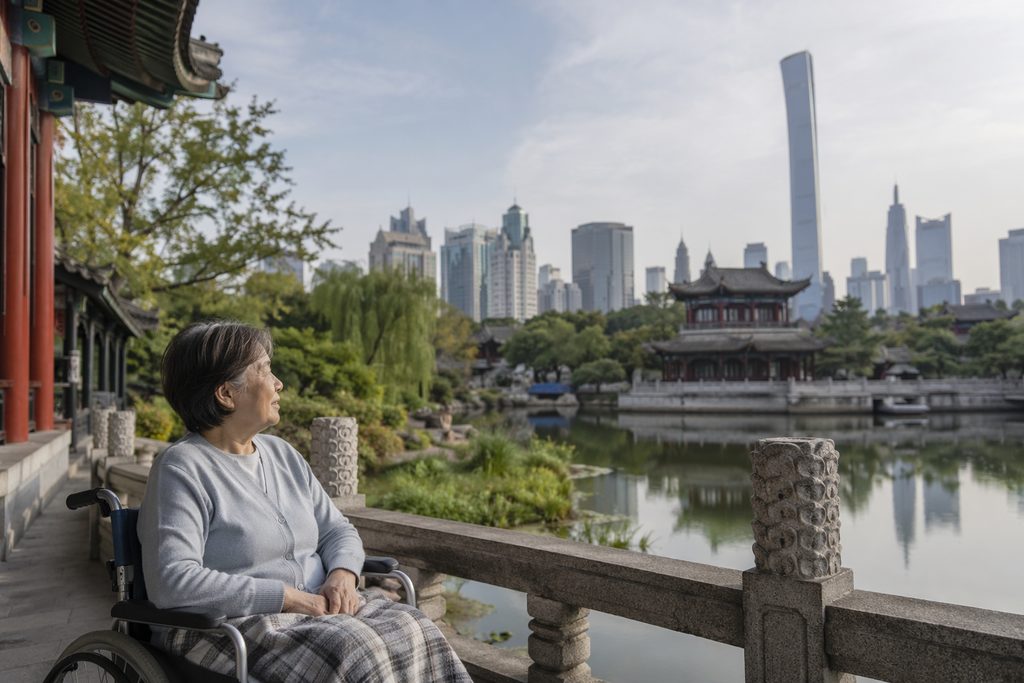
The recovery phase is where the sightseeing question becomes real. Our team works with your surgeon to understand your post-operative restrictions — weight-bearing limits, activity levels, wound care requirements. We then design a gentle itinerary that respects those limits. This is not a packed schedule of tourist attractions. It might mean a morning spent resting at your accommodation, followed by a wheelchair-accessible visit to a quiet garden or a museum with seating every few hundred meters. It might mean a tea house, not a Great Wall hike. For someone who has just had eye surgery and is wondering can I sightsee after cosmetic surgery in Beijing, the answer depends entirely on the procedure, the surgeon’s clearance, and the pace of the itinerary. We build that itinerary around the clearance, not the other way around.
Frequently Asked Questions
It depends on the surgery and the timeline. A knee replacement requires weeks of restricted activity before significant walking is advisable. A minor cosmetic procedure may allow gentle sightseeing within days. The key is that sightseeing follows medical clearance and is paced for recovery — not the other way around. Our team designs itineraries that treat rest as the priority and exploration as a bonus. A two-week trip might include surgery in week one, monitored rest with light local outings in week two, and no strenuous activity at all. The medical tourism China recovery sightseeing package model works because it is medically supervised at every stage.
Start with the clinical data. Our network includes hospitals ranked in the Fudan University Hospital Rankings, which evaluate China’s top 100 hospitals by specialty reputation and overall strength. For a specific procedure, we match you to a department with high volume and strong outcomes in that exact area. Then we consider location. The best hospitals in Shanghai for surgery with vacation are often those with international departments located in the former French Concession or near the Bund — areas with tree-lined streets, accessible parks, and high-quality serviced apartments suitable for post-operative recovery. Shanghai also offers excellent air quality monitoring and a large English-speaking expatriate community, which reduces isolation during a long recovery stay.
Your treating surgeon and hospital remain responsible for your post-operative care. Our bilingual companion ensures you can communicate symptoms immediately and get back to the hospital for evaluation if needed. We do not provide medical care ourselves, but we maintain the connection between you and your clinical team. If a complication requires extended stay, we help adjust accommodations, visa extensions, and follow-up appointments. This is one reason we strongly advise against independent medical travel — when something unexpected happens, having a local logistics team changes the outcome.
This is a practical concern that comes up frequently. Patients researching how to combine eye surgery with China travel need to understand that recovery timelines vary dramatically by procedure. LASIK patients often have functional vision within 24 to 48 hours, though with light sensitivity and dryness that make extended outdoor sightseeing uncomfortable for the first week. Cataract surgery patients may need several days before vision stabilizes. Retinal procedures require longer restrictions. We schedule sightseeing only after the surgeon confirms it is safe, and we adjust the itinerary to account for vision limitations — indoor cultural sites, audio-guided experiences, and shorter outings with frequent rest breaks.
A total knee replacement with a two-week recovery stay in Shanghai, including surgery, hospital fees, accommodation in a serviced apartment, bilingual companion services, airport transfers, and a gentle sightseeing itinerary, typically ranges from $18,000 to $28,000. This compares to $35,000 to $70,000 for the surgery alone in the United States. The exact figure depends on the hospital selected, the complexity of your case, and the accommodation standard you choose. Our team provides a detailed cost breakdown after understanding your medical needs — we do not quote a single number without knowing what we are quoting for.
Your Next Step
Traveling to China for surgery is not a decision to make lightly. It requires planning, patience, and a clear understanding of what the system demands and what it delivers in return. What it delivers — for the right patient, with the right preparation — is access to world-class surgical expertise at a cost that makes treatment possible, followed by a recovery period in one of the world’s most dynamic cultural destinations. Not a rushed tour. A measured, medically supervised return to mobility and health in a place worth experiencing.
If you are considering this path, start with a conversation. Our team reviews your medical situation, explains which hospitals in our network of top-ranked Chinese hospitals are best suited to your needs, and outlines what a realistic timeline looks like — including when and whether gentle sightseeing fits into your recovery. There is no cost for the initial consultation, and no pressure to commit. You need information before you can make a decision. We provide it. Request a free consultation here and we will walk you through the possibilities, honestly and in detail.
For more medical information and treatment options in China, visit chinamedservices.com (China Medical Services).
