Remote ENT Case Review: Pre-Travel Cochlear Implant Sinus Surgery Assessment
What a Remote ENT Case Review Actually Solves
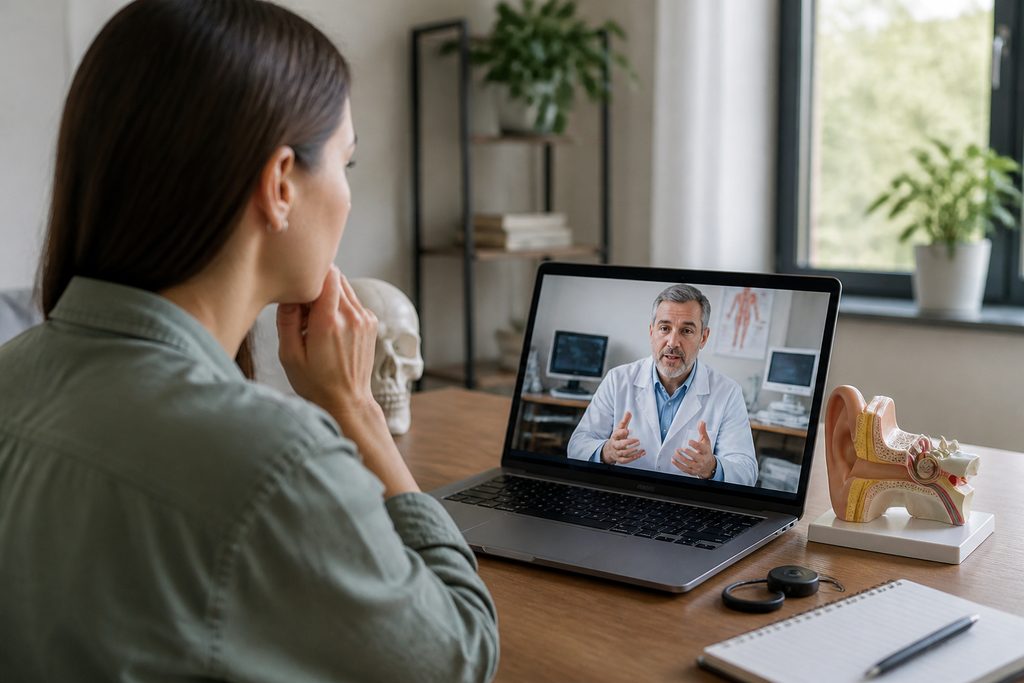
A remote ENT case review means sending your existing scans, audiology reports, and surgical history to a specialist in China before you book a flight. The goal is not a generic price quote. The goal is a surgeon looking at your specific anatomy and telling you whether the procedure you need is feasible, what approach they would take, and what complications your history raises.
For cochlear implant recipients considering sinus or throat surgery abroad, this step matters more than for most patients. You have hardware in your mastoid bone. You may have altered nasal anatomy from prior procedures. A surgeon who has not reviewed your CT scans cannot responsibly tell you that a sinus surgery plan is safe. That review happens remotely, before travel.
Our team coordinates this process for patients from over 30 countries. We send your records to the ENT departments that actually handle complex revision cases. You get a written assessment, a surgical plan outline, and a candid opinion on whether traveling for the procedure makes clinical sense. Sometimes the answer is no. That is useful information too.
How This Actually Works, Step by Step
The sequence is straightforward but every step has friction points most patients do not anticipate. Here is the real process, not the brochure version.
Step 1: You gather your records. This sounds simple. It rarely is. You need your most recent high-resolution CT scan of the sinuses and temporal bone in DICOM format, not just the radiologist’s report. You need your operative notes from the original cochlear implant surgery. You need your most recent audiometry and impedance testing. If you had any revision surgeries, you need those notes too. Missing operative notes are the single most common reason a remote assessment stalls. Hospitals in China need to know exactly which electrode array was implanted, whether a mastoidectomy was performed, and whether any complications occurred during healing.
Step 2: We translate and format everything. Medical translation is not Google Translate. Operative notes use abbreviations, shorthand, and institution-specific terminology. Our team prepares a bilingual summary that preserves clinical precision. We also convert imaging files into formats compatible with Chinese hospital PACS systems. A DICOM CD burned in London does not always open cleanly in Shanghai. We handle that.
Step 3: The ENT department reviews your case. This is not a 15-minute glance. For a cochlear implant patient with sinus pathology, the review typically involves both a rhinologist and an otologist. They need to assess the relationship between the implant electrode and the sinus anatomy. If a frontal sinus drill-out is being considered, they need to map the skull base approach relative to the implant bed. The review takes 5 to 10 business days at a top department.
Step 4: You receive a written assessment. The document covers three things: whether the proposed surgery is anatomically feasible, what specific approach the team recommends, and what risks are elevated because of your implant history. It also includes a preliminary cost range for the procedure, hospital stay, and expected recovery timeline. This is not a binding quote. It is an informed estimate based on your actual anatomy, not a generic price list.
Step 5: You decide. Some patients proceed to schedule surgery. Some realize the risk-benefit calculus does not work for them. Some use the written opinion to advocate for care in their home country. All three outcomes are valid. The point is that the decision is informed.
Why Cochlear Implant Patients Need a Different Pre-Travel Assessment
A standard pre-travel ENT review works for straightforward sinusitis or a deviated septum. Your situation is different. A cochlear implant changes the surgical risk profile for several reasons.
The implant’s electrode array passes through the mastoid cavity into the cochlea. The mastoid and the posterior ethmoid sinuses share a bony partition. Aggressive sinus surgery, particularly a sphenoethmoidectomy or a frontal sinus drill-out, can approach within millimeters of the implant bed. The surgeon needs to know the exact trajectory of your electrode array before making any cuts in that region.
Infection risk is another factor. Sinus surgery inherently introduces bacteria into a space that communicates with the eustachian tube and, potentially, the middle ear. For a patient with a cochlear implant, a post-operative infection that reaches the implant bed can be catastrophic. Explantation is sometimes necessary. A remote review assesses whether your sinus disease pattern creates a particularly high risk of this complication.
Imaging interpretation is harder too. The metallic components of a cochlear implant create artifact on CT scans. Streak artifact can obscure the very anatomy a sinus surgeon needs to see: the skull base, the lamina papyracea, the frontal recess. Chinese ENT departments that regularly handle revision implant cases have radiologists who are accustomed to reading around this artifact. A general radiologist may miss subtle findings that matter for surgical planning.
This is not about finding a cheaper option. It is about finding a team that has seen your specific anatomy before. China’s top ENT centers perform high volumes of both cochlear implantation and complex sinus surgery. The overlap of those two patient populations is larger than in most Western centers, simply because of case volume. That experience matters when your anatomy is atypical.
A Realistic Timeline
Patients often underestimate the total elapsed time from first inquiry to surgery date. Here is what to expect, assuming no major delays.
| Stage | What Happens | Typical Duration |
|---|---|---|
| Week 1–2 | You gather and send records. Delays here are almost always on the patient side — tracking down old operative notes from a hospital that archived them takes time. | 7–14 days |
| Week 3–4 | Our team translates records, converts imaging, and submits the case package to the ENT department. The department confirms receipt and assigns reviewers. | 5–10 business days |
| Week 5–6 | Clinical review period. The rhinologist and otologist review scans, discuss the case, and draft the written assessment. If they need additional imaging or clarification, this stage extends. | 10–14 business days |
| Week 7 | You receive the written assessment and cost estimate. You review it, possibly with your home ENT, and decide whether to proceed. | 1–2 weeks (your pace) |
| Week 8–10 | If you proceed, we coordinate a video consultation with the surgical team. This is when you ask your questions directly. The surgeon explains the plan, risks, and recovery expectations. | 1–3 weeks to schedule |
| Week 10–12 | Surgery scheduling. A top ENT department typically has a 2–4 week lead time for elective sinus surgery. Complex revision cases may require longer. | 2–6 weeks |
| Concurrent | S2 visa processing. You need a hospital invitation letter and supporting documents. Visa processing at your local Chinese embassy or consulate typically takes 5–10 business days but can stretch longer during peak periods. | Plan for 3–4 weeks |
Total realistic timeline: 10 to 16 weeks from first contact to surgery date. Anyone promising a faster track for a complex cochlear implant sinus case is skipping steps. The remote assessment itself is not the bottleneck. Record gathering and surgical scheduling are.
What Can Go Wrong — and What Happens Then
You have paid for an honest opinion and received one. This outcome is disappointing but protective. The remote ENT consultation pre-travel assessment price is a fraction of what you would spend on travel, surgery, and recovery. A negative recommendation is still a successful outcome of the review process. You avoided a risky procedure. Some patients use the written assessment to seek a second opinion closer to home, armed with a detailed analysis of why the surgery is high-risk.
The initial review focuses on the sinus or throat procedure you are seeking. If the reviewing team identifies a potential need for implant revision, they will flag it in the written assessment and provide a separate cost estimate for that component. A combined procedure — sinus surgery plus implant revision — is more expensive and carries a longer recovery. The review ensures you know this before you travel, rather than discovering it on the operating table.
Yes. The remote review serves as the surgical team’s initial workup. When you arrive for your in-person consultation, the team has already studied your anatomy and developed a preliminary surgical plan. The in-person visit confirms the plan rather than starting from zero. This can shorten the time between arrival and surgery by one to two weeks compared to arriving without a prior review.
Surgical schedules shift. Emergency cases take priority. A surgeon may be called away. If your surgery is rescheduled, our team works with the hospital to secure the earliest available new date and adjusts your accommodation and visa support accordingly. We cannot prevent schedule changes, but we manage the logistics when they happen. This is one reason we recommend building a few buffer days into your travel plans.
Your Next Step
A remote ENT case review is the difference between hoping a surgery
Frequently Asked Questions
Yes. The hospitals used for international patients are JCI-accredited and follow the same international safety standards as top hospitals in the US and Europe. Surgical teams perform high volumes of procedures — often more than their Western counterparts — which studies show leads to better outcomes.
Costs vary by procedure and hospital, but international patients typically save 40-80% compared to US prices — even when factoring in travel and accommodation. A consultation with our team will give you an exact, all-inclusive quote with no hidden fees.
Send us your existing medical reports to get started. We handle everything from hospital selection and appointment scheduling to visa assistance and post-operative recovery planning. Your medical records are reviewed by the specialist before you even book a flight.
For more medical information and treatment options in China, visit chinamedservices.com (China Medical Services).
