Medical Treatment in Nanning China: Your Gateway to ASEAN Medical Tourism
Key Takeaways
- Nanning serves as a strategic medical hub connecting Southeast Asia to China’s top-tier healthcare system, with direct high-speed rail links to Guangzhou’s medical district in under 3 hours.
- Treatment costs in Nanning run approximately 60-80% lower than equivalent private care in Singapore or Bangkok, with no clinical compromise for standard surgical procedures.
- Public hospital registration in Nanning operates on a same-day, in-person queuing system — foreign patients cannot book outpatient appointments remotely without going through an international VIP channel.
- Nanning’s strength lies in its ASEAN-facing international hospitals and its role as a gateway city — not as a standalone destination for ultra-complex tertiary care found in Beijing or Shanghai.
The Problem: When Regional Healthcare Options Fall Short
Patients across Southeast Asia face a difficult calculation. A cardiac bypass in a private Bangkok hospital runs $18,000 to $25,000. The same procedure at a top Singapore facility pushes past $30,000. For a family in Hanoi or Vientiane, those numbers represent a decade of savings. And yet the alternative — waiting for under-resourced public systems or traveling to the West — is often worse. Wait times for elective orthopedic surgery in Canada’s public system hit a median 27.4 weeks in 2023, according to the Fraser Institute. In the UK, the NHS reported over 7.6 million patients on waiting lists that same year.
This squeeze between unaffordable private care and interminable public waits creates a real vacuum. Patients need a third path. Something closer to home. Something that does not demand a trans-Pacific flight or a second mortgage.
Who We Are
We are not a hospital. We do not provide medical treatment, clinical diagnoses, or surgical opinions. Our team functions as your logistical architects — we bridge the gap between you and China’s top-tier medical institutions. We handle hospital matching, appointment coordination through official international departments, bilingual medical companion services, visa guidance, and local logistics. We work across 340+ top-ranked hospitals in 37 Chinese cities. Nanning is one of them. Our goal is straightforward: to make navigating a complex foreign healthcare system feel manageable, transparent, and human.
Why Medical Treatment in Nanning China: Guangxi ASEAN Gateway Medical Tourism Service Makes Strategic Sense
Nanning occupies a unique position. It is not Beijing. It is not Shanghai. And for many patients from ASEAN countries, that is precisely the point. The city functions as a logistical bridge — close enough to reduce travel friction, connected enough to access China’s broader hospital network, and increasingly equipped with facilities designed specifically for international patients.
The Geographic Advantage Is Real — and It Changes the Economics
Fly from Hanoi to Nanning and you land in under 90 minutes. From Vientiane, roughly two hours. From Bangkok, a direct flight takes about two and a half hours. These are not abstract conveniences. Shorter flights mean lower travel costs, less physical strain on patients who may already be unwell, and easier logistics for accompanying family members. And the savings compound. A round-trip ticket from Bangkok to Nanning costs a fraction of a Bangkok-to-Los Angeles fare. That matters when you are already budgeting for surgery.
But the real strategic value runs deeper. Nanning sits at the northern end of the Nanning-Singapore Economic Corridor. High-speed rail now connects Nanning to Guangzhou in under three hours. From Guangzhou, you can reach Shenzhen in 30 minutes. This corridor effectively plugs Nanning into the full resources of the Pearl River Delta medical ecosystem — home to multiple hospitals ranked in China’s Fudan Top 100 — without requiring patients to base themselves in a megacity.
Clinical Volume: The Quiet Driver of Surgical Proficiency
There is a straightforward relationship between how often a surgical team performs a procedure and how good their outcomes are. This is not controversial. Studies published in the New England Journal of Medicine and JAMA have repeatedly demonstrated volume-outcome correlations across procedures ranging from pancreatic resections to total knee replacements.
Chinese hospitals operate at a scale that most Western institutions cannot match. A busy orthopedic department in a major Chinese public hospital may complete over 1,000 joint replacements annually. The average US orthopedic surgeon performs approximately 65 per year. For complex abdominal surgeries, the gap is similar. This volume translates into refined protocols, deeply experienced surgical teams, and lower complication rates for standard procedures. Nanning’s top hospitals, while smaller in absolute volume than Beijing’s giants, still operate well above the minimum thresholds associated with superior outcomes.
Cost Without Compromise: The Structural Reasons Behind the Numbers
Let us be direct about the question that brings most patients to the table: is lower cost a sign of lower quality? In the context of China’s top-ranked public hospitals, the answer is no — but you need to understand why.
The cost differential is structural, not qualitative. Chinese public hospitals benefit from government land allocations, state-subsidized medical education that produces a deep physician workforce, and massive patient volumes that spread fixed costs across far more cases. A cardiac bypass at a top-tier Chinese public hospital runs $12,000 to $20,000. At a US hospital, the same procedure averages north of $120,000. That is not a quality gap. That is a system gap.
Nanning’s pricing sits below Beijing and Shanghai for many standard procedures. A laparoscopic cholecystectomy might run $3,000 to $5,000 through a hospital’s international department. Knee replacement surgery lands in the $12,000 to $18,000 range. These figures vary by hospital and case complexity. But the pattern holds: you are paying for clinical expertise and modern facilities, not for US-level administrative overhead, malpractice insurance premiums, or pharmaceutical markups.
What Treatments Are Available at Guangxi ASEAN Hospital and Other Nanning Facilities
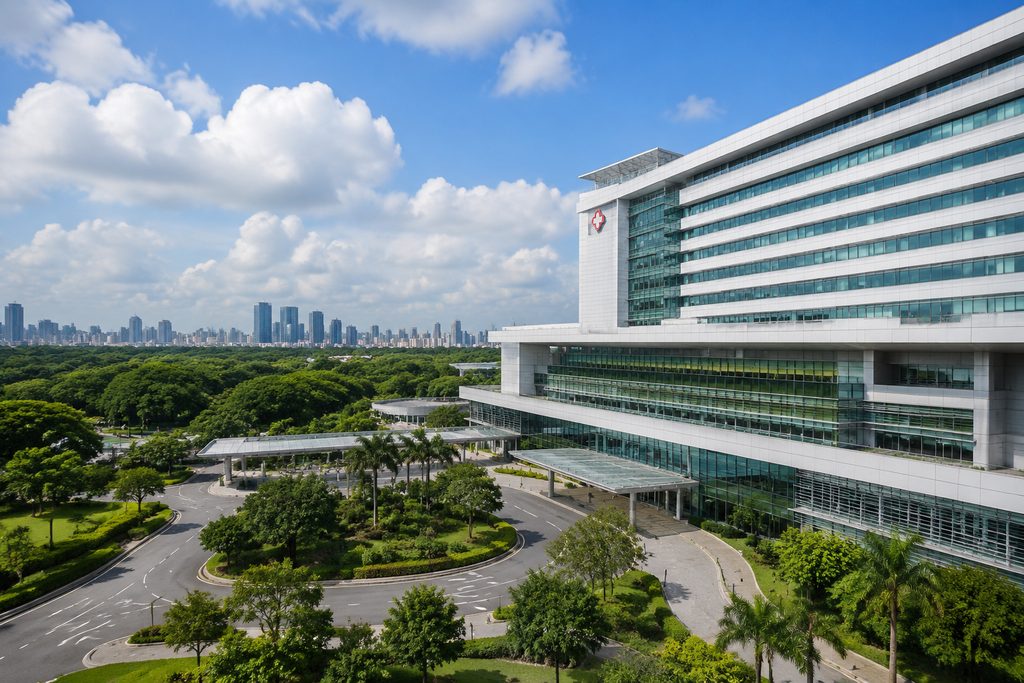
The question “what treatments are available at Guangxi ASEAN hospital” comes up frequently among international patients researching Nanning. The Guangxi ASEAN International Hospital — located in the Wuxiang New District — was purpose-built with cross-border medical tourism in mind. It offers a range of specialties relevant to medical travelers: cardiology, orthopedics, general surgery, urology, gynecology, health screening, and traditional Chinese medicine departments.
But limiting your view to a single facility misses the bigger picture. Nanning’s public hospital system includes several large tertiary centers. The First Affiliated Hospital of Guangxi Medical University handles complex cases across oncology, neurosurgery, and cardiovascular medicine. The People’s Hospital of Guangxi Zhuang Autonomous Region maintains strong programs in minimally invasive surgery and interventional radiology. These are not boutique international clinics. They are large, high-volume teaching hospitals where clinical teams see a breadth of pathology that keeps skills sharp.
For patients asking “is Nanning good for medical treatment,” the honest answer depends on what you need. For standard surgical procedures — hernia repair, gallbladder removal, joint replacement, cataract surgery, basic cardiac interventions — Nanning’s top hospitals deliver solid clinical outcomes at competitive prices. For ultra-specialized care — pediatric cardiac surgery on complex congenital defects, bone marrow transplants for rare hematologic conditions, robotic neurosurgery for deep brain tumors — you may be better served at a dedicated center in Beijing, Shanghai, or Guangzhou. Our team can help you determine which path fits your specific case.
How to Book Medical Treatment in Nanning: The Real Process
Searching for how to book medical treatment in Nanning leads many patients down a frustrating path. The assumptions that work in Western healthcare systems do not apply here. Understanding the actual workflow before you book a flight saves time, money, and stress.
Public hospitals in Nanning — like virtually all public hospitals across China — do not offer remote outpatient appointment booking for international patients. The registration system operates on a same-day, in-person basis. You arrive at the hospital in the early morning, queue at the registration window with your passport, and hope the specialist you need has available slots. If the department is full, you try again the next day. This system works for locals who can navigate it in Chinese. For a foreign patient who does not speak Mandarin, it borders on impossible.
The alternative is the hospital’s international medical department or VIP channel. These departments exist specifically to serve patients who need English-language coordination, shorter wait times, and a more structured experience. Appointment slots are pre-booked. A coordinator meets you on arrival. Consultations happen with senior attending physicians, often with longer visit times than the standard public queue allows. The trade-off is cost — expect to pay 1.5 to 2 times the standard public rate for consultations and procedures through these channels.
Booking through the international department still requires a face-to-face consultation before any surgery can be scheduled. No reputable Chinese hospital will book you for an operation based solely on overseas medical records. The specialist must examine you in person, review your imaging, and determine that the procedure is indicated and safe. This is not bureaucracy. It is sound clinical practice.
Nanning Medical Tourism Package Cost: What to Budget
Patients researching Nanning medical tourism package cost often expect a fixed-price menu. The reality is more nuanced. No legitimate medical provider quotes a firm surgical price without reviewing your specific case. What we can provide are realistic ranges based on historical data from Nanning’s international hospital departments.
| Procedure | Nanning (International Dept) | Singapore (Private) | Thailand (Private) |
|---|---|---|---|
| Knee Replacement (single) | $12,000 – $18,000 | $28,000 – $38,000 | $16,000 – $22,000 |
| Laparoscopic Cholecystectomy | $3,000 – $5,000 | $8,000 – $12,000 | $5,000 – $8,000 |
| Cardiac Bypass (CABG) | $14,000 – $20,000 | $35,000 – $50,000 | $18,000 – $25,000 |
| Cataract Surgery (per eye) | $1,800 – $2,500 | $4,000 – $6,000 | $2,500 – $3,500 |
| Comprehensive Health Screening | $400 – $800 | $1,200 – $2,000 | $600 – $1,200 |
These figures cover the hospital’s charges for the procedure, standard inpatient stay, and basic medications. They do not include travel, accommodation, companion services, or post-discharge rehabilitation. Our coordination fees are separate and quoted after we understand your case. Any video consultation or second opinion fee — ranging from $100 to $800 depending on the specialist — is credited in full toward on-the-ground coordination if you proceed with treatment within 90 days.
What You Need to Know Before Going Alone
The barriers to accessing medical treatment in Nanning are not insurmountable. But they are real. Walking in unprepared wastes time and money. Here is what you face.
- Visa Requirements: Medical treatment in China requires an S2 visa with the purpose of medical treatment explicitly noted. This is not the same as an M visa, which covers commercial and trade activities. Applying for the wrong category leads to rejection or, worse, entry on incorrect documentation. Your accompanying family members also need S2 visas. The application requires an invitation letter from the Chinese hospital confirming your treatment arrangement — which means you must have a confirmed appointment before you can even apply for the visa.
- Language and Navigation: Nanning’s public hospitals see thousands of patients daily. Signage in English is limited outside international departments. Registration kiosks, payment terminals, pharmacy queues, lab result collection — every step assumes Mandarin literacy. Without a bilingual companion, a simple outpatient visit can consume an entire day of confusion.
- Payment Systems: Chinese hospitals operate on a prepaid deposit model. You load funds onto your hospital account at admission. Treatment, medications, and consumables deduct from that balance in real time. When the balance runs low, treatment pauses until you top up. International credit cards are not universally accepted at hospital payment counters. WeChat Pay and Alipay dominate. Foreign patients without a Chinese bank account or local payment setup face real friction at the cashier window.
How We Help You Navigate This
These barriers exist for structural reasons — not because anyone is trying to make things difficult. The Chinese healthcare system evolved to serve a domestic population of 1.4 billion people. It was not designed with international patient convenience as a primary consideration. That is where we come in.
We start with your medical records. Our team translates and summarizes your case for review by the international department of the hospital best matched to your needs. We do not guess at which hospital fits. We match based on the specific procedure, the hospital’s documented case volumes, and the availability of English-speaking coordination staff. Once a hospital confirms they can take your case, we lock in the appointment and generate the invitation letter you need for your S2 visa application.
On the ground, a bilingual medical companion meets you at your hotel or the airport. They handle registration, queue management, payment transactions, and real-time translation during consultations. They ensure you understand what the doctor is saying — and that the doctor understands your concerns. After discharge, we coordinate follow-up appointments, medication instructions in English, and liaison with your home physician if needed.
We also tell you when Nanning might not be the right call. If your case requires a subspecialty center with capabilities that Nanning’s hospitals do not offer, we say so directly and help you evaluate alternatives — whether that means a hospital in Guangzhou, a specialist unit in Shanghai, or a facility in another country entirely. Our job is to get you to the right care, not to sell you on a particular city.
Finding the best hospital in Nanning for foreigners depends heavily on your specific condition. A facility that excels in orthopedics may not be the right choice for a complex gynecological surgery. We help you cut through the marketing claims and look at the data that matters: case volumes, specialist availability, and the international department’s track record with patients from your region.
Affordable Surgery in Nanning China: Who It Works For
The phrase “affordable surgery in Nanning China” attracts a wide range of patients. But affordability alone should not drive a medical decision. The patients who do best with this model share certain characteristics.
They have a clear diagnosis already established. They are seeking a specific procedure — not an open-ended diagnostic workup. They are stable enough to travel. And they understand that while the clinical care is excellent, the patient experience differs from a Western private hospital. Rooms may be shared. Nursing ratios are different. Family members are expected to handle tasks that Western hospitals assign to staff — bringing meals, assisting with mobility, managing personal care items.
None of this reflects on surgical quality. But it matters for your comfort and recovery. Patients who arrive expecting a hotel-like experience often feel jarred. Patients who arrive focused on the clinical outcome tend to report high satisfaction.
Frequently Asked Questions
For standard surgical procedures, Nanning’s top hospitals deliver comparable clinical outcomes at lower price points than private hospitals in Bangkok or Singapore. Where Nanning differs is in the patient experience — less luxury, more clinical efficiency. Singapore offers a more familiar environment for Western patients and seamless English communication throughout. Bangkok has a more developed medical tourism infrastructure with decades of experience catering to international patients. Nanning works best for patients who prioritize cost savings and geographic proximity to southern China or northern Vietnam, and who are comfortable with a more utilitarian care environment.
The answer depends entirely on your medical condition. For cardiology, the First Affiliated Hospital of Guangxi Medical University maintains strong interventional programs. For general surgery and health screening, the Guangxi ASEAN International Hospital was designed with international patients in mind and offers more English-language support. We do not recommend selecting a hospital based on general reputation alone. The right hospital for a knee replacement may be entirely wrong for a neurosurgical procedure. Our matching process starts with your specific diagnosis and works backward to the facility with the most relevant case volume and specialist availability.
Chinese hospitals carry medical liability insurance, and international departments have protocols for managing adverse events. That said, the medicolegal framework differs significantly from Western systems. Pursuing malpractice claims as a foreign patient is complex and rarely straightforward. Our practical recommendation: carry comprehensive medical travel insurance that includes coverage for complication management and medical evacuation. We also advise patients to establish a clear communication channel with their home physician before traveling, so that post-discharge questions or concerns can be addressed by someone who knows your full history.
No. This is one of the most common misunderstandings we encounter. Chinese hospitals require an in-person consultation before scheduling any surgical procedure. The surgeon must examine you, review your imaging, and confirm the diagnosis and treatment plan. You cannot send records overseas and receive a surgery date in return. Plan for at least one pre-surgery trip, or budget extra days before your procedure for consultation and pre-operative clearance.
You need an S2 visa with the purpose of medical treatment clearly indicated. Entering on a tourist (L) visa for the purpose of hospital treatment violates the terms of that visa category. The S2 application requires an invitation letter from the Chinese hospital confirming your treatment arrangement. This is not optional paperwork — it is a hard requirement. We help patients obtain this documentation once their hospital appointment is confirmed. Do not book flights until your visa is approved.
Your Next Step
Medical treatment in Nanning occupies a specific and valuable niche: high-volume surgical care at prices that make sense for patients from across Southeast Asia, delivered in facilities that increasingly understand the needs of international patients. It is not the right fit for every case. But when it fits, the combination of geographic proximity, clinical volume, and cost structure is difficult to match elsewhere.
If you want to explore whether Nanning — or another Chinese medical center — makes sense for your specific situation, we are here to help you think it through. Visit our patient coordination page to start a conversation. No commitment. No pressure. Just an honest assessment of your options.
For more medical information and treatment options in China, visit chinamedservices.com (China Medical Services).
