CAR-T Therapy in Shanghai: Hospital Matching and Full Care
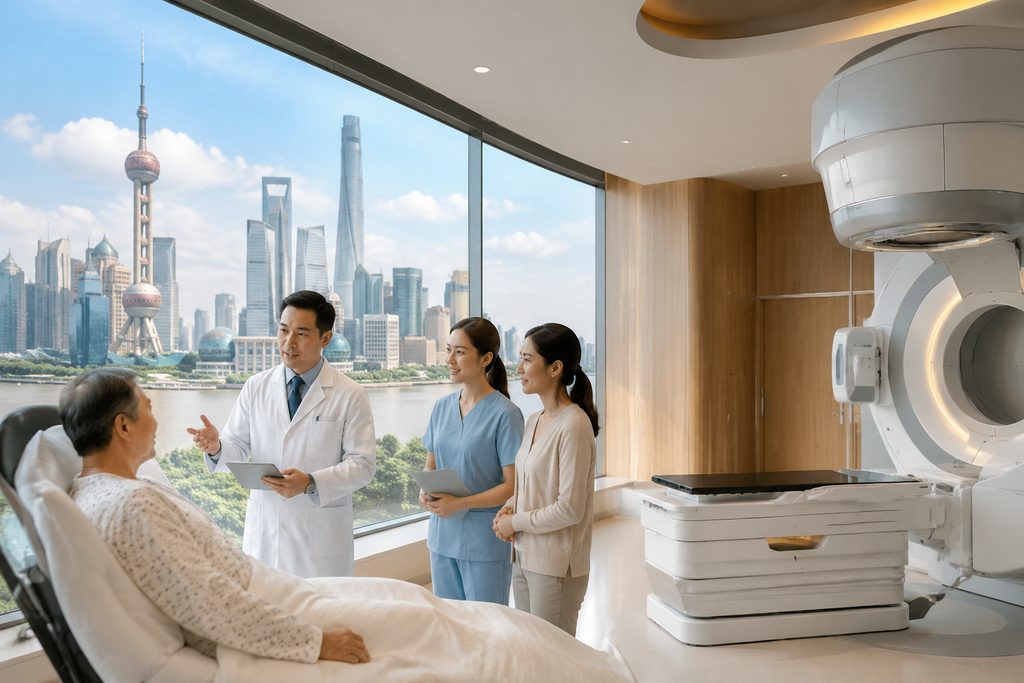
You have probably read that CAR-T therapy is a last resort, something only available at a handful of Western academic medical centers with year-long waiting lists. The numbers tell a different story. China’s National Medical Products Administration has approved more CAR-T products than any other country except the United States, and Shanghai has become one of the densest clusters of CAR-T clinical and commercial activity anywhere. The CAR-T therapy cost Shanghai question is real, and so is the logistical puzzle of getting treated there as a foreigner. We are going to walk through both honestly.
This article covers how hospital matching actually works for international patients, what full care coordination includes, what the realistic timelines look like, and where the process can break down. We are China Medical Services, and our team has spent years helping patients from Europe, the Middle East, Southeast Asia, and North America navigate the Chinese hospital system for complex treatments. We do not perform medicine. We make it possible for you to access it.
How This Actually Works, Step by Step
You do not simply email a Shanghai hospital and ask for a CAR-T slot. The public hospital system in China operates on in-person registration for ordinary outpatient care. Surgery and cellular therapy require face-to-face evaluation first. For international patients, that means working through a hospital’s international department or a designated coordination channel. Here is the sequence we see in practice.
First, you send your existing medical records: pathology reports, imaging, prior chemotherapy lines, current blood counts, performance status. These need professional translation into Chinese. A hospital’s international department reviews them, usually with the hematology or oncology team. They may respond with a written second opinion, or they may request a video consultation before agreeing to see you in person. That remote evaluation costs between $300 and $500 for a written opinion from a top specialist, and $500 to $800 for a video consultation with a senior expert. Those fees are credited in full toward on-the-ground coordination if you proceed within 90 days.
Once the hospital confirms you are a candidate, you travel to Shanghai. You attend the in-person consultation. The hospital runs its own confirmatory tests. Only after that does the treatment planning begin: leukapheresis to collect T cells, manufacturing, lymphodepleting chemotherapy, infusion, and the critical monitoring period. No reputable center will promise you a treatment date before seeing you.
And that is where bilingual support stops being a luxury. A single outpatient visit at a major Shanghai public hospital can involve 10,000 patients in one day. Signs are in Chinese. Queues are long. Payment windows, lab collection, pharmacy pickup — none of it is in English. A bilingual medical companion handles registration, queuing, payment, directions, and translation. That service starts from $300 per day.
Shanghai’s CAR-T Landscape: Where the Expertise Concentrates
Shanghai hosts 18 hospitals ranked among China’s top 100 by the Fudan University hospital rankings, second only to Beijing. Within that group, the centers with active CAR-T programs cluster around a few academic powerhouses. Ruijin Hospital, affiliated with Shanghai Jiao Tong University School of Medicine, runs one of China’s largest hematology departments and has been a site for multiple CAR-T registrational trials. Zhongshan Hospital, affiliated with Fudan University, is a major center for both hematologic malignancies and solid tumor CAR-T research. Shanghai Changzheng Hospital and the Shanghai General Hospital have also built substantial cellular therapy infrastructure.
When international patients ask us about the best hospital for CAR-T cell therapy in China, the honest answer is that it depends on your disease. For B-cell acute lymphoblastic leukemia and diffuse large B-cell lymphoma, the commercial products approved in China — including those from JW Therapeutics, Fosun Kite, and Legend Biotech — are available at designated treatment centers, several of which are in Shanghai. For multiple myeloma, the BCMA-directed products have shown remarkable response rates in Chinese patient populations. For solid tumors, most options remain in clinical trials. A hospital’s Fudan specialty ranking matters, but so does trial access and the specific product you need.
Our hospital database covers 340+ top-ranked hospitals across 37 cities, drawn from the top 5% of China’s 35,000+ hospitals as ranked by Fudan and JCI. You can browse Shanghai’s top institutions on our Shanghai hospital guide or search by specialty through our department rankings. But matching for CAR-T specifically requires more than a list. It requires knowing which centers currently offer which products and which trials are recruiting.
What Does CAR-T Therapy Cost in Shanghai?
The CAR-T therapy cost Shanghai question has a surprisingly concrete answer for commercial products. China’s approved CAR-T therapies are priced significantly below their U.S. counterparts, though still substantial by any measure.
| Cost Component | Shanghai Range (USD) | U.S. Comparison (USD) |
|---|---|---|
| Commercial CAR-T product (drug cost) | $100,000 – $150,000 | $373,000 – $475,000 |
| Hospitalization and monitoring (4–6 weeks) | $15,000 – $35,000 | $50,000 – $100,000 |
| Pre-treatment evaluation and testing | $3,000 – $8,000 | $10,000 – $25,000 |
| Management of cytokine release syndrome (if needed) | $5,000 – $20,000 | $30,000 – $80,000 |
| Total estimated range | $125,000 – $210,000 | $460,000 – $680,000 |
These figures vary by hospital and case complexity. The drug cost itself is set by the manufacturer and is generally uniform across approved treatment centers. Hospital fees, monitoring intensity, and complication management drive the variation. Some patients require ICU-level care for cytokine release syndrome or neurotoxicity. Others sail through with minimal intervention. Insurance coverage is the other variable: some international insurers now reimburse CAR-T in China, but most require pre-authorization and retrospective claims. Public Chinese insurance does not cover foreign patients.
So how much does CAR-T treatment cost in Shanghai compared to what you would pay at home? For a U.S. patient, the total cost in Shanghai typically lands at one-third to one-half of the American price. For European patients, the gap is narrower but still meaningful. The savings are real. The trade-off is that you are managing a complex treatment far from home, in a language you do not speak, in a healthcare system with different rules.
A Realistic Timeline
People underestimate how long this takes. Here is an honest timeline based on what we see with international CAR-T patients.
| Stage | What Happens | Typical Duration |
|---|---|---|
| Week 1–2 | Record collection, translation, submission to hospital international department | 1–2 weeks |
| Week 3–4 | Remote specialist review, written second opinion or video consultation | 1–2 weeks |
| Week 5–8 | S2 visa application with hospital invitation letter; travel planning | 2–4 weeks |
| Week 9 | Arrival in Shanghai, in-person consultation, confirmatory testing | 3–5 days |
| Week 10–11 | Leukapheresis (T cell collection) | 1 day procedure, 1–2 days recovery |
| Week 12–15 | CAR-T manufacturing | 2–4 weeks (varies by product) |
| Week 16 | Lymphodepleting chemotherapy | 3–5 days |
| Week 17 | CAR-T infusion | 1 day |
| Week 18–22 | Hospital monitoring for CRS, neurotoxicity, cytopenias | 2–6 weeks |
| Month 3–6 | Follow-up in home country with remote consultation as needed | Ongoing |
That is a minimum of four to five months from first contact to infusion, assuming no delays. Document translation takes longer than people expect. Visa processing depends on your home country’s Chinese embassy or consulate. Manufacturing slots can be delayed. You should plan for the full arc, not the optimistic version.
The S2 visa is the applicable category for medical treatment in China. It covers short-term private affairs, including medical care, and your accompanying family members apply for the same category. The hospital provides an invitation letter and treatment confirmation to support your application. We guide patients through this, but we cannot guarantee approval — that rests with the consulate.
What Can Go Wrong — and What Happens Then
Let us be direct about failure modes, because this is where trust is earned.
The hospital reviews your records and says no. This happens. CAR-T is not appropriate for every patient. Poor performance status, active infection, certain comorbidities, or insufficient organ function can disqualify you. If that happens, the remote evaluation has still given you something: a clear expert assessment of why CAR-T is not right for you and what alternatives exist. The consultation fee is not refunded, but the knowledge is real.
You arrive in Shanghai and the in-person evaluation changes the picture. Imaging shows disease progression. Blood counts have shifted. The hospital may adjust the plan, delay treatment, or recommend a bridging therapy first. This is frustrating, but it is also why in-person evaluation exists. No one should infuse CAR-T cells into a patient whose clinical status has changed since the remote review.
Manufacturing fails. CAR-T manufacturing failure rates run in the single digits to low teens depending on product and patient factors. If your T cells fail to expand or the product does not meet release criteria, the hospital will discuss options: a second leukapheresis, a different product, or an alternative therapy. This is a known risk of autologous cell therapy, not a sign of poor care.
Cytokine release syndrome is severe. Most patients experience some degree of CRS. Severe cases require tocilizumab, corticosteroids, and sometimes ICU support. Shanghai’s top CAR-T centers have deep experience managing this — they have treated thousands of patients. But being in a foreign ICU, even an excellent one, is hard. Your family needs support too, and that is part of what full care coordination means.
Is CAR-T Therapy Safe in China? What the Data Actually Show
The question is CAR-T therapy safe in China deserves more than a yes or no. The safety profile of CAR-T is determined by the product, the patient’s disease burden, and the center’s experience managing toxicity. Chinese centers have published extensively on real-world CAR-T outcomes. The CRS rates reported from major Shanghai centers are broadly consistent with global experience: most patients develop grade 1–2 CRS, a minority develop grade 3–4, and treatment-related mortality in experienced centers is low but not zero.
What matters more than the country is the specific center. A hospital that has treated 500 CAR-T patients has protocols, trained nursing teams, and rapid access to tocilizumab. A hospital that has treated 20 does not. This is why hospital matching matters. The Fudan specialty rankings identify centers with deep hematology expertise. JCI accreditation identifies hospitals with international-standard safety systems. We look at both, plus trial volume and product availability.
China’s regulatory environment has also matured. The NMPA now requires post-marketing safety surveillance for approved CAR-T products. Hospitals administering CAR-T must meet specific facility and staffing requirements. That does not eliminate risk — no regulatory system does — but it means the infrastructure is not improvised.
For patients specifically searching book CAR-T therapy Shanghai international patient, the practical path is not a booking button. It is a staged evaluation: remote review, then in-person, then treatment planning. Anyone promising you a confirmed treatment slot before seeing your records and before the hospital sees you is not being honest.
Practical Considerations: Records, Visa, Payment, Language, Follow-Up
Your medical records are the foundation. Complete pathology reports matter more than anything else. Prior treatment lines, dates, responses, and toxicities all inform the CAR-T decision. Imaging on CD or via secure transfer. If records are not in English or Chinese, translation is required. We handle this as part of case management.
The S2 visa requires a hospital-issued invitation or treatment confirmation. Processing times vary by country. Apply as soon as the hospital confirms willingness to evaluate you in person. Do not book flights before the visa is in hand.
Payment in Chinese public hospitals is prepaid. You deposit funds upfront, treatment is drawn against that deposit, and unused funds are refunded at discharge. International insurance typically reimburses after the fact — the hospital does not bill your insurer directly. Private international hospitals in Shanghai, such as Jiahui or United Family, offer direct insurance billing and English-speaking staff, but their CAR-T access is more limited. For CAR-T specifically, you are almost certainly working with a major public hospital’s international department.
Language is the single biggest daily friction. Every interaction — registration, blood draw, pharmacy, discharge — happens in Chinese. A bilingual companion transforms this. Without one, you will struggle. With one, the system becomes navigable.
Follow-up after you return home is often overlooked. CAR-T requires monitoring for cytopenias, B-cell aplasia, infections, and late neurotoxicity for months. Your home oncologist needs the full treatment summary and direct communication with the Shanghai team. We facilitate that handoff, including remote follow-up consultations when needed.
Some patients ask about a CAR-T cell therapy China medical tourism package. We understand the appeal of a bundled price. But honest case management is not a fixed package. Your needs depend on your disease, your hospital, your response to treatment, and your complications. We quote coordination services transparently — from $300 for appointment coordination, from $300 per day for bilingual companionship, $5,000 to $8,000 for VIP end-to-end coordination — but hospital treatment charges are always separate and always paid directly to the hospital. Anyone bundling “everything” into one price is either hiding something or guessing.
You can learn more about our approach on the China Medical Services homepage or explore our rankings of China’s top hospitals to see which Shanghai institutions appear in the Fudan top 100.
Frequently Asked Questions
For approved commercial products, the drug cost alone typically ranges from $100,000 to $150,000. Total treatment including hospitalization, monitoring, and complication management generally falls between $125,000 and $210,000, though this varies by hospital and case complexity. That compares to $460,000 to $680,000 in the United States.
It depends on your diagnosis and the product you need. Ruijin Hospital and Zhongshan Hospital are the most prominent academic centers with extensive CAR-T experience, but other Shanghai institutions also offer approved products and clinical trials. Matching requires knowing which center offers which product for your specific disease and whether you meet eligibility criteria.
China’s approved CAR-T products undergo the same regulatory evaluation as products elsewhere, and major Shanghai centers have treated thousands of patients with safety outcomes consistent with global experience. The critical variable is center experience, not country. Choose a high-volume hospital with established toxicity management protocols.
No. You can complete a remote evaluation — records review, written second opinion, or video consultation — and receive a preliminary assessment of eligibility. But the hospital will not commit to a treatment plan or date until you have been evaluated in person. Be cautious of anyone promising otherwise.
The S2 visa is the applicable category for short-term medical treatment and private affairs in China. Accompanying family members apply for the same category. The hospital provides supporting documents, but approval is determined by the Chinese embassy or consulate in your home country.
Your Next Step
CAR-T therapy in Shanghai is a serious undertaking with real costs, real timelines, and real risks. It is also one of the most accessible pathways to a treatment that remains out of reach for many patients in Western systems. The key is starting with an honest evaluation, not a booking.
We are China Medical Services. We match international patients with 340+ top-ranked Chinese
For more medical information and treatment options in China, visit chinamedservices.com (China Medical Services).
