How We Coordinate Your TCM Care at Hospital of Chengdu University of TCM: Acupuncture Full Guide
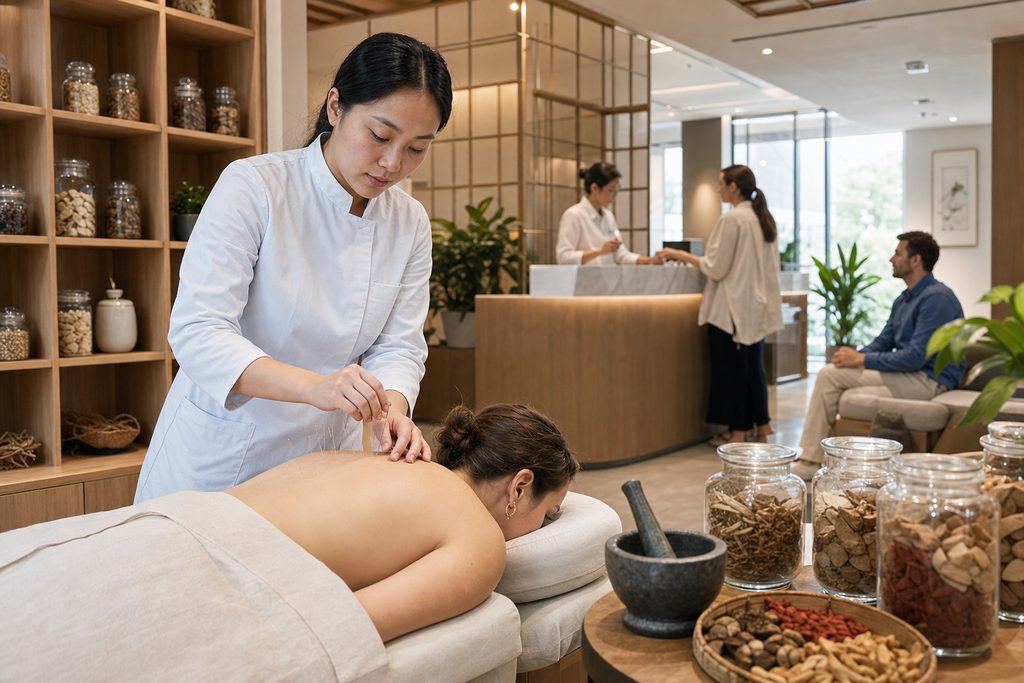
You have probably read that acupuncture in China means walking into a crowded, chaotic clinic where no one speaks English and the treatment feels rushed. That image keeps a lot of people from booking the care they need.
The reality at a major teaching hospital is different. A structured outpatient department, senior physicians who have treated international patients for years, and a clinical methodology that blends classical meridian theory with modern diagnostics. The gap is not the quality of care. It is the logistics: knowing who to contact, which documents to prepare, and how the actual session unfolds. We handle those logistics so the treatment itself is the only thing you need to focus on.
How This Actually Works, Step by Step
The process starts before you ever book a flight. Most international patients send us a brief medical summary and a clear goal. That goal could be chronic lower back pain that has not responded to physiotherapy, tension headaches that flare up every few weeks, or post-chemotherapy fatigue that makes daily life difficult. We translate the summary into clinical Chinese and route it to the acupuncture department at the Hospital of Chengdu University of TCM.
A senior physician reviews the case. The review is not a formal diagnosis. It is a feasibility check: does the condition fall within the scope of what acupuncture can reasonably address, and is the patient stable enough to travel? If the answer is yes, the department proposes a preliminary treatment frequency. A typical plan for a chronic pain condition might be three sessions per week for four weeks. We relay that proposal back to you, along with the estimated acupuncture treatment cost in Chengdu China, so you can make a decision with numbers in hand.
Once you approve the plan, we lock in the first appointment date. That date drives everything else: visa application timing, flight booking, accommodation near the hospital. We provide a detailed timeline and document checklist. You arrive in Chengdu. We meet you at the airport, get you settled, and on the morning of your first session, a bilingual medical companion walks with you into the hospital.
What an Acupuncture Session Actually Looks Like at This Hospital
The acupuncture department occupies a dedicated floor in the outpatient building. It is quiet. The air smells faintly of moxa, the dried mugwort used in moxibustion therapy. You check in at the reception desk. Our companion handles the registration while you sit in the waiting area. Wait times are usually short because appointments are scheduled in blocks.
When your name is called, you enter a private treatment room. The physician reviews your file again, asks about any changes since you arrived—sleep quality, pain level, digestion—and then explains the session plan. This is where a common worry gets resolved. Many first-time patients ask: how does acupuncture work in Chinese medicine hospital settings compared to a Western physiotherapy clinic? The answer is in the diagnostic layer. Before any needles are placed, the physician may check your pulse at three positions on each wrist and look at your tongue. These are not symbolic gestures. In TCM, pulse quality and tongue coating provide data about organ system balance that guides point selection.
Then the needling begins. For a back pain protocol, you might lie face down. The physician swabs a series of points along the bladder meridian, inserts fine, single-use filiform needles, and may manipulate a few of them until you report a dull ache or a tingling sensation. That sensation is called *de qi*. It is considered a sign that the point has been activated. The needles stay in place for twenty to thirty minutes. Some patients fall asleep. Most feel a deep relaxation that lasts for hours afterward.
Adjunctive therapies may follow. Cupping is common for musculoskeletal complaints. Electroacupuncture, where a mild current is applied to the needles, might be used for stubborn nerve pain. Everything is explained beforehand. Nothing is done without your consent.
A Realistic Timeline
People underestimate how much time the invisible steps consume. Here is what a typical acupuncture treatment plan looks like from first contact to final session, assuming a four-week course of therapy.
| Stage | What Happens | Typical Duration |
|---|---|---|
| Initial inquiry & document collection | You share medical records, imaging reports, and treatment goals. We translate and format them for the hospital. | 3–5 business days |
| Department review & proposal | The acupuncture department assesses feasibility and proposes session frequency, duration, and cost estimate. | 5–7 business days |
| Decision & appointment lock | You approve the plan. We secure the first appointment slot and issue the hospital confirmation letter. | 2–3 business days |
| Visa processing (S2) | You submit the hospital letter, accommodation proof, and application to the Chinese embassy or consulate. | 1–4 weeks, varies by country |
| Travel & arrival | Flight to Chengdu Tianfu International Airport. Airport pickup and transfer to accommodation. | 1–2 days |
| First session | In-person consultation, pulse and tongue diagnosis, first acupuncture treatment. | Day 1 at the hospital |
| Treatment course | Ongoing sessions per the agreed schedule, typically 3 times per week. | 4–6 weeks |
| Discharge summary & home plan | Final assessment, written summary in English, and recommendations for follow-up care at home. | Final session |
The visa stage is the biggest variable. Some embassies process S2 applications in five business days. Others take a month during peak season. We always recommend starting the entire process at least eight weeks before your ideal treatment start date. That buffer absorbs delays without derailing the medical plan.
What Can Go Wrong — and What Happens Then
Honesty matters more here than anywhere else. Things do not always go perfectly.
The most common disruption is a visa rejection or delay. If the embassy denies the S2 application, we resubmit with additional supporting documents or adjust the travel window. If the delay simply pushes your arrival back by two weeks, we shift the appointment series accordingly. The hospital understands that international patients face border uncertainties. They hold the treatment slot for a reasonable period.
Another failure mode is a mismatch between expectations and clinical reality. A patient arrives hoping acupuncture will resolve a condition that has not improved after years of conventional treatment. The physician, after the first few sessions, may say honestly that the progress is slower than anticipated. When that happens, the department may adjust the point prescription, add adjunctive therapies like herbal medicine, or recommend a longer treatment course. We facilitate that conversation so you are never left guessing.
A practical issue that catches some patients off guard: bruising or soreness at needle sites. This is normal. It resolves within a day or two. But if you have never had acupuncture before, it can be alarming. The physician explains this in advance. We reinforce it afterward.
Rarely, a patient experiences a vasovagal response—dizziness, cold sweat, a sudden drop in blood pressure—during needle insertion. The clinical staff are trained for this. Needles come out immediately. You lie flat with legs elevated. It passes quickly. It is not dangerous, but it can feel frightening. Knowing it is a known, manageable reaction helps.
How to Evaluate Whether This Is Right for You
Not every condition responds equally to acupuncture. The evidence base is strongest for chronic pain conditions: low back pain, neck pain, osteoarthritis of the knee, and tension-type headaches. A 2017 meta-analysis published in the *Journal of Pain* reviewed data from nearly 18,000 patients and found that acupuncture was superior to both sham acupuncture and usual care for chronic pain, with effects that persisted at 12-month follow-up. That is not a small finding.
For other conditions, the evidence is emerging but less robust. Chemotherapy-induced nausea, for instance, has good support. Insomnia and anxiety show promise but need more high-quality trials. Fertility support is a common reason patients seek acupuncture, but the data on live birth rate improvement is mixed.
The best TCM hospital Chengdu acupuncture packages are not one-size-fits-all bundles. They are physician-designed protocols based on your specific diagnosis. When you send us your records, the department does not reply with a generic price sheet. They propose a point prescription logic, session frequency, and expected duration that matches your case. That specificity is what you should look for. If a provider quotes a flat package price without reviewing your history, walk away.
Also worth knowing: the Hospital of Chengdu University of TCM is not a small neighborhood clinic. It is one of the earliest TCM universities in China, founded in 1956, and its affiliated hospital is a Grade-A tertiary hospital—the highest classification in the Chinese system. The acupuncture department handles a high volume of both domestic and international patients. That volume matters. It means the physicians have seen your condition before, probably many times.
Practical Considerations: Records, Visa, Payment, and Follow-Up
Medical records are the foundation of everything. Send us anything relevant: MRI reports, blood work, specialist notes, physiotherapy summaries. PDFs are fine. We need enough detail for the TCM physician to understand what has been tried and what has not worked. A single paragraph saying “I have back pain” is not enough. The more context you provide, the more precise the treatment proposal will be.
Visa is straightforward but slow. You need an S2 visa for short-term private medical treatment. The hospital confirmation letter is the key supporting document. We provide that, along with a detailed itinerary and accommodation proof. Apply at least four weeks before your planned departure. Do not book non-refundable flights until the visa is in your passport.
Payment works differently than in Western hospitals. You prepay a deposit at the hospital cashier before each session or in blocks. Cash, UnionPay, and major credit cards are accepted, but international card processing can be unreliable. We usually advise patients to carry a combination of cash and card, or to use Alipay linked to an international card. The acupuncture treatment cost in Chengdu China is significantly lower than in North America or Europe. A single session typically ranges from $30 to $80 USD, depending on whether adjunctive therapies like electroacupuncture or cupping are included. A full four-week course of twelve sessions might run between $400 and $1,000 USD. That is the treatment fee paid directly to the hospital. Our coordination service is separate and quoted upfront.
Insurance is another layer. Most international health plans do not cover acupuncture abroad, but some do. Check your policy. We can provide itemized receipts and treatment summaries in English for reimbursement claims. We do not do direct billing.
Follow-up after you return home is part of the plan. The physician writes a discharge summary that includes the TCM diagnosis, points used, number of sessions completed, and clinical observations. You can share this with a local acupuncturist. Some patients book a written second opinion or a follow-up video consultation with the same Chengdu physician a few months later to discuss maintenance strategies. That continuity is valuable, and we can arrange it remotely.
Frequently Asked Questions
What should I expect at my first acupuncture session at Chengdu University TCM?
Expect a thorough intake. The physician will ask about your main complaint, sleep, digestion, and emotional state. They will check your pulse and tongue. Then they will explain which points they plan to use and why. The needling itself is usually brief. You rest with the needles for 20 to 30 minutes. Most patients feel relaxed, sometimes tired, afterward. Bring loose clothing that allows access to your arms and legs.
How do I book acupuncture treatment in Chengdu as an international patient?
You cannot book directly with the hospital’s general outpatient system as a foreigner. The public registration platform is in Chinese and requires a local ID. The practical path is through the hospital’s international cooperation office or through a coordination service like ours. We handle the booking, translation, and on-the-ground logistics so you arrive with an appointment already secured. This is the only way to ensure an English-speaking companion is present for your first visit.
Is acupuncture safe? What are the real risks?
When performed by a trained physician using sterile, single-use needles, acupuncture is very safe. The most common side effects are minor bruising, slight bleeding at the needle site, and temporary soreness. Serious adverse events, like pneumothorax from a needle placed too deep in the chest, are extremely rare in a hospital setting where physicians have full anatomical training. The practitioners at a tertiary TCM hospital are not short-course technicians. They are medical graduates with years of clinical experience.
Can I combine acupuncture with other TCM treatments during the same trip?
Yes. Many international patients book acupuncture alongside Tuina medical massage or herbal medicine consultations. The hospital’s TCM departments are integrated, so the acupuncture physician can refer you internally. If you are interested in a broader TCM experience, tell us during the initial inquiry. We can coordinate multiple departments so your schedule is efficient and your treatment plan is coherent.
What if I need to cancel or reschedule after booking?
We understand that international travel plans change. If you need to reschedule before the visa stage, we shift the appointment dates at no additional coordination cost. If you cancel after the hospital confirmation letter has been issued but before travel, the hospital’s own cancellation policy applies to any prepaid treatment deposits. Our coordination fee terms are transparent upfront. We never lock patients into non-refundable commitments they cannot get out of.
Your Next Step
You now have a clear picture of what medical tourism TCM acupuncture China fast track actually involves: a structured process, a realistic timeline, honest risks, and a hospital with genuine depth in acupuncture. The decision to pursue treatment abroad is never small, but it does not have to be confusing.
Our team at China Medical Services exists to handle the parts that would otherwise stop you: the language barrier, the appointment logistics, the visa paperwork, and the on-the-ground navigation. We do not practice medicine. We do not promise miracles. We connect you with physicians who know what they are doing, and we make sure you understand every step before you take it.
If you are considering acupuncture at the Hospital of Chengdu University of TCM, start with a conversation. Send us your medical summary and your goals. We will get a preliminary review from the department and give you a clear proposal with real numbers. There is no cost for that initial assessment and no obligation to proceed. It is simply the fastest way to know whether this path makes sense for you.
Request your free consultation here.
For more medical information and treatment options in China, visit chinamedservices.com (China Medical Services).
