Specialized Cancer Centers vs General Hospitals in China: Where to Go for Oncology Care
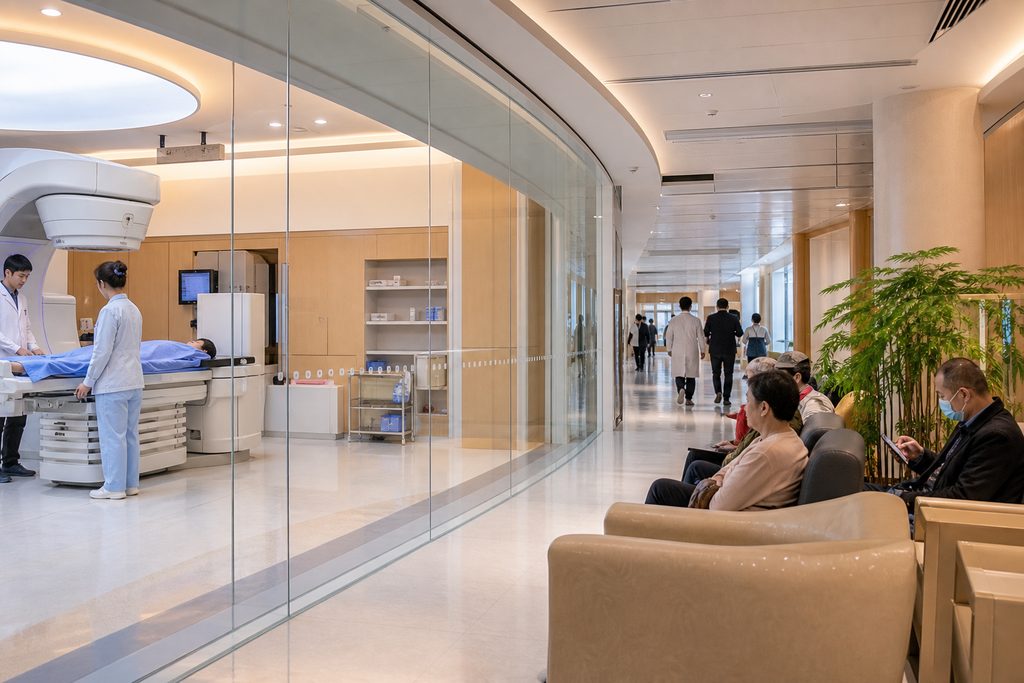
In the United States, a patient with a new lung mass might wait three to four weeks just to get a PET-CT scan scheduled. At Fudan University Shanghai Cancer Center, the same imaging study is typically completed within 48 hours of registration. The gap isn’t about technology. It’s about throughput. China’s top-tier oncology infrastructure processes patient volumes that would overwhelm most Western systems, and that operational speed has real clinical consequences for diseases where time to treatment directly affects survival rates.
But speed alone doesn’t answer the question every international patient eventually asks: should I go to a specialized cancer hospital or a general hospital with a strong oncology department? The answer shapes your access to multidisciplinary teams, your exposure to clinical trials, your out-of-pocket costs, and — for foreign patients — the entire logistics chain from visa paperwork to post-treatment follow-up. This article walks through the structural differences between these two types of institutions in China, what those differences mean for your treatment plan, and how to make the choice without flying blind.
How This Actually Works, Step by Step
You don’t just pick a hospital from a list and show up. The sequence matters, and skipping steps creates delays that eat into whatever time advantage you hoped to gain.
First, you send your existing medical records — pathology reports, imaging studies on CD or cloud link, surgical notes if you’ve had prior procedures, and a summary of your current treatment status. Our team translates these into clinical Chinese. Not conversational Chinese. The specific terminology that oncologists use when reviewing cases at tumor board meetings. This translation step alone typically takes two to three working days.
Those translated records go to the international patient office of your target hospital — or to multiple hospitals if you’re still comparing options. A specialist reviews them and issues a written opinion. That opinion tells you three things: whether the hospital will accept your case, what treatment approach they recommend, and whether you need to come for an in-person consultation before any definitive plan can be made. Some hospitals will give you a treatment outline and cost estimate from records alone. Others — particularly for surgical cases — require an in-person evaluation. No way around it.
Once you have that acceptance letter and treatment outline, you apply for your S2 visa at the nearest Chinese embassy or consulate. The hospital’s invitation letter is the key document here. Visa processing times vary by country, but plan for two to four weeks. During that window, our team coordinates your arrival logistics: airport pickup, accommodation near the hospital, and your first appointment slot.
After arrival, you complete any outstanding diagnostics, meet your attending physician, and begin the treatment protocol. For chemotherapy or radiation, you may be treated as an outpatient. For surgery, you’ll be admitted — typically within days of completing pre-operative clearance, not weeks.
What Actually Separates a Cancer Center from a General Hospital’s Oncology Department
The difference isn’t just branding. It’s structural. And it directly affects how your case gets managed.
A specialized cancer center — like the Cancer Hospital Chinese Academy of Medical Sciences in Beijing or Fudan University Shanghai Cancer Center — operates with oncology as its sole institutional focus. Every department orbits around cancer care. The radiology team reads oncologic imaging all day, every day. The pathology lab processes predominantly tumor specimens. The pharmacy stocks chemotherapy agents and targeted therapies in volumes and varieties that general hospital pharmacies rarely match. When your case requires input from surgery, medical oncology, and radiation oncology simultaneously, these specialists sit in the same building and attend the same tumor boards. Coordination isn’t scheduled. It’s built into the floor plan.
General hospitals with top-ranked oncology departments — Peking Union Medical College Hospital or Ruijin Hospital in Shanghai, for example — offer something different. They house comprehensive medical and surgical specialties under one roof. If your cancer treatment is complicated by a cardiac condition, the cardiology team is in-house. If you need a complex reconstruction after tumor resection, the plastic surgery department is down the hall. These hospitals manage the whole patient, not just the tumor. For patients with significant comorbidities, that breadth can be decisive.
So the question of whether a specialized cancer center is better than a general hospital in China depends heavily on your specific situation. A 55-year-old with Stage III colorectal cancer and no other health issues will likely move faster and receive more protocol-driven care at a dedicated cancer center. A 72-year-old with the same diagnosis plus poorly controlled diabetes and a history of stroke may be safer at a comprehensive general hospital where endocrinology and neurology can consult on the same day.
Volume tells part of the story. Fudan University Shanghai Cancer Center treats over 15,000 new cancer cases annually. The oncology department at a major general hospital might see 3,000 to 5,000. That volume difference translates into pattern recognition — the ability of a clinical team to spot rare complications early because they’ve seen them before.
But general hospitals have their own volume advantages. West China Hospital in Chengdu performs more lung cancer surgeries annually than many dedicated cancer centers worldwide. Their thoracic surgery team operates at a scale that generates its own expertise. When you’re evaluating the best oncology hospital China cost equation, you’re not just comparing sticker prices. You’re weighing institutional focus against institutional breadth.
A Realistic Timeline
Here’s what the process looks like from the day you decide to explore treatment in China to the day treatment actually begins. These ranges reflect real experience, not best-case scenarios.
| Stage | What Happens | Typical Duration |
|---|---|---|
| Days 1–7 | Record collection, translation into clinical Chinese, submission to target hospital(s) | 5–7 days |
| Days 8–21 | Hospital reviews records, issues written opinion and preliminary treatment plan | 7–14 days |
| Days 22–28 | Patient reviews opinion, decides whether to proceed; service agreement finalized | 3–7 days |
| Days 29–56 | Hospital issues invitation letter; patient applies for S2 visa at Chinese embassy/consulate | 14–28 days |
| Days 57–63 | Travel to China, airport pickup, settle into accommodation | 2–3 days |
| Days 64–70 | First hospital visit, completion of outstanding diagnostics, pre-treatment clearance | 3–7 days |
| Day 71+ | Treatment begins — chemotherapy, radiation, or surgical admission | Varies by protocol |
Some stages can compress. A hospital may review records in three days if the case is urgent and clearly documented. A visa may process in a week if the embassy has capacity. But planning for the longer end prevents the stress of missed expectations.
One step people routinely underestimate: document translation. Medical records contain abbreviations, institution-specific codes, and handwriting that requires clinical knowledge to interpret correctly. Rushing this step produces errors that delay everything downstream. Budget the full week.
What Can Go Wrong — and What Happens Then
Things fail. Here’s how they fail and what recourse exists.
Records get rejected. The hospital reviews your file and says the imaging is too old, the pathology report lacks necessary immunohistochemistry stains, or the clinical summary doesn’t answer the questions their specialists need answered. This happens in roughly one in five international cases. The fix is straightforward but time-consuming: return to your home physician, obtain the missing studies or reports, resubmit. This adds two to four weeks.
The written opinion recommends against travel. Sometimes the Chinese specialist concludes that your condition is too advanced for the proposed treatment, or that the treatment you’re seeking isn’t available in China, or that you’d be better served by a clinical trial in your home country. This isn’t a rejection of you. It’s a clinical judgment that protects you from spending money and time on a trip that won’t help. Take it seriously.
Visa delays happen. Embassy processing times fluctuate with staffing, holidays, and political currents. If your visa doesn’t arrive in time for your scheduled appointment, the hospital typically reschedules — but you lose your slot and may wait another week or two for the next opening. Our team tracks visa status daily and communicates with the hospital’s international office to adjust timelines in real time.
You arrive and your condition has changed. Cancer doesn’t pause for paperwork. If your disease has progressed between your last home-country scan and your arrival in China, the treatment plan may need revision. The hospital will repeat key imaging before starting treatment. This is standard practice, not a failure of the system. But it can feel like one when you’ve traveled thousands of miles expecting to start treatment immediately.
How to Choose Without Getting Lost in Marketing Claims
For a course of treatment at a top public hospital’s international department, expect roughly 15% to 25% of U.S. prices for equivalent care. A complex surgical oncology procedure that costs $150,000 in the United States might run $20,000 to $35,000 in Shanghai or Beijing. Radiation therapy courses are similarly discounted. Chemotherapy drug costs vary — some targeted therapies are priced comparably to Western markets because they’re imported; others manufactured in China are significantly less expensive. Get a written cost estimate from the hospital before you commit to travel.
Most Western health insurance plans do not cover elective treatment in China. Some international health insurance policies — particularly those from carriers like Cigna Global, Bupa International, or Allianz — may provide coverage or reimbursement. Check your policy’s out-of-network and international treatment provisions. Even if your insurer won’t pay directly, you may be able to submit claims for reimbursement after the fact. Chinese public hospitals provide itemized receipts suitable for insurance submission. Private international hospitals with JCI accreditation are more likely to have direct billing arrangements with international carriers.
No reputable hospital in China sells pre-packaged cancer treatment to international patients sight unseen. What you can arrange before travel is a written second opinion, a preliminary treatment outline, and a scheduled first appointment. The actual treatment protocol — specific chemotherapy regimens, radiation fields, surgical approach — is determined after the treating physician evaluates you in person and reviews your current imaging. Any service promising a fixed-price “cancer treatment package” before a doctor has examined you is not operating within China’s legitimate medical system. Be wary.
Chinese hospitals have emergency departments that operate 24/7. If you’re already under the care of an oncologist at the hospital, the emergency team will coordinate with your treating department. Emergency care is billed separately from your planned treatment. International departments can help with emergency department navigation during business hours; after hours, you may need to rely on your bilingual companion or the hospital’s general emergency staff, who may have limited English capability. Discuss emergency protocols with your international patient coordinator during your first visit, not when a crisis is already unfolding.
Frequently Asked Questions
Yes. The hospitals used for international patients are JCI-accredited and follow the same international safety standards as top hospitals in the US and Europe. Surgical teams perform high volumes of procedures — often more than their Western counterparts — which studies show leads to better outcomes.
Costs vary by procedure and hospital, but international patients typically save 40-80% compared to US prices — even when factoring in travel and accommodation. A consultation with our team will give you an exact, all-inclusive quote with no hidden fees.
Send us your existing medical reports to get started. We handle everything from hospital selection and appointment scheduling to visa assistance and post-operative recovery planning. Your medical records are reviewed by the specialist before you even book a flight.
For more medical information and treatment options in China, visit chinamedservices.com (China Medical Services).
