Why Choose Shanghai for Your Treatment in China: Premier Hospitals and Cosmopolitan Recovery
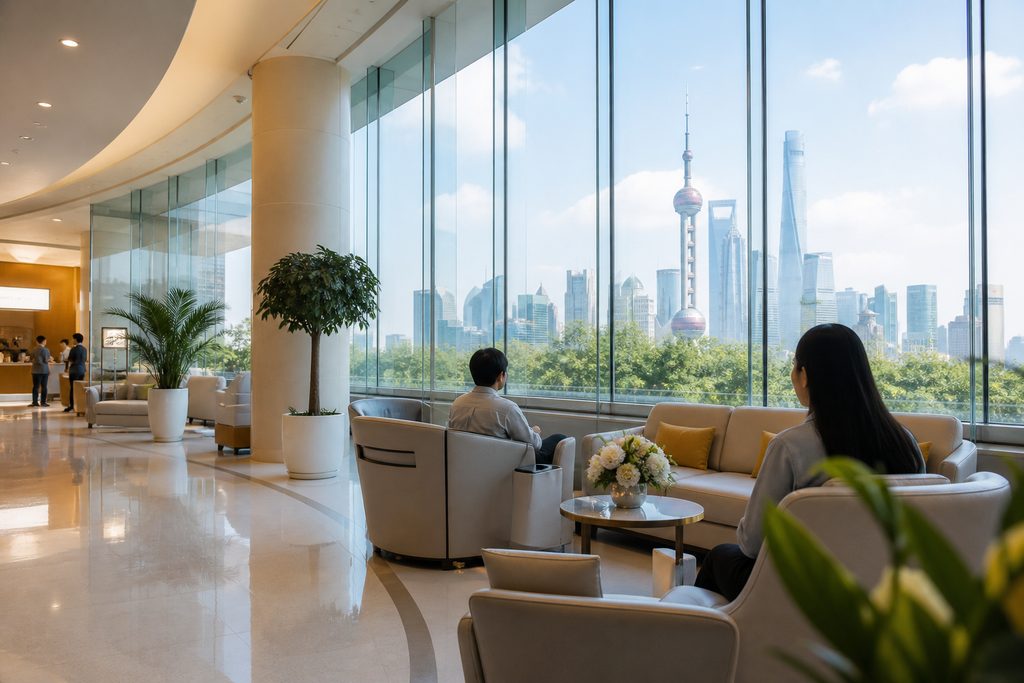
In Canada, a patient waits a median 27.4 weeks between specialist consultation and orthopedic surgery. At Shanghai Sixth People’s Hospital, surgeons handle over 50,000 orthopedic surgeries annually. Two healthcare systems. Two completely different timelines. The question is not whether Shanghai has the clinical firepower. The question is whether this city’s unique blend of medical density and international infrastructure fits your specific situation.
Our team has spent years connecting patients with the best hospital in Shanghai for international patients based on their exact diagnosis. Not the most famous name. The right department, the right surgeon, the right logistical setup. Shanghai houses 18 hospitals on the Fudan University Top 100 ranking, second only to Beijing. Some of these institutions run international medical centers with English-speaking coordinators, direct insurance billing, and VIP wings designed for overseas patients. Others are pure public powerhouses where a bilingual companion is non-negotiable. We help you understand the difference before you book a flight.
The Short Answer: Why Shanghai Delivers What Other Cities Cannot
Shanghai offers the highest concentration of internationally accessible top-tier hospitals in China, paired with a recovery environment that feels familiar to Western patients. You get surgical volumes that breed clinical expertise, at costs roughly 70-80% below US private pay rates, in a city where you can find authentic Italian food, French-speaking expat communities, and direct flights to most major global hubs. The catch? Accessing the right surgeon through public channels without Mandarin fluency is genuinely difficult. The system rewards preparation.
Who This Is Right For — and Who It Isn’t
Traveling for medical care is a serious decision. We are direct about candidacy because a bad fit wastes your time and money.
Typically a strong candidate:
- You need a high-volume procedure — joint replacement, cardiac intervention, cancer resection — where surgeon experience correlates directly with outcomes.
- You are paying out of pocket or facing a high deductible, and the price difference between Shanghai and your home country is $20,000 or more.
- You are stable enough to fly commercially and can commit to a 2-4 week stay for surgery plus initial recovery.
- You want access to techniques approved in Asia but still in trial phases in the West — certain ablation technologies, minimally invasive spine procedures, or specific oncology protocols.
Probably not a good fit:
- Your condition requires ongoing, multi-year follow-up that cannot be coordinated remotely with your home physician.
- You are in an acute crisis that makes long-haul air travel medically unsafe.
- Your insurance plan has no out-of-network international coverage and you cannot self-fund.
- You expect the exact same patient experience as a Western private hospital — Shanghai’s top international wings come close, but cultural differences in nursing style and communication cadence are real.
The Options, Compared: Shanghai Hospital Tiers for International Patients
Not all hospitals in Shanghai accept foreign patients the same way. The table below lays out the three practical pathways.
| Factor | Public Top-Tier (Fudan Ranked) | Public Hospital International VIP Wing | Private International Hospital |
|---|---|---|---|
| Clinical depth | Maximum — 3,000+ beds, subspecialized teams | Same parent hospital, dedicated senior staff | Good for routine and elective; limited complex subspecialty |
| English capability | Minimal in general wards | English-speaking coordinators and nurses | Full English environment, Western-trained doctors |
| Insurance | Pay upfront, seek reimbursement | Some accept direct billing from major international insurers | Direct billing standard with most global plans |
| Wait time for surgery | Days to 1-2 weeks after face-to-face consult | Coordinated, typically within 1-2 weeks | Flexible scheduling, low volume |
| Cost multiplier vs. public | 1x (baseline) | 1.5x – 2x | 2x – 4x |
| Best for | Cost-sensitive patients with bilingual companion support | Patients wanting senior surgeons with English coordination | Routine procedures, pediatric care, wellness checks |
Most of the patients we work with choose the middle column: the international VIP wing of a Fudan-ranked public hospital. This delivers the surgical volume and specialist expertise that makes the trip worthwhile, with enough logistical support to keep the experience manageable. Pure public general wards are viable but demanding. Private international hospitals are comfortable but cannot match the case volumes of a Ruijin or Zhongshan for complex procedures.
What “Cosmopolitan Recovery” Actually Means in Shanghai
Recovery after surgery is not just about the hospital bed. It is about the weeks that follow — the follow-up visits, the slow return to mobility, the mental toll of being in a foreign place while your body heals. Shanghai solves this in ways that other Chinese medical hubs do not.
The former French Concession has tree-lined streets flat enough for post-operative walks. International grocery stores stock familiar foods. The city has over 200,000 registered foreign residents, which means a real ecosystem of English-speaking physiotherapists, short-term serviced apartments with kitchenettes, and international pharmacies. A patient recovering from a hip replacement can stay in a ground-floor serviced apartment in Jing’an, attend outpatient physiotherapy at Jiahui Health’s rehabilitation center, and eat room service from an adjacent five-star hotel. That infrastructure simply does not exist at scale in cities with equally strong hospitals but smaller expat footprints.
Also, Shanghai Pudong International Airport offers direct flights to over 130 international destinations. When you are cleared to fly home, you are not dealing with multiple connections. That matters more than most patients anticipate.
What It Costs: Real Ranges for Common Procedures
We are often asked some variation of how much does a hip replacement cost in China. The answer depends heavily on which hospital tier you select and the implant you choose. Here are current ranges for international patients in Shanghai, inclusive of hospital fees, surgeon fees, and standard implant costs for a primary unilateral procedure:
- Total hip replacement, public top-tier hospital (general ward): $8,000 – $12,000
- Total hip replacement, international VIP wing: $18,000 – $28,000
- Total knee replacement, international VIP wing: $20,000 – $30,000
- Cardiac bypass (CABG), international VIP wing: $18,000 – $25,000
- Laparoscopic cholecystectomy, international VIP wing: $5,000 – $9,000
Compare that to US cash-pay prices, where a hip replacement routinely exceeds $40,000 and a bypass can hit $120,000. The savings are real. But note what these numbers do not include: international airfare, accommodation for a companion, post-discharge rehabilitation, or the coordination service fees that make the whole process navigable. Budget an additional $3,000 to $8,000 for the surrounding logistics depending on your length of stay and accommodation standards.
Some patients ask us about medical tourism packages Shanghai all inclusive. A few private international hospitals do offer bundled pricing that covers the procedure, hospital stay, airport transfer, and a hotel recovery period. These packages typically range from $15,000 to $35,000 depending on the procedure and hotel tier. They are convenient but less flexible. You are locked into their partner hotel and their timeline. For patients who want a single point of contact and a predictable total cost, they work. For patients who want to choose their own surgeon at a specific Fudan-ranked department, a package is usually the wrong tool.
Practical Considerations: Visas, Records, and What No One Tells You
Getting the medical side right is only half the equation. The logistics will determine whether your experience is smooth or exhausting.
Visa category. You will need an S2 visa for short-term private affairs including medical treatment. Your accompanying family member applies for the same category. The hospital must provide an invitation letter and a treatment confirmation document. Processing times vary by embassy, but plan for 2-4 weeks. Do not book non-refundable flights until the visa is in your passport.
Medical records. Chinese specialists will want your full imaging — not just the radiology report, but the DICOM files on a CD or USB drive. Pathology slides, if relevant, should be sent as physical specimens or high-resolution digital scans. Translated summaries help, but the raw data matters more. Incomplete records are the single biggest cause of delayed surgical planning.
Payment. Public hospitals and their VIP wings generally require a deposit before admission, with the balance settled before discharge. Cash, UnionPay, and major credit cards are accepted, but international wire transfers can take days. Private international hospitals are more likely to handle direct insurance billing. Confirm payment mechanics with your coordinator before you arrive.
Safety. We get the question directly: is Shanghai safe for medical tourists? Shanghai consistently ranks among the safest major cities globally, with violent crime rates far below most Western metropolitan areas. The practical risks for a medical traveler are not violent crime. They are traffic accidents when crossing busy streets while medicated or disoriented, and falls in unfamiliar hotel bathrooms. Book ground-floor or elevator-accessible accommodation. Arrange a driver rather than navigating public transport post-operatively. These small precautions matter more than macro-level safety statistics.
JCI accredited hospitals in Shanghai list includes names like Shanghai United Family Hospital, Jiahui International Hospital, and ParkwayHealth. JCI accreditation signals that a hospital meets international standards for patient safety and quality management. It is a useful filter, but not the only one. Several of Shanghai’s most clinically accomplished hospitals — Ruijin, Zhongshan, Huashan — operate international wards that function at a high standard without pursuing JCI for the entire institution. The accreditation is a signal, not a verdict.
Frequently Asked Questions
Patients often search for ways to book orthopedic surgery Shanghai fast track, and the honest answer is that true fast-track scheduling is possible through hospital international VIP centers — but it requires an in-person consultation first. No reputable Shanghai hospital will schedule a joint replacement purely over email. You fly in, meet the surgeon, complete pre-operative testing, and surgery often follows within 3-7 days. That is fast by any global standard. But the face-to-face step is non-negotiable.
Your Shanghai surgeon will typically offer one or two remote follow-up consultations via video as part of the post-operative package. After that, continuity of care transfers to your local orthopedist or primary care physician. This works smoothly when you have established a home provider before traveling. It becomes problematic if you arrive back with complications and no doctor who knows your baseline. We strongly recommend confirming that your home physician is willing to accept post-operative follow-up before you commit to surgery abroad.
In a public general ward, you may not know. Teaching hospitals train residents, and complex surgeries involve teams. In an international VIP wing, the attending surgeon of record is typically the one performing the critical portions of the procedure — and you can request confirmation of this during your pre-operative consultation. Ask directly: “Will you be the primary surgeon in the operating room for the entire procedure?” A legitimate senior surgeon will answer without hesitation.
For ordering coffee, no. For understanding a surgical consent form, discussing anesthesia risk factors, or clarifying post-operative medication instructions, a translation app is not adequate. The stakes are too high. Even in international wards with English-speaking coordinators, the nursing staff on the floor may have limited English. A bilingual medical companion bridges the gap during the moments that matter — pre-op briefing, post-anesthesia recovery, discharge instructions. You can manage without one. Many patients do. But the difference between managing and feeling genuinely supported is significant.
Your Next Step
Shanghai has the hospitals, the surgical volume, and the recovery infrastructure to make a compelling case for international patients. The challenge is matching your specific diagnosis to the right department, the right surgeon, and the right logistical setup — and then navigating the pre-arrival paperwork, visa requirements, and in-country coordination that turns a good surgical plan into a smooth experience.
Our team at China Medical Services handles exactly that matching and coordination. We are not a hospital and we do not provide medical advice or diagnoses. What we do is connect you with the appropriate specialists, arrange your documentation, and provide bilingual companion support on the ground so you can focus on treatment and recovery. If you are considering Shanghai for an upcoming procedure, a free consultation is the lowest-commitment way to understand whether this path fits your situation. Start with a conversation — no pressure, no hard sell, just an honest assessment of your options.
For more medical information and treatment options in China, visit chinamedservices.com (China Medical Services).
