Spinal Tumor Surgery Cost China: A Complete Guide to Intradural Extramedullary Tumor Resection
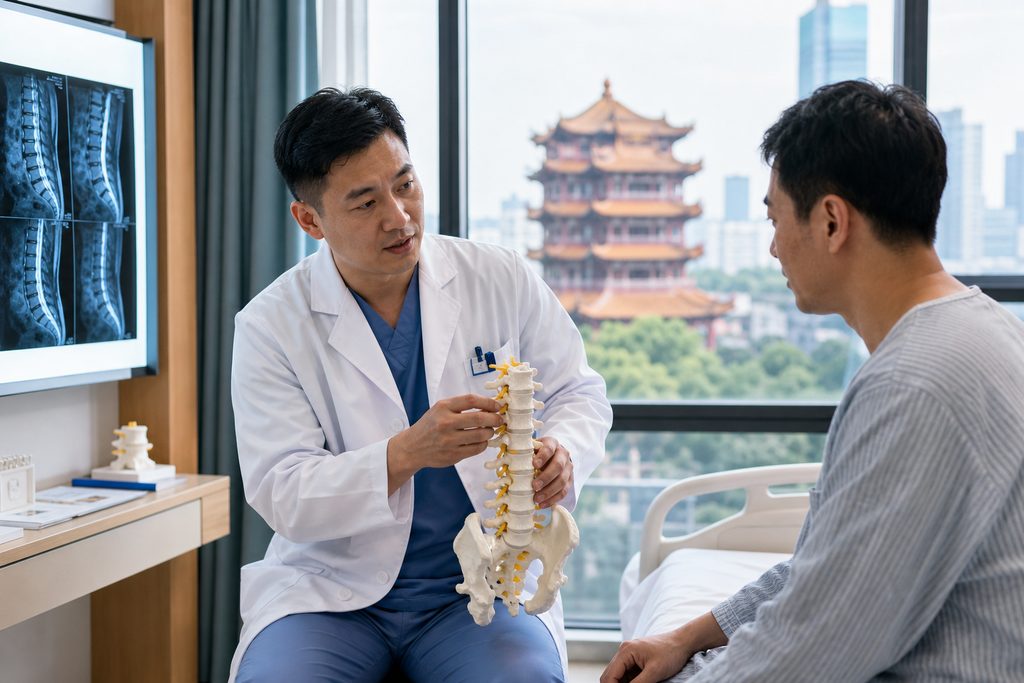
You have probably heard that traveling abroad for spinal surgery means gambling with quality. The assumption is that a lower price tag automatically translates to lower standards. The data tells a completely different story. When you examine the structural reasons behind the intradural extramedullary tumor surgery cost in China, you discover a system built on high clinical volume, rapid technology adoption, and an economic model that separates affordability from compromise. For a patient facing a diagnosis of a tumor growing inside the spinal canal but outside the spinal cord, the math becomes impossible to ignore. The same procedure quoted at over $100,000 in the United States can be performed at a top-tier Chinese neurosurgical center for a fraction of that, without sacrificing the expertise of a surgeon who may handle more of these rare cases in a single year than a Western surgeon sees in a decade.
Key Takeaways
- A full intradural extramedullary tumor resection at a top Chinese hospital ranges from $25,000 to $45,000, roughly 60-75% less than the typical US cash price.
- China’s top neurosurgery departments, ranked by the Fudan University Hospital Ranking, manage surgical volumes that are statistically linked to lower complication rates for rare spinal cord pathologies.
- Language, visa logistics, and navigating a high-volume public hospital without a local contact are the real barriers—not clinical competence.
- Before committing to travel, you should secure a written second opinion from the target surgical team to confirm your diagnosis, surgical candidacy, and a personalized cost breakdown.
The Problem: A Rare Tumor and a Devastating Price Quote
An intradural extramedullary spinal tumor is not a common diagnosis. These growths, typically meningiomas or schwannomas, sit inside the dura mater but press against the spinal cord from the outside. They are usually benign. But benign does not mean harmless. As the tumor expands in the confined space of the spinal canal, it compresses the cord, leading to progressive myelopathy. You lose sensation. Your legs stop cooperating. Bladder and bowel function can fail. The clock starts ticking the moment neurological symptoms appear. Left untreated, the compression becomes permanent.
In the US healthcare system, a patient without comprehensive insurance faces a financial catastrophe. The surgical resection requires a laminectomy, microsurgical dissection under neuromonitoring, and often a duraplasty. The bundled hospital charge, surgeon fee, anesthesia, and implant costs routinely exceed $120,000. Even insured patients can face out-of-pocket maximums that wipe out savings. In the UK or Canada, the problem is not the bill—it is the wait. A non-emergent intradural tumor can sit on a surgical waitlist for months, all while neurological function erodes. A 2022 report by the Canadian Institute for Health Information noted that only 59% of patients received their scheduled spinal surgery within the benchmark time frame. For a tumor pressing on your spinal cord, months feel like years.
This is the impossible position. You need a highly specialized neurosurgeon. You need the surgery soon. And you need to afford it without bankrupting your family. That is precisely the gap that has led patients from North America, Europe, and the Middle East to investigate the intradural extramedullary tumor surgery cost in China.
Why China’s Neurosurgical System Delivers Results
The value proposition is not just about the final invoice. It is about a healthcare ecosystem that has optimized for high-stakes, technically demanding surgery in ways that most Western systems structurally cannot match.
Clinical Volume Drives Surgical Precision
Spinal tumor surgery is a volume game. A surgeon who performs 10 intradural tumor resections a year operates with a different level of intuition than one who performs 2. In China’s largest neurosurgical centers, the case volumes are staggering. A single department at a hospital like Huashan Hospital Fudan University or Xuanwu Hospital Capital Medical University may complete over 1,500 spinal tumor surgeries annually. Within that number, intradural extramedullary cases are routine, not rare. The attending neurosurgeon you consult will have likely managed your exact tumor type—same location, same spinal level, same relationship to the nerve roots—hundreds of times before. This repetition breeds a calm, efficient operative rhythm that directly translates to shorter anesthesia time, less cord manipulation, and a lower risk of an incomplete resection.
Western neurosurgeons are undoubtedly brilliant. But the case distribution is different. A 2019 study in the Journal of Neurosurgery: Spine highlighted that surgeon experience, measured by cumulative case volume, was independently associated with reduced odds of perioperative complications in spinal tumor surgery. You want the team that has seen your problem more times than they can count.
Technology Adoption Without Legacy Debt
Many Chinese neurosurgical theaters leapfrogged directly to the latest intraoperative technology. You will find intraoperative MRI (iMRI), 3D C-arm fluoroscopy, and continuous multimodal neuromonitoring (somatosensory evoked potentials and motor evoked potentials) as standard equipment in the neurosurgery suites of top-tier hospitals. This is not a theoretical advantage. Intraoperative neuromonitoring acts as a real-time safety net. It alerts the surgeon the instant a surgical maneuver threatens the spinal cord’s functional integrity. In an intradural tumor resection, where the tumor and the cord are often adherent, this feedback loop is the difference between walking out of the hospital and a permanent neurological deficit.
The integration of these tools is seamless. The surgical workflow is built around them from the ground up, not retrofitted into an older operating room. For the patient, this means a safer surgery. For the surgeon, it means the confidence to pursue a gross total resection without crossing the invisible line into cord damage.
Cost Structure: The Economics of Scale
Let us address the obvious question. How can the intradural extramedullary tumor surgery cost in China be so much lower without cutting corners? The answer is structural, not qualitative. The cost of labor for highly skilled operating room staff, nurses, and even senior neurosurgeons is lower in China relative to the US. This is an economic reality, not a reflection of skill. The hospital infrastructure is often newer and built at lower construction cost. Pharmaceutical and implant costs, particularly for domestically manufactured neuromonitoring electrodes and dural sealants that meet international standards, are significantly cheaper.
And then there is volume. A hospital performing thousands of these surgeries annually negotiates supply costs and optimizes OR turnover in ways a low-volume center cannot. The savings are real and passed on. The result is a cash price that typically lands between $25,000 and $45,000 for the full episode of care—hospital stay, surgeon fee, anesthesia, neuromonitoring, and the implant hardware for spinal stabilization if required. This is not a stripped-down package. This is the price for accessing a team ranked among the best in the country.
What the Intradural Extramedullary Tumor Surgery Cost in China Actually Includes
When you receive a quote from a hospital’s international patient center, you need to know exactly what that number covers. A vague estimate is dangerous. You want a line-item breakdown before you book a flight. A comprehensive package for an intradural extramedullary tumor resection at a top Chinese public hospital, accessed through the international VIP or special needs channel, should explicitly include the following.
The preoperative workup is foundational. This means a high-resolution 3.0T MRI with contrast of the entire neuroaxis, not just the tumor level. It includes CT angiography if the tumor is suspected to be highly vascular. It covers a full cardiopulmonary and neurological clearance assessment. The surgical fee itself covers the attending neurosurgeon, two neurosurgical assistants, the anesthesiologist, and the intraoperative neuromonitoring technician. The operating room charge bundles the use of the surgical microscope, the ultrasonic aspirator, and the continuous electrophysiological monitoring equipment.
The implant and consumables cost is the most variable line item. It covers the titanium plates and screws if a laminoplasty or fusion is performed, the artificial dura graft, the fibrin sealant, and the wound closure materials. The inpatient stay typically covers 7 to 10 days in a private room on the international ward, including daily nursing care, medications, and three meals. Postoperative imaging—a follow-up MRI before discharge to confirm the extent of resection—should be included. Finally, a basic rehabilitation consultation with a physiotherapist to initiate safe mobilization is standard.
What is usually not included? Extended inpatient rehabilitation beyond the initial surgical stay, air ambulance transfer, and treatment of unexpected complications like deep vein thrombosis or hospital-acquired infection are typically billed separately. The key is to get the inclusion and exclusion criteria in writing.
How Much Does Spinal Tumor Removal Cost in Shanghai Versus Other Asian Destinations
Shanghai has become a focal point for international neurosurgical patients, and the numbers justify the attention. Understanding how much spinal tumor removal costs in Shanghai specifically helps you benchmark against other options in Asia. Shanghai is home to multiple hospitals ranked in the top tier for neurosurgery on the Fudan University Hospital Ranking, including Huashan Hospital and Zhongshan Hospital Fudan University. The concentration of expertise in one city drives competitive pricing and clinical excellence.
For a straightforward intradural extramedullary meningioma resection, the all-inclusive cash price through a Shanghai hospital’s international department typically ranges from $28,000 to $38,000. A more complex schwannoma with a dumbbell-shaped extension into the neural foramen, requiring a combined posterior-anterior approach and spinal instrumentation, can push the cost to $40,000-$50,000. These figures are all-in for the hospital side.
A spinal cord tumor resection price comparison across Asia reveals the Shanghai advantage clearly.
| Destination | Hospital Tier | Price Range (USD) | Key Consideration |
|---|---|---|---|
| Shanghai, China | Top-10 Neurosurgery (Fudan Ranked) | $28,000 – $50,000 | High volume, full intraoperative neuromonitoring, English-speaking coordinators available |
| Seoul, South Korea | Major University Hospital | $50,000 – $75,000 | Excellent infrastructure, higher labor costs, strong JCI presence |
| Bangkok, Thailand | Private JCI-Accredited Hospital | $35,000 – $55,000 | Strong medical tourism infrastructure, but lower neurosurgical case volume for rare tumors |
| Taipei, Taiwan | Top Public Hospital | $30,000 – $45,000 | Comparable quality and pricing, but visa process differs from mainland China |
| Mumbai/Chennai, India | Private Tertiary Center | $18,000 – $30,000 | Lowest cost, high volume, but perioperative infection control is a documented concern in some facilities |
The Shanghai price sits in a sweet spot. It is not the cheapest in Asia. India occupies that position. But for patients who prioritize a system with top-decile Fudan-ranked neurosurgery departments, integrated intraoperative MRI, and a growing infrastructure for international patient logistics, the value is unmatched. You are paying for the safety margin that comes from a team that performs this exact surgery multiple times per week.
Can You Remove an Intradural Tumor Safely Abroad? The Safety Question
This is the question that keeps you up at night. It is the right question to ask. The idea of flying to another country for spinal cord surgery feels like an enormous leap of faith. The honest answer is that safety is not determined by geography. It is determined by the specific hospital, the specific surgeon, and the systems that surround them.
A neurosurgical department that is part of a major teaching hospital in Shanghai or Beijing operates under rigorous internal quality controls. Morbidity and mortality conferences are standard. Complication rates are tracked. The international patient pathway adds another layer of scrutiny, because a poor outcome in a foreign patient carries reputational risk the hospital is keen to avoid. The attending surgeon assigned to your case through the international channel is almost always a senior consultant, not a junior trainee operating without supervision. This is the model that makes the question “can you remove an intradural tumor safely abroad” answerable with a qualified yes. The qualification is that you must do your due diligence. You verify the surgeon’s experience. You confirm the hospital’s Fudan ranking for neurosurgery. You ensure continuous intraoperative neuromonitoring is a non-negotiable part of the surgical plan. If those boxes are checked, the safety profile is comparable to any Western center of excellence.
The risk of a postoperative cerebrospinal fluid leak, wound infection, or neurological deterioration exists in every operating room on earth. The variable is how the team anticipates and manages these complications. A high-volume Chinese neurosurgical unit has seen and managed every possible postoperative scenario. Their recognition of early warning signs is rapid. Their intervention is decisive. This is the benefit of scale.
How to Book Spine Tumor Surgery in China Without Getting Lost in the System
The most common mistake is assuming you can simply email a hospital and book spine tumor surgery in China like a hotel reservation. The Chinese public hospital system does not work that way. The standard outpatient clinic is a high-volume, walk-in environment conducted entirely in Mandarin. You cannot navigate this alone as a non-Chinese speaker. The pathway that works for international patients is the hospital’s official International Medical Center or Special Needs Clinic channel. This is a parallel process designed for foreign patients, with English-speaking case managers, dedicated appointment slots, and private inpatient rooms. The cost is higher than the standard public channel—typically 1.5 to 2 times the local price—but it is the only viable route for a planned international surgical visit.
The process to book spine tumor surgery in China through this channel follows a logical sequence. First, you submit your complete medical records: the original MRI DICOM files on a CD or cloud link, the radiology report, any biopsy results, and a summary letter from your local neurologist or neurosurgeon. These documents are translated into Chinese by the hospital’s team or an external service. The neurosurgical department reviews the case. If they determine you are a surgical candidate, they will issue a preliminary treatment plan and a cost estimate. This is the moment you get the line-item breakdown we discussed earlier.
You then formally accept the plan and transfer the deposit to the hospital’s international bank account. The hospital issues the official invitation letter required for your S2 visa application. You apply for the S2 visa at the Chinese embassy or consulate in your country, submitting the invitation letter, your passport, and the standard application form. Once the visa is approved, you coordinate your arrival date with the hospital. The case manager arranges your admission, preoperative workup, and surgery scheduling. This entire sequence, from initial record submission to surgery date, typically takes 3 to 5 weeks. It is not instant. But it is a defined, predictable process.
Attempting to bypass this and simply show up at a public hospital’s general neurosurgery clinic is a recipe for frustration. You will face language barriers, registration confusion, and no guarantee of seeing the senior surgeon you researched. The international channel is not a luxury. It is a logistical necessity.
Finding the Best Hospital for Spine Tumor Surgery in China
Choosing the best hospital for spine tumor surgery in China starts with the Fudan University Hospital Ranking, specifically the neurosurgery specialty reputation list. This annual ranking, published by the Hospital Management Institute of Fudan University, is the most authoritative peer-reviewed assessment of Chinese hospital quality. For neurosurgery, the top-ranked institutions are concentrated in Beijing and Shanghai. Huashan Hospital Fudan University in Shanghai is perennially ranked at the top for neurosurgery, with a dedicated spinal cord tumor program that is one of the largest in the world. Xuanwu Hospital Capital Medical University in Beijing is another heavyweight, known for its expertise in complex spinal vascular and tumor pathologies. Beijing Tiantan Hospital, also affiliated with Capital Medical University, is a global giant in neurosurgical volume and research.
Outside these two cities, West China Hospital in Chengdu and Zhongnan Hospital of Wuhan University have rapidly ascending neurosurgery programs with strong spinal tumor subspecialties. The key differentiator is not just the hospital’s name. It is the presence of a dedicated spinal tumor team within the neurosurgery department. You want a surgeon whose practice is 80% or more spinal cord tumors, not a general neurosurgeon who does one intradural case every two months. When you review the hospital’s website or communicate with the international center, ask directly: “How many intradural extramedullary tumor resections does the assigned surgeon perform annually?” A number above 50 is a strong signal. A number above 100 is exceptional.
Our team maintains a current database of over 340 top-ranked hospitals across 37 cities, including the specific neurosurgery departments that meet these volume thresholds. The goal is to match your specific tumor location and pathology to the surgeon who has the deepest experience with that narrow subcategory, not just to a famous hospital name.
Practical Considerations: Visa, Payment, and Postoperative Logistics
The clinical decision is only half the equation. The practical logistics can derail your plan if you underestimate them.
The visa process is specific. You will apply for an S2 visa, which is the short-stay category for private affairs, including medical treatment. The hospital’s invitation letter is the critical supporting document. Processing time varies by embassy, but plan for 2 to 3 weeks. Do not book a non-refundable flight until the visa is in your passport. The S2 visa typically allows a stay of up to 180 days, which is more than sufficient for surgery and initial recovery. If you need to stay longer for rehabilitation, the hospital can assist with an extension application.
Payment is upfront and in full before admission. This is standard practice in Chinese hospitals for international self-pay patients. The hospital will provide a formal invoice that you submit to your insurance for potential reimbursement, but you must pay the hospital directly. Most international patient centers accept wire transfers and major credit cards. There are transaction limits on foreign credit cards in China, so a wire transfer for the deposit is more reliable. Confirm the exact final amount and the receiving bank details with the international center before initiating any transfer.
You need a companion. Not a medical companion in the clinical sense, but a family member or friend who can stay with you. The nursing care on the international ward is excellent, but it is task-oriented. You will need someone to help you communicate small needs, order food, and provide emotional support. If a family member cannot travel, hiring a bilingual medical companion for the hospitalization period is a practical safeguard. This person handles the non-clinical friction—pharmacy runs, dietary requests, communication with the ward nurses—so you can focus entirely on recovery.
Postoperative follow-up requires planning. Your surgeon will want a follow-up MRI at 3 months, 6 months, and 1 year. The 3-month scan can be done in China if you stay, or you can return home and send the DICOM files back for review. Establish this communication channel before you leave. Get the surgeon’s or the case manager’s professional WeChat contact or email for secure image transfer. Spinal tumor surgery is not a one-and-done event. It is the beginning of a surveillance relationship that lasts years. Make sure your Chinese surgical team is committed to that long-term follow-up before you commit to the surgery.
Frequently Asked Questions
The same attending neurosurgeon who performed the surgery manages all postoperative complications. You are not handed off to a generalist. If a cerebrospinal fluid leak develops, the primary surgeon will decide on lumbar drainage versus surgical re-exploration. If a new neurological deficit appears, you will get an emergency MRI and the team will determine if it is reversible. The hospital has the full resources—ICU, interventional radiology, rehabilitation medicine—to manage these events. The reality is that complications happen in a small percentage of cases regardless of where the surgery is performed. The measure of a program is how it responds, and a high-volume Chinese neurosurgical center has the depth to respond rapidly.
This depends entirely on your policy. Some US-based international health plans and European private insurers have provisions for overseas treatment, especially if the cost is significantly lower than the local network price. You need to contact your insurer before surgery. Request a pre-authorization or a written confirmation of the reimbursement conditions. The hospital will provide an itemized invoice and translated medical records to support your claim. But the financial transaction is between you and the hospital. Do not expect the hospital to bill your insurer directly, as is common in the US. The direct-pay model is the norm here.
This is a fair concern. In the international patient pathway, the surgeon who conducts your preoperative video consultation and reviews your MRI is the attending surgeon of record. The surgical consent form you sign will list this surgeon’s name as the primary operator. You can and should confirm this explicitly with the international center case manager before you transfer the deposit. Ask the direct question: “Will Dr. [Name] be the primary surgeon in the operating room for the entire tumor resection?” The answer should be an unambiguous yes. In a teaching hospital, residents and fellows will assist, but the attending surgeon’s hands are on the critical portions of the case.
What is the total recovery time before I can fly home?
For a straightforward intradural extramedullary tumor resection without fusion, you can typically fly home 10 to 14 days after surgery. The wound needs to be healing cleanly, with no signs of infection or cerebrospinal fluid leak. Your pain should be controlled on oral medication. You should be able to walk independently or with minimal assistance
For more medical information and treatment options in China, visit chinamedservices.com (China Medical Services).
