Family and Caregiver Visa for China Medical Travel: How Your Companion Gets Approved
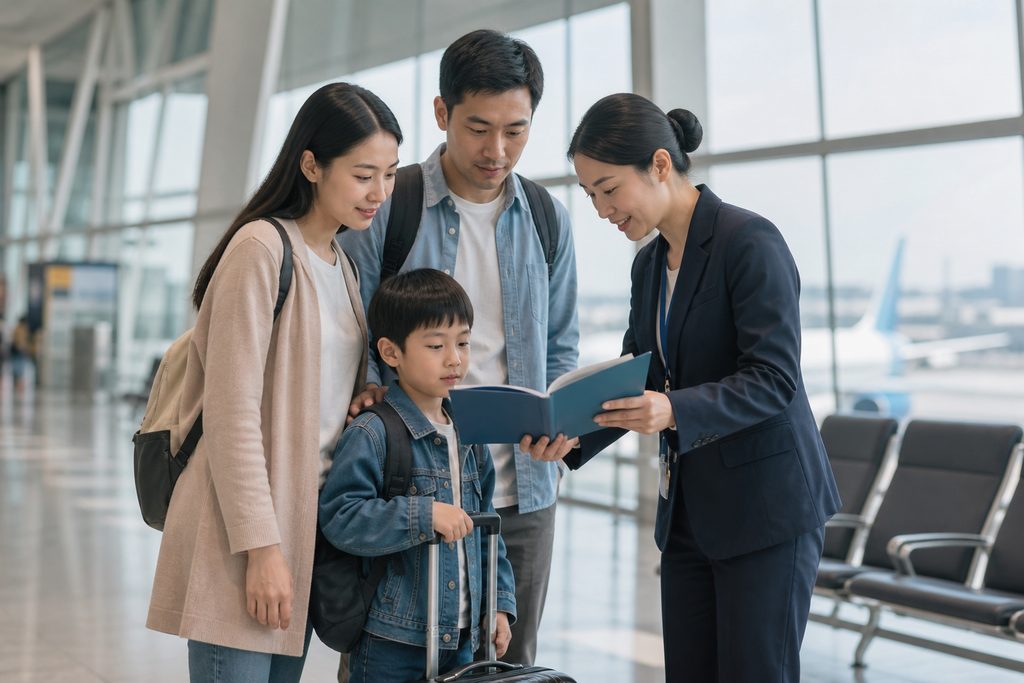
When 42-year-old Michael first heard the diagnosis, he had no idea where to start looking for treatment. A complex cardiac procedure was recommended. The wait time back home stretched past seven months. His research led him to consider a top-ranked cardiovascular center in Beijing. But one question kept him up at night more than the surgery itself: “Can my wife come with me?”
That question lands in our inbox almost daily. And it makes sense. Traveling to a foreign country for surgery is daunting enough. Doing it alone borders on unthinkable for most people. The good news is straightforward. Yes, your family member or caregiver can accompany you to China for medical treatment. The mechanism exists. It is called the S2 visa. Getting it approved requires specific documentation and a clear sequence of steps. Mess up the order, and you lose weeks.
We handle this exact coordination for patients from over a dozen countries. Our team connects international patients with more than 340 top-ranked hospitals across 37 cities. The visa piece is never an afterthought for us. It is step one.
How This Actually Works, Step by Step
The process is not mysterious. But it is rigid. Chinese consulates do not respond well to incomplete applications. Here is the real sequence, stripped of guesswork.
First, you need a confirmed medical relationship with a Chinese hospital. Not a vague email. Not a brochure. You need an official document — typically a stamped invitation letter or treatment confirmation — issued by a hospital authorized to receive foreign patients. Most top-tier public hospitals have an international department that handles this. Private international hospitals do too.
You send us your existing medical records. We translate them into Chinese. We submit them to the relevant department for review. A specialist evaluates whether your case is suitable for treatment at that facility. If yes, the hospital issues a formal treatment invitation letter. This letter is the cornerstone of the visa application. Without it, you cannot proceed.
Your companion applies at the same time. Their application is linked to yours. They will need a copy of your hospital invitation letter, proof of your relationship — marriage certificate, birth certificate, or legal guardianship documents — and a letter explaining their role as your caregiver during treatment. We prepare a companion support letter that outlines the medical necessity of having a caregiver present. This is not optional fluff. Consular officers look for it.
Both of you submit your applications to the Chinese Visa Application Service Center in your home country. Processing typically takes four to seven business days. Expedited service is sometimes available for an additional fee. The visa issued is an S2 visa, annotated with the purpose of accompanying a patient for medical treatment.
That is the clean path. Real life gets messier. Documents get rejected. Translations are inaccurate. Hospital departments change their requirements. We have seen every variation. The sequence above is what we aim for every time.
The S2 Visa for Medical Treatment: China Requirements That Actually Matter
Let us be blunt about what the S2 visa is and is not. The S2 is a short-term private visit visa. For medical travel, it is the correct category. The M visa — often mistakenly called a “medical visa” by uninformed agencies — is strictly for commercial and trade activities. Applying for an M visa for surgery will get you refused. We have had to fix that mistake for patients who tried to DIY the process.
The S2 visa for medical treatment China requirements center on a few non-negotiable documents. The hospital invitation letter tops the list. It must be on official hospital letterhead. It must state the patient’s name, passport number, diagnosis, proposed treatment plan, and expected duration of stay. A stamp or seal from the hospital’s international department is mandatory.
For your companion, the requirements mirror yours but add the relationship proof. A marriage certificate for a spouse. A birth certificate for a parent or child. If the relationship document is not in English or Chinese, it needs a certified translation. We cannot stress this enough. A consular officer in London or Los Angeles will not accept a handwritten family registry from a village in another language.
Financial proof matters too. Both patient and companion need to show sufficient funds to cover the stay. Bank statements from the last three months. Proof of income. Sometimes a letter from an employer confirming leave. The consulate wants to see that neither of you will become a financial burden in China. This is standard. It is not personal.
Also required: a valid passport with at least six months of remaining validity and two blank visa pages. Round-trip flight reservations. Hotel bookings or a letter from the hospital confirming accommodation arrangements. The details matter. A missing stamp on one page can send you back to the start.
A Realistic Timeline
People underestimate the calendar. They look at the medical procedure time and forget the administrative scaffolding. Here is what we tell patients, based on real cases.
| Stage | What Happens | Typical Duration |
|---|---|---|
| Week 1–2 | Patient sends medical records. Our team reviews for completeness. We identify missing documents and request them. Initial hospital matching begins. | 7–14 days |
| Week 3–4 | Records translated into Chinese by medical translators. Submission to target hospital department. Specialist review of case suitability. This step cannot be rushed. The doctor reviews when they review. | 10–20 days |
| Week 5 | Hospital issues treatment invitation letter. We prepare companion support documentation. Both patient and companion complete visa application forms. Appointment booked at Chinese Visa Application Service Center. | 5–7 days |
| Week 6–7 | Visa applications submitted. Standard processing. Biometrics captured if required by that consulate. | 4–10 business days |
| Week 8 | Visas issued. Travel arrangements finalized. Departure for China. | — |
The total from first contact to wheels up lands between eight and twelve weeks. Sometimes faster. Sometimes slower. A complex oncology case requiring multidisciplinary review can stretch the hospital evaluation phase by two weeks. A consulate in a high-volume city like Dubai or Moscow may take longer during peak season.
And here is what nobody tells you. The waiting is not passive. You are gathering documents. Getting notarizations. Securing translations. Booking appointments. It feels like a part-time job. That is exactly why patients hire us. We collapse the coordination burden into a single point of contact.
What Can Go Wrong — and What Happens Then
We lose credibility when we pretend everything always works. It does not. Here are the real failure modes and what recourse actually exists.
The hospital declines the case. It happens. Maybe the specialist reviews the records and concludes that the condition is too advanced for the proposed intervention. Maybe the hospital’s current capacity cannot accommodate a foreign patient requiring extended post-operative monitoring. What then? We pivot. We take the same records to a second hospital. Our database includes institutions across 37 cities. One refusal is not a dead end. It is a redirection.
The visa gets rejected. This is rarer when documentation is complete, but it happens. Common reasons: insufficient financial proof, unclear relationship documentation, or a consular officer’s concern about overstay risk. If rejected, you receive a refusal notice with a reason code. You can reapply immediately with corrected documents. You are not blacklisted. We have guided patients through successful reapplication within ten days of an initial refusal.
The companion’s visa is approved but the patient’s is not. This is almost always a documentation asymmetry. The patient’s hospital letter had an error. The companion’s application was cleaner. The fix is to correct the patient’s documents and reapply. The companion’s visa remains valid. They do not need to reapply.
The hospital changes its policy mid-process. It is rare but real. A department head retires. A new international patient protocol rolls out. Suddenly the document requirements shift. We handle this by maintaining direct relationships with international departments. We hear about policy changes before they hit the website. That early warning lets us adjust applications in flight.
None of these failure modes are catastrophic. They are frustrating. They cost time. But they are navigable with experienced guidance.
Can My Family Member Stay with Me During Surgery in China? The Practical Reality
The short answer is yes. But the experience differs from what many Western patients expect.
Chinese hospitals, especially the large public teaching hospitals, have strict ward policies. In most general wards, family members are not permitted to stay overnight. Visiting hours exist and are enforced. This can be jarring for someone accustomed to a private room with a pull-out couch for a spouse.
The workaround is the hospital’s international or VIP ward. These units are designed for patients who pay a premium — typically 1.5 to 2 times the standard rate — and they offer private rooms with space for a family member to stay. A companion bed or sofa is standard. The nursing ratio is higher. English-speaking staff are more common. For a patient traveling from abroad with a caregiver, we almost always recommend the international ward route. The cost difference is real, but the practical benefit of having your spouse in the room during recovery is immense.
Outside the hospital, your companion needs a place to stay. Hotels near major hospital clusters in Beijing, Shanghai, and Guangzhou are plentiful. Serviced apartments with kitchenettes are popular for longer stays. We help coordinate this. A companion who is well-rested and eating properly is a better caregiver. It sounds obvious. It gets forgotten in the stress of planning.
The companion’s role during the hospital stay is not medical. They are not changing dressings or adjusting IVs. They are communicating with you, liaising with our bilingual coordinators, and providing the emotional anchoring that speeds recovery. Studies consistently show that patients with a present family caregiver report lower pain scores and shorter hospital stays. That data holds regardless of which country the hospital is in.
China Companion Visa Medical Trip Cost: Breaking Down the Numbers
People search for “China companion visa medical trip cost” because they are building a budget. Let us build it honestly.
The visa fee itself is modest. An S2 visa for a single entry with a stay duration of up to 180 days typically costs between $140 and $190, depending on your nationality and the consulate’s fee schedule. Express processing adds $30 to $50. This is the government fee. It is non-negotiable.
The larger costs are the supporting services. Document translation — medical records, relationship certificates, financial statements — runs from $200 to $500 depending on volume and language pair. A certified translation of a 50-page oncology history from Arabic or Russian into Chinese costs more than a 10-page cardiology summary from English.
Our coordination fee for visa support starts from $300. This covers the preparation of the companion support letter, document review for consular compliance, and guidance through the application sequence. It does not guarantee visa approval. No legitimate service can guarantee that. What it guarantees is that your application will be complete and correctly formatted the first time.
Then there is the companion’s travel and living cost. Round-trip economy airfare: $800 to $2,500 depending on origin. Accommodation near the hospital: $50 to $150 per night for a decent hotel or serviced apartment. Daily expenses for food and local transport: $30 to $60 per day. For a four-week stay, a companion’s total cost — excluding our coordination fee — typically lands between $3,000 and $7,000.
This is not pocket change. But frame it against the alternative. The medical procedure itself, done at a top Chinese hospital, often costs one-fifth to one-tenth of the equivalent in the United States. A cardiac bypass that runs $120,000 in the US might cost $15,000 to $20,000 at Fuwai Hospital in Beijing. The companion’s travel cost is a rounding error in that calculus.
We never want a patient to arrive in China financially strained. That stress bleeds into recovery. We encourage patients to budget conservatively, to include a 15% contingency, and to have a clear conversation with their companion about shared expenses before booking anything.
Practical Considerations: Records, Timing, and Insurance
Medical records are the foundation of everything. If your records are incomplete or poorly organized, the entire timeline slides. Before you contact any hospital or visa service, gather every relevant document. Imaging reports on CD or via secure link. Pathology slides if available. Operative notes from prior surgeries. Current medication list with dosages. A summary letter from your treating physician explaining the diagnosis and treatment to date.
Timing is the second practical headache. Surgical schedules at top Chinese hospitals are tight. A specialist might only perform certain procedures on specific days of the week. Aligning your visa validity, your companion’s availability, and the surgeon’s schedule requires a project manager’s mindset. We build a reverse calendar from the target treatment date and work backward. It is the only way to avoid arriving in China with a valid visa but no confirmed hospital bed.
Insurance is the third piece. Most international health insurance plans do not cover elective treatment in China unless the hospital is part of their network. Check before you book. Some private international hospitals in China — United Family, Jiahui, Parkway — offer direct billing with major insurers. Public hospitals generally do not. You pay upfront and seek reimbursement. Get a clear cost estimate from the hospital before you travel. Surprise bills are avoidable with upfront diligence.
Language is the fourth. Your companion may not speak Mandarin. In the international ward, some nurses speak English. In the corridors, cafeteria, and surrounding streets, English evaporates quickly. Our bilingual medical companions handle the in-hospital navigation. But your caregiver should download a translation app, learn five essential phrases, and carry the hospital’s address in Chinese characters on a card. Small preparations reduce daily friction enormously.
Follow-up at home is the final consideration. Before you leave China, get a detailed discharge summary in English. Get copies of all imaging and lab results. Get a medication plan with generic drug names — brand names differ between countries. Your home physician will need these to continue your care. We facilitate this documentation handoff as a standard part of our service. It is not an upsell. It is essential.
Frequently Asked Questions
No. Your companion’s application references your hospital invitation letter. They do not need their own. They do need a companion support letter explaining their role as your caregiver, plus proof of your relationship. The consulate links the two applications.
An S2 visa typically allows a stay of up to 180 days. The exact duration granted is at the consular officer’s discretion and is printed on the visa sticker. If your treatment and recovery require a longer stay, an S1 visa for long-term private visits may apply. We advise on which category fits your timeline.
This is a common scenario. A partner, an adult child caring for a parent, or a close friend serving as caregiver. The consulate needs documented proof of the caregiving relationship. This can be a notarized affidavit explaining the arrangement, combined with evidence of shared residence or financial interdependence. These cases require more preparation. They are approved regularly when properly documented.
Yes. The S2 visa has no restriction on movement within China. Your companion can come and go from the hospital during visiting hours, stay at a nearby hotel, and travel within the city. They are a visitor, not a detainee. The only constraint is the hospital’s own ward policies, which we clarify before admission.
Visa extensions are processed in China at the local Public Security Bureau’s Exit and Entry Administration. An extension application requires a letter from the treating hospital confirming the need for continued treatment and extended stay. We assist with this application. Extensions are not guaranteed but are routinely granted for documented medical necessity.
Your Next Step
Bringing a caregiver to China for medical treatment is not a loophole to exploit or a bureaucratic labyrinth to fear. It is a defined process with clear requirements. The S2 visa exists for exactly this purpose. Thousands of international patients and their companions use it every year.
Our team at China Medical Services handles the coordination from end to end. We do not practice medicine. We do not promise outcomes. What we do is remove the administrative chaos so you and your companion can focus on the treatment and recovery ahead. We connect you with specialists across 340+ top-ranked hospitals, prepare your documentation, and guide both of you through the visa process.
If you are considering treatment in China and need to bring someone with you, start with a conversation. Tell us about your case. We will tell you honestly whether the timeline works, what the costs will look like, and what the first concrete step should be. No pressure. Just clarity.
This article is for informational purposes only and does not constitute medical or legal advice. Visa policies are subject to change by Chinese authorities. Always consult the Chinese embassy or consulate in your jurisdiction for the most current requirements. Medical decisions should be made in consultation with a qualified physician.
For more medical information and treatment options in China, visit chinamedservices.com (China Medical Services).
