Spine Surgery in China: Complete Timeline From MRI Review to Recovery
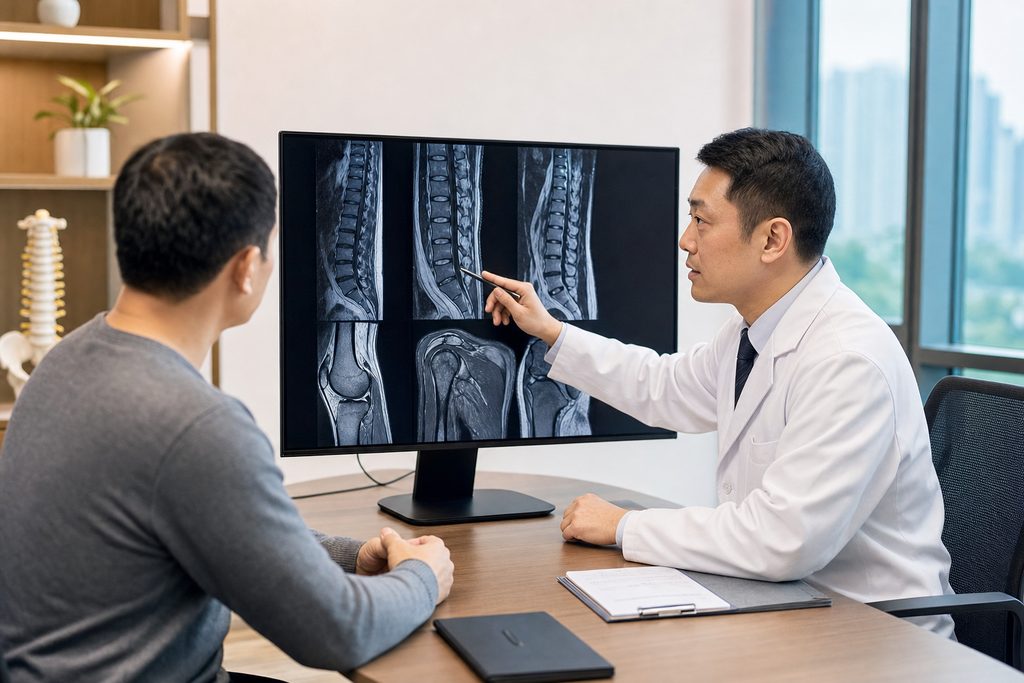
Key Takeaways
- A lumbar spinal fusion in a top-tier Chinese hospital costs between $12,000 and $22,000, roughly one-fifth of the $80,000 to $150,000 typically billed in the United States.
- China’s high-volume orthopedic centers handle thousands of complex spine cases annually, creating surgical teams with a depth of repetitive experience that is difficult to match in lower-volume Western institutions.
- The public hospital system in China is vast and can feel chaotic. Walking into a 10,000-patient-per-day facility without Mandarin fluency and a plan is not merely inconvenient—it is a genuine barrier to safe, efficient care.
- Before booking any flight, you need a written surgical indication from a Chinese specialist based on your existing MRI and a clear understanding of the visa category required for private medical treatment.
The Problem: When Your Spine Dictates Your Life
Chronic spinal degeneration is not a rare disease. The Global Burden of Disease Study tracks it as a leading cause of years lived with disability worldwide. For a patient sitting in a specialist’s office in London, Sydney, or Toronto, the news often lands the same way: surgery is clinically indicated, but the wait for a public-system slot stretches 12 to 18 months. Going private slashes the wait but introduces a financial shock—a single-level lumbar fusion can easily exceed £40,000 in the UK or CAD $60,000 in Canada. In the United States, the same procedure often generates a facility and professional bill north of $100,000. That financial toxicity is real. Patients drain retirement accounts. They delay surgery and watch their mobility shrink, their nerve pain intensify, and their world contract to the four walls of a living room.
That equation—long waits or life-altering debt—pushes rational people to look beyond their borders. And when they do, the question becomes brutally practical: can you access high-stakes spine surgery in a country where you do not speak the language, do not understand the hospital system, and cannot verify the surgeon’s track record? The answer is not a simple yes. It is a conditional yes, dependent entirely on how you enter the system.
Why China’s Spine Centers Deliver Results at Scale
The clinical argument for considering a Chinese orthopedic center rests on three structural advantages that have nothing to do with marketing and everything to do with volume, technology, and economics.
Surgical Volume Creates Pattern Recognition
A senior spine surgeon at a major Chinese tertiary hospital may perform 300 to 400 instrumented spinal fusions annually. That number is not an outlier. It reflects a system where high-prevalence pathology meets concentrated specialist resources. Compare this to the average U.S. orthopedic spine surgeon, whose annual fusion volume often sits between 50 and 100 cases, per published workforce analyses. Volume alone does not guarantee a good outcome. But in complex spine surgery—where intraoperative judgment about screw trajectory, decompression adequacy, and sagittal balance matters as much as technical skill—repetitive experience under pressure builds a pattern-recognition capacity that no amount of textbook study can replicate. When a surgeon has seen 2,000 variations of the same degenerative condition, the intraoperative surprises shrink.
Technology Adoption Without Legacy Lag
Chinese hospitals invested heavily in surgical infrastructure over the past decade, often leapfrogging older Western facilities that are still amortizing equipment purchased 15 years ago. It is common to find intraoperative 3D navigation systems, O-arm imaging, and neuromonitoring suites in orthopedic theaters at hospitals like Peking University Third Hospital or Shanghai Changzheng Hospital. Minimally invasive tubular retractor systems and endoscopic spine platforms are standard in centers that market themselves to international patients. The technology itself is not unique to China—you can find the same equipment in a top U.S. academic center. The difference is that in China, this equipment is often concentrated in dedicated orthopedic towers that run high-volume lists six days a week, reducing the per-case amortization cost and increasing staff familiarity with the workflow.
The spine surgery cost China 2025 Advantage Is Structural, Not a Discount
This is the point where skepticism peaks. Lower cost must mean lower quality. That assumption is understandable but wrong in this specific context. The cost difference is not a clearance sale. It reflects structural economic factors: lower physician labor costs relative to Western markets, hospital-owned equipment with higher utilization rates, and a system that does not carry the administrative overhead of multi-payer insurance billing. A single-level lumbar fusion with instrumentation at a top-tier Chinese public hospital’s international department runs $12,000 to $22,000. The same procedure at a Joint Commission International-accredited private hospital in Shanghai may run $25,000 to $35,000. Both figures are a fraction of the U.S. list price. The key variable is not the quality of the implant or the surgeon’s training—it is the economic environment in which the care is delivered.
The Complete Timeline: From MRI Upload to Standing Straight
This is the pathway as it actually works, not as a brochure describes it. Understanding the real timeline prevents the single biggest mistake international patients make: booking flights before confirming surgical candidacy.
| Phase | What Happens | Typical Duration |
|---|---|---|
| 1. Remote Record Review | You upload your MRI (DICOM files, not just the report), X-rays, and clinical summary. A Chinese spine specialist reviews them and provides a written second opinion: is surgery indicated, what procedure, and what is the provisional prognosis. | 3-5 business days |
| 2. Video Consultation | A live discussion with the reviewing surgeon or their team. You explain your symptoms, functional limitations, and goals. The surgeon explains the proposed approach, implant type, and expected hospital stay. This is where you assess communication quality and build trust—or decide to walk away. | 30-60 minutes, scheduled within one week of record review |
| 3. Visa Processing | With a treatment confirmation letter from the hospital, you apply for an S2 visa at your local Chinese embassy or consulate. The letter must specify the medical purpose. Processing times vary by jurisdiction but typically run 4-10 business days. Do not book non-refundable flights until the visa is in hand. | 1-2 weeks |
| 4. Arrival and Pre-Op Workup | You arrive in China. The hospital conducts fresh imaging (often a new MRI and CT), full blood work, cardiac clearance, and an in-person surgical consultation. This is non-negotiable—no reputable surgeon operates on overseas imaging alone. The pre-op phase also includes an anesthesia assessment. | 2-4 days |
| 5. Surgery and Inpatient Stay | The procedure itself. For a standard single-level fusion or disc replacement, the inpatient stay typically runs 5-10 days post-operatively. This includes initial mobilization with a physiotherapist, wound care, and pain management transition to oral medications. | 5-10 days |
| 6. Local Recovery Period | Most international patients stay in China for a period of early recovery before flying home. This allows for staple removal, a follow-up X-ray to confirm implant position, and 1-2 supervised physiotherapy sessions to establish a safe home exercise program. Flying long-haul immediately after spine surgery is uncomfortable and medically inadvisable. | 2-4 weeks post-discharge |
| 7. Return Home and Continuity | You fly home with a full operative report, implant card, and discharge imaging. Your local spine surgeon or physiotherapist takes over long-term rehabilitation. A follow-up video consultation with the Chinese surgical team at 3 and 12 months is standard. | Ongoing |
This timeline adds up to roughly 6-8 weeks on the ground in China, from arrival to safe departure. Anyone promising a two-week surgical tourism turnaround for a spinal fusion is either being reckless or dishonest. Healing bone and safely navigating the inflammatory phase of recovery takes the time it takes.
Is Minimally Invasive Spine Surgery in China Safe and Worth the Hype?
The term “minimally invasive spine surgery” covers a spectrum from tubular microdiscectomies to percutaneous pedicle screw placement and endoscopic decompressions. The question of safety is legitimate, and the answer requires nuance.
Chinese spine surgeons were early and aggressive adopters of endoscopic techniques, particularly for lumbar disc herniations. The volume of transforaminal endoscopic discectomies performed in centers like the Third Military Medical University’s affiliated hospitals exceeds anything seen in most Western institutions. Published complication rates for these procedures in experienced hands are comparable to international benchmarks—dural tear rates under 2%, infection rates well below 1%, and reoperation rates in the single digits at five years.
But minimally invasive is not risk-free. The learning curve for endoscopic spine surgery is steep. A surgeon who has done 50 cases is not the same as one who has done 500. This is where the volume argument circles back. At a high-volume Chinese spine center, the surgeon you are assigned is likely well past the learning curve plateau. The equipment is modern, the sterilization protocols in Joint Commission International-accredited or Chinese Grade A tertiary hospitals are rigorous, and the neuromonitoring standards are real. Is it safe? In the right institution, with the right surgeon, for the right indication—yes, the safety profile is comparable to open surgery with the added benefit of reduced paraspinal muscle trauma and faster early mobilization.
The “hype” part is worth addressing. Not every spine problem is a candidate for a 7-millimeter incision. Multi-level degenerative disease with significant instability, severe central stenosis, or deformity correction often still requires open instrumentation. A good surgeon tells you when minimally invasive is not in your best interest. A bad one tells you what you want to hear. The remote consultation phase is your opportunity to gauge which type you are dealing with.
How Long Is Recovery After Spinal Fusion in China and Who Should Not Do This
Recovery after a lumbar fusion follows a biological timeline that no amount of surgical skill can accelerate. Bone fusion takes 6 to 12 months. The early phase—the first 6 weeks—is about protecting the construct. No bending, lifting, or twisting. Walking is encouraged. Sitting is limited. The middle phase, from 6 weeks to 3 months, introduces progressive strengthening and weaning from any rigid bracing. Return to sedentary work is often possible around 6-8 weeks. Return to physical labor or contact sports is a 6- to 12-month conversation.
The recovery timeline in China does not differ from the biological reality anywhere else. What differs is the intensity of early inpatient rehabilitation. Chinese physiotherapy teams tend to be aggressive about early mobilization—patients are often standing and walking with assistance within 24 hours of a routine fusion. This is not unique to China, but the cultural expectation of patient effort and the high therapist-to-patient ratios in international departments make a difference in those first critical days.
This pathway is not for everyone. It is a poor fit if you have unstable cardiac or pulmonary comorbidities that make long-haul travel dangerous. It is a poor fit if you lack a local spine surgeon willing to take over your post-operative care—continuity matters, and a surgeon who feels slighted that you went abroad may not provide enthusiastic follow-up. It is a poor fit if you expect a hotel-like experience in a public hospital. Even in the international VIP wards, the nursing culture is different. Families are expected to be present and involved in bedside care in ways that surprise Western patients. The food is Chinese hospital food unless you are in a private international facility. These are not deal-breakers, but they are deal-breakers if you do not know them in advance.
Practical Considerations: Documentation, Payment, and the S2 Visa Reality
The logistics of getting spine surgery in China are not trivial, but they are manageable with the right preparation.
You need a current MRI in DICOM format—not just the radiologist’s report, but the actual image files. A surgeon cannot assess canal stenosis, disc height, or foraminal compromise from a text description. You also need any previous operative notes if this is a revision case, a current medication list, and a summary from your primary care physician confirming you are medically optimized for surgery. All documents must be in English or translated into Chinese. Professional medical translation is worth paying for; a mistranslated allergy or comorbidity can have serious consequences.
The visa category for private medical treatment in China is the S2 visa. This is a short-term private affairs visa, and the hospital’s treatment confirmation letter is the supporting document that makes the application viable. The S2 is typically issued for a stay of up to 180 days. For treatment requiring longer stays, the S1 category applies. The M visa—often incorrectly referenced online as a “medical visa”—is a commercial and trade visa and has no relevance to medical travel. Using the wrong category can result in denial at the border. Processing times vary by embassy, but plan for two weeks and do not book flights until the visa is stamped in your passport.
Payment is almost universally required upfront. Chinese public hospitals, including their international departments, operate on a deposit-and-settlement model. You will be asked to place a deposit at admission, with the final bill settled at discharge. International wire transfers, major credit cards, and sometimes cash are accepted, but confirm the specific payment methods with the hospital’s international office before you travel. U.S. Medicare does not cover care in China. Some private international insurers with out-of-network benefits may reimburse a portion, but you will almost certainly be paying out of pocket and seeking reimbursement later. Get a pre-determination letter from your insurer if you intend to claim.
Frequently Asked Questions
No reputable Chinese hospital will schedule you for surgery without an in-person pre-operative consultation and fresh imaging. The remote record review and video consultation can confirm that you are a surgical candidate and establish a provisional plan, but the final decision to operate happens only after the surgeon examines you, reviews new scans, and clears you medically. Anyone offering to lock in a surgery date based solely on your emailed MRI is cutting a corner that puts you at risk.
Chinese tertiary hospitals carry medical liability insurance, and the standard of care in top-tier institutions is governed by national clinical practice guidelines that align with international norms. Surgical complications—infection, dural tear, implant malposition, nerve injury—occur at rates comparable to Western benchmarks. The practical reality is that pursuing a medical malpractice claim across international borders is complex, expensive, and slow. This is not a reason to avoid treatment, but it is a reason to choose your hospital and surgeon carefully based on verifiable volume and outcomes data, not marketing materials. The best protection is a surgeon who does enough of these procedures to manage complications competently when they arise.
Yes, with an important distinction. Top-tier Chinese hospitals use the same multinational implant brands—Medtronic, DePuy Synthes, Stryker, Zimmer Biomet—that you would find in a U.S. or European operating room. These are CE-marked and FDA-cleared devices. There are also domestic Chinese implant manufacturers producing pedicle screw systems and interbody cages that are widely used within China and increasingly exported. The quality of domestic implants has improved dramatically over the past decade, and published biomechanical and clinical studies show comparable performance. If you have a strong preference for a specific international brand, state that during your video consultation and confirm it will be used.
Most will, but not all. Some Western surgeons are professionally skeptical of surgery performed abroad, and a few are outright hostile. Before you travel, have an honest conversation with your local spine specialist or general practitioner. Explain your reasons—cost, wait times, or both—and ask directly if they are willing to manage your post-operative rehabilitation and order follow-up imaging. If the answer is no, find a new local provider before you leave, not after you return with staples in your back and no one to remove them.
Your Next Step
Spine surgery is a serious decision, and crossing borders to have it done raises the stakes. The right approach is methodical: start with a remote record review, speak directly with the surgeon who would operate on you, and only then make travel commitments. Our team at China Medical Services connects international patients with verified spine specialists at top-tier Chinese hospitals. We coordinate the remote consultation, arrange the in-person pre-operative workup, and provide bilingual support throughout the hospital stay. We are not a hospital and we do not provide medical advice—we bridge the logistical and language gap so you can focus on your recovery. When you are ready to explore whether this pathway fits your specific spine condition, request a free consultation and we will walk you through the first practical steps.
For more medical information and treatment options in China, visit chinamedservices.com (China Medical Services).
