Dental Restoration in Nanjing China: Full Mouth Rebuild with a Local Companion
Key Takeaways
- A full mouth restoration in Nanjing typically ranges from $8,000 to $18,000 — roughly 70% less than the $45,000+ common in the United States for comparable implant-supported prosthetics.
- The real challenge is not clinical quality. Nanjing has several university-affiliated stomatology hospitals with digital workflows. The barrier is navigating a system where reception desks speak Mandarin and appointment logic follows local norms.
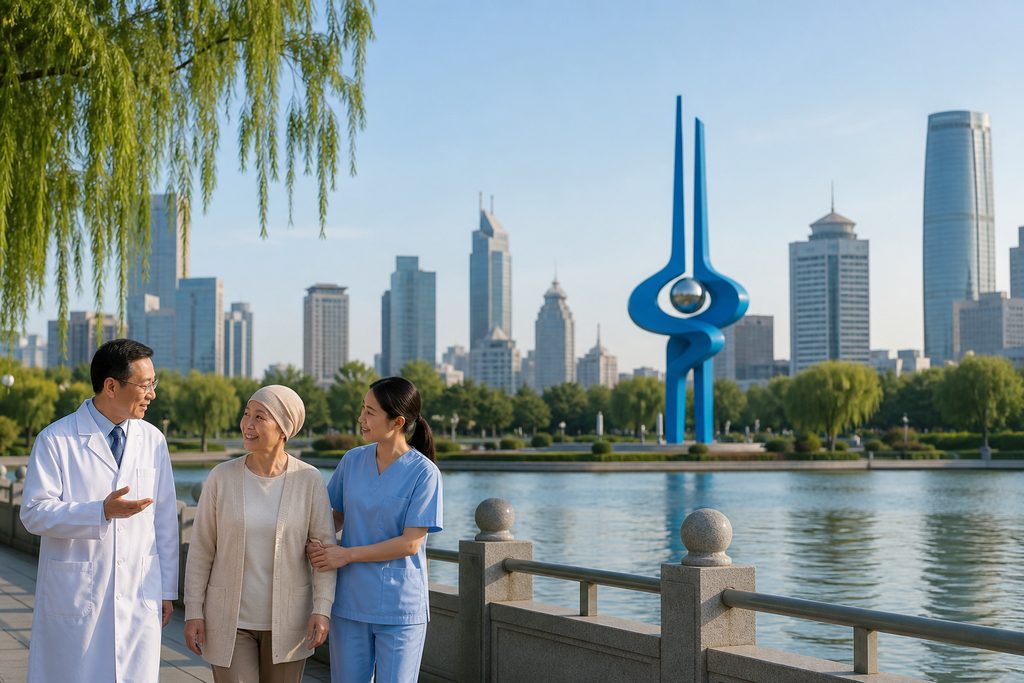
- A local companion does not perform dentistry. They handle registration, payment queues, translation during consultations, and the logistical friction that burns days for a non-Mandarin speaker.
- You need to understand the timeline before booking a flight. Full mouth work is not one visit. Plan for at least two trips spread over 4 to 8 months.
The Problem: Your Teeth Are Failing and Your Local Quote Is Astronomical
According to the American College of Prosthodontists, approximately 36 million Americans do not have any teeth, and that number is expected to rise to 200 million over the next 15 years. For those with severely compromised dentition, a full mouth restoration using implants is often the only durable solution.
Then the quote arrives. In the US, a full-arch fixed implant bridge (All-on-4 or All-on-6 per arch) runs $20,000 to $30,000 per jaw. A complete upper and lower restoration can hit $50,000. In Australia, patients report quotes of AUD $45,000 to $60,000. In the UK, £25,000 to £35,000. Dental insurance typically caps annual coverage at $1,500 to $2,000. The math does not work for most people.
So patients start searching. They look at Mexico, Thailand, Turkey. And increasingly, they look at China — specifically cities like Nanjing, where the concentration of university dental hospitals and the cost structure create a gap wide enough to justify a long flight.
But a low price on a website means nothing if you cannot communicate with the surgeon who will place the implants. That is the gap a local companion fills.
Why Nanjing for Full Mouth Dental Work Makes Structural Sense
Nanjing is not a dental tourism hub like Budapest or Cancun. That is precisely its advantage. The city is home to the Jiangsu Province Stomatological Hospital, affiliated with Nanjing Medical University, and the dental department of Nanjing Drum Tower Hospital. These are teaching institutions. Their senior prosthodontists and implantologists train the next generation of clinicians. They see complex cases daily. Their equipment — CBCT scanners, intraoral optical scanners, CAD/CAM milling units — is current because university budgets refresh technology on 3-to-5-year cycles.
Prices are lower not because materials are inferior, but because the cost base is different. A prosthodontist in Nanjing earns a fraction of what a US counterpart earns. The hospital owns the lab. The supply chain for implants — Straumann, Nobel Biocare, Osstem, Dentium — runs through distributors who serve a high-volume domestic market. These structural factors compress the final bill without touching clinical protocols.
Clinical Volume You Can Verify
A senior implant surgeon at a major Nanjing teaching hospital may place 600 to 1,000 implants annually. The average US general dentist placing implants does roughly 50 to 100 per year. Volume correlates with complication management. When a surgeon has seen 5,000 cases of posterior maxillary bone atrophy, the pterygoid or zygomatic implant option is not theoretical. It is routine.
That matters for full mouth cases. These are not single-tooth procedures. They involve bone assessment, sinus lifts if needed, strategic implant angulation, provisional prosthesis delivery, and occlusal adjustment over multiple appointments. Experience is not a nice-to-have. It is the difference between a restoration that lasts 5 years and one that lasts 20.
Digital Workflow Cuts Chair Time
Many Nanjing dental hospitals now run a partially or fully digital workflow. The sequence: CBCT scan → virtual implant planning software → surgical guide fabrication (3D-printed) → guided implant placement → intraoral scan for the provisional prosthesis → CAD design → CAM milling of the final zirconia or titanium-acrylic hybrid bridge. This is not futuristic. It is standard in the university hospital setting.
For an international patient, digital workflow means fewer appointments. The surgical guide is fabricated before you arrive. The provisional prosthesis can be ready within 24 to 48 hours of implant placement. You are not waiting a week for a lab technician to hand-stack porcelain. That reduces the number of days you need a companion by your side and the number of hotel nights you pay for.
What a Full Mouth Restoration in Nanjing Actually Costs
The phrase “full mouth restoration cost Nanjing” is what brings readers to this page, and the answer is not a single number. It depends on implant system, prosthesis material, and whether bone grafting is needed. Below is a realistic range based on current market data from university-affiliated and private dental hospitals in Nanjing.
| Treatment Option | Nanjing Price Range (USD) | US Comparison (USD) | Notes |
|---|---|---|---|
| Full arch fixed bridge (All-on-4, single jaw) — mid-tier implant (Osstem/Dentium) | $4,000–$6,000 | $20,000–$25,000 | Includes surgery, standard acrylic provisional, and final hybrid prosthesis. Excludes bone graft. |
| Full arch fixed bridge (All-on-6, single jaw) — premium implant (Straumann/Nobel) | $6,000–$9,000 | $25,000–$30,000 | Premium implant brands add $200–$400 per fixture. Zirconia final bridge costs more than acrylic hybrid. |
| Full mouth restoration (upper + lower, All-on-4 or All-on-6) | $8,000–$18,000 | $45,000–$60,000 | Range reflects mid-tier vs. premium implants and prosthesis material. Bone grafting adds $800–$2,500 per arch if needed. |
| Implant-supported overdenture (removable, 2–4 implants per arch) | $3,000–$5,500 per arch | $12,000–$18,000 per arch | Lower cost, less stability. Good option for patients with severe bone loss who want to avoid extensive grafting. |
These are all-in figures for the surgical and prosthetic phases at a university hospital or reputable private clinic. They include the CBCT, surgical guide, implant placement, provisional prosthesis, and final prosthesis. They do not include your flight, hotel, meals, or the local companion fee. They also do not include treatment for active periodontal disease or extractions of remaining teeth — those are typically billed separately at $30 to $80 per tooth.
Ask any clinic for a written treatment plan that separates the surgical fee, the implant hardware cost, the provisional prosthesis fee, and the final prosthesis fee. A lump-sum quote without line items is a red flag, in Nanjing or anywhere else.
How the Timeline Works: Two Trips, Not One
Full mouth implant rehabilitation is not completed in a week. Anyone promising “teeth in 3 days” is selling a provisional prosthesis — which is a real and valid step — but the final restoration comes months later. Here is the realistic timeline for international patients traveling to Nanjing.
Trip 1 (10–14 days): You arrive. The companion meets you at the airport or hotel. Day 1 is a comprehensive exam: CBCT scan, intraoral scan, periodontal assessment, and treatment planning discussion with the surgeon and prosthodontist together. If you sent records ahead, this day confirms or adjusts the plan. Day 2 or 3 is surgery. Full-arch implant placement under local anesthesia or IV sedation takes 3 to 5 hours per arch. A provisional fixed bridge is delivered within 24 to 48 hours. You leave Nanjing with teeth. They are temporary. You eat soft food. You do not chew steak. But you smile.
Healing phase (4–6 months at home): Osseointegration happens. The implants fuse to bone. You follow up with your local dentist if any issues arise — the Nanjing clinic will provide a discharge summary and post-op instructions in English.
Trip 2 (7–10 days): You return. The provisional bridge is removed. Implant stability is confirmed. Final impressions are taken — digitally, in most Nanjing university clinics. The final zirconia or titanium-acrylic prosthesis is fabricated and delivered within 5 to 7 days. Occlusion is adjusted. You go home with the permanent restoration.
This timeline is not a sales pitch. It is biology. Bone needs time. Skipping the healing phase and loading a final prosthesis immediately on fresh implants is possible in select cases with high primary stability, but it is not the standard of care for full-arch cases with compromised bone.
Choosing a Clinic: What “Best Dental Clinic Nanjing for International Patients” Actually Means
Searching for the best dental clinic Nanjing for international patients yields a mix of private chains and university hospitals. The right choice depends on what you prioritize: price, English fluency, or subspecialty expertise.
University-Affiliated Hospitals
Jiangsu Province Stomatological Hospital and Nanjing Drum Tower Hospital’s dental department are the heavyweights. Their implant departments handle complex full mouth cases routinely. The surgeons are faculty. They publish. They teach. English capability varies — some senior surgeons speak functional English; many do not. That is where a companion becomes essential. A bilingual companion translates the clinical discussion accurately, not just the pleasantries. They ensure you understand the difference between a Straumann BLX and a Bone Level Tapered implant, and why the surgeon recommends one over the other for your bone type.
Wait times for surgery at these hospitals are typically 2 to 4 weeks, not months. The companion coordinates the appointment date before you book your flight.
Private Dental Hospitals and Chains
Nanjing has several private dental hospitals that cater to a mix of domestic and international patients. Some have English-speaking front desk staff. Some have in-house labs that can mill a zirconia bridge in 24 hours. Prices run 20–40% higher than university hospitals, but the experience is smoother: less waiting, more privacy, more flexible scheduling. For a patient who wants a single point of contact and a clinic that understands international patient logistics without a third party, this can be worth the premium.
Verify credentials. Ask where the surgeon trained. Ask how many full-arch cases they complete per year. A glossy website with stock photos of smiling foreigners does not tell you anything about clinical competence. A companion who knows the local landscape can help you distinguish a marketing operation from a serious clinical team.
Practical Considerations: Visa, Payment, and What to Bring
Foreigners can get full mouth dental work in China. The question is not whether it is allowed — it is whether you are prepared for the logistics.
Visa: Dental treatment falls under private medical travel. The appropriate visa category is the S2 short-stay private affairs visa, with supporting documentation from the Nanjing hospital confirming your treatment appointment. The hospital’s international patient office or your companion service can provide the invitation letter. Do not apply for an M visa — that is for commercial and trade activities, not medical treatment. S2 visas are typically issued for 30 to 90 days and can sometimes be extended once inside China. Check current requirements with the Chinese embassy or consulate in your country; rules shift.
Payment: Chinese hospitals require upfront payment. University hospitals accept UnionPay cards, WeChat Pay, Alipay, and sometimes international credit cards — but do not count on Visa or Mastercard working at every terminal. Bring a debit card that works on the UnionPay network, or set up Alipay TourPass before you travel. Cash in RMB is universally accepted but impractical for large amounts. A companion helps you navigate the payment counter, which may have a 30-minute queue and a cashier who speaks no English.
Records to bring: Any panoramic X-rays or CBCT scans from the past 12 months. A list of medications and medical conditions. Your current dentist’s treatment notes if you have them. The Nanjing clinic will redo imaging, but prior records give the surgeon context.
Insurance: Most international dental insurance plans do not cover treatment outside their network, and almost none cover full mouth implant rehabilitation — it is classified as a major prosthetic procedure with annual maximums that are laughably low. Assume you are paying out of pocket. Get a detailed invoice from the Nanjing hospital in English and Chinese; you can submit it to your insurer for possible partial reimbursement, but do not budget around that happening.
Frequently Asked Questions
Yes. The clinical work is the same regardless of the patient’s native language. The friction is entirely logistical: booking, registration, payment, consent forms, and understanding the surgeon’s instructions. A bilingual local companion handles all of that. You focus on healing. They handle the system.
For a premium implant full mouth restoration, budget $12,000 to $18,000 for the dental work. Add $2,500 to $4,000 for two round-trip flights and 17 to 24 nights of hotel stays across two trips. A local companion service runs from $300 per day. Total all-in cost: roughly $18,000 to $26,000. That is still half the US price for the dental work alone.
This is the hardest question. The Nanjing clinic will provide a discharge summary, post-op instructions, and imaging files. You need a local dentist willing to manage complications — a loose prosthesis screw, a chipped provisional tooth, peri-implant mucositis. Find that dentist before you book your flight to Nanjing. Call local implant dentists. Explain your plan. Ask if they will see you for post-op care. Some will say no. Find one who says yes. The Nanjing clinic can ship a replacement prosthesis component if needed, but someone local must deliver it.
The implant hardware — Straumann, Nobel Biocare, Osstem — is the same product you receive in the US or Europe. The lab work quality at a university hospital’s in-house lab is generally high; technicians there are full-time prosthetics specialists who work alongside the surgeons. The variable is communication. If the surgeon’s instructions to the lab are precise, and if the patient’s occlusal scheme is communicated clearly, the result is excellent. A companion who understands dental terminology in both languages reduces the risk of a lab miscommunication.
A legitimate medical companion service will be transparent about what they do and do not do. They do not diagnose. They do not perform dentistry. They do not guarantee a specific surgeon or treatment date. What they do: translate your dental records into Chinese, coordinate appointments with the hospital’s international patient office, accompany you on treatment days to handle registration and payment, and ensure you understand every clinical conversation. Ask them directly: “What happens if I need to reschedule?” “Do you have experience with full mouth implant cases specifically?” “Can you provide a sample itinerary?” Their answers will tell you whether they are a logistics partner or just a translator with a business card.
Your Next Step
Full mouth restoration is a significant decision — clinically, financially, and logistically. The numbers in Nanjing are compelling, but they only matter if the execution is smooth. Our team at China Medical Services connects international patients with vetted dental hospitals across Nanjing and handles the on-the-ground coordination that makes the difference between a stressful trip and a focused recovery. We are not dentists. We do not provide medical advice. We handle the logistics so you can focus on treatment. If you are considering dental treatment in Nanjing, start by sending your records and treatment goals through our consultation page. We will help you understand whether this path makes sense for your case — honestly and without pressure.
For more medical information and treatment options in China, visit chinamedservices.com (China Medical Services).
