Getting Your TCM Treatment in Kunming, China: A Full Local Companion Guide
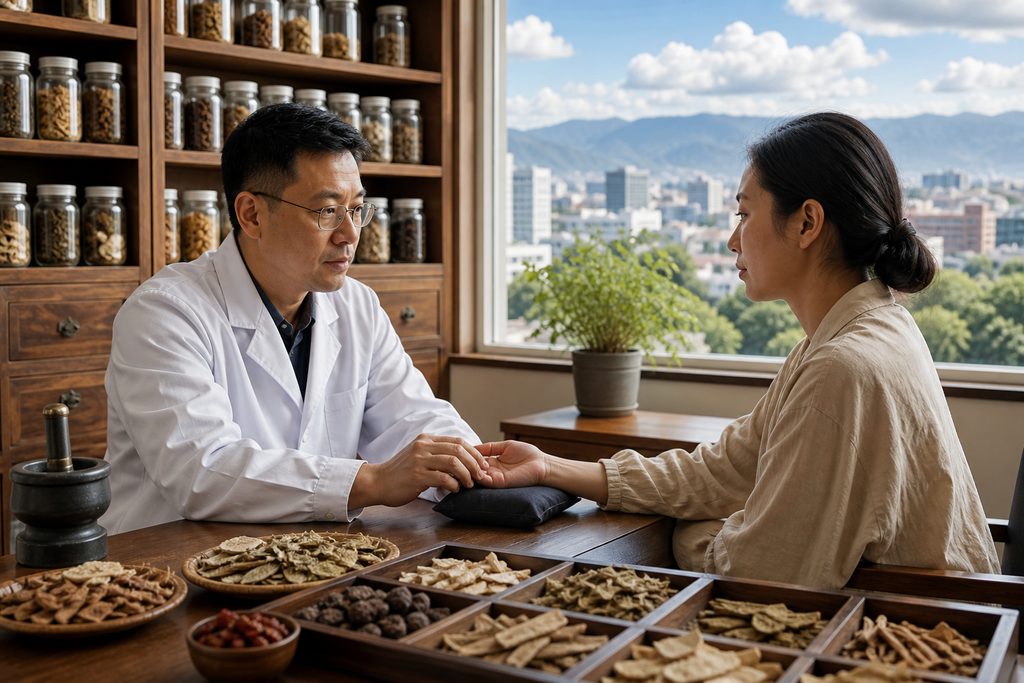
TCM Treatment in Kunming: The Short Answer
Getting authentic traditional Chinese medicine in Kunming costs a fraction of what you would pay in a Western city. A full acupuncture session runs $30–60. A two-week herbal protocol typically falls between $80–200. And a comprehensive wellness retreat with daily treatments, meals, and a translator starts around $2,500 for ten days. These are real numbers from 2025 patient files.
But cost is not the hard part. The hard part is walking into a hospital where nobody speaks your language, the system runs on a WeChat mini-program you cannot download, and the herbal pharmacy dispenses raw bark and roots that need to be decocted at home. That gap between the treatment and actually receiving it is where most international patients stall. This guide closes that gap.
Who This Is Right For — and Who It Isn’t
We see two kinds of patients succeed with TCM in Kunming. The first group has a chronic condition that Western medicine manages but does not resolve — things like persistent migraines, eczema, IBS, or unexplained fatigue. The second group is already healthy and wants a structured wellness reset: sleep restoration, stress recovery, metabolic rebalancing.
Who should not come? Anyone with an acute, undiagnosed, or rapidly progressing condition. If you have a new lump, unexplained weight loss, or chest pain that wakes you at night, you need a full Western workup first. TCM is not a replacement for emergency diagnostics. Also, if you expect a single acupuncture needle to fix twenty years of poor sleep and chronic stress, you will leave disappointed. TCM works cumulatively. A typical course is ten to fourteen sessions over three to four weeks. Half-measures get half-results.
One more group we gently steer away: patients who are deeply uncomfortable with ambiguity. TCM diagnosis uses terms like “damp-heat in the liver channel” and “kidney yang deficiency.” These are functional descriptors, not anatomical ones. If that language makes you roll your eyes and you cannot suspend disbelief long enough to let the treatment work, save your money.
The Options, Compared
Not all TCM experiences in Kunming are created equal. Here is what actually exists on the ground, organized by what you get, who you see, and what you pay.
| Option | Who Treats You | Language Support | Typical Cost (10-day course) | Best For |
|---|---|---|---|---|
| Public TCM Hospital Outpatient | Attending physician, possibly a senior consultant | None — bring your own translator | $150–400 | Budget-conscious patients with a companion |
| Public Hospital International Department | Senior consultant or department head | Basic English-speaking coordinator | $600–1,200 | First-time visitors wanting hospital credibility |
| Private TCM Clinic (Standalone) | Often a renowned practitioner with a loyal local following | Rare — some have English brochures | $400–900 | Patients seeking a specific lineage or specialty |
| Integrated Wellness Retreat | Team: TCM doctor, tuina therapist, nutritionist | Full-time bilingual health coordinator | $2,500–5,000 | Those wanting a contained, all-inclusive experience |
| Yunnan Provincial Hospital of Traditional Chinese Medicine (International VIP) | Department chiefs, some with overseas training | Dedicated English interpreter provided | $800–1,800 | Patients wanting top-tier hospital oversight with comfort |
If you are a seasoned traveler who speaks some Mandarin and has a local friend, the public hospital outpatient path works. You will save money and see authentic cases. If this is your first time in China and the thought of navigating a 3,000-patient-per-day hospital alone makes your stomach tighten, the integrated retreat or international department route is the right call. The premium you pay buys certainty.
What Makes Yunnan TCM Genuinely Different
Every province in China practices TCM. Why fly to Kunming specifically? Three reasons that matter clinically.
First, the materia medica. Yunnan is China’s most biodiverse province. Over 6,000 plant species used in TCM grow here, many endemic to the high-altitude forests of the Hengduan Mountains. The tcm treatment cost Kunming patients pay often includes herbs that are simply not available in dried, exported form elsewhere. Practitioners here prescribe fresh san qi (Panax notoginseng) from Wenshan, wild tian ma (Gastrodia elata) from Zhaotong, and Yunnan-specific fungal medicines like polyporus. These are regional tools with regional effects. A TCM doctor in London or Los Angeles works from a limited imported pharmacopoeia. A doctor in Kunming works from the source.
Second, the ethnic medicine overlap. Yunnan is home to 25 of China’s 56 recognized ethnic minorities. The Dai, Bai, Yi, and Naxi peoples each have their own medical traditions that have cross-pollinated with Han Chinese TCM for centuries. Many best Yunnan traditional medicine hospital for foreigners programs now integrate Dai medicine — which uses different diagnostic methods and a separate herbal repertoire — alongside classical TCM. This is not something you find in Beijing or Shanghai.
Third, the climate itself aids recovery. Kunming sits at 1,890 meters elevation with a mean annual temperature of 15°C (59°F). The air is thin but clean. For patients with respiratory or inflammatory conditions, the combination of altitude, low humidity, and clean air creates a recovery environment that no clinic room can replicate. It is why the city has been a sanatorium destination for Chinese patients since the 1950s.
How Does TCM Work Compared to Western Medicine?
This is the question every patient asks, usually in the first five minutes of our initial call. The honest answer requires setting aside the impulse to make TCM fit into a Western framework.
Western medicine identifies a pathogen, a lesion, or a biochemical pathway and intervenes directly. A statin blocks HMG-CoA reductase. An antibiotic disrupts a bacterial cell wall. The logic is linear and the endpoint is measurable: LDL drops, the culture comes back negative.
TCM does not target a single pathway. It reads patterns across multiple systems — your pulse, tongue coating, sleep quality, stool consistency, emotional state, sensitivity to cold or heat — and classifies you into a syndrome. Two patients with the same Western diagnosis of “migraine” might receive completely different herbal formulas because one presents with “liver yang rising” and the other with “blood stasis.” The treatment aims to restore a functional balance, not eliminate a named entity.
Does it work? For some conditions, the evidence is substantial. A 2022 systematic review in The BMJ found that acupuncture provided clinically meaningful relief for chronic low back pain, tension headaches, and knee osteoarthritis compared to sham controls. For other claims, the evidence is thin. The key is matching the condition to the modality. TCM excels at functional, chronic, multi-system complaints. It is not the tool for a burst appendix.
Can I Combine TCM with Modern Medicine in China?
Yes. And in China, this is not an alternative approach — it is the standard approach. Walk into any top-tier hospital here and you will find a TCM department on the third floor and an oncology ward on the sixth. Patients routinely receive chemotherapy alongside herbal decoctions to manage side effects. Post-surgical patients get acupuncture for pain control and ileus prevention. This integration is not fringe; it is state policy.
What matters is coordination. Your TCM practitioner must know every drug you are taking. Some herbs interact with anticoagulants, immunosuppressants, and cytochrome P450-metabolized drugs. St. John’s wort is the famous example, but Chinese herbal formulas can contain dozens of compounds with similar enzyme-inducing effects. A responsible traditional Chinese medicine travel package Yunnan provider will insist on a full medication reconciliation before your first treatment. If they do not ask, walk away.
The best setup is when your Western-trained specialist and your TCM doctor are in the same hospital system, sharing the same electronic health record. Several hospitals in Kunming operate this way. It is one of the quiet advantages of seeking tcm treatment cost Kunming rather than piecing together care across two countries and two disconnected systems.
What It Costs: A Real Budget Breakdown
Patients ask about cost first and most often. Here is what a ten-day TCM treatment stay in Kunming actually looks like, based on mid-range choices. All figures in USD.
| Expense Category | Budget Range | Mid-Range | Premium |
|---|---|---|---|
| Initial comprehensive TCM consultation (90 min) | $20–40 | $60–100 | $150–250 |
| Acupuncture session (per visit, 45–60 min) | $15–25 | $30–60 | $80–120 |
| Tuina therapeutic massage (60 min) | $20–30 | $40–70 | $80–120 |
| Custom herbal formula (14-day supply, raw herbs) | $40–80 | $80–200 | $200–400 |
| Bilingual medical companion (per day) | N/A | $300 | $400+ |
| Hotel (per night, 3–4 star, city center) | $30–50 | $60–100 | $150–300 |
| Meals and local transport (per day) | $15–25 | $30–50 | $60–100 |
| Estimated 10-day total (with companion) | $1,400–2,100 | $3,200–5,000 | $6,000–9,000 |
What drives the variance? Three things. The seniority of your practitioner — a department chief with a thirty-year waiting list in China charges more than a staff acupuncturist. The format of your herbs — raw herbs you boil at home cost less than concentrated granules or prepackaged decoctions. And whether you need a full-time companion or just occasional interpretation.
The companion line item deserves attention. At $300 per day, it is often the single largest expense after the hotel. But it is also the line item that determines whether your treatment actually happens or you spend three hours lost in a hospital corridor trying to find the cashier. We have seen patients skip the companion to save money and end up missing appointments because they could not read the queue number on the screen. That is not frugality; it is a false economy.
Practical Considerations: Visa, Records, and What to Pack
You cannot just book a flight and show up. Well, you can. But you will waste the first three days untangling logistics that should have been handled from home.
Visa. Medical treatment in China requires an S2 short-term private affairs visa, annotated for medical purposes. You will need an invitation letter from the hospital or clinic confirming your treatment schedule. This is not optional. The hospital’s international department typically issues this after you have a confirmed appointment. Do not apply for an M visa — that is for commercial and trade activities and has nothing to do with medical travel. Using the wrong visa category can get you turned away at the border. Your spouse or partner traveling with you applies for their own S2 as an accompanying family member.
Medical records. Bring everything. Your most recent blood work, imaging reports (the written reports, not just the CDs), current medication list with generic names and dosages, and any relevant specialist letters. Have the key documents translated into Chinese before you travel. A bilingual medical companion can handle this, but it takes time. Arriving with untranslated records adds two to three days to your timeline before any treatment begins.
Payment. Chinese hospitals require prepayment. You load funds onto a hospital card at admission and draw down as services are consumed. Most international departments accept Visa and Mastercard, but public outpatient departments often do not. Cash is still common. WeChat Pay and Alipay dominate daily life, and both now support foreign credit card linking — set this up before you leave home. Your home health insurance will likely not cover TCM treatment abroad unless you have a specific expatriate or integrative medicine policy. Expect to pay out of pocket and seek reimbursement later if eligible.
What to pack. Bring loose, comfortable clothing for acupuncture and tuina sessions — your practitioner needs access to your back, abdomen, and limbs. Download a VPN before you arrive. Google, WhatsApp, Gmail, and most Western social media are blocked in China without one. And bring patience. The pace of a Chinese hospital is fast, loud, and crowded in ways that can overwhelm even experienced travelers. A companion does not just translate language; they translate the culture of the system itself.
Frequently Asked Questions
Yes, when you go through a regulated hospital or a licensed practitioner. China’s TCM practitioners are state-certified and TCM hospitals are accredited. The risks come from unlicensed operators — tiny storefront clinics with no credentials, or “herbalists” selling powdered mixtures with undisclosed ingredients. Stick to hospital-affiliated departments or clinics with verifiable practitioner licenses. If a book TCM wellness retreat Kunming with translator provider cannot show you the practitioner’s license number and hospital affiliation, do not book.
The Yunnan Provincial Hospital of Traditional Chinese Medicine is the flagship institution. It has an international department with English-speaking coordinators, and its senior physicians routinely handle foreign patients. For a more boutique experience, several private clinics near Green Lake Park cater specifically to medical travelers, with shorter wait times and more flexible scheduling. The trade-off is that private clinics may not have the same depth of specialist coverage if your case becomes complex. We typically recommend starting at the provincial hospital for the initial workup, then continuing treatment at whichever setting feels right.
This happens. TCM sometimes produces a temporary “healing crisis” — fatigue, mild digestive upset, or a transient worsening of symptoms in the first three to five days. Practitioners see this as a positive sign that the body is responding. But you need to distinguish that from an adverse reaction. Any fever, severe pain, vomiting, or new neurological symptoms are not a healing crisis and require immediate Western medical evaluation. This is another reason to stay in Kunming near a major hospital rather than at an isolated mountain retreat hours from emergency care. You want access to both systems.
Sometimes. Raw dried herbs in sealed, labeled packaging from the hospital pharmacy usually clear customs in most countries if declared as personal medical supplies. Pre-decocted liquid medicines are often confiscated. Patent herbal pills in original packaging are generally fine. But every country has different biosecurity rules. Australia and New Zealand are strict. The EU varies by member state. The US generally allows a reasonable personal supply. Check with your home country’s customs authority before you travel, and always carry a letter from the prescribing doctor explaining what the herbs are and why you need them.
A translation app handles simple things. “Where is the bathroom?” and “I need water.” It fails when the nurse asks you to confirm your name and date of birth before inserting a needle, or when the pharmacist explains that one of your herbs must be soaked for thirty minutes before boiling and the other added only in the last ten minutes. A companion also handles the invisible work: knowing which window to queue at, recognizing when a hospital staff member is giving you incorrect information out of expediency rather than malice, and advocating for you when the system is moving too fast. Some patients manage without one. Most tell us afterward they wish they had not tried.
