Stroke Rehab in Beijing: Full Companion Service for Post-Stroke Recovery
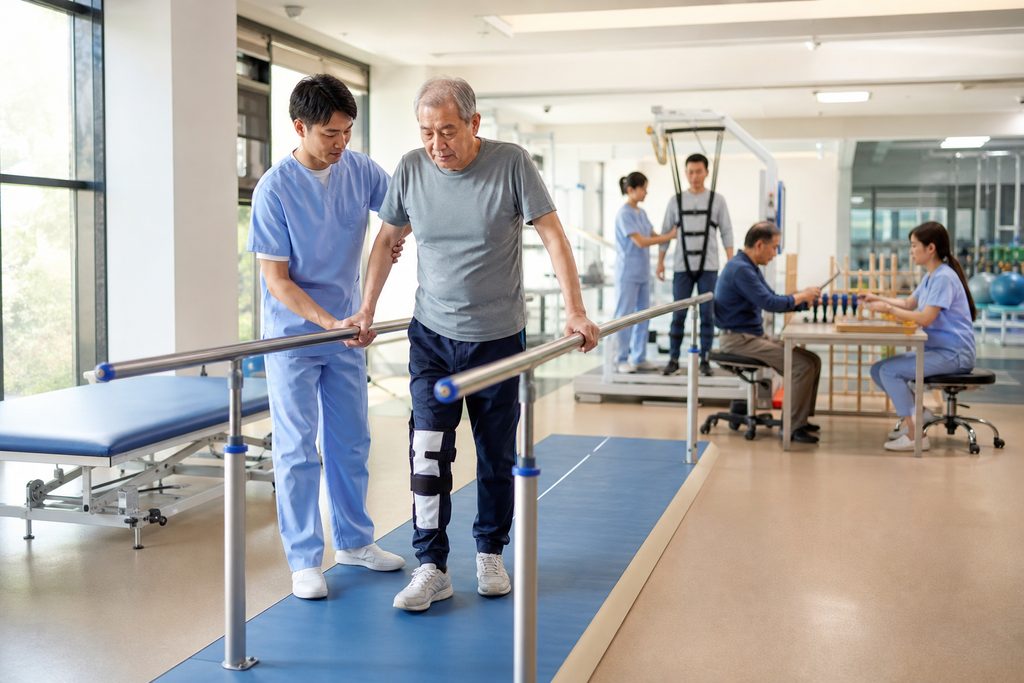
Every 40 seconds, someone in the world has a stroke. The aftermath isn’t just about surviving. It’s about reclaiming the ability to speak, to walk, to hold a fork. For many families, the search for intensive, affordable rehabilitation leads to one question: what does a complete recovery program look like in China, and what is the actual stroke rehab Beijing cost?
Our team has coordinated recovery pathways for patients from over a dozen countries. We’ve seen the confusion when a family tries to compare a Western outpatient model—maybe two hours of therapy per week—with the immersive, multi-hour daily protocols common in Beijing’s top neurological centers. The gap is enormous. So is the logistical challenge of navigating it from 5,000 miles away.
This article maps the real sequence. Not a glossy brochure. We’ll walk through the clinical intake, the visa category that actually applies, what the daily companion service does (and doesn’t do), and an honest timeline that includes the waiting steps nobody mentions. If you’re researching how does stroke rehabilitation work in Beijing, you need the unvarnished version.
How This Actually Works, Step by Step
The process begins with a remote evaluation. You send us the patient’s complete medical records: the initial CT or MRI scans from the acute event, the discharge summary, current medication list, and any recent physical or occupational therapy assessments. Our bilingual case managers translate these documents into clinical Chinese. We don’t summarize. We render the full chart—every lab value, every neurologist’s note.
Those translated records go to the international patient center of a top-ranked hospital with a dedicated neurological rehabilitation department. A senior physiatrist reviews the case. This is the gatekeeper. They decide whether the patient is medically stable for travel and whether their specific deficits—motor, speech, cognitive—match the hospital’s program strengths.
Within five to seven business days, we receive a written assessment. It outlines a proposed treatment intensity, an estimated inpatient stay duration, and a preliminary cost range. This is not a binding contract. It’s a clinical opinion that lets you decide if traveling makes sense. If you agree, we move to scheduling.
Booking a bed in a Beijing rehab ward isn’t like reserving a hotel room. The hospital confirms an admission window, usually two to four weeks out. That window dictates everything else: flight bookings, visa applications, and the start date for your local companion. You don’t book the companion first. You secure the clinical slot, then layer the support services around it.
The Post-Stroke Recovery Local Full Companion Service: What It Actually Does
A post-stroke recovery companion service China is not a medical role. The companion doesn’t adjust medications, perform therapy, or make clinical decisions. What they do is eliminate the friction that exhausts a recovering patient and their family.
Picture the first morning at the hospital. The patient needs to register at the international department, obtain a hospital medical card, pay the admission deposit, and reach the correct ward on the 8th floor of Building 3. All signage is in Chinese. The registration system requires a local phone number. The cashier’s desk closes for lunch from 12:00 to 1:30. A companion handles every one of these micro-obstacles before the patient feels the first wave of fatigue.
During the inpatient stay, the companion arrives each morning. They confirm the day’s therapy schedule—physical therapy at 9:00, speech therapy at 10:30, acupuncture at 2:00. They escort the patient to each session. They translate the therapist’s instructions in real time: “She wants you to keep your weight on the left heel, not the ball of the foot.” They note down home exercise instructions that a tired patient will forget by evening. They communicate dietary restrictions to the ward kitchen. When the physiatrist does rounds, the companion ensures every question the family emailed overnight gets asked and answered.
This is the difference between receiving therapy and absorbing it. Without language mediation, a world-class rehab program becomes a series of gestures and guesses.
We’ve also coordinated for families who want to book stroke rehab package Beijing with a bundled approach—combining the hospital’s clinical program, daily companion service, and airport transfers into a single coordinated plan. It reduces the cognitive load on the family at a moment when cognitive load is the last thing anyone needs.
A Realistic Timeline
| Stage | What Happens | Typical Duration |
|---|---|---|
| Document Collection | Family gathers all medical records, scans (DICOM format preferred), and physician notes | 3–7 days |
| Translation & Clinical Summary | Our team translates records into clinical Chinese and prepares a structured case summary | 3–5 business days |
| Hospital Review | Target hospital’s rehabilitation department reviews the case and issues a preliminary assessment | 5–7 business days |
| Decision & Financial Prep | Family reviews the proposed program and cost estimate; arranges payment method | 3–10 days |
| Admission Scheduling | Hospital confirms admission window; we coordinate the exact date | 2–4 weeks lead time |
| Visa Processing | Family submits S2 visa application with hospital invitation letter and supporting documents | 1–3 weeks (varies by embassy) |
| Travel & Arrival | Flight to Beijing; airport pickup; next-day hospital admission | 2–3 days |
| Inpatient Rehabilitation | Intensive daily therapy program; companion present throughout | 4–12 weeks (case-dependent) |
| Discharge & Home Program | Hospital provides written home exercise plan; companion translates and clarifies | 1–2 days |
The timeline above assumes no major setbacks. A patient with significant medical instability may be declined for travel. A visa application can stall if the embassy requests additional documentation. We’ve seen the document collection phase stretch to two weeks when a family struggles to obtain DICOM-format imaging from a small community hospital. Build buffer into your expectations.
What Can Go Wrong — and What Happens Then
Let’s be direct about the failure modes.
The hospital declines the case. This happens. The physiatrist may determine that the patient’s deficits require a level of acute medical management that a rehab ward cannot provide, or that the patient is not yet medically stable for international travel. If this occurs, we relay the specific clinical reasoning to the family. Sometimes the answer is “wait three months and resubmit.” Sometimes it’s “this patient needs a different type of facility.” We don’t shop the case to a less appropriate hospital just to secure a booking.
The patient arrives and cannot tolerate the program. Beijing rehab protocols are intensive. Three hours of combined therapy daily is common. A patient who has been doing 45-minute sessions at home may hit a wall on day three. The companion’s role here is critical: they communicate the struggle to the therapy team immediately. The program gets adjusted. Intensity scales back temporarily. The goal is completion, not collapse.
Complications arise during the stay. A post-stroke patient develops a urinary tract infection. Or a shoulder subluxation from improper transfer technique. Beijing’s top hospitals have acute care resources on-site. The patient gets transferred to the appropriate department, treated, and returned to the rehab ward when stable. The companion remains the family’s eyes and ears through every step of that detour.
The family runs out of money mid-program. We’ve seen this exactly twice in our history. Both times, the family had underestimated the total cost by focusing only on the hospital’s base rate and ignoring the companion service, accommodation, and incidentals. We now require a transparent budget worksheet before any booking is confirmed. If funds run short, the hospital may discharge the patient early. We help negotiate a compressed discharge plan and a detailed home program. It’s not ideal. But it’s manageable.
What the Numbers Actually Look Like
Let’s talk about stroke rehab Beijing cost in real terms. Prices vary by hospital tier, program intensity, and length of stay. The figures below reflect our observed range for international patients at top-tier Beijing rehabilitation centers.
| Cost Component | Estimated Range (USD) | Notes |
|---|---|---|
| Inpatient Rehab (per week) | $2,500 – $5,000 | Includes room, board, nursing, and therapy sessions; varies by hospital tier and ward class |
| Bilingual Companion Service (per day) | from $300 | Full-day accompaniment, translation, and coordination |
| Airport Transfer (round-trip) | $200 | Includes wheelchair-accessible vehicle if needed |
| Remote Written Second Opinion | $300 – $500 | Pre-travel case review by a rehabilitation specialist |
| Video Consultation with Specialist | $500 – $800 | Live discussion with the treating physiatrist before travel |
| Accommodation for Family (per month) | $1,500 – $3,000 | Serviced apartment near hospital; we provide neighborhood recommendations |
An eight-week inpatient program with daily companion service typically lands between $28,000 and $52,000, excluding international flights and family living expenses. Compare this to equivalent-intensity inpatient rehab in the United States, where a single week can exceed $8,000 to $12,000 for a fraction of the daily therapy hours. The math is straightforward.
We’ve also helped families evaluate specific stroke rehabilitation center Beijing price with caregiver options, where the companion is integrated into the hospital’s international ward package rather than billed separately. These bundled programs sometimes offer better per-day economics for stays exceeding six weeks.
How to Choose the Right Hospital
Not every top-ranked hospital excels at stroke rehabilitation. A hospital famous for cardiac surgery may have a perfectly competent neurology department but lack the dedicated rehab beds, the therapy gym footprint, or the multidisciplinary team structure that drives outcomes.
When we evaluate a hospital for a post-stroke patient, we look at five factors.
Rehab bed count. A dedicated neurological rehabilitation ward with 40-plus beds signals institutional commitment. Smaller units tucked inside general neurology wards often lack dedicated therapy space.
Therapist-to-patient ratio. In a strong program, one physical therapist manages no more than six to eight inpatients. Higher ratios mean shorter, less individualized sessions.
Multidisciplinary rounding. The physiatrist, physical therapist, occupational therapist, speech-language pathologist, and TCM practitioner should meet weekly to discuss each patient’s progress. Siloed care produces fragmented outcomes.
Equipment inventory. Look for body-weight-support treadmill systems, robotic gait trainers, functional electrical stimulation devices, and a well-equipped activities-of-daily-living training suite. A program that relies entirely on parallel bars and therabands is under-resourced.
Discharge planning rigor. The best programs start discharge planning in week one. They conduct a home environment assessment (even if by video call), fabricate any needed splints or orthotics on-site, and produce a detailed, illustrated home exercise program. A generic one-page handout is a red flag.
Our database includes several Beijing hospitals that meet these criteria. The right match depends on the patient’s specific deficits: a patient with predominant aphasia needs a program with strong speech-language pathology, while a patient with hemiplegia and neglect needs a different emphasis. We don’t recommend a hospital until we’ve seen the records.
Practical Considerations: Records, Visas, and Follow-Up
Medical records. You need everything. The initial brain imaging—CT and ideally MRI with DWI sequences—in DICOM format on a CD or uploaded to a secure cloud folder. The discharge summary from the acute hospitalization. All therapy notes to date. A current medication list with generic drug names. If the patient has undergone any post-stroke surgical interventions, the operative reports. Incomplete records cause delays. We’ve had cases stall for ten days because a family couldn’t locate the original MRI and the hospital wouldn’t review the case without it.
Visa. Medical treatment in China falls under the S2 visa category. The patient applies for an S2 visa, and any accompanying family member applies for their own S2. The hospital’s international patient center issues an invitation letter that supports the application. Processing times vary by country. Budget three weeks. We provide a document checklist and review the application before submission, but we don’t control the embassy’s timeline.
Payment. Chinese public hospitals require prepayment. You deposit funds at admission, and the hospital draws down against that balance. International patient departments typically accept wire transfers and major credit cards. Private international hospitals may offer direct insurance billing, but the top rehabilitation programs are in public institutions. Reimbursement from your home-country insurer is your responsibility. We provide itemized receipts and translated discharge summaries to support your claim.
Language. Even in hospitals with English-speaking physicians, the therapy sessions happen in Mandarin. The physical therapist demonstrating a transfer technique will explain it in Chinese. The occupational therapist coaching a dressing sequence will speak Chinese. Without a companion translating in real time, the patient misses the cognitive layer of the intervention—the “why” behind the movement. That’s the layer that drives neuroplasticity and carryover to home.
Follow-up at home. The hospital provides a written discharge plan. We ensure it’s translated into English before the patient leaves Beijing. The companion reviews every exercise with the patient and records video of key techniques on the family’s phone. Back home, the patient’s local therapist can pick up where Beijing left off, armed with a detailed program rather than vague instructions.
Frequently Asked Questions
An eight-week inpatient program with daily bilingual companion service, airport transfers, and a pre-travel video consultation typically ranges from $28,000 to $52,000. This excludes international flights and family accommodation. The final figure depends on the hospital selected, the patient’s specific therapy needs, and the ward class chosen.
No. The companion is a bilingual logistics coordinator, not a clinician. They translate, escort, schedule, and communicate. They do not adjust medications, interpret test results, or override a therapist’s instructions. If a clinical question arises, they facilitate a direct conversation between the patient and the treating team.
This is uncommon but possible. If the reviewing physiatrist determines the patient is not medically stable for travel or would not benefit from the available program, we relay that decision with the specific clinical rationale. We don’t submit the case to hospitals we know are inappropriate. If no suitable program exists, we tell the family directly and suggest alternative approaches, which may include waiting for further recovery before reapplying.
Most international patient wards in Beijing offer private or semi-private rooms with space for one family member to stay overnight. A fold-out bed or cot is typically provided. However, the companion service is separate from family presence. A family member provides emotional support. The companion handles the logistical and linguistic workload so the family member can simply be present.
Extensions are possible if medically justified and if the hospital has bed availability. The treating physiatrist must document the clinical need for continued inpatient rehabilitation. We submit the extension request on the family’s behalf. If approved, the visa may also need an extension, which we guide the family through. Extensions are never guaranteed and depend entirely on the hospital’s assessment and capacity.
Your Next Step
Rehabilitation is a window. The brain’s peak plasticity period after a stroke doesn’t wait for visa delays or incomplete paperwork. The families we’ve seen achieve the strongest outcomes are the ones who moved decisively—not recklessly, but without the paralysis of over-analysis.
Our organization exists to compress the time between “we should look into this” and a confirmed admission date. We don’t practice medicine. We don’t promise outcomes. We handle the coordination, the translation, the scheduling, and the daily in-hospital support so the clinical team can focus on the patient and the family can focus on recovery. If you’re ready to understand whether a Beijing program is right for your situation, send us the records. We’ll get you an honest answer.
Medical disclaimer: This article is for informational purposes only and does
For more medical information and treatment options in China, visit chinamedservices.com (China Medical Services).
