TCM Treatment at Guangdong Provincial TCM Hospital: Your Acupuncture & Herbal Guide
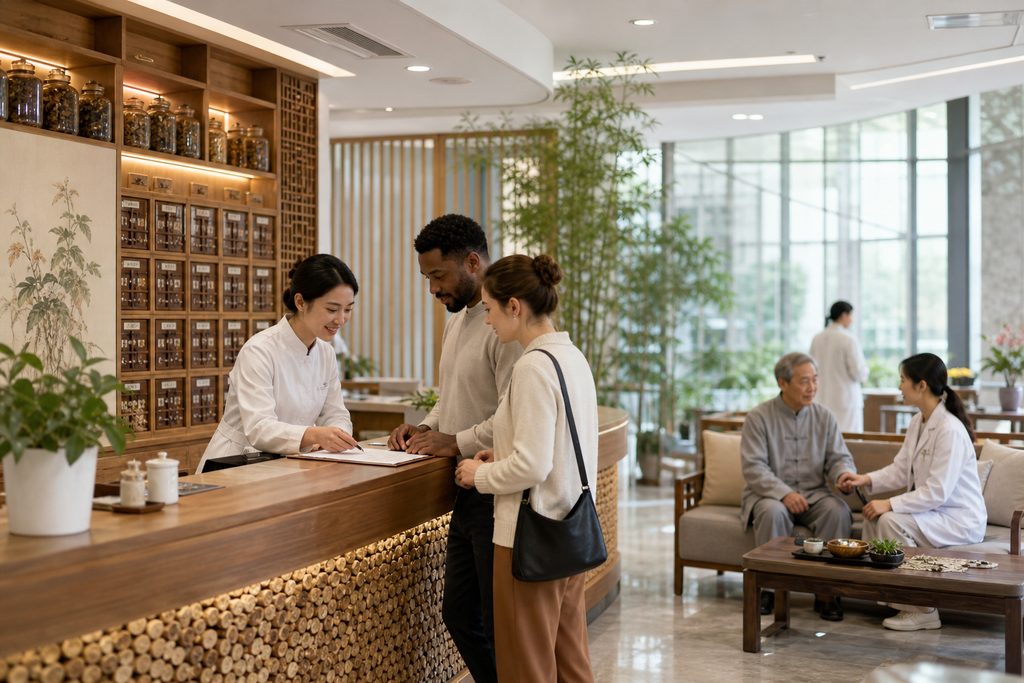
While patients in the United States might pay $75 to $150 for a single community acupuncture session, the model at Guangdong Provincial TCM Hospital operates on a different scale entirely. This is a 2,800-bed institution with over 20,000 daily outpatient visits. The economics of volume, combined with a fully integrated herbal pharmacy, create a treatment experience that is both clinically dense and surprisingly accessible. You are not just booking a needle session. You are stepping into a system where diagnostics, manual therapy, and custom pharmacopoeia intersect under one roof.
TCM Treatment at Guangdong Provincial TCM Hospital: The Short Answer
The Guangdong Provincial TCM Hospital acupuncture cost typically ranges from $20 to $60 per session for standard outpatient treatment in the general department. A complex specialist consultation with a senior professor might run $80 to $150. These are base clinical fees. Herbal prescriptions are separate and can add $30 to $200 per week depending on whether you receive raw herbs, granulated concentrates, or pre-prepared patent medicines. The real cost variable is rarely the needle technique itself. It is the granularity of the diagnosis and the duration of the herbal protocol that follows.
That pricing assumes you can navigate the hospital’s public registration system. For foreign patients without Mandarin fluency, the practical path is through the hospital’s international outpatient department or a third-party coordination service that handles translation, scheduling, and billing. That layer adds a coordination fee but removes the friction of a system built for domestic throughput.
Who This Is Right For — and Who It Isn’t
TCM at this level of intensity is not a wellness spa experience. It is a clinical intervention. Knowing where the line sits matters.
Good candidates typically include:
- Patients with chronic pain conditions—lower back pain, cervical spondylosis, migraines—who have plateaued on physiotherapy or medication.
- Individuals managing gastrointestinal disorders like IBS or functional dyspepsia where gastroenterology workups have ruled out structural disease.
- Women navigating menstrual irregularities, perimenopausal symptoms, or unexplained infertility where hormonal panels show no clear pathology.
- Patients in cancer recovery seeking adjunctive support for fatigue, neuropathy, or appetite loss alongside conventional oncology follow-up.
- People with stress-related insomnia, anxiety, or somatic complaints that respond poorly to single-drug interventions.
Who should think twice:
- Anyone with an undiagnosed acute condition—sudden weight loss, unexplained fevers, new neurological deficits. Get a full biomedical workup first.
- Patients on high-dose anticoagulants like warfarin. Acupuncture is not absolutely contraindicated, but it requires a senior practitioner who communicates with your prescribing physician.
- Those seeking a single-session cure. TCM is cumulative. A typical acupuncture course runs 6 to 12 sessions. Herbal protocols often span 3 to 6 months for chronic conditions.
- People with severe needle phobia who are unwilling to explore alternatives like acupressure or moxibustion. The hospital offers them, but the core methodology is needle-based.
The Options, Compared
Not all TCM encounters in Guangzhou are equal. The table below distinguishes the real clinical settings from the commercial wellness centers that often appear in English-language search results.
| Setting | Practitioner Level | Session Cost | Herbal Quality | Foreigner Accessibility |
|---|---|---|---|---|
| Guangdong Provincial TCM Hospital (Public General Dept.) | Resident to Chief Physician; high patient volume | $20–$60 | Hospital-grade dispensary; raw herbs and granules | Low without Mandarin or a companion |
| Guangdong Provincial TCM Hospital (International Dept.) | Senior specialists; English-capable coordinators | $80–$150 + coordination fee | Same hospital pharmacy; tailored export packaging available | High; designed for medical travelers |
| Private TCM Clinics (Guangzhou city center) | Varies widely; some retired hospital professors | $50–$120 | In-house pharmacy; quality depends on supplier | Moderate; some English-speaking staff |
| Hotel or Spa “TCM Experiences” | Massage therapists with short-course certificates | $100–$250 | Pre-packaged generic formulas | High; but not clinical medicine |
The international department occupies the middle ground that most foreign patients actually need: clinical legitimacy from a top-tier institution, with the language and logistical barriers lowered. The cost sits above the public floor but far below what a comparable consultation with a university-hospital integrative medicine department costs in the U.S. or Europe. For context, an initial integrative medicine consult at a major American academic center routinely exceeds $400 before any treatment is administered.
What Actually Happens During a Session: Diagnostics Before Needles
Walk into a consultation at this hospital expecting a biomedical intake form, and you will be disoriented. The first 20 minutes are purely diagnostic in the TCM framework. The practitioner observes your tongue—its color, coating, shape, and any tooth marks along the edges. They palpate your radial pulse at three positions on each wrist, assessing depth, speed, strength, and rhythm. These are not symbolic gestures. They are data collection.
Then comes the questioning. Expect detailed inquiries about your temperature preferences, your thirst patterns, the exact quality of your pain, your bowel habits, and your emotional state. A patient describing knee osteoarthritis might be asked whether the pain worsens in damp weather and whether they feel generally heavy-limbed in the mornings. These answers map to pattern differentiations—Wind-Cold-Damp Bi Syndrome versus Kidney Yang Deficiency, for instance—that determine the acupuncture point prescription and the herbal formula base.
The needle insertion itself is fast. A typical session uses 10 to 20 points, retained for 20 to 30 minutes. Adjunctive techniques like electro-acupuncture or moxibustion are added based on the diagnosis. The session ends with a handwritten or printed herbal prescription, which you fill at the hospital’s pharmacy on the ground floor. The pharmacy at Guangdong Provincial TCM Hospital is one of the largest in southern China. You watch your formula assembled from rows of drawers containing hundreds of raw substances—roots, barks, seeds, minerals.
How Does Acupuncture Work in Chinese Medicine
The question itself reveals a translation problem. In the framework practiced here, acupuncture does not “work” as an isolated technique. It is one arm of a three-part intervention: needle regulation of qi flow, herbal correction of internal imbalance, and dietary or lifestyle adjustments based on pattern diagnosis. Remove the herbs, and you are asking a single tool to do the job of a system.
The classical explanation centers on meridians—channels through which qi and blood circulate. Pain or illness represents a blockage, a deficiency, or a counterflow in these channels. The needle at a specific point acts as a signal. Modern research at this hospital and elsewhere has mapped some of the neurophysiological correlates: acupuncture triggers the release of endogenous opioids, modulates inflammatory cytokines, and alters functional connectivity in brain regions associated with pain processing. A 2022 study published in Nature identified a specific neuroanatomical pathway—the PROKR2-Cre-marked sensory neurons—that mediate acupuncture’s anti-inflammatory effects in the hindlimbs. The traditional language and the neuroscience describe the same phenomenon from different angles. The practitioners here move fluidly between both.
What It Costs — and What Drives the Price
The best TCM hospital Guangzhou price structure breaks down into distinct layers. The needle session is the cheapest part. A standard acupuncture treatment at the public rate falls between $20 and $40. Add cupping, moxibustion, or tuina manual therapy, and the session cost rises to $50–$80.
Herbs are the real variable. A week of granulated concentrates for a straightforward case—say, Liver Qi Stagnation with Spleen Deficiency—might cost $40. A complex dermatological formula with specialized substances can exceed $150 per week. Raw herbs that you decoct at home cost less per dose but require time and kitchen equipment. The hospital also offers pre-cooked vacuum-sealed herbal pouches for an additional preparation fee, convenient for hotel stays.
For foreign patients, the international department packages typically start from $150 for an initial consultation with treatment, excluding herbs. Follow-up sessions run $80–$120. These prices include English-language case summary documents suitable for sharing with your home physician. Coordination services that handle registration, translation, pharmacy queuing, and export documentation add a daily or per-visit fee. At China Medical Services, we structure this as transparent case management rather than a bundled markup on the hospital’s own charges.
Practical Considerations: Records, Payment, and Getting Herbs Home
Bring every relevant biomedical report you have. MRI scans, blood panels, endoscopy reports, and especially your current medication list. The TCM specialist needs to know what pharmaceuticals you are taking—not to judge them, but because herbs like Dang Gui can interact with warfarin, and Gan Cao can affect potassium levels. A responsible practitioner will adjust the formula accordingly.
Payment at the hospital is by cash, UnionPay card, or WeChat Pay. International credit cards are not reliably accepted at the public counters. The international department can process wire transfers or card payments with advance arrangement. Do not assume you can swipe a Visa card at the pharmacy window.
Taking herbs across borders requires planning. Raw herbs and loose granules may draw scrutiny from customs officials in countries with strict biosecurity laws, including Australia and New Zealand. The hospital pharmacy can provide a treatment certificate and a detailed ingredient list in English. Granulated concentrates in sealed manufacturer packaging clear customs more smoothly than unlabeled bags of twigs and bark. For patients returning to the U.S. or EU, we generally recommend the granule option with full documentation.
Visa logistics matter. Medical treatment in China falls under the S2 short-stay visa category, not the M business visa. You will need an invitation letter from the hospital or a coordinating entity, proof of accommodation, and a passport with at least six months of validity. Processing times vary by embassy. Start the paperwork at least four weeks before your intended travel date.
Frequently Asked Questions
Not directly through the public registration system. Public outpatient slots open on a rolling basis and require in-person registration with a Chinese ID or passport. The international outpatient department does accept advance scheduling, but only through their designated coordinators or an authorized medical concierge service. Walk-in attempts without prior arrangement usually result in hours of waiting and no guarantee of seeing an English-speaking specialist. The practical way to book acupuncture session Guangzhou hospital services as a foreigner is to work with a coordination team that pre-arranges the appointment, confirms the specialist’s availability, and has a bilingual companion meet you at the hospital entrance.
The term “package” is loose and worth interrogating. Clinical packages at Guangdong Provincial TCM Hospital are treatment courses, not retreats. A typical traditional Chinese medicine packages China foreigners might include an initial comprehensive consultation, 6 to 10 acupuncture sessions, a course of herbal medicine dispensed weekly, and adjunctive therapies as indicated. The hospital itself does not bundle hotel stays or sightseeing. Some private coordinators create wellness packages that add accommodation and cultural activities, but the core medical component remains the hospital consultation and pharmacy dispensing. Expect to pay separately for the clinical fees and any lifestyle add-ons.
This happens. A minority of patients experience what TCM practitioners call a “healing reaction”—mild digestive upset, temporary fatigue, or a brief flare of the original symptom. It should resolve within 48 to 72 hours. If it does not, or if you develop hives, difficulty breathing, or severe diarrhea, stop the herbs immediately and contact the prescribing practitioner. The hospital’s international department provides a direct contact number for post-consultation concerns. Do not simply discontinue and say nothing. The formula can almost always be adjusted. The initial prescription is a hypothesis tested against your response.
Guangdong Provincial TCM Hospital sources its raw herbs through the provincial TCM supply chain, which is subject to Chinese Pharmacopoeia standards for heavy metals, pesticide residues, and microbial limits. The hospital pharmacy also carries granulated products from manufacturers like China Resources Sanjiu and Jiangyin Tianjiang, which operate GMP-certified facilities. For patients with heightened concerns—those who are pregnant, immunocompromised, or on chemotherapy—the international department can prioritize GMP-verified granulated formulas over raw herbs. Independent third-party testing is available at the patient’s expense but is rarely necessary given the hospital’s internal quality controls.
Your Next Step
Guangdong Provincial TCM Hospital represents a specific proposition: genuine, high-volume clinical TCM delivered in an institution that sees more complex cases in a month than most Western integrative clinics see in a year. The barrier is not the medicine. It is the logistics—language, scheduling, payment, and the gap between what you expect from a hospital visit and what actually happens on the ground in Guangzhou.
Our team handles that translation layer. We are not a hospital, we do not employ doctors, and we never offer diagnoses. What we do is case management: we review your medical history, match you with the appropriate department and specialist level, schedule the consultation, provide a bilingual medical companion on the day, and ensure your herbal prescription is properly documented for travel. If you are considering TCM treatment in China and want to understand what a realistic treatment course looks like for your specific condition, we can map that out before you commit to a flight. The consultation is free, and there is no pressure to proceed. Sometimes the most useful next step is simply knowing what is possible.
For more medical information and treatment options in China, visit chinamedservices.com (China Medical Services).
