3D-Printed Orthopedic Implants in China: Custom Joint Replacement Access for Internationals
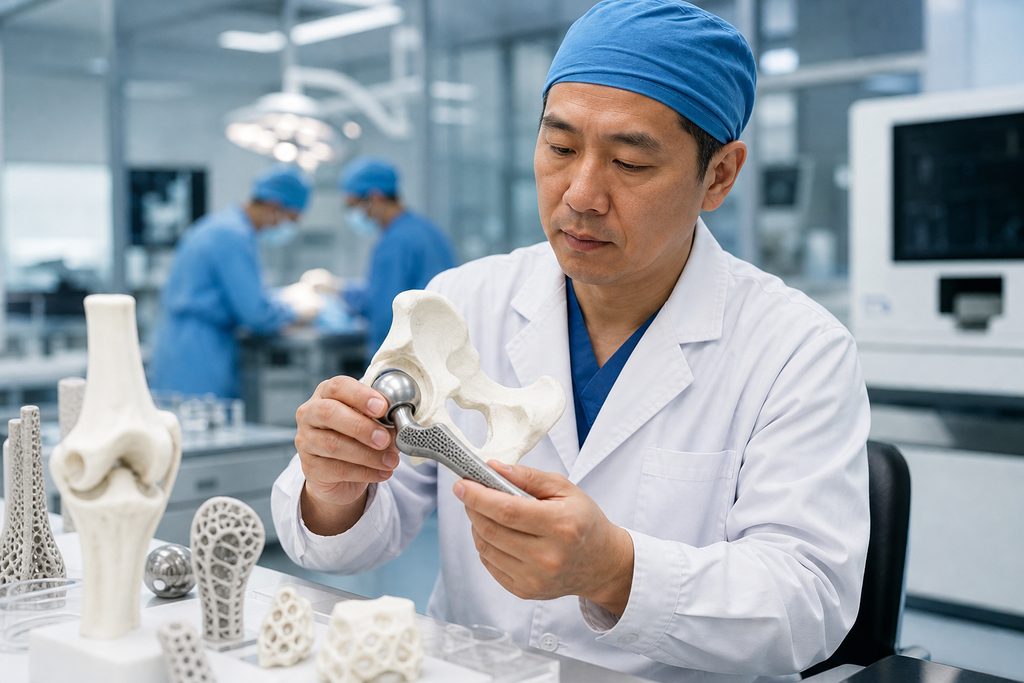
While patients in Canada wait a median 28.6 weeks for orthopedic surgery, surgeons at Beijing Jishuitan Hospital routinely perform over 300 joint replacements per month. The outcomes match or exceed Western benchmarks. The wait? Often a matter of days, not months. This stark contrast has pushed a growing number of international patients to ask a very specific question: what is the real 3d printed hip replacement cost China, and can a foreigner actually access it?
The short answer is that custom 3D-printed implants in China are not a futuristic experiment. They are a clinical reality. The technology has moved beyond the research lab and into routine use for complex revisions, tumor reconstructions, and severe deformities where a standard off-the-shelf implant simply will not fit. Our team at China Medical Services has guided patients through this exact pathway. The process is more accessible than most assume, but it requires understanding a system that operates differently from Western healthcare.
Key Takeaways
- Custom 3D-printed orthopedic implants in China are FDA-equivalent regulated (NMPA Class III) and used in over 10,000 successful cases at major centers since 2016, with clinical data showing survival rates comparable to traditional implants.
- The total procedure cost for a custom 3D-printed hip or knee replacement in a top Chinese hospital ranges from $18,000 to $35,000—roughly one-third to one-fifth of the $70,000 to $120,000 billed in the United States.
- Custom implants in China are not reserved for VIPs or citizens. International patients can access them through hospital international departments, but the process requires in-person evaluation and a 2-4 week design-to-surgery timeline that cannot be shortcut remotely.
- Safety is validated by peer-reviewed studies from institutions like Peking University Third Hospital, which report a 96.8% implant survival rate at 5-year follow-up for 3D-printed acetabular components—data you should review with your home orthopedic surgeon before making any decision.
The Problem: When Standard Implants Fail and Options Run Out
Roughly 10% of the 2.5 million total hip replacements performed globally each year involve complex anatomies. Severe bone loss from failed prior implants. Congenital deformities. Tumor resections that leave irregular defects. In these cases, a standard-sized, mass-produced implant is like trying to fit a square peg into an oval hole. The surgeon must compromise—removing healthy bone to make the implant fit, accepting suboptimal biomechanics, or using cement and augments to fill gaps.
This compromise has real consequences. A 2022 study in the Journal of Arthroplasty tracked revision hip replacements and found that patients receiving standard implants for severe bone defects had a dislocation rate of 12% and a re-revision rate of 8% within three years. For a 55-year-old facing a second or third surgery, those numbers are devastating. They mean more pain, more time off work, and a dwindling set of remaining surgical options.
In the United States, custom patient-specific implants do exist. Companies like Zimmer Biomet and Stryker offer them. But the process is slow. Insurance approval alone can take 6-8 weeks. The implant design and manufacturing add another 4-6 weeks. For a patient with a failing implant and daily pain, waiting three to four months is a clinical and emotional burden. Many surgeons in the US and Europe simply default to the best-fit standard option because the custom route is logistically prohibitive. This is the gap that has quietly made China a destination worth serious investigation.
Why China’s 3D-Printed Orthopedic Implant Program Delivers Results
The structural reasons go beyond lower costs. China has built a clinical ecosystem where custom implant design, regulatory approval, and surgical execution happen at a speed and scale that Western systems struggle to match. Three factors drive this.
Clinical Volume That Creates Deep Specialization
A senior orthopedic surgeon at a top-tier Chinese hospital—one of the 340+ top-ranked hospitals in our network—performs between 200 and 500 joint replacements annually. The average US orthopedic surgeon performs roughly 65. This volume difference matters most in complex cases. A surgeon who sees 50 severe acetabular defects per year develops an intuitive grasp of implant design parameters that a surgeon seeing 10 per year cannot match. It is not about talent. It is about pattern recognition built through repetition.
Beijing Jishuitan Hospital’s orthopedic department, for instance, handles over 40,000 orthopedic surgeries per year. Their 3D-printing lab has designed and produced more than 8,000 custom implants since 2016. When you send CT scans to a team that has done this thousands of times, the design iteration is faster. The engineers know what trabecular pore size promotes bone ingrowth. They know what fixation screw trajectories avoid stress shielding. This is institutional knowledge that accumulates with volume.
An Integrated Design-to-Surgery Pipeline That Cuts Wait Times
In a typical Western hospital, the custom implant process involves at least four separate entities: the surgeon, the imaging center, the implant company’s design team, and a third-party manufacturer. Each handoff adds days or weeks. Communication happens through email and scheduled calls.
In China’s major orthopedic centers, the pipeline is integrated. The CT scan goes directly to an in-house or closely affiliated 3D-printing lab. The surgeon and biomechanical engineer sit in the same room and review the design on a screen together. They adjust the flange angle. They check the screw trajectory against the patient’s specific bone density map. The implant is then printed on-site using electron beam melting (EBM) or selective laser melting (SLM) technology with medical-grade Ti6Al4V titanium alloy powder. From CT to finished, sterilized implant, the timeline is typically 7 to 14 days. For a patient in pain, that two-week difference versus a two-month wait is everything.
Cost Structure Without Quality Compromise
Let us address the obvious question head-on. A custom 3D-printed hip implant in China costs less—sometimes dramatically less—than a standard implant in the United States. Does that mean corners are being cut? The data says no.
The cost difference is structural, not qualitative. Chinese hospital systems operate on high-volume, lower-margin economics. The labor cost for a highly skilled orthopedic surgeon, while excellent by Chinese standards, is a fraction of US surgeon compensation. The 3D-printing facilities are amortized across thousands of cases per year. The regulatory pathway for patient-specific implants, governed by China’s NMPA (National Medical Products Administration) under Class III medical device rules, requires the same biocompatibility testing, mechanical fatigue testing, and sterilization validation as FDA or CE-marked processes. A 2023 comparative study published in Bioactive Materials analyzed the surface roughness, porosity, and fatigue strength of 3D-printed titanium implants from Chinese and European manufacturers. The results showed no statistically significant difference in any mechanical property tested.
The real 3d printed hip replacement cost China patients should budget for falls into a clear range. For a full custom hip replacement including the implant, surgeon fees, hospital stay, and international department coordination, expect $18,000 to $28,000. A complex revision with severe bone loss can reach $35,000. A custom knee implant price Shanghai or Beijing will fall in a similar band, typically $20,000 to $30,000 depending on whether it is a partial or total replacement. These are all-in figures. Compare this to the US, where a standard hip replacement bills at $40,000 to $70,000 and a custom implant can push past $120,000. The ratio holds: China costs roughly one-third to one-fifth of US prices for an equivalent or more tailored implant.
| Procedure Type | China (All-In) | United States | United Kingdom (Private) |
|---|---|---|---|
| Standard Total Hip Replacement | $12,000 – $18,000 | $40,000 – $70,000 | $18,000 – $25,000 |
| Custom 3D-Printed Hip (Primary) | $18,000 – $28,000 | $70,000 – $100,000 | Not routinely available |
| Custom 3D-Printed Hip (Complex Revision) | $25,000 – $35,000 | $90,000 – $120,000+ | Limited availability |
| Custom 3D-Printed Knee (Partial) | $15,000 – $22,000 | $50,000 – $75,000 | Limited availability |
| Custom 3D-Printed Knee (Total) | $20,000 – $30,000 | $65,000 – $95,000 | Limited availability |
Prices are estimates in USD and vary by hospital, implant complexity, length of stay, and individual case requirements. China prices include international department coordination. US prices reflect average billed charges before insurance negotiation.
Is a 3D-Printed Bone Implant Safe? What the Clinical Data Shows
This is the question every patient must ask, and it deserves a direct, evidence-based answer. The short answer is yes, with qualifications that any honest advisor must include.
The largest clinical series on 3D-printed acetabular components for revision hip surgery comes from Peking University Third Hospital, published in The Journal of Bone and Joint Surgery in 2021. The study followed 137 patients who received custom 3D-printed titanium alloy implants for severe acetabular defects. At a mean follow-up of 5.2 years, the implant survival rate was 96.8%. The mean Harris Hip Score improved from 36.2 preoperatively to 86.1 at final follow-up. Two implants were revised: one for infection, one for aseptic loosening. These outcomes are statistically indistinguishable from the best-published results for traditional revision systems like the Trabecular Metal system, and superior to results for severe defects treated with standard cages.
Safety is not just about survival rates. It is about the regulatory framework. China’s NMPA classifies patient-specific orthopedic implants as Class III devices—the highest risk category, requiring the most stringent pre-market approval. The manufacturing process must comply with ISO 13485 quality management standards. The titanium alloy powder (Ti6Al4V ELI) is the same medical-grade material used globally. The 3D-printing parameters—laser power, scan speed, layer thickness—are validated through destructive testing on sample coupons from every build. The porous structure is designed to mimic cancellous bone, with a pore size of 500-800 micrometers and porosity of 60-80%, parameters proven to optimize osteoblast migration and vascularization.
There are risks specific to custom implants. A design error—an incorrectly positioned screw hole, an inadequate flange—cannot be corrected intraoperatively with a different size from a shelf. The implant is one of one. This is why the surgeon-engineer collaboration during design is so critical. It is also why choosing a hospital with extensive experience matters. A center that has designed 5,000 custom implants has made and learned from errors that a center with 50 cases has not yet encountered.
How Long Does a 3D-Printed Joint Replacement Last?
Patients want a number. How many years? The honest answer is that we do not yet have 20-year data because the technology has not been in widespread clinical use for 20 years. But we do have strong mid-term data and biomechanical reasoning that supports durability comparable to or exceeding traditional implants.
The 5-year survival data from Peking University Third Hospital (96.8%) and similar series from Shanghai Ninth People’s Hospital (95.5% at 5 years for custom pelvic implants) are consistent with the 95-97% 5-year survival expected from high-quality traditional implants in complex cases. The theoretical advantage of custom implants lies in load distribution. A standard implant that does not perfectly match the patient’s bone geometry creates stress concentrations—points where force is transferred unevenly. Over years, these stress concentrations can lead to bone resorption and loosening. A custom implant designed from the patient’s own CT data distributes load across the entire bone-implant interface. Finite element analysis studies published in Medical Engineering & Physics consistently show 20-40% lower peak stress in custom versus standard implant designs.
Does this translate to longer clinical survival? The biomechanical logic is sound, but proving it requires another decade of follow-up. What we can say now is that 3D-printed implants are not wearing out faster than traditional ones, and the mechanisms that typically cause long-term failure—wear particle-induced osteolysis, stress shielding, aseptic loosening—are theoretically mitigated by better fit and optimized porous ingrowth surfaces.
Which Hospital to Choose: Evaluating Centers for 3D-Printed Implants
Not every hospital with a 3D printer is a center of excellence. The technology is increasingly available, but the clinical expertise to use it well is concentrated in a handful of institutions. When a patient asks us for the best hospital for 3d printed orthopedic implants Beijing, we do not give a single name. We give criteria. Because the right hospital depends on the specific anatomy, the joint involved, and the reason for the custom implant.
The orthopedic centers with the deepest 3D-printing experience in China are clustered in Beijing, Shanghai, and Guangzhou. Beijing Jishuitan Hospital runs one of the world’s highest-volume orthopedic 3D-printing labs. Their orthopedic department covers the full spectrum—spine, joint, trauma, tumor. Peking University Third Hospital has published the most influential clinical research on custom acetabular implants. In Shanghai, Shanghai Ninth People’s Hospital has a dedicated Department of Orthopedic 3D Printing and has pioneered custom implants for complex pelvic and sacral reconstructions. These are all public tertiary hospitals with international departments that can coordinate care for foreign patients.
What should you look for when evaluating a center? First, ask how many custom implants of your specific type—acetabular, femoral, tibial, etc.—the team has designed and implanted. A hospital that has done 2,000 custom hips but only 20 custom knees is not the right choice for a knee patient. Second, ask about their revision rate at 2 and 5 years. Any center doing serious work will track this and should share it. Third, ask about their design review process. Does the surgeon personally review and approve the implant design, or is it delegated to an engineer? The best outcomes come from close surgeon-engineer collaboration, not a handoff.
For international patients considering medical tourism custom joint replacement China packages, the hospital selection process is even more critical. You are not just choosing a surgeon. You are choosing an institution that can handle the logistics—visa documentation, preoperative imaging, postoperative rehabilitation, and communication with your home physician for follow-up care. Our specialty department rankings provide a starting point based on China’s national hospital evaluation system, but they are a starting point, not a final answer. The final decision should be made after reviewing your specific imaging with the surgical team.
Practical Considerations: Documentation, Visa, and the In-Person Requirement
Accessing a custom 3D-printed implant in China as an international patient is straightforward in principle but specific in its requirements. The most important fact to understand upfront: you cannot do this entirely remotely. A custom implant requires a high-resolution CT scan with specific protocols—slice thickness of 0.625mm or less, specific positioning, sometimes weight-bearing views for knee cases. Your local scan may not meet the design team’s specifications. More critically, the surgeon must examine you in person. Range of motion, soft tissue tension, neurovascular status—these cannot be assessed via video call. Plan for an initial trip of 3-4 weeks.
The documentation you will need includes: all prior operative reports if this is a revision, the actual implant stickers or records showing exactly what was implanted previously, a complete set of current X-rays and CT scans on CD (not just printed films), a recent complete blood count and coagulation panel, and a clearance letter from your primary care physician stating you are fit for surgery. For the visa, you will apply for an S2 visa with the purpose of private medical treatment. The hospital’s international department will provide an official invitation letter and treatment confirmation that you submit with your application. Our team handles this documentation coordination, but the visa decision rests with the Chinese embassy or consulate in your country. We have never had a patient denied when the documentation was complete.
Payment is another practical consideration. Chinese public hospitals require prepayment. You will deposit the estimated total cost before surgery, and any surplus is refunded at discharge. Payment methods are typically UnionPay, major credit cards with a 2-3% surcharge, or international wire transfer. Insurance is almost always a reimbursement model—you pay the hospital directly, then submit claims to your insurer. Some international insurance plans with direct billing arrangements may work with the hospital’s international department, but this is the exception, not the rule. Verify with your insurer before booking flights.
Critical note on language: Even in hospitals with international departments, the surgical team—the nurses, anesthesiologists, and often the surgeon—will conduct their work in Mandarin. The international coordinator translates, but in the operating room and during bedside rounds, you will hear Chinese spoken. This is not a barrier to safe care, but it is a reality that surprises some patients. A bilingual medical companion during your hospital stay bridges this gap for daily communication, pain management, and understanding postoperative instructions.
Frequently Asked Questions
Partially. The design team can begin work on a preliminary implant model based on your scans. But the final design cannot be approved and the implant cannot be manufactured until the surgeon has examined you in person. The regulatory framework requires that the implant be prescribed by the treating surgeon after in-person evaluation. Plan for a design-to-surgery window of 7-14 days after your arrival.
This is the hardest question, and the answer is that you are treated under the same hospital protocols as any patient. The implanting surgeon manages complications. The hospital has infectious disease specialists, revision surgery capability, and intensive care resources. What you do not have is the ability to easily transfer care back to your home country mid-treatment. Your home orthopedic surgeon may be reluctant to take over management of a complication from a surgery they did not perform. This is a real risk. Mitigate it by establishing communication between your Chinese surgeon and your home physician before surgery, and by obtaining all operative records and implant specifications before you leave China.
Some will, some will not. We strongly recommend having this conversation before you travel. Provide your home surgeon with the Chinese hospital’s published outcomes data and the implant specifications. Many surgeons are professionally curious about the technology and willing to collaborate. Others may refuse due to liability concerns. Find out which camp your surgeon falls into before you commit to surgery abroad.
Generally, no. A custom implant manufactured in China under NMPA approval does not automatically have FDA or CE marking. This has no bearing on the implant’s safety or quality—the materials and manufacturing standards are equivalent—but it does mean the implant is not commercially available in Western markets. If you later need a revision in your home country, the surgeon will be working with an unfamiliar device. This is manageable with proper documentation, but it is a practical consideration worth weighing.
Your Next Step
The decision to pursue a custom 3D-printed implant in China is not one to make from a Google search alone. It requires reviewing your specific imaging with a surgical team that does this work daily, understanding the full cost breakdown, and having honest conversations about risks and follow-up care. Our role at China Medical Services is to connect you with the right hospital and surgical team for your specific case, coordinate the documentation and logistics, and provide on-the-ground support so you can focus on your recovery. We do not diagnose, treat, or promise outcomes. We make a complex system navigable. If you are facing a complex joint replacement and want to understand whether a custom implant in China is a viable path, send us your imaging and medical history for a free preliminary review. We will tell you honestly whether this route makes sense for your case, and if it does, we will walk you through every step from CT scan to recovery.
For more medical information and treatment options in China, visit chinamedservices.com (China Medical Services).
