Why Canadians Fly to China for ACL Reconstruction: Full Sports Injury Guide
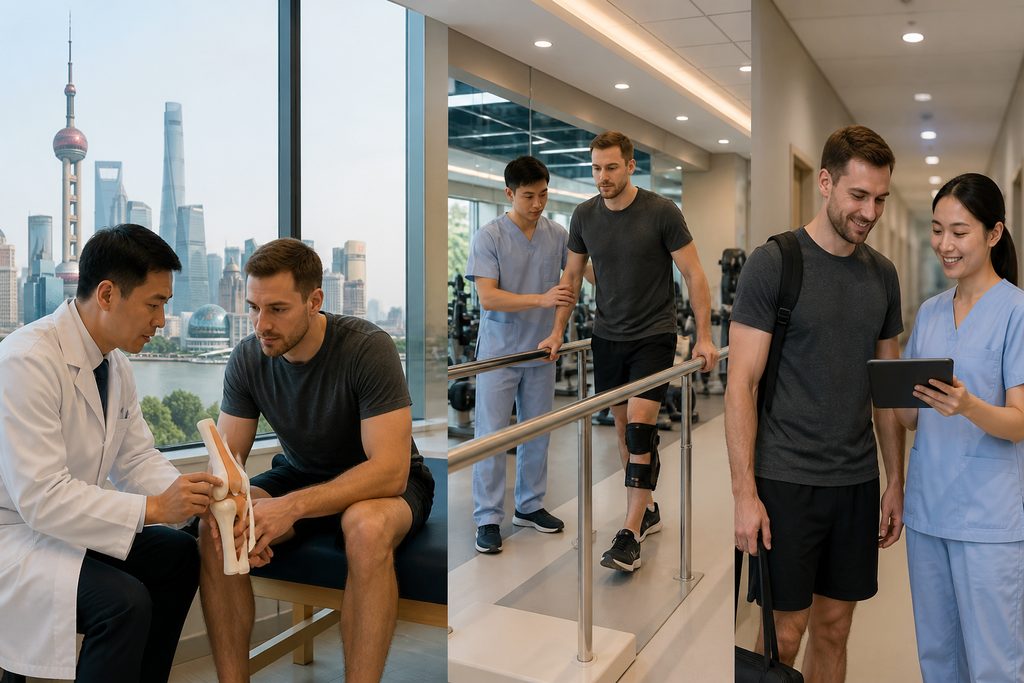
An ACL tear doesn’t just end a season. It stops you from chasing your kids around the park. It makes you hesitate on stairs. For Canadian athletes and active adults, hearing “you’ve torn your ACL” often comes with a second, quieter blow: the wait. Our team has spoken with patients from Vancouver, Toronto, and Calgary who were told they would wait 6 to 18 months for reconstructive surgery in the public system. That timeline is not a clinical opinion. It’s a resource reality.
That reality is what pushes people to look beyond their borders. And increasingly, their search leads them to one question: what is the real ACL reconstruction cost China, and is the quality of care worth the journey? The short answer is that patients are finding access to surgeons who perform several hundred ACL reconstructions annually, using the same arthroscopic techniques and graft options used in North America, at a fraction of the price. The full answer requires understanding how the system works, what safety looks like, and what recovery demands when you’re thousands of miles from home.
Key Takeaways
- Canadian public health wait times for ACL reconstruction frequently stretch beyond 6 months, during which muscle atrophy and secondary meniscus damage can occur.
- Top-tier Chinese orthopedic centers perform high volumes of ACL procedures using internationally standardized techniques, with all-inclusive surgery costs typically ranging from $4,000 to $8,000 USD.
- Language and logistical barriers are the primary risk for international patients, not clinical quality—a bilingual medical companion is not a luxury but a safety tool in a system where nearly all documentation and instruction is in Mandarin.
- A staged approach—starting with a remote written second opinion before committing to travel—is the most prudent path for anyone considering this option.
The Problem: A 12-Month Wait Is Not Just Inconvenient
Canada’s universal healthcare system is a point of national pride. But for orthopedic procedures like ACL reconstruction, the system’s capacity does not match the demand. The Canadian Institute for Health Information reported that in 2023, only 59% of patients requiring knee replacement or similar priority orthopedic procedures received surgery within the recommended benchmark time. ACL reconstruction, classified as a lower-urgency procedure than a hip fracture, routinely falls further down the queue.
A knee with a completely torn ACL is mechanically unstable. Every time it gives way during that 12-month wait, the patient risks shredding the meniscus—the knee’s shock absorber. A study published in the British Journal of Sports Medicine found that each month of surgical delay increases the risk of a medial meniscal tear by nearly 1%. Wait a year, and the odds of having done additional, often irreversible, damage to the cartilage climb significantly. The surgery then becomes more complex. The recovery gets longer. The knee is never quite the same.
Private surgery in Canada exists but is limited. A private ACL reconstruction in a facility not covered by provincial health plans can cost between $15,000 and $25,000 CAD. For many, that is simply not an option. The alternative—traveling abroad—stops being a radical idea and starts looking like a rational medical decision.
Why High-Volume Chinese Orthopedic Centers Deliver Results
The argument for traveling to China for this procedure rests on three pillars: volume, technology, and a structural cost advantage that does not depend on cutting clinical corners. A patient who understands these three factors can make an informed choice, rather than a desperate one.
Surgical Volume and Specialist Focus
In the public systems of Canada and much of Europe, an orthopedic surgeon’s time is split. They manage trauma call, perform joint replacements, and handle a broad range of sports medicine cases. A surgeon might do 30 ACL reconstructions in a year. At a high-volume Chinese sports medicine center, a dedicated knee surgeon may perform 300 to 500 ACL procedures annually. This is not a hypothetical. Hospitals on the Fudan University Hospital Ranking operate at a scale that creates deep, narrow specialization.
Volume matters for one reason: complications. There is a well-documented volume-outcome relationship in orthopedic surgery. Surgeons who perform a procedure hundreds of times a year encounter and manage the rare complications that a lower-volume surgeon might see once in a career. They are also faster. Operative time is a direct predictor of infection risk. A surgeon who does five ACL reconstructions in a single day is working with a highly efficient, dedicated surgical team that repeats the same choreography every week.
Technology Without the Wait
Chinese hospitals do not lag behind in arthroscopic technology. They compete on it. The orthopedic departments at hospitals like Shanghai‘s Huashan Hospital or Beijing’s Jishuitan Hospital use the same arthroscopic towers, graft preparation systems, and implant materials found in any major North American sports medicine center. The difference is access. A patient can often schedule surgery within two to four weeks of a confirmed diagnosis and treatment plan, not within two seasons.
The Cost Equation: Why Quality and Low Price Coexist
The ACL reconstruction cost China is the most immediate draw for Canadian patients, and the numbers are genuinely striking. An all-inclusive package—surgeon fees, anesthesia, single-bundle or double-bundle reconstruction, one night of inpatient stay, and basic post-operative medication—typically lands between $4,000 and $8,000 USD. That is roughly $5,500 to $11,000 CAD. Compare that to $15,000+ CAD for a private Canadian surgery, or upwards of $30,000 USD in the United States.
These lower costs are not a sign of inferior care. They are a function of economic structure. Physician salaries, hospital construction costs, and the price of locally manufactured medical devices are all lower. The cost of an FDA- or CE-approved interference screw imported from the US is the same everywhere. But the cost of the operating room time, the nursing staff, and the hospital bed is structurally lower. The result is a price point that makes it financially feasible for a Canadian patient to pay cash, fly internationally, and still spend far less than a private-pay option at home.
How Much Is ACL Surgery in Shanghai: A Real Cost Breakdown
When patients ask us “how much is ACL surgery in Shanghai,” they are usually trying to figure out the total cost of the trip, not just the hospital bill. The hospital quote is one line item. The full picture includes travel, lodging, and the hidden costs of recovery abroad. Here is a realistic breakdown for a patient traveling from Canada to Shanghai for a standard arthroscopic ACL reconstruction with an autograft.
| Expense Category | Estimated Cost (USD) | Notes |
|---|---|---|
| Surgery Package (all-inclusive) | $4,500 – $7,000 | Surgeon, anesthesia, operating room, one night inpatient, basic meds. Varies by graft type and hospital tier. |
| Round-Trip Airfare (YYZ/YVR to PVG) | $1,200 – $2,200 | Economy class. Business class for post-op comfort adds $3,000+. |
| Lodging (14-21 days) | $1,000 – $2,500 | Service apartment near the hospital. Critical for post-op mobility access. |
| Bilingual Medical Companion | $1,500 – $2,100 | 5-7 days of half-day support for surgery day and key follow-ups. |
| Pre-Op MRI & Consultation | $300 – $500 | If not already done. Many patients bring their own MRI from Canada. |
| Post-Op Physiotherapy (initial) | $400 – $800 | 3-5 sessions before flying home. Essential for safe travel. |
| Estimated Total Range | $8,900 – $15,100 | Total cost is still below the Canadian private-pay surgery price alone. |
These numbers are estimates. A final quote always depends on the specific hospital, the surgeon’s assessment, and whether any unexpected meniscal repair is needed. But the math is clear: even at the high end, the all-in cost of flying to Shanghai for surgery competes favorably with the cost of the surgery alone in a Canadian private clinic.
Is ACL Surgery Safe in China for Canadians? What the Data Shows
The question “is ACL surgery safe in China for Canadians” is the right one to ask. It is also one that requires a more nuanced answer than a simple yes or no. Safety is not a property of a country. It is a property of a specific hospital, a specific surgical team, and a specific communication pathway.
At hospitals that are part of the top 5% of China’s 35,000+ medical institutions, the clinical safety profile for a procedure like ACL reconstruction is comparable to international benchmarks. These hospitals track and publish their infection rates. Their operating rooms meet international sterility standards. Their anesthesiologists are board-certified. The risk of a catastrophic complication—deep infection, nerve damage, graft failure—is low, in the 1-2% range, which mirrors rates in North American registries.
Where the real safety risk lies for a foreign patient is not in the operating room. It is in the communication breakdowns before and after. A medication allergy not properly translated. A post-operative fever that goes unreported because the patient cannot describe their symptoms. A discharge instruction sheet entirely in Chinese characters. These are the dangers that turn a successful surgery into a medical crisis. The clinical care is safe. The experience is only safe if the patient has a reliable bridge to the care team. That is not a sales pitch. It is a structural fact of navigating a healthcare system where English is not the operating language.
Finding the Best Orthopedic Hospital China for ACL Tear
Orthopedic excellence in China is concentrated. The Fudan University Hospital Ranking publishes a specialty reputation list each year, and the top orthopedic hospitals consistently include a handful of names. Searching for the “best orthopedic hospital China for ACL tear” will lead you to institutions where sports medicine is a defined sub-specialty, not an afterthought.
Beijing Jishuitan Hospital is widely regarded as the country’s premier orthopedic center. Its sports medicine department handles a massive caseload of knee ligament reconstructions. In Shanghai, Huashan Hospital affiliated with Fudan University runs a dedicated sports medicine institute with a strong focus on arthroscopic techniques. Further south, the orthopedic department at West China Hospital in Chengdu is a referral center for complex knee surgeries from across the country’s western regions.
What distinguishes these hospitals is not just their reputation. It is their infrastructure for handling the specific demands of an ACL reconstruction. They have dedicated sports medicine wards. Their rehabilitation protocols are protocol-driven and start on post-operative day one. Their surgeons routinely use both hamstring and patellar tendon autografts, as well as allograft options, and can discuss the trade-offs with a patient in a way that reflects current evidence, not just local tradition. A remote consultation with one of these centers is a practical first step. It allows the surgical team to review your MRI and give a graft recommendation before you ever book a flight.
What a Medical Tourism Package ACL Reconstruction China Actually Includes
The phrase “medical tourism package ACL reconstruction China” can mean almost anything, from a bare-bones surgery quote to a fully managed episode of care. For a Canadian patient, understanding what you are buying is the difference between a smooth recovery and a logistical nightmare.
A bare-bones package typically includes the surgery, one or two nights of inpatient stay, and basic discharge medications. It does not include airport pickup, hotel booking, translation of your medical records, a bilingual person to sit with you during the pre-op consultation, or someone to argue with the pharmacy cashier when they hand you a prescription you cannot read. This type of package works for expatriates who already live in China and speak some Mandarin. It is a high-risk gamble for a Canadian flying in for two weeks.
A comprehensive care episode layers in the logistics. It starts with a written second opinion based on the MRI and history you send from home. It includes a video consultation with the surgeon before you travel. It covers the visa guidance—an S2 visa for short-term private medical treatment, not an M visa, which is for commercial business and does not apply to medical travel. It provides a bilingual medical companion who is physically present for the hospital registration, the pre-op marking, the surgery day, and the critical first post-operative visit. It arranges a few sessions with a physiotherapist who can communicate in English and send a structured home exercise program back with you to your Canadian PT.
The package is not just about convenience. It is about clinical continuity. Your Canadian physiotherapist will need the operative note and the surgeon’s specific rehabilitation protocol. A good package ensures those documents are translated and in your hands before you leave.
What Is Recovery Time for ACL Surgery Abroad: The Timeline That Matters
The question “what is recovery time for ACL surgery abroad” has two answers. There is the clinical recovery timeline, which is the same whether you have surgery in Toronto or Tianjin. And there is the travel recovery timeline, which dictates when you can safely get on a 12-hour flight.
The clinical milestones are well-established. Weight-bearing as tolerated with crutches begins immediately for an isolated ACL reconstruction. The first two weeks are about swelling control, full knee extension, and quadriceps activation. By six weeks, most patients are walking without crutches. Light jogging begins around three to four months. Return to pivoting sports—soccer, basketball, skiing—is a nine- to twelve-month decision based on strength testing, not the calendar.
The travel timeline is more compressed. You should not board a trans-Pacific flight within the first five to seven days after surgery. The risk of deep vein thrombosis is elevated after any lower-extremity surgery, and a long-haul flight compounds that risk. Our team recommends staying in China for a minimum of 14 days post-operatively. This allows for staple removal, at least three to five supervised physiotherapy sessions, and a final in-person review with the surgeon. You fly home with a clear understanding of what your knee needs for the next month, not with a list of unanswered questions.
Once home, you hand the translated operative report and rehab protocol to your local physiotherapist. The surgeon’s job is done. The hard work is yours. But the blueprint is sound.
Practical Considerations: Visas, Records, and Payment for Canadian Patients
Traveling to China for surgery is not a spontaneous decision. The practical groundwork makes or breaks the experience. Here is what you need to have in order before you even request a surgical quote.
Medical Records. You will need a digital copy of your knee MRI in DICOM format, not just the radiologist’s report. Chinese surgeons want to scroll through the images themselves. You also need a referral letter or summary from your Canadian family doctor or sports medicine physician outlining your injury history, any prior surgeries, and your general health status. These documents must be translated into Mandarin. Google Translate is not sufficient for a surgical history.
Visa. The correct visa category for medical treatment in China is the S2 visa, which covers short-term private affairs including medical treatment. Your accompanying family member applies for the same category. The hospital will provide an invitation letter and a treatment confirmation document to support your application. Do not apply for an M visa, which is for commercial and trade activities and does not apply to medical travel. Visa processing times vary, but you should allow at least four weeks.
Payment. Chinese public hospitals, including their international medical departments, operate on a pre-payment or deposit system. You will need to pay a deposit upon admission, with the balance settled before discharge. Cash, UnionPay, and major international credit cards are generally accepted, though daily transaction limits on foreign cards can be an issue. Wire transfer in advance is the most reliable method. Private international hospitals may offer direct insurance billing, but for a cash-pay patient, the public hospital international department is the more cost-effective route.
Communication. Even in a hospital’s “international” wing, do not assume that every nurse, physiotherapist, and pharmacy technician speaks functional English. Some do. Many do not. A bilingual companion who can translate your pain description, clarify your medication schedule, and confirm your discharge instructions is not a luxury. It is the single most important safety investment you will make on this trip.
Frequently Asked Questions
No. Canadian provincial health plans do not cover elective surgery performed outside of Canada. You will be paying out of pocket. Some extended health insurance plans through employers or private insurers offer limited out-of-country coverage, but this is rare for a planned, elective procedure. You should check your policy carefully. The procedure is a cash-pay event, which is why the lower ACL reconstruction cost China is such a decisive factor.
What happens if there is a complication after I fly home?
This is the hardest question. The Chinese surgeon’s direct responsibility ends when you leave the country
For more medical information and treatment options in China, visit chinamedservices.com (China Medical Services).
