The Medical Escort That Saves You from a Wasted Trip to China: Honest Pre-Travel Assessment
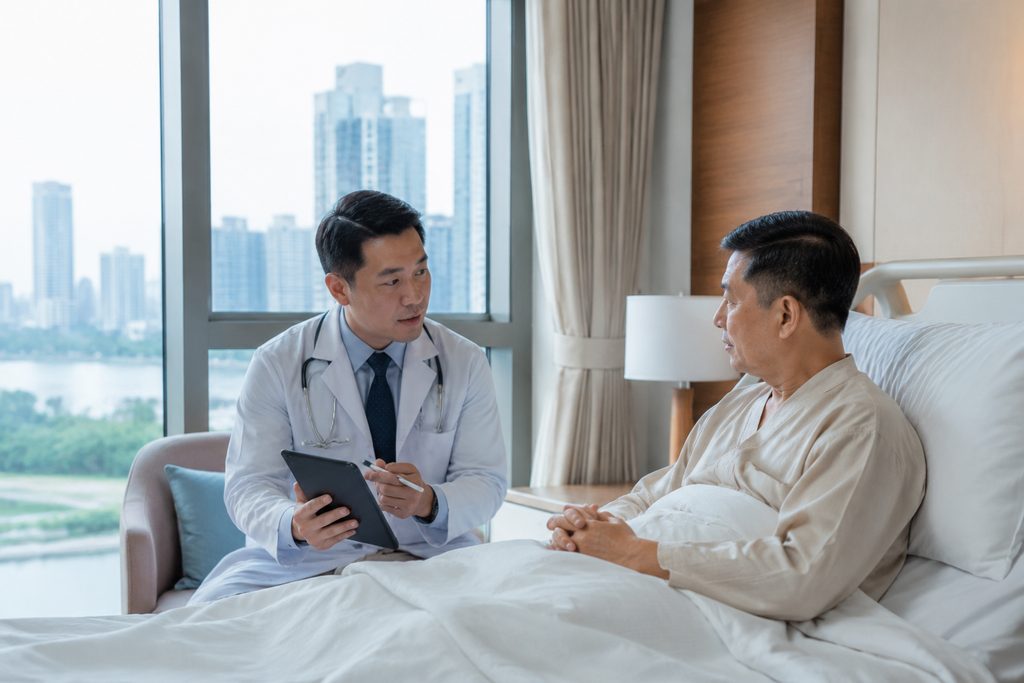
When 54-year-old David from Manchester first sent his MRI reports to a top-tier hospital in Shanghai, he assumed the next step was booking a flight. The response he got back was polite but firm: the tumor’s location required a specific ablation technique that the hospital’s interventional radiology team needed to evaluate in person. No promises. No guarantees. David booked the flight anyway. He spent eleven days in a hotel near the hospital, attended two brief outpatient consultations, and was told on day twelve that his case was indeed operable — but the surgeon who specialized in his exact presentation was booked for six weeks. David flew home. He had spent over $7,000 on flights, accommodation, and local logistics for a trip that produced zero medical progress.
Our team hears variations of this story every month. The core problem isn’t that Chinese hospitals lack capability. It’s that international patients often arrive before anyone has honestly assessed whether the trip makes clinical sense. A proper pre-travel medical assessment for China treatment changes that equation entirely.
Pre-Travel Medical Assessment: The Short Answer
A genuine pre-travel assessment doesn’t come from a marketing brochure. It comes from sending your complete medical records — imaging, pathology reports, treatment history — to the specific department that would handle your case, and receiving a written opinion on three questions: Is this condition within our scope? What additional information do you need before we can commit to a treatment plan? And, crucially, is there a realistic path to scheduling within a timeframe that makes sense for an international patient?
That last question is where things get real. A hospital can be world-class and still be the wrong choice for you if the wait for the right specialist exceeds what your condition allows.
Who This Is Right For — and Who It Isn’t
A pre-travel assessment through a China medical tourism consultation online makes sense for a specific profile of patient. It’s not for everyone.
Typically a good candidate:
- You have a confirmed diagnosis and complete imaging (CT, MRI, PET-CT) no older than 30 days.
- Your condition is non-emergency but time-sensitive — think oncology, orthopedics, cardiac surgery, not acute trauma.
- You’ve been told wait times in your home country exceed what you’re comfortable with.
- You’re evaluating a specific technique or device that is more established or accessible in China.
- You can afford to invest $300–$800 in a remote evaluation before committing to travel costs.
Who should not pursue this path:
- You don’t have a confirmed diagnosis yet. Chinese specialists need a starting point, not a mystery to solve from scratch.
- Your condition requires immediate intervention measured in days, not weeks.
- You’re unwilling to share complete, unedited medical records. Partial records produce partial opinions.
- You expect a guaranteed surgery date before any doctor has examined you in person. That’s not how China’s public hospitals work, and anyone promising otherwise is exactly the kind of operator you need to avoid.
Being explicit about the last point matters. Understanding how to avoid medical scam in China starts with recognizing that legitimate hospitals don’t sell surgery slots sight-unseen. They evaluate first.
The Options, Compared
When you’re considering treatment in China, you’re not choosing between one path. You’re choosing between several, and the cost of picking wrong is measured in wasted time and money.
| Assessment Type | What You Get | Typical Timeline | Cost Range (USD) | Best For |
|---|---|---|---|---|
| Written Second Opinion | Department-level review of records; written analysis and treatment direction | 5–10 business days | $300–$500 | Verifying treatability before any travel commitment |
| Video Consultation | Live discussion with specialist team; Q&A on approach and timeline | 7–14 business days | $500–$800 | Cases where the written opinion raises questions that need dialogue |
| Proxy Consultation | Our team visits the hospital with your records; in-person discussion with department | 3–7 business days after document prep | $300 coordination + hospital fees | When a specific hospital or specialist must be reached and remote channels aren’t responsive |
| Fly-and-Hope (No Assessment) | You arrive, register, queue, and hope the right doctor is available | Unpredictable | $5,000–$10,000+ (travel, accommodation, lost time) | Almost never the right choice |
The last row isn’t hyperbole. David’s Manchester-to-Shanghai round trip cost him seven thousand dollars and changed nothing about his treatment timeline. A written second opinion would have cost him under $500 and given him the same information — plus a clear path to scheduling before he packed a bag.
What a Real Pre-Travel Assessment Actually Answers
This is the section that can’t be copied from a generic medical tourism article. It’s specific to how Chinese hospitals evaluate international cases.
A legitimate pre-travel assessment addresses four questions that most patients don’t know to ask:
1. Is your imaging sufficient? Chinese top-tier hospitals often require thinner-slice CT scans or specific MRI sequences than what some Western clinics produce as standard. A department might review your files and respond not with a yes or no, but with a request: “We need a 1mm-slice arterial-phase CT before we can assess resectability.” That’s not a rejection. It’s a roadmap.
2. Which specific sub-specialist handles your exact presentation? A hospital’s oncology department might have 40 attending physicians. Only two of them might perform the specific Whipple procedure variant your pancreatic anatomy requires. The assessment identifies whether those two surgeons are accepting international patients and what their current scheduling looks like.
3. Is there a clinical trial or registry that changes your options? Some Chinese hospitals run trials for immunotherapy combinations or device implantations that haven’t yet opened enrollment in Western countries. If you qualify, your treatment pathway and cost structure look completely different.
4. What pre-admission requirements will delay you? Some departments require a fresh biopsy processed by their own pathology lab before scheduling surgery. That means even after you arrive, there’s a mandatory waiting period. Knowing this in advance prevents the panic of sitting in a hotel room wondering why nothing is happening.
These are the questions that determine whether the question “is my medical condition treatable in China” gets a real answer or a marketing one.
What This Costs — and What Drives the Variance
Let’s talk about medical escort service China cost in practical terms. The figures below reflect what patients actually spend when they approach this systematically.
A written second opinion from a top-tier department runs $300 to $500. That covers document translation, submission through the hospital’s international channel, and the specialist’s time reviewing your case. It does not guarantee treatment. It guarantees an honest clinical assessment.
A video consultation with a senior specialist costs $500 to $800. The variance depends on the specialist’s seniority and the department’s international consultation volume. Busier departments charge more because the opportunity cost of the specialist’s time is higher.
If you move forward with treatment in China, those assessment fees are credited in full toward the on-the-ground coordination service. That means the assessment effectively costs you nothing if you proceed — and saves you thousands if you discover that the timing or approach isn’t right.
What’s not included in any remote assessment fee: hospital treatment charges, visa fees, flights, accommodation, or the bilingual companion service that runs from $300 per day for on-the-ground support. Those costs only apply if and when you decide to travel.
Practical Considerations: Documentation, Visas, and What Nobody Tells You
The logistics of a pre-travel assessment are straightforward, but the details matter.
Medical records. You’ll need every relevant imaging study on CD or via secure digital transfer, not just the radiology report. You’ll need pathology slides or digital pathology images if your case involves cancer. You’ll need a chronological treatment summary that a Chinese specialist can read in translation and understand within five minutes. Incomplete records are the single biggest reason assessments come back with “insufficient information to evaluate.”
Visa reality. Medical treatment in China falls under the S2 visa category — short-stay private affairs with a medical purpose note. The S2 requires an invitation letter from the treating hospital. You cannot get this letter without a confirmed treatment relationship, which is exactly what the pre-travel assessment helps establish. Do not apply for an M visa. M is for commercial trade activities and will create problems if your actual purpose is medical.
Payment and insurance. Public hospitals in China operate on a prepayment model. You deposit funds at admission and draw down against them during treatment. Most international insurance plans reimburse after the fact rather than paying directly. Private international hospitals like United Family and Jiahui offer direct billing, but their specialist rosters are different from the public top-tier institutions. You may need to choose between insurance convenience and access to a specific sub-specialist.
Language. The international departments at major hospitals like Peking Union Medical College Hospital have English-speaking coordinators. The specialist who reviews your case may not speak English fluently. That’s what the written opinion and translated communication channel are for. On the ground, a bilingual companion handles the friction that English-only patients encounter at registration counters, pharmacy windows, and billing offices.
Follow-up after returning home. Chinese surgeons are generally comfortable with international patients returning to their home countries for follow-up care, provided the local physician receives a complete operative note and discharge summary in English. Confirm this handoff arrangement before surgery, not after.
Frequently Asked Questions
How do I know if a Chinese hospital’s offer is legitimate or a scam?
Legitimate hospitals don’t guarantee outcomes. They don’t promise surgery dates before reviewing your records. They don’t ask for large upfront payments to personal accounts. Any communication that skips clinical assessment and jumps straight to pricing or scheduling should make you pause. A real second opinion before surgery abroad comes from a hospital department, not a marketing representative. If you’re unsure, ask for the department director’s name and verify it against the hospital’s official website. Scammers rarely pass that test.
What if the assessment says my condition isn’t treatable there?
That outcome is disappointing but valuable. You’ve spent a few hundred dollars to avoid spending thousands on a trip that would end the same way. The assessment might also identify a different Chinese hospital that does handle your presentation, or it might confirm that staying in your home country’s system is the better path. Either way, you have clarity instead of hope.
Can I get a second opinion from a Chinese hospital without traveling?
Yes. That’s exactly what the written second opinion and video consultation pathways are designed for. You send your records. The department reviews them. You receive a written analysis and treatment recommendation. This is standard practice at major hospitals’ international departments and is often the required first step before they’ll discuss scheduling.
How long does the whole process take, from assessment to treatment?
A written second opinion typically takes 5 to 10 business days. If the opinion is positive and you decide to proceed, scheduling depends on the specific specialist’s availability. Some departments can accommodate international patients within 2 to 4 weeks. Others have waits of 2 to 3 months for specific sub-specialists. The assessment gives you that information before you commit to travel dates.
What if I need a procedure that isn’t common in Western countries?
Some techniques — certain ablation approaches, specific implant types, TCM-integrated oncology protocols — are more established in China than elsewhere. The assessment is where you learn whether your case fits the indication for that technique. The department reviews your imaging against their inclusion criteria and tells you yes or no. This is clinical gatekeeping, not sales.
Your Next Step
The decision to pursue treatment in another country is never simple. What makes it manageable is replacing uncertainty with information — knowing before you fly whether the hospital can treat you, which specialist is available, and what the timeline realistically looks like.
Our team handles the logistics that sit between you and that information: document translation, hospital channel coordination, and honest communication about what’s possible and what isn’t. We are not a hospital. We do not diagnose or treat. We connect you with China’s top-tier medical institutions and make sure you arrive with a plan, not just a plane ticket.
If you’re considering treatment in China, start with a pre-travel assessment. Get a free consultation to discuss your case and whether a remote evaluation makes sense before you commit to travel. The worst outcome isn’t hearing that your case isn’t a fit. It’s spending thousands to learn that in person.
For more medical information and treatment options in China, visit chinamedservices.com (China Medical Services).
