Complex Lung Disease Diagnosis China: Why Guangzhou GZMU First Hospital Leads
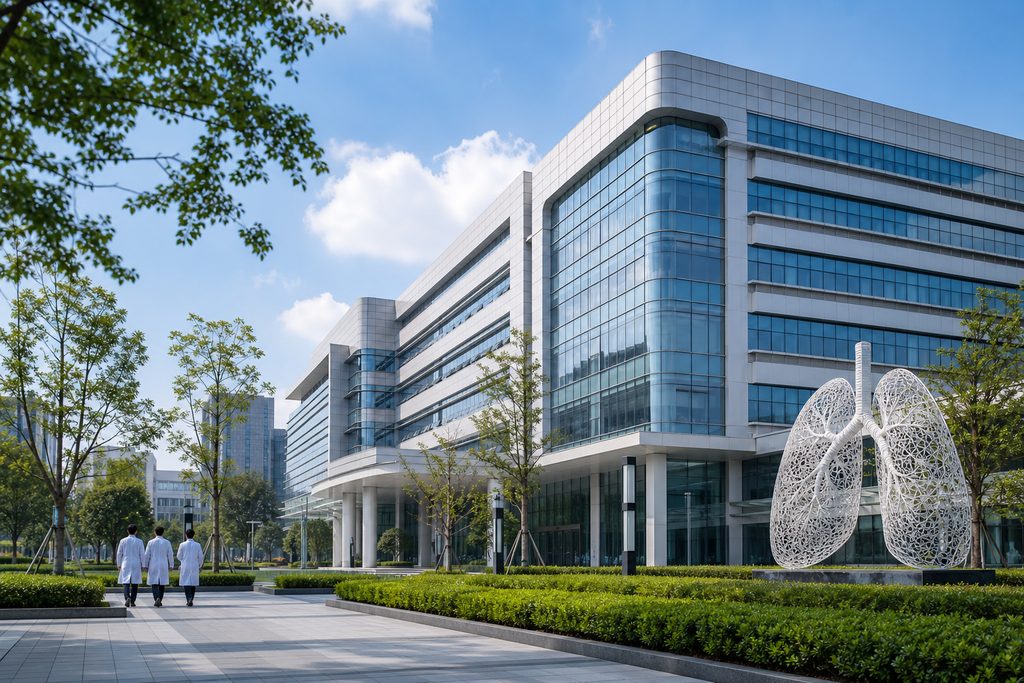
When 42-year-old Michael finally got a name for the lung condition that had been stealing his breath for three years, the relief lasted about ten minutes. His local pulmonologist was honest: the diagnosis was rare, the recommended surgical biopsy was high-risk, and the one specialist in his region who handled such cases had an eleven-month waiting list. Michael needed a different path. He started searching for a center that saw unusual pulmonary cases every single week, not once a quarter. That search led him to look at options in China.
Key Takeaways
- Guangzhou GZMU First Hospital houses the National Clinical Research Center for Respiratory Disease, handling over 30,000 respiratory inpatient cases annually — volume that directly shapes diagnostic accuracy for rare conditions.
- International patients can access a complex lung disease diagnostic workup with full imaging, lab panels, and multidisciplinary review at a fraction of Western costs, typically with a 2-4 week coordination timeline rather than months of waiting.
- Navigating a Chinese public hospital independently is difficult. Language barriers, registration systems, and payment workflows are not designed for overseas visitors. A bilingual coordinator transforms this experience.
- No legitimate service can guarantee a specific surgeon or bypass clinical triage. What a good medical concierge provides is direct access to the hospital’s official international channel, case preparation, and logistical support — with full refund if an appointment cannot be secured.
The Problem: When Your Lungs Defy a Standard Diagnosis
Interstitial lung disease. Pulmonary alveolar proteinosis. Lymphangioleiomyomatosis. Hypersensitivity pneumonitis that mimics a dozen other conditions. These are not common colds. They are diagnostically slippery, often requiring a combination of high-resolution CT interpreted by eyes that have seen thousands of variants, bronchoscopy with lavage or cryobiopsy, and a multidisciplinary team that includes pulmonologists, radiologists, and pathologists who actually talk to each other. In many Western health systems, getting those three specialists in the same room to review your case can take months. A 2023 report from the British Lung Foundation noted that nearly one in three patients with rare pulmonary conditions waited over a year for a confirmed diagnosis. That wait is not just frustrating. For progressive conditions, it is dangerous.
The challenge compounds when your local center simply lacks the case volume. A general pulmonologist might encounter one case of idiopathic pulmonary fibrosis per month. A high-volume respiratory hospital sees several new presentations every day. Pattern recognition in medicine is built on exposure. And exposure requires volume.
Who We Are
China Medical Services is not a hospital. We do not diagnose conditions, prescribe treatments, or offer clinical opinions. We are a medical concierge team based in China, built specifically to connect international patients with the country’s top-tier hospitals. Our database covers 340+ ranked hospitals across 37 cities — institutions that represent the top 5% of China’s 35,000+ hospitals as evaluated by the Fudan University hospital rankings and JCI accreditation. We handle the logistics: hospital matching, appointment coordination through official international departments, bilingual medical companion services, and visa guidance. Think of us as the bridge. You bring the medical need. We bring the pathway.
Why Guangzhou GZMU First Hospital Is a Serious Contender for Complex Lung Disease Diagnosis in China
When patients ask us is Guangzhou respiratory hospital top ranked in China, the answer requires some context. China’s most authoritative hospital ranking system — the Fudan University China Hospital Rankings — evaluates hospitals by specialty reputation. For respiratory medicine, the top tier includes names like China-Japan Friendship Hospital in Beijing and Zhongshan Hospital in Shanghai. But Guangzhou GZMU First Hospital, officially the First Affiliated Hospital of Guangzhou Medical University, holds a unique position: it is home to the National Clinical Research Center for Respiratory Disease. That designation is not honorary. It means the hospital is a national-level hub for respiratory research, clinical trials, and complex case referrals.
The center was shaped significantly under the leadership of Dr. Zhong Nanshan, the pulmonologist who became a household name across China during the SARS outbreak and again during COVID-19. The respiratory department here does not just treat asthma and COPD. It handles the difficult cases — the ones that stump regional hospitals. And it does so at a scale that is hard to match.
Volume Builds Diagnostic Precision
The respiratory center at GZMU First Hospital manages more than 30,000 inpatient admissions annually, supported by a pulmonary function lab, advanced bronchoscopy suites, and a thoracic imaging unit that processes thousands of high-resolution CT scans each month. For a patient with an undiagnosed interstitial lung abnormality, the difference between a center that reviews five such scans weekly versus fifty is substantial. Radiologists here see patterns that generalists might miss. The bronchoscopy team performs procedures — including endobronchial ultrasound-guided biopsy and cryobiopsy — with a frequency that keeps complication rates low and diagnostic yield high. Volume is not everything. But in complex pulmonary diagnosis, it correlates strongly with accuracy.
Multidisciplinary Review as Standard Practice
At many hospitals, a “multidisciplinary team” meeting is a scheduled event that happens once a month. At GZMU First Hospital’s respiratory center, complex cases are reviewed by pulmonologists, thoracic radiologists, and pathologists as a matter of routine workflow. This matters for international patients seeking complex pulmonary disease treatment abroad fast track options. Instead of sequential referrals — see the pulmonologist, wait two weeks for radiology, wait another week for the pathology report — the diagnostic process is compressed. The team reviews imaging, lab results, and biopsy findings together, which can cut the time from initial consultation to confirmed diagnosis substantially.
Guangzhou GZMU First Hospital Respiratory Center Cost: What International Patients Should Expect
Let us address the question directly: Guangzhou GZMU First Hospital respiratory center cost for a comprehensive lung disease diagnostic workup. This is not a fixed price menu. Costs vary by the complexity of your case, the specific tests required, and whether you access the hospital through the standard public channel or the international VIP department. Based on cases we have coordinated, here is a realistic picture:
| Diagnostic Component | Estimated Cost (USD) | Notes |
|---|---|---|
| Initial specialist consultation (international dept.) | $150–300 | Includes case review and examination |
| High-resolution chest CT with contrast | $200–400 | Read by thoracic radiologist |
| Comprehensive pulmonary function testing | $100–200 | Full spirometry, diffusion capacity, lung volumes |
| Bronchoscopy with bronchoalveolar lavage | $800–1,500 | Includes lab analysis of lavage fluid |
| Bronchoscopy with cryobiopsy | $1,500–2,500 | Higher diagnostic yield for ILD; requires sedation |
| Multidisciplinary team case review | $500–800 | Pulmonology, radiology, pathology joint review |
| Written second opinion report (English) | $300–500 | For reference only; not a prescription |
All figures are estimates and vary by hospital and case complexity. For comparison, a similar diagnostic bronchoscopy with biopsy in the United States typically costs $8,000–15,000 before insurance. Even accounting for travel and accommodation, the math often favors treatment abroad — provided you have the right coordination.
What You Need to Know Before Going Alone
We have seen patients try to navigate this independently. Some succeed. Most lose time, money, or both. Here are the barriers you will face if you attempt to access best hospital for complex lung disease China options without local support:
- Visa requirements are specific and unforgiving: Medical treatment in China requires an S2 visa with a clear treatment purpose annotation. This is not a tourist visa. You need an invitation letter from the hospital, proof of appointment, and documentation of your medical condition. Applying for the wrong visa category — like an M business visa — will result in rejection. Your accompanying family members also need S2 visas. Getting the paperwork right the first time saves weeks of delay.
- Public hospital registration does not work like Western booking systems: You cannot simply call GZMU First Hospital’s general line and schedule an appointment with a senior respiratory specialist. The public outpatient system requires in-person registration, often on the same day, with queues forming at dawn. The international department operates differently — it accepts pre-arranged appointments — but you need to know which channel to use and have someone who speaks Mandarin to coordinate.
- Payment is upfront and insurance reimbursement is retrospective: Chinese public hospitals require payment before services are rendered. They do not direct-bill international insurance. You pay out of pocket, then submit claims to your insurer. The hospital provides receipts and documentation, but navigating the billing codes and medical record translation for insurance purposes is a task most patients underestimate.
- Language is the invisible wall: Even in Guangzhou, a cosmopolitan city of 15 million, clinical staff in public hospitals primarily operate in Mandarin and Cantonese. Medical records, consent forms, test instructions — all in Chinese. A bilingual medical companion is not a luxury. It is the difference between understanding your diagnosis and signing forms you cannot read.
How We Help You Navigate This
These barriers exist for structural reasons — Chinese public hospitals were built to serve a domestic population of 1.4 billion, not international walk-ins. Our role is to bridge that gap without pretending the gap does not exist.
When you contact us about how to get diagnosed for rare lung disease in China, the process starts with a free consultation. You share your medical history, current diagnosis (or diagnostic uncertainty), imaging, and lab results. Our team — which includes Mandarin-English bilingual case managers — reviews your file and identifies the appropriate hospital and department. For complex respiratory cases, GZMU First Hospital is frequently our recommendation, but we also consider alternatives based on your specific condition, budget, and timeline.
Once you decide to proceed, we handle the appointment coordination through the hospital’s official international department. This is not a backdoor. It is the legitimate channel for overseas patients, staffed by the hospital’s own international patient coordinators. We prepare your case summary in Chinese, submit it for review, and secure a confirmed appointment slot. The coordination fee starts from $300 — and if we cannot secure the appointment, that fee is fully refunded.
Before you travel, we guide you through the S2 visa application, providing the invitation documentation and appointment confirmation the Chinese consulate requires. We arrange airport pickup and recommend accommodation near the hospital. On the day of your consultation, a bilingual medical companion meets you at the hospital entrance. They handle registration, queue at the appropriate windows, escort you to the consultation room, and translate your conversation with the specialist in real time. They also translate test instructions, medication schedules, and follow-up plans. Companion services start from $200 per day.
For patients who want a preliminary opinion before committing to travel, we offer remote video consultations with specialists at the hospital’s international department ($100–300) and written second opinion services ($300–500). Any consultation fee you pay is credited in full toward on-the-ground coordination services if you proceed within 90 days. This means you can test the waters without financial penalty.
Frequently Asked Questions
You can coordinate a structured diagnostic pathway, but the hospital does not sell pre-packaged “diagnosis packages” in the way a wellness retreat might. What you receive through our service is a sequenced plan: specialist consultation, imaging, pulmonary function tests, and if clinically indicated, bronchoscopy with biopsy — all scheduled in a logical order with bilingual support. The coordination service creates the package structure. The hospital provides the medical care. Total diagnostic costs typically range from $1,500 to $5,000 depending on the invasiveness of testing required.
GZMU First Hospital’s respiratory department is not simply “ranked” — it holds a national research center designation that places it among the most influential respiratory institutions in the country. In the Fudan University specialty reputation rankings, its respiratory medicine program consistently appears among the top tier nationally. More importantly for international patients, the center’s case volume in complex and rare pulmonary conditions means the clinical teams have seen what your local hospital may have only read about. For a deeper look at how Chinese hospitals are evaluated, visit our top-ranked hospitals database.
This happens. A diagnostic bronchoscopy sometimes reveals a condition that requires surgical intervention — a lung nodule that needs resection, for example. If your case escalates, we adjust. The same coordination team can extend your stay, reschedule flights, and arrange surgical consultations. You are never locked into a rigid itinerary. The hospital’s thoracic surgery department can often schedule procedures within days of a diagnostic finding, avoiding the multi-week wait between diagnosis and treatment that frustrates patients in many systems. Costs for thoracic surgery at GZMU First Hospital vary widely but generally run 70–80% less than equivalent procedures in the United States.
No medical service can guarantee a diagnosis — that would be dishonest. What we can tell you is that high-volume centers with multidisciplinary workflows produce fewer diagnostic errors, particularly for rare conditions. A 2020 study in the journal Chest found that interstitial lung disease diagnoses changed after multidisciplinary discussion in approximately 40% of cases initially diagnosed by a single clinician. The workflow at GZMU First Hospital builds that multidisciplinary review into the standard process. You are not relying on one doctor’s opinion. You are getting a team assessment. For patients considering multiple options, our specialty department rankings provide a starting point for comparing respiratory centers across China.
This is extraordinarily unlikely when you come through the international department with a confirmed appointment. The hospital has already reviewed your case summary and agreed to accept you as a patient. If an unforeseen issue arises — a change in your clinical status that makes travel inadvisable, for instance — we work with the hospital to reschedule or, if necessary, refund the coordination fee. Our business depends on successful patient outcomes, not on collecting fees for appointments that fall through.
Your Next Step
A complex lung disease diagnosis does not have to mean months of waiting and uncertainty. China’s top respiratory centers, led by institutions like Guangzhou GZMU First Hospital, offer high-volume clinical expertise, multidisciplinary diagnostic workflows, and costs that make treatment abroad a financially viable option — even for patients paying out of pocket. The barriers are real: language, visas, and a hospital system not designed for international walk-ins. But those barriers are navigable with the right support. If you are ready to explore what a fast-track diagnostic pathway could look like for your specific case, our team is here to walk you through it — starting with a free, no-pressure consultation at our patient services page. We will help you understand your options. The decisions remain entirely yours.
For more medical information and treatment options in China, visit chinamedservices.com (China Medical Services).
