Stroke Recovery and Rehabilitation Pathway in China: Post-Stroke Intensive Rehab Full Timeline
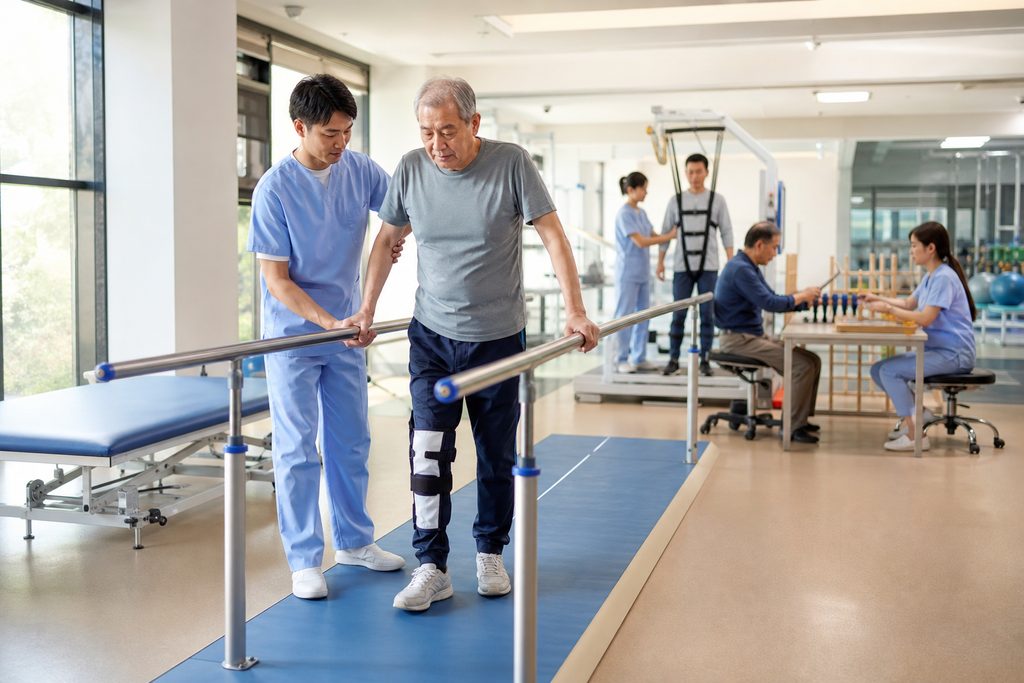
You’ve probably heard that recovering from a stroke means accepting a slow, uncertain path with limited options. The data tells a more hopeful story. Research published in The Lancet shows that patients who enter a structured, intensive rehabilitation program within the first 90 days post-stroke can recover significantly more function than those who receive only standard care. The real question is not if recovery is possible, but where you can access that level of intensity without burning through a lifetime of savings. That’s where understanding the stroke rehabilitation cost China pathway becomes practical, not just theoretical.
Our team has helped patients from over a dozen countries coordinate post-stroke rehab at hospitals ranked among China’s top tier. What we’ve seen consistently is that the combination of high-volume clinical experience, integrated Traditional Chinese Medicine (TCM) modalities, and a cost structure roughly one-fifth to one-tenth of comparable Western programs changes the calculus for families. This article walks you through the actual timeline, the real costs, and the decisions you’ll face—without sugarcoating the logistics.
How This Actually Works, Step by Step
The process begins before you ever book a flight. Most international patients start by sending us their existing medical records: the discharge summary from the acute hospital, recent imaging reports (CT or MRI), current medication list, and any therapy assessments. A dedicated case manager translates these documents into clinical Chinese and submits them to the rehabilitation department of a top-ranked hospital for a written second opinion.
Within 5 to 7 business days, you receive a preliminary treatment plan. This document outlines the recommended therapy intensity, estimated duration, and a breakdown of the post-stroke intensive rehab packages China hospitals offer. It is not a prescription—it’s an expert assessment that helps you decide whether traveling makes sense. If the plan looks viable, we then coordinate a video consultation with the rehabilitation specialist. The doctor reviews your imaging live, asks about your current functional status, and refines the timeline.
After the video consult, if you decide to proceed, we shift to logistics. You apply for an S2 visa with supporting documents from the hospital. We coordinate your first outpatient evaluation appointment. Once you land, a bilingual medical companion meets you at the airport and stays with you through every appointment—registration, payment, therapy sessions, and pharmacy runs. The hospital’s international department handles admission if inpatient rehab is recommended.
What Intensive Stroke Rehab Actually Looks Like in a Chinese Hospital
The phrase “intensive rehab” gets thrown around loosely. In the context of a major Chinese rehabilitation center—think the Rehabilitation Hospital affiliated to China Rehabilitation Research Center in Beijing or the department at Huashan Hospital in Shanghai—it means something specific. Patients in the early subacute phase typically receive 3 to 5 hours of active therapy per day, six days a week.
A typical morning might start with one-on-one physical therapy focused on gait retraining and balance. That’s followed by occupational therapy: relearning how to dress, cook, or manage fine motor tasks. After lunch, speech-language pathology sessions address aphasia or dysphagia. Then, often, a TCM practitioner provides acupuncture targeting specific meridian points associated with motor recovery. The day might end with electrostimulation therapy or robotic-assisted gait training using a Lokomat system—equipment that exists in only a handful of Western rehab centers but is increasingly common in China’s top-tier facilities.
This density matters. A 2021 meta-analysis in the Journal of Rehabilitation Medicine found a clear dose-response relationship: more therapy hours per week correlated with better functional outcomes at 6 months. The intensive stroke recovery timeline abroad compresses what might take 4 months of outpatient visits at home into 6 to 8 weeks of concentrated inpatient work.
A Realistic Timeline
Timelines in stroke recovery are never guarantees. They’re projections based on typical trajectories for patients with moderate deficits who are medically stable. Here’s what the sequence actually looks like from the moment you first contact us.
| Phase | What Happens | Typical Duration |
|---|---|---|
| Remote Evaluation | Records translation, written second opinion, video consultation | 2 to 3 weeks |
| Visa Processing | S2 visa application with hospital invitation letter; varies by consulate | 1 to 4 weeks |
| Arrival & Initial Assessment | In-person evaluation by rehab physician; final treatment plan signed | Days 1 to 3 in China |
| Inpatient Intensive Rehab | 3–5 hours daily therapy, 6 days/week; weekly progress reviews | 4 to 12 weeks (median: 8 weeks) |
| Transition to Day Program | Reduced to 2–3 hours/day outpatient; focus on community re-integration | 2 to 6 weeks |
| Discharge & Home Program | Final assessment, written home exercise plan, tele-follow-up schedule | Ongoing |
The waiting steps catch people off guard. Document translation takes time because clinical terminology must be precise. Appointment lead times at the most sought-after rehabilitation departments can stretch to 2 weeks. And visa processing depends entirely on your home country’s Chinese consulate workload. We’ve seen S2 visas approved in 5 business days in Dubai and take 4 weeks in London. Plan for the longer end.
Also, the question how long does stroke rehab take in China doesn’t have a single answer. A patient with mild hemiparesis who can walk with a cane on arrival might need only 4 weeks of inpatient work before stepping down to outpatient. Someone with significant aphasia and dense hemiplegia could reasonably need the full 12 weeks. The hospital will not discharge you on an arbitrary date—they’ll discharge you when your progress plateaus or when you’ve met the goals set in your initial plan.
What Can Go Wrong — and What Happens Then
Medical complications during rehab are not rare. A urinary tract infection can set therapy back a week. Uncontrolled hypertension might require a cardiology consult that delays sessions. Depression surfaces in roughly one-third of post-stroke patients and can sap the motivation needed to engage in intensive therapy. These are not signs that the program is failing. They’re predictable obstacles that the care team manages.
If a complication arises, the rehab physician adjusts the plan. Therapy intensity might drop temporarily while an infection clears. A psychiatrist or psychologist—available within the same hospital—can initiate medication and counseling for mood issues. The bilingual companion ensures you understand every change and can relay your concerns to the team. If the issue is severe enough to require transfer to acute care, the rehab hospital coordinates directly with the affiliated acute hospital; you don’t start over from an emergency room.
A harder scenario: the patient simply isn’t progressing as hoped. Plateaus happen. When weekly assessments show flat functional scores for two consecutive weeks, the team typically calls a family meeting. Options include shifting the therapy mix, trying different modalities, or acknowledging that the current phase of intensive inpatient work has done what it can and it’s time to transition to a maintenance program. No reputable hospital will keep a patient in expensive inpatient therapy just to fill a bed.
Choosing the Right Hospital: What the Numbers Don’t Tell You
The best rehab hospital Beijing for stroke might not be the best hospital for your stroke. Beijing boasts several world-class options. The China Rehabilitation Research Center (CRRC) handles an enormous volume of stroke patients annually and has dedicated research arms studying neuroplasticity. Peking University Third Hospital‘s rehabilitation department is consistently ranked among China’s top 10 for the specialty. But volume and prestige are only part of the picture.
What matters more for an international patient is the hospital’s experience with foreign nationals. Does the international department have English-speaking rehab coordinators? Are the therapy protocols documented in a way that your home-country physician can understand for follow-up care? Can the hospital provide a discharge summary in English that your insurer will accept? These operational details determine whether your experience is smooth or constantly frustrating.
Shanghai offers a different profile. Huashan Hospital affiliated with Fudan University runs a renowned rehabilitation department with a strong research focus on motor recovery after stroke. If you’re looking to book stroke rehabilitation program Shanghai, Huashan and Ruijin Hospital are the names that come up repeatedly in both the Fudan specialty rankings and in feedback from our patients. Shanghai also has a higher density of English-speaking support staff outside the hospital—in hotels, restaurants, and transportation—which matters during the outpatient phase when you’re no longer inside the hospital 24/7.
Cost varies by city and hospital tier. The stroke rehabilitation cost China for a comprehensive inpatient program at a top-tier public hospital’s international department typically ranges from $3,000 to $6,000 per week, all-inclusive of therapy, room, and board. That compares to $20,000 to $40,000 per week at a comparable U.S. inpatient rehab facility. Private international hospitals like United Family charge more—closer to $8,000 to $12,000 per week—but offer fully English-native environments and direct insurance billing. These are reference ranges; the final number depends on your specific therapy mix and length of stay.
Practical Considerations: Records, Visas, Payment, and Follow-Up
Bring every piece of imaging you have—not just the reports. The actual DICOM files from your CT and MRI scans let the Chinese radiologist and rehab physician do their own analysis. A CD or USB drive works. Also bring a detailed medication list with generic names, not just brand names; drug availability differs between countries.
Your visa category is S2, specifically annotated for medical treatment. The hospital provides an official invitation letter that you submit with your application. Do not apply for an M visa; that’s for commercial and trade activities and will be rejected if the purpose is clearly medical. One accompanying family member can also apply for an S2 visa. Visa validity and permitted stay duration are at the consulate’s discretion.
Payment is almost always out-of-pocket upfront at public hospitals, with receipts provided for you to submit to your insurer for reimbursement. Private international hospitals can often bill your insurer directly—check before you commit. We recommend confirming with your insurer that post-stroke inpatient rehabilitation in a foreign facility is a covered benefit. Get that confirmation in writing.
Language is the friction point that surprises people. Even in hospitals with international departments, the physical therapist conducting your daily session likely speaks only Mandarin. That’s where the bilingual medical companion becomes essential—not as a translator hovering awkwardly, but as a bridge who ensures instructions are understood, questions are asked, and nothing gets lost. After discharge, you’ll need a plan for follow-up. Most hospitals offer telemedicine check-ins at 1 month and 3 months post-discharge. Your home-country physical therapist should receive a translated summary of your program so they can continue the work.
Frequently Asked Questions
At the top-ranked hospitals, yes—and in some respects, more so. Facilities like CRRC in Beijing use robotic gait trainers, brain-computer interface therapy, and functional electrical stimulation systems that are available at only a handful of elite Western centers. The therapy intensity—measured in hours per day—often exceeds what’s typical in Western inpatient rehab. The difference is in the environment: fewer English-speaking staff, different cultural expectations around patient autonomy, and a more directive therapy style. It’s not better or worse; it’s different, and it suits some patients more than others.
Top rehabilitation hospitals in China are either part of large general hospital systems or have formal transfer agreements with nearby acute hospitals. A recurrent stroke, cardiac event, or serious infection triggers an immediate transfer to the affiliated acute care facility. Your rehab program pauses, not ends. Once you’re medically stable, you return to the rehab unit. Your bilingual companion stays with you through the transfer and ensures communication continuity.
In most public hospital international departments, a family member can stay in the patient’s room—rooms are typically private and include a sofa bed or cot. In private international hospitals, this is standard. During the COVID-19 pandemic, restrictions were tight; currently, one accompanying family member is generally permitted without quarantine beyond standard entry requirements, but this can change with little notice. We confirm the policy with the specific hospital before you travel.
There’s no absolute cutoff, but the science points to a window of maximum neuroplasticity in the first 3 to 6 months post-stroke. Patients who arrive within that window tend to make faster gains. That said, we’ve coordinated programs for patients 12 and even 18 months post-stroke who still achieved meaningful functional improvements. The key is medical stability: you need to be cleared for 3+ hours of daily physical activity. A written second opinion from the Chinese rehab team will honestly assess whether you’re likely to benefit before you commit to travel.
Your Next Step
Recovering from a stroke is a marathon that demands the right support at the right intensity. The decision to travel for rehabilitation is never easy, and it should never be rushed. What we’ve laid out here is the actual pathway—the timeline, the costs, the things that can go sideways—so you can weigh it against staying local.
Our role is not to provide medical care. We are case managers who translate records, coordinate with hospital international departments, arrange bilingual companions, and handle the logistics that would otherwise overwhelm a family navigating a foreign healthcare system. If you want to explore whether a specific Chinese rehabilitation program fits your situation, start with a free consultation. Send us the records. We’ll get you an honest assessment, not a sales pitch.
Request a free consultation to discuss your specific case and receive a preliminary treatment plan from a top-ranked Chinese rehabilitation hospital.
For more medical information and treatment options in China, visit chinamedservices.com (China Medical Services).
