Shanghai vs Nanjing for Surgery: Dual City Escort to Compare Medical Destinations
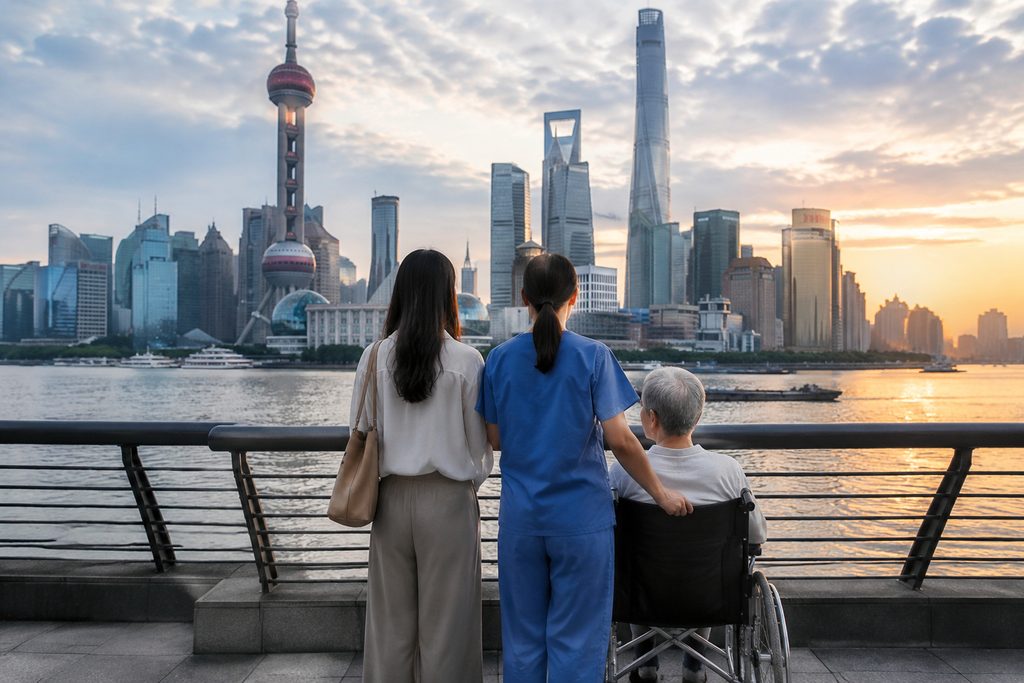
According to the Fudan University Hospital Rankings, China’s top 100 hospitals are distributed across 23 cities — and two of the most frequently compared destinations sit just 300 kilometers apart. Shanghai hosts 18 of these elite institutions. Nanjing holds fewer, but its centers dominate specific specialties with global reputations. The real question patients face isn’t which city is “better.” It’s which city aligns with your specific procedure, budget, and recovery expectations. Our team has coordinated dual-city evaluations for over 340+ top-ranked hospitals across 37 cities, and the Shanghai-Nanjing corridor is one of the most practical comparison routes we arrange. Here’s what the data actually shows, so you can make a decision grounded in evidence rather than marketing brochures.
How This Actually Works, Step by Step
You send us your existing medical records — CT scans, lab reports, physician notes, current medication list. Our bilingual case managers translate and format everything for Chinese hospital standards. Within 72 hours, we return a shortlist of 2-4 hospitals matched to your condition, citing their Fudan specialty rankings, annual procedure volumes, and any relevant JCI accreditation status. You choose which cities and hospitals interest you. Then we handle the sequence most international patients underestimate.
Step one: we secure written second opinions from the departments you’ve selected. This isn’t a generic brochure. It’s a specific analysis of your case, including proposed surgical approach, estimated hospital stay, and a treatment fee range. Step two: for patients who want to see both cities before committing, we coordinate what we call a dual-city evaluation itinerary. You arrive in Shanghai. A bilingual medical companion meets you at the airport. Over the next 4-6 days, you attend in-person consultations at your shortlisted Shanghai hospitals, then take the 1.5-hour high-speed train to Nanjing for parallel consultations there. Same companion travels with you. Same translator handles every doctor conversation. No lost context. No repeated explanations.
Step three: after all consultations, you receive a comparison document — side-by-side surgical plans, cost breakdowns, surgeon profiles, and recovery timelines for each hospital you visited. Then you decide. No pressure. No commission pushing you toward one city over the other.
Shanghai vs Nanjing Surgery Cost Comparison: What the Numbers Show
The Shanghai vs Nanjing surgery cost comparison reveals a consistent pattern across most major procedures. Shanghai’s top-tier public hospitals — Zhongshan Hospital, Ruijin Hospital, Renji Hospital — charge approximately 15-30% more than their Nanjing counterparts for equivalent surgeries. This isn’t about quality differences. It’s about operational costs, real estate, and the premium Shanghai’s international patient infrastructure commands.
| Procedure | Shanghai Public Hospital (USD) | Nanjing Public Hospital (USD) | U.S. Equivalent (USD) |
|---|---|---|---|
| Cardiac bypass surgery | $18,000 – $24,000 | $14,000 – $19,000 | $120,000+ |
| Total hip replacement | $15,000 – $22,000 | $12,000 – $18,000 | $40,000 – $60,000 |
| Laparoscopic gastrectomy | $10,000 – $16,000 | $8,000 – $13,000 | $50,000 – $80,000 |
| Spinal fusion (2-level) | $20,000 – $28,000 | $16,000 – $23,000 | $80,000 – $110,000 |
These figures reflect the hospital and surgeon fees for international patients using the VIP/international department channels. They do not include our coordination service fees, travel, accommodation, or post-operative rehabilitation. Prices vary by hospital and case complexity — we quote specific figures only after a department reviews your records.
Nanjing’s cost advantage is real. But it’s not the whole story. Shanghai offers something Nanjing cannot match: sheer clinical volume. Zhongshan Hospital’s cardiac surgery department performs over 14,000 procedures annually. That repetition breeds a particular kind of surgical fluency — teams that have seen every anatomical variant, every intraoperative complication. For complex or high-risk procedures, that volume matters more than the price difference.
A Realistic Timeline
Patients often underestimate how long a dual-city evaluation takes. Here’s what we tell every patient before they book a flight.
| Stage | Duration | What Actually Happens |
|---|---|---|
| Document preparation | 5–10 days | You gather all imaging, reports, and records. We translate and format everything. Incomplete records are the #1 cause of delays. |
| Hospital matching & written opinions | 7–14 days | We submit your case to 2-4 shortlisted departments. Each hospital has its own review timeline. We chase responses daily. |
| Visa processing (S2) | 10–20 days | Apply at your nearest Chinese embassy or consulate. You’ll need an invitation letter from the hospital and proof of accommodation. We guide the paperwork but cannot guarantee approval. |
| In-country dual-city evaluation | 5–8 days | 2-3 days in Shanghai for consultations. High-speed train to Nanjing. 2-3 days in Nanjing. Your bilingual companion handles every interaction. |
| Decision & surgery scheduling | 7–21 days | After you choose a hospital, the department confirms a surgery date. Public hospital VIP channels typically schedule within 1-3 weeks, depending on surgeon availability. |
| Post-operative recovery in China | 7–30 days | Depends entirely on the procedure. Your surgeon determines discharge timing. We can arrange recovery accommodation and follow-up visits. |
Total time from first contact to surgery: roughly 6-10 weeks. The variable is always the document preparation phase. Patients who send complete, well-organized records move through the pipeline in half the time of those who send fragmented files.
What Can Go Wrong — and What Happens Then
The most common failure mode is this: a patient arrives in Shanghai, attends one consultation, feels overwhelmed by the language barrier and the sheer scale of a Chinese public hospital, and cancels the Nanjing leg entirely. They make a decision based on a single data point. That defeats the purpose of a dual-city comparison.
Our protocol prevents this. The bilingual companion stays with you from airport arrival through the final Nanjing consultation. When a Shanghai surgeon recommends an approach you don’t fully understand, your companion clarifies it immediately. When the Nanjing specialist proposes something different, you can compare the two recommendations in real time — not weeks later through fragmented email threads.
Another failure mode: patients assume the Nanjing consultation will be less sophisticated because the city is smaller. We’ve seen the opposite. Nanjing Drum Tower Hospital‘s hepatobiliary surgery department and Jiangsu Province Hospital‘s oncology program are nationally ranked. A Shanghai surgeon might propose an aggressive resection while a Nanjing surgeon recommends a staged approach. Neither is wrong. But you need to hear both to understand your options.
What if a hospital rejects your case after review? It happens. Some departments decline cases they deem too high-risk or outside their current research focus. Our response: we immediately pivot to the next-ranked hospital on your shortlist. We don’t charge additional coordination fees for this — the service fee covers matching to your approved hospital list, not a single institution.
Is Shanghai or Nanjing Better for Medical Treatment? The Specialty-Specific Answer
The question “is Shanghai or Nanjing better for medical treatment” has no universal answer. It depends entirely on your diagnosis. Here’s how the two cities compare across major specialties, based on the Fudan Hospital Specialty Reputation Rankings.
Cardiac surgery: Shanghai dominates. Zhongshan Hospital alone performs more cardiac procedures annually than most countries. Its surgeons handle complex valve repairs and re-operations that smaller centers refer out. For straightforward CABG, Nanjing’s cost advantage makes it worth considering. For anything involving multiple valves, congenital defects, or prior sternotomies, Shanghai’s volume advantage is decisive.
Oncology: this is where the comparison gets interesting. Shanghai’s Fudan University Cancer Hospital ranks among China’s top three cancer centers. But Nanjing’s Jiangsu Cancer Hospital has developed particular expertise in gastric and esophageal cancers — diseases with high incidence in Jiangsu province. If you have a GI malignancy, Nanjing may offer more specialized surgical experience than a general oncology department in Shanghai.
Orthopedics: roughly equivalent. Both cities have multiple hospitals with strong joint replacement and spine surgery programs. The Shanghai vs Nanjing surgery cost comparison tilts toward Nanjing here — you’re likely to get equivalent orthopedic outcomes for 20-25% less. But Shanghai offers more options if you need a specific implant system or a surgeon trained in a particular technique.
Neurosurgery: Shanghai’s Huashan Hospital is arguably China’s top neurosurgical center, with subspecialty teams covering everything from skull base tumors to functional neurosurgery. Nanjing has capable neurosurgery departments, but for complex intracranial procedures, the concentration of expertise in Shanghai is difficult to match.
This specialty-by-specialty analysis is exactly what our hospital matching process delivers. We don’t recommend a city. We recommend specific departments based on your condition, then let you compare them in person.
How to Choose Between Shanghai and Nanjing for Surgery: A Decision Framework
When patients ask us “how to choose between Shanghai and Nanjing for surgery,” we walk them through four criteria. Not preferences — criteria with measurable impact on outcomes and experience.
First: procedure complexity. For high-risk, low-frequency surgeries, choose the hospital with the highest annual volume of that exact procedure. Volume correlates with outcomes across virtually every surgical discipline. If the highest-volume center is in Shanghai, the cost difference becomes secondary.
Second: surgeon specialization. A general orthopedic surgeon in Shanghai is not necessarily better than a hip-replacement-only surgeon in Nanjing. Look at what the individual surgeon does 80% of the time. Our written second opinions include the proposed surgeon’s annual procedure counts for your specific operation.
Third: recovery environment. Shanghai is a loud, dense, 25-million-person megacity. Some patients find it energizing. Others find it exhausting during recovery. Nanjing — still a major city at 9 million people — moves at a noticeably calmer pace. If you’ll be in China for 3-4 weeks post-operatively, the city’s rhythm matters.
Fourth: follow-up logistics. If you anticipate needing multiple follow-up visits over several months, consider which city has better flight connections to your home country. Shanghai Pudong International Airport offers far more direct international routes than Nanjing Lukou International Airport. For patients from Europe or North America, Shanghai often means one fewer connection.
Practical Considerations: Records, Visas, Payment, and Language
Records must be in English or Chinese when submitted to hospitals. We handle translation, but the quality of your source records determines the quality of the surgical assessment. Blurry phone photos of CT scans are not diagnostic. We’ll tell you exactly what format each hospital requires — usually DICOM files on CD or USB for imaging, and PDF summaries for clinical notes.
Visa category is non-negotiable. Medical treatment in China requires an S2 visa, with the specific purpose noted on the application. Your accompanying family member applies for the same S2 category. The hospital provides an invitation letter confirming your consultation or treatment schedule. Processing times vary by embassy — budget 2-3 weeks minimum. We’ve seen rush approvals in 5 days and we’ve seen routine applications take 4 weeks. Apply early.
Payment flows differently than most Western patients expect. Public hospitals require prepayment — you deposit funds at admission, and the hospital deducts charges daily. Any remainder is refunded at discharge. International departments accept wire transfers and major credit cards. Private international hospitals like United Family or Jiahui offer direct insurance billing, but their surgical fees run 2-3 times higher than public hospital VIP channels. We help you navigate which payment method each hospital accepts, but we never handle your funds directly.
Language is the invisible cost most patients forget to budget. A public hospital VIP department typically has some English-speaking staff, but not in every interaction — the surgical consent form, the anesthesia consult, the post-op nursing instructions. Our bilingual medical companion service, starting from $300 per day, eliminates this friction. One companion handles registration, queue management, payment processing, translation during every doctor conversation, and discharge paperwork. For a dual-city evaluation, the companion travels with you between Shanghai and Nanjing, maintaining continuity across every consultation.
Frequently Asked Questions
Yes. Shanghai and Nanjing are connected by high-speed rail — roughly 90 minutes station to station. A typical dual-city evaluation spans 5-8 days: 2-3 days of consultations in Shanghai, a morning train to Nanjing, and 2-3 days of consultations there. Your bilingual companion handles all logistics, so you focus entirely on the medical conversations.
We don’t hide it. Chinese specialists are accustomed to patients seeking multiple opinions — it’s standard practice domestically. In fact, being transparent often improves the consultation quality. When a Nanjing surgeon knows you’re comparing approaches, they tend to explain their rationale more thoroughly. There’s no penalty for comparison shopping in the Chinese medical system.
This happens more often than patients expect. One surgeon recommends a minimally invasive approach; another recommends open surgery. One proposes immediate intervention; another suggests a period of monitoring. Our role is not to tell you which is correct. We ensure you understand both rationales fully, then connect you with your home-country physician for a third perspective if needed. The decision remains yours.
Hospital quotes for international patients using the VIP channel are comprehensive: surgeon fees, anesthesiologist fees, operating room charges, ward fees, and standard medications. What’s not included: high-cost imported implants (quoted separately), extended ICU stays beyond the standard package, and any complication management. We ask each hospital to itemize these exclusions in writing before you commit.
For a procedure costing $15,000-$25,000, spending an additional $1,500-$2,000 on coordination to compare two surgical plans is a fraction of the total — and it can prevent a decision you later regret. The patients who benefit most are those with complex conditions, those weighing significantly different surgical approaches, and those who want to see both a high-volume Shanghai center and a cost-competitive Nanjing alternative before committing.
Your Next Step
A dual-city evaluation turns an abstract internet search into an informed medical decision. You sit across from the surgeons. You hear their reasoning. You compare costs grounded in your actual case, not generic price lists. Our team at China Medical Services handles the entire sequence — from record translation to hospital matching to bilingual companionship across both cities. We don’t practice medicine. We don’t recommend specific surgeons or guarantee surgical outcomes. What we do is remove every logistical barrier between you and the information you need to choose confidently. If you’re considering surgery in China and want to evaluate both Shanghai and Nanjing in a single, structured trip, send us your records. We’ll show you what’s possible.
For more medical information and treatment options in China, visit chinamedservices.com (China Medical Services).
