Endometriosis Treatment at Shanghai Red House Hospital: A Guide for International Patients
Endometriosis is not just “bad period pain.” It is a condition where tissue similar to the uterine lining grows outside the uterus, causing severe pelvic pain, scarring, and often infertility. It affects roughly 1 in 10 women of reproductive age globally. For many, the path to diagnosis takes 7 to 10 years of bouncing between doctors who dismiss the symptoms. By the time a clear surgical plan emerges, the question shifts from “what is wrong with me” to “where can I get the most precise treatment without waiting another year or facing a bill that rewrites my financial future.”
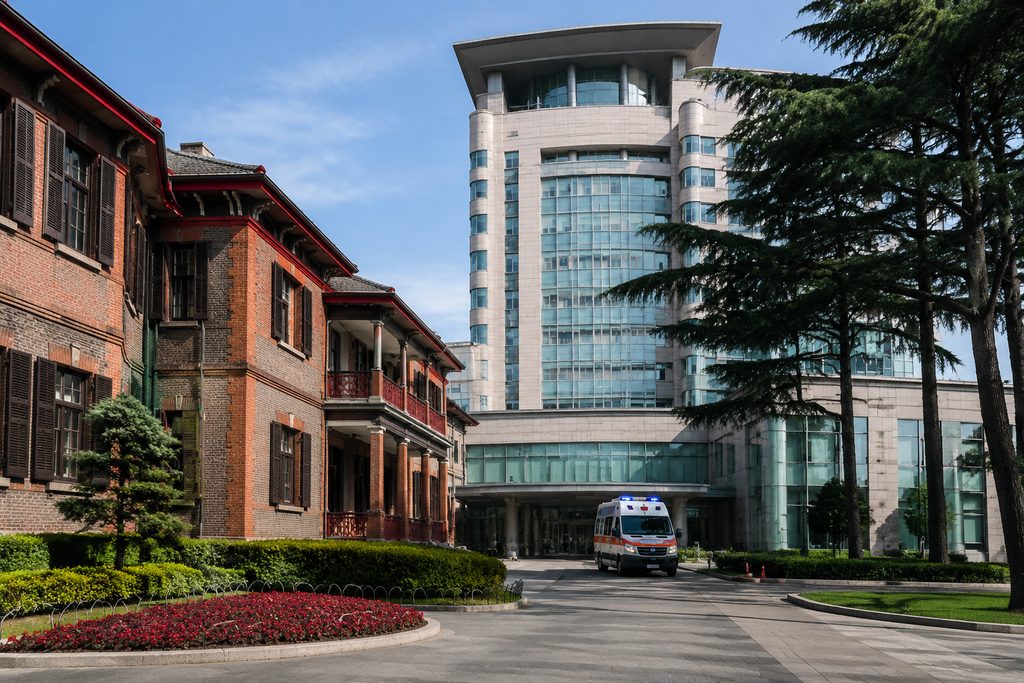
A growing number of international patients are looking toward one specific answer: the gynecology department at the Obstetrics and Gynecology Hospital of Fudan University. Most people know it as Shanghai Red House Hospital. It holds the rank of number two in China for gynecology on the authoritative Fudan University hospital rankings. That puts it ahead of every other women’s hospital in a country of 1.4 billion people except one. For someone researching endometriosis surgery cost Shanghai Red House Hospital while comparing clinical quality across borders, that ranking carries real weight.
Key Takeaways
- Shanghai Red House Hospital is ranked the #2 gynecology hospital in China, handling a surgical volume that few Western centers match.
- Endometriosis surgery costs at Red House typically run $6,000 to $12,000 for international patients—a fraction of US or UK private-sector pricing.
- Direct overseas booking into the general outpatient clinic is not possible; international patients must route through the hospital’s designated international channel or VIP department.
- Language barriers and documentation requirements are significant—arriving without a bilingual companion or properly translated records will delay care.
The Problem: Endometriosis Surgery in the West Is Expensive and Slow
Let’s put numbers on the table. In the United States, the average out-of-pocket cost for laparoscopic excision of endometriosis—the gold-standard surgery—ranges from $10,000 to $30,000 for patients with high-deductible plans, and the total billed amount can exceed $50,000 depending on the complexity and hospital system. In the United Kingdom, NHS waiting times for non-urgent gynecological surgery now routinely stretch past 18 weeks, with many patients waiting over a year from referral to operating table. Going private in London? Expect to pay £8,000 to £15,000.
And timing matters with endometriosis. The disease is progressive. Adhesions thicken. Ovarian endometriomas grow. Fertility windows narrow. Waiting is not neutral—it is a clinical decision with consequences. Patients who have exhausted their local options start searching for alternatives that do not force them to choose between speed, quality, and affordability. That search often leads to Shanghai.
Why Shanghai Red House Hospital Delivers Results for Endometriosis Patients
Surgical Volume Creates Precision
There is a well-documented relationship between surgical volume and patient outcomes, especially in complex laparoscopic procedures. A surgeon who performs 300 endometriosis excisions a year sees variants of the disease—deep infiltrating endometriosis, bowel involvement, ureteral adhesions—that a lower-volume surgeon might encounter a handful of times annually. Red House Hospital operates at that high-volume tier. Its gynecologists perform thousands of laparoscopic procedures each year, with endometriosis representing a core subspecialty. This is not a general OB/GYN department that handles endo on the side. It is a dedicated center where complex pelvic surgery is the daily workload.
For an international patient, that means walking into an operating room where the surgical team has seen your exact presentation many times before. The pathology is familiar ground.
Technology Infrastructure Without the Markup
Red House Hospital is a teaching hospital of Fudan University, one of China’s top medical schools. Its operating suites are equipped for advanced laparoscopic surgery, including 4K and 3D imaging systems, robotic-assisted platforms in select cases, and intraoperative nerve monitoring when indicated. The hospital also maintains an integrated fertility preservation program. For endometriosis patients concerned about ovarian reserve, surgeons can coordinate with reproductive endocrinologists on the same campus to discuss oocyte or embryo cryopreservation before extensive ovarian surgery. That kind of intra-institutional coordination eliminates the “go see someone across town” fragmentation that frustrates patients at home.
Cost Advantage Rooted in Structural Economics
Let’s address the elephant in the room directly: lower cost does not mean lower quality. The endometriosis surgery cost Shanghai Red House Hospital charges international patients reflects China’s hospital economics—not a discount on expertise. A laparoscopic excision procedure typically falls between $6,000 and $12,000 for international patients routed through the hospital’s international department. Complex cases involving bowel resection or multi-organ surgery run higher, but still land well below comparable US or European private-sector bills.
Why? Hospital overhead, physician compensation, and device pricing are structurally lower in China’s public hospital system. The same surgical device that carries a $4,000 markup in a US hospital might cost a fraction of that in Shanghai. The surgeon’s fee is not inflated by a liability insurance system that adds six figures annually to an American physician’s overhead. These are macroeconomic factors. They have nothing to do with the quality of the hands holding the laparoscope.
How Endometriosis Is Treated in China: The Clinical Pathway at Red House
A patient arriving at Red House Hospital for endometriosis care follows a defined clinical pathway. Understanding this before you travel prevents surprises.
The process starts with a comprehensive preoperative evaluation. You will need a transvaginal ultrasound—ideally performed by a sonographer experienced in endometriosis mapping—and in many cases a pelvic MRI to assess deep infiltrating disease. Red House’s imaging department is accustomed to staging endometriosis severity, which directly informs the surgical plan. Blood work includes CA-125 (often elevated in endometriosis) and anti-Müllerian hormone if fertility preservation is relevant.
Surgery itself is almost always laparoscopic. The standard of care in China’s top gynecology centers has firmly shifted toward excision over ablation. Excision cuts out the disease at the root. Ablation burns the surface and leaves deeper lesions behind. Red House surgeons are trained in excision techniques, including the demanding work of dissecting endometriosis off the bowel, bladder, and ureters without damaging those organs. For stage IV disease with frozen pelvis—where organs are stuck together by scar tissue—a multidisciplinary surgical team may include a colorectal surgeon or urologist from Fudan’s affiliated network.
Postoperative recovery follows a fast-track protocol. Most patients stay in the hospital for 2 to 4 days after a straightforward laparoscopic excision. Complex cases with bowel resection require longer observation. Pain management leans on multimodal analgesia—nerve blocks, NSAIDs, and acetaminophen—rather than heavy opioid use, which aligns with enhanced recovery after surgery guidelines used internationally.
Is Shanghai Red House Hospital Good for Gynecology? What the Rankings Actually Mean
The short answer is yes—and the evidence is public. The Fudan University China Hospital Rankings, published annually since 2010, are the closest thing China has to the US News & World Report hospital rankings. In the gynecology specialty category, Red House Hospital has held the number two position consistently. Only Peking Union Medical College Hospital in Beijing ranks higher.
But rankings only tell part of the story. What does the #2 gynecology hospital in China actually look like in practice? It is a high-throughput academic center. The outpatient clinics see several thousand patients daily. The surgical schedule runs at full capacity five days a week, with some emergency cases on weekends. The hospital’s research output on endometriosis and reproductive medicine appears regularly in international journals. Its specialists present at global conferences, including the World Endometriosis Congress.
For the international patient, the key takeaway is that this is not an obscure local hospital that happens to rank well. It is a globally connected academic medical center where the clinical protocols align with international guidelines from bodies like the European Society of Human Reproduction and Embryology and the American Society for Reproductive Medicine. The treatment philosophy will feel familiar. The execution is what you are traveling for.
| Cost Component | Shanghai Red House (International Patient) | US Hospital (Uninsured/Self-Pay) | UK Private Hospital |
|---|---|---|---|
| Laparoscopic Excision (uncomplicated) | $6,000 – $9,000 | $15,000 – $35,000 | £8,000 – £12,000 |
| Complex Excision with Bowel Surgery | $10,000 – $15,000 | $30,000 – $55,000 | £15,000 – £22,000 |
| Preoperative Imaging (MRI + Ultrasound) | $400 – $800 | $2,000 – $5,000 | £800 – £1,500 |
| Hospital Stay (per day, standard room) | $200 – $400 | $2,500 – $5,000 | £600 – £1,200 |
| Surgeon’s Fee | Included in package | $3,000 – $8,000 | Included in package |
All figures are estimates in USD and GBP. Actual costs vary by case complexity, length of stay, and exchange rates. International patient pricing at Red House Hospital is set by the hospital’s international department and confirmed before admission.
Finding the Best Endometriosis Specialist in China: How to Evaluate a Surgeon at Red House
Patients often ask us: “Who is the best endometriosis specialist China has at Red House?” It is the wrong question—or at least an incomplete one. Endometriosis surgery is not a solo performance. The best outcomes come from teams: a lead surgeon who operates on complex pelvic disease routinely, an anesthesiologist experienced in prolonged laparoscopic cases, a nursing unit that manages postoperative recovery without over-reliance on narcotics, and a pathology lab that processes endometriosis specimens correctly.
That said, certain indicators signal deeper expertise. Look for a surgeon who publishes on endometriosis staging or surgical technique. Ask whether they perform excision rather than ablation as their default approach. Inquire about their experience with deep infiltrating endometriosis involving the bowel or urinary tract—and whether they operate with a multidisciplinary team when those structures are involved. A surgeon who says “I handle everything myself” for stage IV bowel endo is not the surgeon you want. The honest ones say “I bring in a colorectal colleague for that part of the case.”
At Red House, the senior gynecological surgeons operate within exactly that kind of collaborative structure. The hospital’s affiliation with Fudan University means colorectal, urology, and reproductive endocrinology colleagues are available for intraoperative consultation. That is the infrastructure that turns a good surgeon into a safe one.
Practical Considerations: Records, Visas, and the Reality of a Chinese Public Hospital
Let’s be direct about what international patients need to prepare before contacting Red House Hospital.
Medical Records. You will need a complete dossier translated into Chinese or, at minimum, English. This includes all prior surgical notes, pathology reports, imaging studies (on CD or cloud link, not just the written report), and a summary of your symptom history. Chinese public hospitals operate on documentation. An incomplete file means the surgeon cannot assess your case fully—and may refuse to schedule surgery. Our team handles document translation and organization, but the raw materials must come from you.
Visa Category. Medical treatment in China for foreign nationals falls under the S2 visa, which covers short-term private affairs including medical visits. The hospital’s international department will issue an invitation letter confirming your scheduled treatment. That letter supports your visa application. Do not apply for an M visa—that is for commercial and trade activities, not medical care. Processing times vary by consulate. Budget four to six weeks from invitation letter to visa in hand.
Payment. Public hospitals in China, including Red House’s international department, operate on a prepayment model. You deposit funds before admission, and the hospital draws down against that deposit as services are rendered. International patients typically pay via wire transfer or major credit card. The hospital does not direct-bill Western insurance companies, so you will need to pay upfront and seek reimbursement from your insurer afterward. Request an itemized receipt in English before discharge—it is essential for insurance claims.
Language. Red House’s international department has English-speaking coordinators, but the nursing staff on the ward and the technicians in imaging may not speak English. A bilingual companion who can translate clinical instructions, clarify medication schedules, and advocate for you during rounds is not a luxury. It is the difference between a smooth recovery and a stressful one. Our bilingual medical companion service exists for exactly this reason.
Follow-Up After Returning Home. Red House surgeons provide a discharge summary and surgical report in English. You will need to arrange follow-up care with a gynecologist in your home country. Share the operative report and any histopathology results. If postoperative hormone suppression therapy is recommended—GnRH agonists or progestins—your local physician can prescribe and monitor it.
Frequently Asked Questions
You can secure a preoperative consultation slot and a provisional surgery date through the hospital’s international department, but the surgeon will not finalize the surgical plan until they have reviewed your imaging and, in most cases, conducted an in-person examination. This is standard practice—no reputable surgeon commits to an operation sight unseen. What you can lock in is the evaluation timeline, which means you arrive knowing you will be seen within days, not weeks.
Chinese gynecologists approach organ removal conservatively, especially in premenopausal women. The default is organ-preserving excision of endometriosis lesions wherever possible. If your disease is severe enough that hysterectomy or oophorectomy is on the table, the surgeon will discuss it explicitly before surgery and require your written consent for that specific procedure. No one will remove your uterus because it seemed convenient during the operation.
Some medical tourism agencies market all-inclusive endometriosis surgery packages China that bundle hospital fees, hotel stays, airport transfers, and translation services. Red House Hospital itself does not sell packages—it charges for medical services line by line. Coordinating the non-medical logistics falls to you or a service provider. Be cautious of packages that quote a single price without breaking down what goes to the hospital and what goes to the intermediary. Transparency on that split is non-negotiable.
Budget a minimum of two to three weeks. That allows for preoperative consultation and imaging (2–3 days), the surgery itself (1 day), inpatient recovery (2–5 days), and a postoperative follow-up visit before you fly home (usually 7–10 days after discharge). Flying long-haul immediately after pelvic surgery is uncomfortable and increases the risk of deep vein thrombosis. Your surgeon will clear you for travel once you are mobile and stable.
Some international health insurance plans cover treatment at recognized hospitals abroad, but you must confirm this with your insurer before committing. Red House Hospital is an accredited teaching hospital of Fudan University, which satisfies the “recognized institution” requirement for many plans. Request a predetermination letter from your insurer. If they require specific documentation—hospital license, surgeon credentials—the international department can usually provide it.
Your Next Step
Choosing where to have endometriosis surgery is a decision that affects your fertility, your pain levels, and your long-term health. The clinical quality at Shanghai Red House Hospital is real, the cost advantage is substantial, and the logistical hurdles are manageable if you prepare correctly. Our team at China Medical Services exists to bridge the gap between international patients and China’s top-ranked hospitals. We do not provide medical advice or diagnoses—we handle the coordination, documentation, and on-the-ground support so you can focus on recovery. If you are ready to explore whether Red House Hospital is the right fit for your case, request a free consultation and we will walk through the process with you, honestly and without pressure.
For more medical information and treatment options in China, visit chinamedservices.com (China Medical Services).
