Fertility Preservation in Shanghai: Renji Hospital’s Program for Cancer Patients
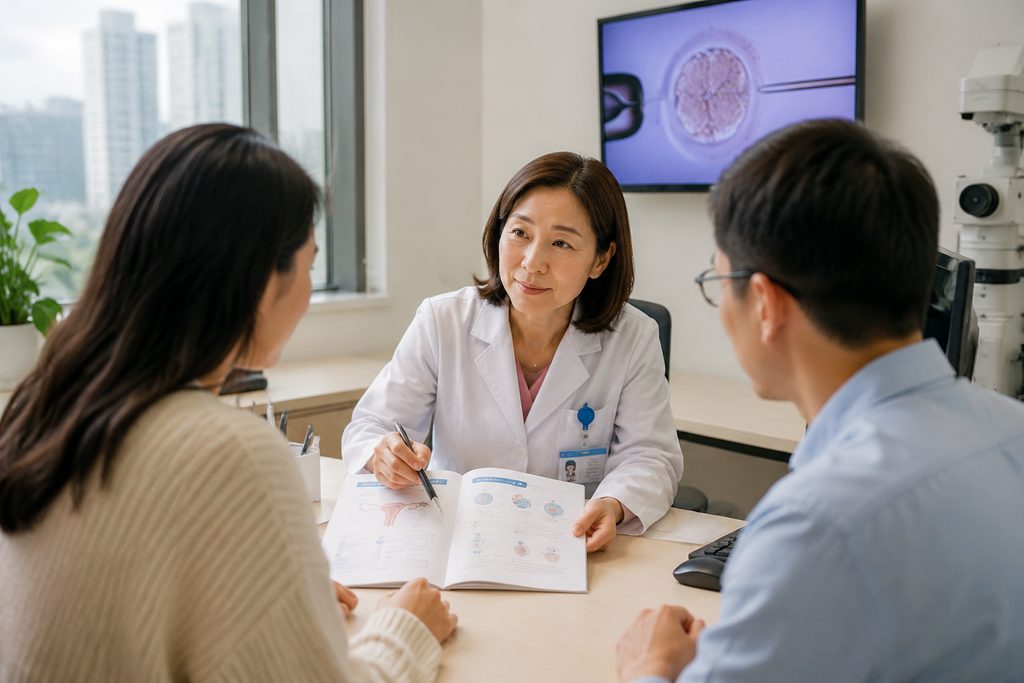
What if the very treatment meant to save your life took away your chance to have a family later? That question sits heavy for many young adults staring down a cancer diagnosis. Chemotherapy and radiation are aggressive by design. They attack rapidly dividing cells. Cancer cells, yes. But also the cells in your ovaries. The damage can be permanent. We see the panic in the emails we receive. A 28-year-old woman in London, diagnosed with breast cancer, told her oncologist starts chemo in three weeks. Can she freeze her eggs? Where? How much will it cost? The fertility preservation cost Shanghai cancer patients encounter at Renji Hospital’s Reproductive Medicine Program makes this a real option for international patients who need to act fast and spend wisely.
How This Actually Works, Step by Step
The sequence is more compressed than most people realize. You don’t have months. You have a window measured in weeks between diagnosis and the start of gonadotoxic therapy. Here is the real path when you work through a coordination team.
You send your existing medical records. Oncology reports, pathology, the proposed chemo regimen. Our team translates these into clinical Chinese and submits them to the Reproductive Medicine department at Renji Hospital. A fertility specialist reviews your case. They look at your age, your ovarian reserve markers if you have them, and the urgency dictated by your oncology team. Within 2-3 business days, you receive a written assessment. Is ovarian stimulation feasible in your window? What protocol would they recommend? This is the written second opinion stage.
If the assessment is green, the next step is a video consultation. You speak directly with the Renji reproductive endocrinologist. They explain the stimulation protocol, the medication schedule, the monitoring visits, and the retrieval procedure. You ask every question you have. No question is too small. After that call, you decide. If you move forward, we coordinate your S2 visa application with the hospital’s invitation letter. You fly to Shanghai. You begin ovarian stimulation on day 2 or 3 of your cycle. The process takes roughly 10-14 days of daily injections, with ultrasound monitoring every 2-3 days. Then the retrieval. A 15-minute procedure under light anesthesia. Your eggs or embryos are vitrified and stored. You return home and start your cancer treatment. The entire stay in Shanghai: about two to three weeks.
Renji Hospital Fertility Preservation for Cancer Patients: Why This Program Stands Out
Renji Hospital, affiliated with Shanghai Jiao Tong University School of Medicine, is not a small operation. Its Reproductive Medicine department is one of the largest in China. The department was established in 2001 and has since grown into a high-volume center that handles complex cases many smaller clinics turn away. For international patients searching for Renji Hospital fertility preservation for cancer patients, the draw is a combination of clinical speed, technological capability, and cost.
The oncofertility team here understands the time pressure. They routinely accept patients who need to start ovarian stimulation within days of first contact. The lab uses vitrification, a flash-freezing technique that has largely replaced slow-freezing methods. Survival rates for oocytes after thawing at top Chinese labs now exceed 90%. Renji’s embryology lab operates to standards that align with international benchmarks. They also offer ovarian tissue cryopreservation for prepubertal patients or women who cannot delay chemotherapy for ovarian stimulation. That procedure involves laparoscopic removal of ovarian cortical tissue, which is sliced, frozen, and reimplanted later. It is still considered experimental in many countries, but Renji has been performing it for years.
For a deeper look at how Renji compares to other top-tier hospitals, see our guide to China’s Fudan-ranked hospitals. The institution consistently ranks in the highest tier for comprehensive strength.
A Realistic Timeline
Timelines in oncofertility are never theoretical. They are hard constraints set by your oncologist. Here is what a realistic sequence looks like from the moment you decide to explore this option.
| Stage | What Happens | Typical Duration |
|---|---|---|
| Days 1–3 | Record collection, translation, submission to Renji | 2–3 business days |
| Days 4–7 | Specialist review and video consultation scheduling | 2–4 business days |
| Days 8–14 | Video consultation, decision, visa invitation letter | 3–5 business days |
| Days 15–25 | S2 visa processing at your local Chinese embassy/consulate | 4–10 business days (varies by country) |
| Days 26–28 | Travel to Shanghai, baseline ultrasound and bloodwork | 1–2 days |
| Days 29–42 | Ovarian stimulation and monitoring (start day 2–3 of cycle) | 10–14 days |
| Day 43 | Egg retrieval procedure | 1 day (outpatient) |
| Day 44–45 | Recovery, discharge, return home | 1–2 days |
The total time from first email to retrieval: roughly six weeks. If your oncology team can give you that window, the process works. If chemo must start in two weeks, ovarian stimulation is not possible. In that case, ovarian tissue cryopreservation or GnRH agonist suppression may be discussed as alternatives. You need to know that upfront.
What Can Go Wrong — and What Happens Then
We need to talk about the hard parts. Ovarian stimulation can fail to produce enough eggs. A woman with diminished ovarian reserve may get three eggs when she hoped for twelve. That happens. The retrieval procedure carries a small risk of ovarian hyperstimulation syndrome, though modern protocols using GnRH antagonist cycles and agonist triggers have reduced severe OHSS to well under 1% in experienced centers.
Then there is the visa problem. The S2 visa for private affairs and medical treatment is the correct category, but embassy processing times vary wildly. A patient from a country with a backlogged consulate might wait three weeks. If your oncology window is tight, that delay can kill the plan. We have seen it happen once. The patient’s oncologist would not wait. She started chemo without fertility preservation. The recourse in that scenario is limited to pursuing ovarian tissue freezing after treatment, which is a much more uncertain path.
Another failure mode: you arrive in Shanghai and your baseline scan shows a cyst or your hormone levels are off. The cycle gets canceled. You fly home. The money spent on travel and initial consultations is gone. You can try again later, but for many cancer patients, later does not exist. These are the real stakes. No coordinator can eliminate these risks. The value of an experienced team is in identifying them early and being honest when the odds are poor.
What Egg Freezing Before Chemotherapy in China Actually Costs
Let’s talk numbers. The egg freezing before chemotherapy China price is one of the primary reasons international patients look here. In the United States, a single IVF cycle with medications and egg freezing runs $15,000 to $20,000. In the UK, roughly £7,000 to £9,000 privately. At Renji Hospital’s international or VIP division, the cost for the medical procedure itself — stimulation, monitoring, retrieval, and vitrification — ranges from $4,000 to $6,500. Medications are an additional $1,500 to $2,500. Annual storage fees start from approximately $500 per year.
The fertility preservation cost Shanghai cancer patients pay is not a fixed price. It varies by protocol, medication dose, and whether you need embryo freezing rather than egg freezing. Embryo freezing adds ICSI and culture costs. But even at the high end, the total medical bill rarely exceeds $9,000. That is half or less of Western prices. Add coordination fees for record translation, hospital appointment scheduling, and bilingual companion services — starting from $300 for appointment coordination — and you still land far below what you would pay at home.
There is a practical financial mechanism worth knowing. If you pay for a remote consultation and later proceed with in-person treatment coordination, that consultation fee is credited in full toward the on-the-ground service. This is not a discount on hospital charges. It applies to the coordination service we provide. It means your initial investment in the written second opinion or video consultation is not lost if you move forward.
For a broader picture of how Chinese hospital pricing works for international patients, read our breakdown on how we help you navigate hospital selection and costs.
Is Fertility Preservation Safe for Cancer Patients in China?
The question is fertility preservation safe for cancer patients in China deserves a direct answer. The short version: yes, when performed at a high-volume academic center like Renji, the safety profile matches what you would expect at any top Western fertility clinic. The longer answer requires looking at the specific risks for cancer patients.
Ovarian stimulation raises estradiol levels. For women with estrogen-sensitive cancers — certain breast cancers, for example — that spike is a concern. Renji’s oncofertility team addresses this with letrozole-supplemented stimulation protocols. Letrozole keeps serum estradiol levels low during stimulation without compromising egg yield. Studies published in the Journal of Clinical Oncology have shown no increase in breast cancer recurrence after letrozole-supplemented stimulation. Renji has been using this protocol for years.
The retrieval itself is a transvaginal ultrasound-guided needle aspiration. It takes 10 to 15 minutes. Complications like bleeding or infection occur in fewer than 1 in 1,000 cases at experienced centers. For immunocompromised patients or those with blood clotting issues from their cancer, the team adjusts the anesthesia plan and adds prophylactic antibiotics. These are standard precautions.
The other safety dimension is timing. Delaying chemotherapy by two to three weeks for fertility preservation is safe for the vast majority of solid tumor cancers. Multiple retrospective studies have shown no survival disadvantage. But this is a conversation you must have with your oncologist. No fertility specialist can clear you for a delay. Your oncologist owns that decision.
Practical Considerations: Records, Visa, and Language
You cannot walk into Renji Hospital and expect English-language service at every desk. The international wing has English-speaking coordinators, but the phlebotomist drawing your blood, the ultrasound technician, the pharmacist dispensing your gonadotropins — they likely speak Mandarin. A bilingual medical companion who handles registration, payment, queueing, and translation is not a luxury. It is what makes the process functional. Our companion service runs from $300 per day and covers those logistics.
For your visa, you need an S2 visa. The hospital provides a formal invitation letter and treatment confirmation. You submit these with your passport, photo, and application form to the Chinese embassy or consulate in your country. Processing time ranges from four to ten business days. We have seen it take longer during peak travel seasons. Plan for the worst case. Your companion or partner traveling with you also applies for an S2 visa.
Medical records must be translated into Chinese. Not summarized. Fully translated. Oncology reports, pathology slides, imaging reports, and a letter from your oncologist stating the urgency and the proposed chemo start date. Incomplete records cause delays. We handle the translation in-house as part of the coordination service.
Payment at Renji’s international division is typically out-of-pocket at the time of service. Most international insurance plans do not directly settle with Chinese public hospitals. You pay, you get a detailed receipt and medical report, and you file for reimbursement with your insurer at home. Confirm your coverage before you travel.
Frequently Asked Questions
Yes. The process starts with a remote evaluation. You send your records, the specialist reviews them, and you have a video consultation. If the plan is confirmed, we coordinate your appointment schedule before you travel. You do not fly to Shanghai hoping to get seen. You arrive with a scheduled cycle start date.
Under current Chinese regulations, frozen eggs and embryos can be stored for up to five years, renewable upon review. You pay an annual storage fee. If you do not renew or make contact, the disposition of stored tissue follows the consent agreement you sign at the time of freezing. Make sure you understand that document.
This is what a bilingual medical companion solves. We provide a coordinator who accompanies you to every appointment — ultrasound monitoring, blood draws, medication pickup, the retrieval itself. They translate in real time. They handle all administrative friction. You focus on the medical process, not on navigating a hospital system in a language you do not speak.
Yes. Renji’s Reproductive Medicine department performs ovarian tissue cryopreservation via laparoscopy. This is the only option for children who have not gone through puberty and cannot undergo ovarian stimulation. The tissue is stored and can be reimplanted later. Pregnancy rates after reimplantation remain modest — roughly 25% to 30% across published series — but it is the only fertility preservation option available for this group.
At a top center like Renji, yes. The lab uses vitrification, the same technology used in leading Western clinics. Post-thaw survival rates exceed 90%. The limiting factor in success is not the freezing technology. It is the age of the woman at the time of freezing and the number of mature eggs retrieved. A 35-year-old freezing eight mature eggs has a cumulative live birth rate of roughly 40% to 50% from those eggs, regardless of which country the lab is in.
Your Next Step
You have a narrow window and a decision that will echo for decades. The information here gives you a clear picture of what is possible, what it costs, and what can go wrong. Our team exists to bridge the gap between where you are and the medical expertise at Renji Hospital. We do not give medical advice. We do not promise outcomes. What we do is handle the logistics — records, translation, specialist matching, visa paperwork, appointment scheduling, and in-person support — so that you can act quickly and with confidence. If you want to know whether your specific case is a fit for this program, the next step is a free consultation. We review your situation, explain the timeline, and give you an honest assessment. No pressure. Just clarity. Start with a free consultation here.
The window is short. But for many, it is long enough. The question is whether you use it.
For more medical information and treatment options in China, visit chinamedservices.com (China Medical Services).
