Wisdom Tooth Removal in China: How We Arrange Your Surgery
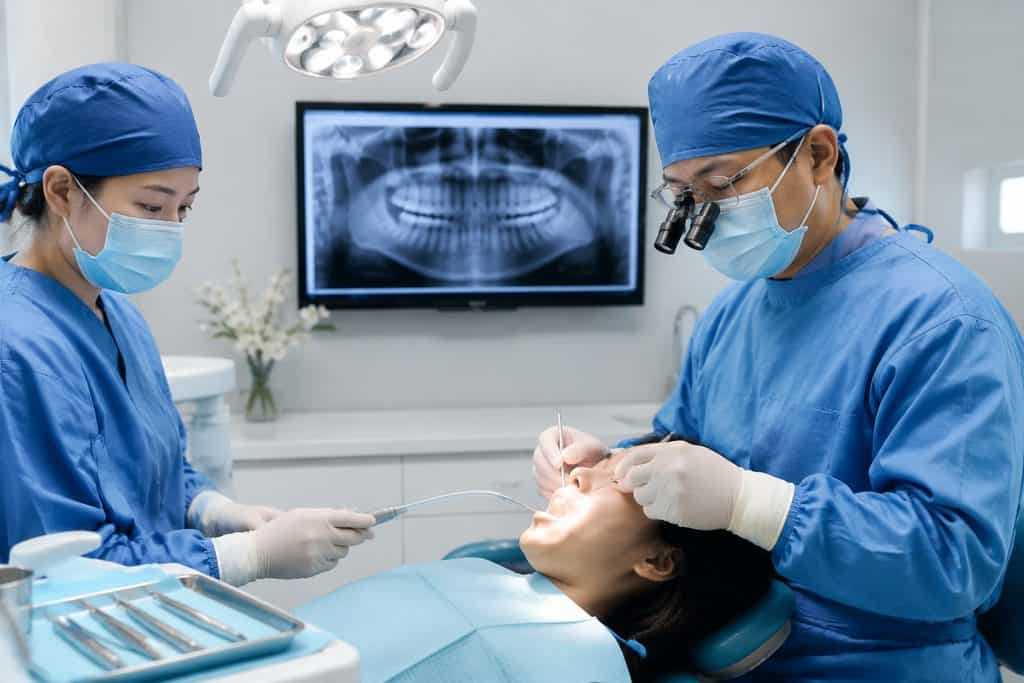
Have you ever put off a dental problem because the price tag back home made your jaw drop — literally? A wisdom tooth that aches at 2 a.m. has a way of forcing the decision. The wisdom tooth removal cost China is one of the strongest reasons international patients look our way. A procedure that runs $1,500 to $3,000 per tooth in the United States often costs $150 to $400 in a top-tier Chinese dental hospital. That gap explains a lot of the emails we receive.
But price is only half the story. You need a hospital you can trust, a surgeon who has done this thousands of times, and somebody on the ground who speaks both languages. That is where our team at China Medical Services comes in. We coordinate the hospital, the appointment, the visa paperwork, and the bilingual support so you are not navigating a foreign dental system alone.
How This Actually Works, Step by Step
The process is more straightforward than most people expect. It starts with your existing dental records. If you have a panoramic X-ray or CBCT scan from your dentist at home, send it to us. If you do not have one, that is fine — the hospital will take one on arrival. But having prior images helps the oral surgeon assess impaction depth, root proximity to the mandibular nerve, and whether a simple or surgical extraction is needed.
Here is the sequence we walk every patient through:
- Step 1 — Send your records. You email us your X-rays, a note on symptoms, and any relevant medical history. We translate these into Chinese for the dental team.
- Step 2 — Hospital matching. Based on the complexity of your case, we recommend a public top-tier hospital’s stomatology department or a JCI-accredited private international dental clinic. Both have English-capable staff, though public hospital international departments offer the best balance of clinical volume and cost.
- Step 3 — Remote consultation. A written second opinion or video consultation with the oral surgery team. They review your images and confirm whether extraction is indicated, what technique they recommend, and the expected cost range. This step costs $100–300 for a standard video consult or $300–500 for a written second opinion from a top specialist.
- Step 4 — Schedule and travel. Once you agree to proceed, we coordinate the appointment date and help you prepare the S2 visa application with a supporting letter from the hospital. Visa processing typically takes 1–3 weeks depending on your home country’s Chinese embassy.
- Step 5 — On-site support. Our bilingual medical companion meets you at the hospital, handles registration, payment, queueing, and translation during the consultation and surgery. That support runs from $300 per day.
- Step 6 — Post-op follow-up. The hospital schedules a review appointment 7–10 days after surgery for suture removal or healing assessment. We coordinate that too, and help you get your discharge records in English for your dentist back home.
One thing to be clear about: public hospitals in China generally cannot be booked months in advance by overseas patients through the standard outpatient channel. You show up, register, and queue. The international department or VIP channel is different — that is where advance booking becomes possible. Our coordination service works through those official international patient channels, not around them.
What Determines Wisdom Tooth Removal Cost in China
Not all wisdom teeth are created equal. A fully erupted upper third molar that takes ten minutes to remove costs far less than a horizontally impacted lower third molar sitting on the inferior alveolar nerve. The wisdom tooth removal cost China varies primarily by case complexity and hospital tier.
| Procedure Type | Public Top-Tier Hospital (International Dept.) | Private International Clinic | Typical US Price |
|---|---|---|---|
| Simple extraction (erupted tooth) | $80–$200 | $150–$350 | $300–$800 |
| Surgical extraction (soft tissue impaction) | $150–$350 | $300–$600 | $800–$1,800 |
| Complex surgical (bony impaction, near nerve) | $250–$500 | $500–$900 | $1,500–$3,000+ |
| All four wisdom teeth (surgical, same session) | $600–$1,500 | $1,200–$2,500 | $4,000–$8,000+ |
Wisdom teeth extraction price Shanghai sits at the higher end of the public hospital range — typically 20–30% above cities like Chengdu or Wuhan — because Shanghai’s top stomatology departments carry significant clinical prestige. Beijing is comparable. That said, both cities remain dramatically cheaper than Western private dental care.
What drives the price up? A CBCT scan if the panoramic X-ray suggests nerve proximity. General anesthesia instead of local. A hospital stay if all four are removed in one session and you have a bleeding disorder or complex medical history. These add-ons are quoted upfront, not sprung on you later.
For context on hospital quality, our database covers 340+ top-ranked hospitals across 37 cities, all ranked by Fudan University’s hospital rankings or JCI accreditation. The stomatology departments among them handle extraction volumes that would be difficult to match in most Western settings — some perform thousands of third molar surgeries annually.
A Realistic Timeline
People underestimate the waiting steps. Not the surgery itself — that is quick. The document gathering, the visa, the scheduling. Here is what a typical timeline actually looks like:
| Stage | Duration | What Happens |
|---|---|---|
| Day 1–3 | 1–3 days | You send X-rays and medical history. We translate and forward to the dental department. |
| Week 1 | 3–7 days | Hospital reviews records. Remote consultation scheduled. Written opinion or video consult completed. |
| Week 2–3 | 1–3 weeks | You apply for S2 visa with hospital invitation letter. Processing time varies by embassy. |
| Week 3–4 | 1–2 weeks | Travel to China. In-person consultation, panoramic X-ray or CBCT, surgery scheduled same visit or within 1–3 days. |
| Post-op | 7–10 days | Suture removal or review appointment. Discharge records issued. You fly home. |
Total realistic timeline: 4–6 weeks from first contact to completed surgery. Can it be faster? Sometimes. If you already have a valid Chinese visa and recent X-rays, the remote consultation can happen in days and surgery within a week of arrival. But planning for 4–6 weeks removes the stress.
One thing that surprises people: the in-person consultation is mandatory before surgery. Chinese public hospitals will not operate on a patient they have not examined face-to-face. That is not bureaucracy — it is clinical safety. The surgeon needs to assess your mouth, review imaging, and confirm the treatment plan with you directly.
What Can Go Wrong — and What Happens Then
Let us be honest about failure modes. They are rare, but you deserve to know how they are handled.
The surgeon recommends against surgery. It happens more than you might think. A wisdom tooth that is asymptomatic, fully erupted, and not damaging adjacent teeth may not need removal. If the hospital’s oral surgeon says watchful waiting is appropriate, we do not push surgery. We relay the recommendation and help you decide. Your consultation fee is not wasted — you received an expert opinion.
Your X-rays are insufficient. A blurry panoramic from a decade ago will not do. The hospital will take new imaging on-site. That adds $30–80 and a same-day delay. Not a problem, just a step to expect.
Visa delay. Embassy processing times fluctuate. If your S2 visa is delayed, we contact the hospital to reschedule. The appointment coordination fee is refunded in full if we cannot secure the appointment we promised — that is our standing policy.
Unexpected anatomical complexity. The CBCT reveals the tooth root is wrapped around the inferior alveolar nerve. This changes everything. The surgeon may recommend coronectomy — removing only the crown and leaving the root in place to protect the nerve. Or a more experienced specialist. We coordinate the referral. This is exactly why the remote consultation matters: you find out before you fly, not after.
Post-operative dry socket or infection. Occurs in roughly 2–5% of extractions. The hospital provides post-op care instructions and a review appointment. If you are still in China, the surgical team treats it directly. If you have flown home, we help you get the records to your local dentist.
Language barrier during recovery. Pain management instructions, medication labels, dietary restrictions — all in Chinese. Our bilingual companion ensures you leave with translated, written instructions and a clear understanding of warning signs. This is the part of the service patients tell us they value most.
Is Wisdom Tooth Surgery Safe in China? What the Data Shows
Is wisdom tooth surgery safe in China is the question behind every inquiry we receive. The honest answer: at top-tier hospitals, yes — with safety records comparable to Western academic medical centers. The key word is top-tier.
China’s leading stomatology departments are not small clinics. The stomatology hospital affiliated with Peking University in Beijing and the Ninth People’s Hospital in Shanghai each handle enormous surgical volumes. The Ninth People’s Hospital’s oral and maxillofacial surgery department alone performs a volume of procedures that places it among the busiest in the world. Volume matters in surgery. A surgeon who extracts 2,000 wisdom teeth a year has seen complications you have never heard of — and knows how to avoid them.
The best dental hospital for wisdom teeth Beijing patients ask about is typically either the Peking University School of Stomatology or the stomatology department of a top general hospital like Peking Union Medical College Hospital. Shanghai patients often look to the Ninth People’s Hospital or the Shanghai Stomatological Hospital. Both cities also have JCI-accredited private options like United Family and Jiahui for those who prefer a Western-style environment with direct insurance billing.
Safety specifics worth knowing: Chinese oral surgeons use the same techniques and equipment as their Western counterparts — panoramic radiography, CBCT for complex cases, ultrasonic bone surgery, and standard aseptic protocols. The difference is cost and access speed, not clinical fundamentals. But — and this is the honest caveat — quality varies enormously between a top-tier hospital and a small private clinic. That is why our database only includes hospitals ranked by Fudan or accredited by JCI. We do not work with clinics we cannot verify.
What about anesthesia? Most wisdom tooth extractions in China are performed under local anesthesia. General anesthesia or sedation is available at international departments and private clinics for patients with severe anxiety or complex multi-tooth extractions. If you need sedation, tell us during the remote consultation so the right facility and anesthesiologist are arranged.
Practical Considerations: Records, Visa, Payment, and Recovery
Let us cover the practicalities that actually affect your trip.
Records. Bring or send: recent panoramic X-ray or CBCT (digital file preferred), a list of current medications, any relevant medical conditions (diabetes, bleeding disorders, heart conditions, pregnancy), and your dentist’s contact information. We translate everything into Chinese before your consultation.
Visa. Medical treatment in China falls under the S2 visa category for short stays. The hospital issues a supporting letter confirming your scheduled treatment. Your accompanying family member applies for the same S2 category. We provide guidance on the application, but approval is always at the embassy’s discretion. Do not book flights until the visa is in your passport.
Payment. Public hospital international departments require prepayment at registration — typically a deposit covering the consultation, imaging, and estimated surgery cost. Excess is refunded at discharge. Private international clinics may bill insurance directly if you have a policy with a network agreement. Most international patients pay out of pocket and claim reimbursement later. Keep every receipt.
Recovery. Here is a realistic picture of how long is recovery from wisdom tooth removal: most people return to normal eating and activity within 3–5 days for a simple extraction, 7–10 days for surgical extraction of an impacted tooth. Swelling peaks at 48–72 hours. Stitches dissolve or are removed at day 7–10. Full soft tissue healing takes 2–4 weeks. Bone healing continues for months, but you will not feel it.
Plan to stay in China for at least 7 days after surgery if you had a surgical extraction. That allows for the review appointment and ensures you are stable before a long flight. Cabin pressure changes during air travel can aggravate post-operative pain in the first 48 hours — another reason not to fly home immediately.
If you are considering book dental surgery package China options, ask what the package actually includes. Some agencies bundle airport pickup, hotel, and surgery at inflated prices. Our model is different: you pay the hospital directly at their standard international department rates, and you pay us separately for coordination and companion services. No markup on medical fees. That transparency is worth insisting on.
For patients who want to explore hospital options before committing, our department pages list top-ranked hospitals by specialty, including stomatology and oral surgery. You can see which institutions hold Fudan ranking positions before you ever contact us.
Frequently Asked Questions
A simple extraction at a top-tier public hospital’s international department runs $80–$200. Surgical extraction of an impacted tooth ranges $150–$500. Complex cases near the mandibular nerve can reach $500–$900 at private clinics. All four wisdom teeth in one surgical session typically total $600–$1,500 at a public hospital. These figures exclude coordination and companion service fees, which are quoted separately.
Usually yes, for the initial remote review. But the treating surgeon will almost always order fresh imaging on-site. Panoramic X-rays are cheap and same-day. If nerve proximity is suspected, a CBCT scan adds $80–150. This is standard practice, not an upsell.
Not recommended. Flying within 48 hours of a surgical extraction increases pain and bleeding risk due to cabin pressure changes. Stay at least 3–5 days for a simple extraction, 7–10 days for a surgical one. Your surgeon will clear you for travel at the review appointment.
You receive complete discharge records in English, including the surgical notes, medication list, and post-op instructions. Your local dentist can manage any follow-up care. If a complication arises while you are still in China, the surgical team treats it directly at no additional consultation cost.
You apply for an S2 visa, which covers short-term private affairs including medical treatment. The hospital provides a supporting letter confirming your appointment. Your companion applies for the same category. Processing takes 1–3 weeks depending on the embassy. We cannot guarantee approval — that decision rests entirely with the consular officer.
Your Next Step
Wisdom tooth pain does not improve by waiting. The cost difference is real, the hospitals are world-class, and the process is manageable — if you have someone who knows the system. That is what we do. We are a medical coordination team, not a clinic. We do not perform surgery, and we do not promise outcomes. We handle the logistics: hospital matching, appointment coordination, document translation, visa guidance, and bilingual on-site support.
If you are thinking about it, start with a free consultation. Tell us your situation, send whatever X-rays you have, and we will give you an honest assessment of whether this makes sense for you. No pressure. No obligation. Just clarity. Get a free consultation here.
For more medical information and treatment options in China, visit chinamedservices.com (China Medical Services).
