Minimally Invasive Surgery in China: Our Specialist Match Service
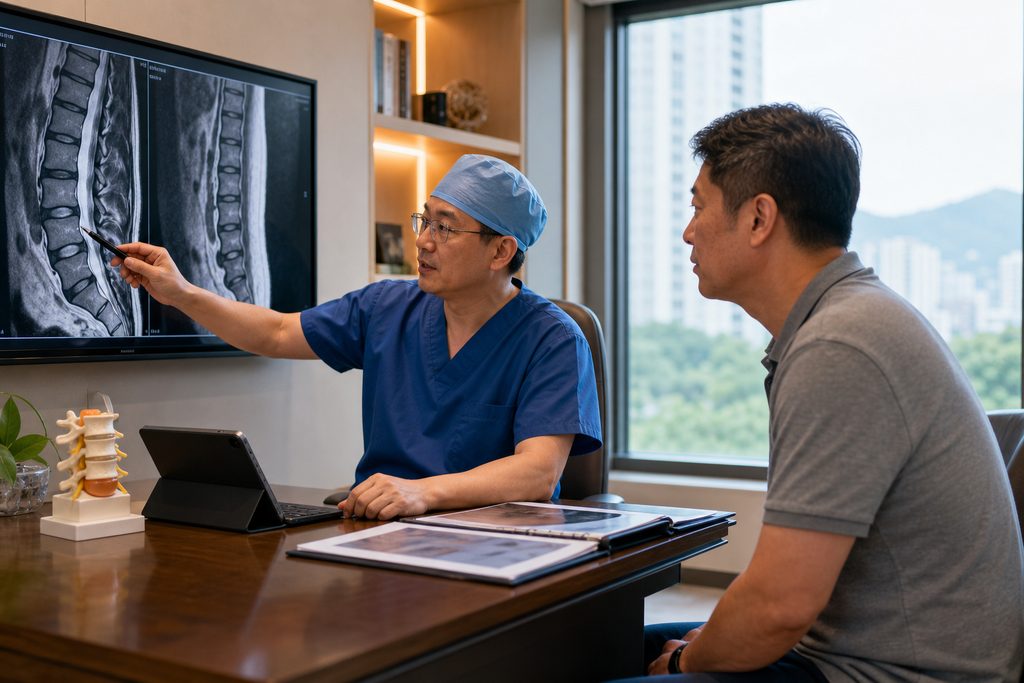
When 42-year-old Michael from Manchester first heard the word “laparoscopic cholecystectomy,” he had no idea where to start looking for treatment. His NHS wait time was 11 months. The pain wasn’t waiting. A colleague mentioned medical travel. Michael started typing “minimally invasive surgery cost China” into Google at 2 a.m. and found a landscape he didn’t recognize: hospitals with 14,000 cardiac procedures a year, surgeons who perform more robotic cases in a month than many Western surgeons do in a year, and price tags that made him re-read the numbers twice.
This article explains what that landscape actually looks like, what it costs, and how our specialist match service works when you’re ready to take the next step. No promises of miracle outcomes. No inflated claims. Just the facts a careful patient needs before booking a flight.
Minimally Invasive Surgery in China: The Short Answer
Minimally invasive surgery in China costs roughly one-fifth to one-tenth of comparable procedures in the United States, with wait times measured in days or weeks rather than months. A laparoscopic cholecystectomy that might run $15,000–$25,000 in the U.S. typically costs $4,000–$7,000 at a top-tier Chinese public hospital’s international department. That’s the headline. But the real answer is more complicated than a price tag.
What makes the difference is who operates and where. China has 35,000+ hospitals. The top 5% — roughly 340+ facilities ranked by Fudan University’s hospital evaluation system and JCI accreditation — deliver outcomes comparable to good Western centers. The rest vary widely. Our job is making sure you land in the first group, not the second.
Who This Is Right For — and Who It Isn’t
Minimally invasive surgery abroad suits a specific patient profile. You’re likely a good candidate if:
- You face a wait longer than 8–12 weeks at home for a procedure that affects your daily function or quality of life.
- You’re paying out of pocket or have a high-deductible plan, and the cost difference genuinely matters to your family budget.
- You need a procedure with well-established laparoscopic or robotic protocols — gallbladder removal, hernia repair, uterine fibroid removal, certain spine procedures, bariatric surgery, prostatectomy.
- You’re stable enough to fly long-haul and have no active infections or uncontrolled comorbidities.
You should not pursue surgery abroad if:
- Your condition is unstable or deteriorating rapidly — acute emergencies belong at home.
- You require a highly experimental procedure with no established track record in China.
- You cannot arrange at least 10–14 days in-country for the procedure plus initial recovery.
- Your home physician has explicitly advised against international travel for medical reasons.
Being honest about who shouldn’t come is part of what we do. We’ve turned away patients whose cases were better handled locally. That’s not lost revenue. That’s the job.
The Options, Compared
You have real choices when considering minimally invasive surgery in China. The table below compares the three main pathways available to international patients.
| Pathway | Typical Cost (USD) | Language Support | Wait Time | Best For |
|---|---|---|---|---|
| Top Public Hospital — Standard Outpatient | $3,000–$8,000 | Limited; Chinese required | Same-day queue, surgery scheduled after in-person consult | Patients with Chinese-speaking family or local support |
| Top Public Hospital — International/VIP Department | $8,000–$25,000 | English-speaking staff, dedicated coordinators | 1–3 weeks typical | Most international patients seeking top specialists |
| Private International Hospital (JCI-accredited) | $15,000–$40,000 | Full English service, Western-style care | 1–2 weeks | Patients prioritizing familiarity and insurance direct billing |
Which column fits you? If you speak Mandarin and have family in Beijing or Shanghai, the standard outpatient route saves the most money but demands real navigation skills. Most of our patients choose the international department pathway — it balances cost with access to the senior surgeons who handle the highest case volumes. The private international hospitals like United Family or Jiahui work well when your insurance covers direct billing and you want a Western-style experience from check-in to discharge.
What Our Specialist Match Service Actually Does
Here’s the part most websites gloss over: finding a hospital name is easy. Getting the right surgeon to review your films, your history, your specific anatomy — that’s the hard part. Our specialist match service exists because a hospital’s reputation doesn’t tell you which attending surgeon handles complex laparoscopic revisions versus routine cases.
The process works in stages. First, you send existing imaging and records. A relevant Chinese specialty team reviews them — this is the written second opinion, priced from $300–$500 depending on the hospital tier. If the case warrants, you move to a video consultation with the surgical team, typically $500–$800 for a top specialist. Only after remote evaluation clarifies a feasible plan do we coordinate arrival logistics, hospital registration, and the bilingual companion who handles queues, payments, and translation on the ground. That companion service starts at $300 per day.
And here’s a detail that matters: any consultation fee you pay is credited in full toward on-the-ground coordination if you proceed to surgery in China within 90 days. One-time credit. Applies to coordination only, never to hospital treatment charges. That’s our way of making the evaluation stage genuinely low-risk.
What It Costs: Minimally Invasive Surgery in China, Procedure by Procedure
Numbers matter more than adjectives. Here’s what we currently see across our partner hospitals, based on international department pricing. All figures vary by hospital and case complexity.
| Procedure | China (International Dept.) | United States (Average Cash Price) | Typical In-Country Stay |
|---|---|---|---|
| Laparoscopic cholecystectomy | $4,000–$7,000 | $15,000–$25,000 | 5–7 days |
| Laparoscopic hernia repair | $3,500–$6,000 | $8,000–$15,000 | 5–7 days |
| Robotic prostatectomy | $18,000–$28,000 | $40,000–$70,000 | 10–14 days |
| Minimally invasive spine surgery | $12,000–$20,000 | $50,000–$90,000 | 10–14 days |
| Laparoscopic hysterectomy | $6,000–$10,000 | $20,000–$35,000 | 7–10 days |
What’s included in these figures? The surgery itself, standard hospital stay, routine medications, and basic nursing care. What’s not included: international flights, accommodation for family, the bilingual companion service, post-discharge rehabilitation, and any complications requiring extended care. Ask for a written breakdown before you commit. Every reputable international department provides one.
Practical Considerations: Records, Visas, Payment, and Follow-Up
Let’s talk logistics without sugarcoating. The process is manageable, but it requires preparation.
Medical records. You need complete imaging (DICOM files, not just printed films), pathology reports if applicable, a summary letter from your home physician, and a list of current medications. If records aren’t in English or Chinese, professional translation is required. Our team handles this as part of case management.
Visa. Foreign nationals traveling to China for medical treatment apply for an S2 visa, which covers short-term private affairs including medical care. Accompanying family members also apply for S2. The hospital’s international department issues an invitation letter and treatment confirmation that supports the application. Processing times vary by country — start at least 6–8 weeks before your target surgery date. We provide guidance on documentation; we don’t guarantee visa approval, and neither should anyone else.
Payment. Chinese public hospitals, including international departments, typically require prepayment or a deposit before admission. Insurance reimbursement happens after the fact — bring documentation home and file with your insurer. Private international hospitals like JCI-accredited facilities in Shanghai and Beijing often handle direct insurance billing, which simplifies things if your plan covers international care.
Language. Even in international departments, the gap between “some English” and “comfortable clinical English” is real. Operating room protocols, anesthesia consent, discharge instructions — these are conversations where precision matters. A bilingual medical companion from our on-the-ground coordination team bridges that gap. It’s not a luxury. It’s a safety measure.
Follow-up after returning home. Your Chinese surgeon will provide a discharge summary and recommendations for follow-up care. Share these with your home physician. For most minimally invasive procedures, follow-up can be managed locally — imaging, wound checks, medication adjustments. Video follow-up with your Chinese team is available if needed, typically $100–$300 per session.
Is Robotic Surgery Safe in China? What the Data Shows
Short answer: at top-ranked centers, yes — with outcomes comparable to high-volume Western hospitals. The longer answer requires context.
China’s surgical volume is enormous. Fuwai Hospital in Beijing performs over 14,000 cardiac surgeries annually, the highest volume of any cardiac center globally. That volume translates into operator experience. A surgeon who performs 300 robotic prostatectomies a year has simply seen more anatomical variation than one who performs 30. Volume doesn’t guarantee outcomes, but it’s the strongest proxy we have.
Safety data from Chinese hospitals is improving in transparency, but it’s not uniformly published the way Western registries are. That’s why hospital selection matters so much. We direct patients toward facilities with published outcome data, JCI accreditation, or Fudan ranking in their specific specialty. The specialty-specific rankings on our departments page show which hospitals rank among China’s top 10 for oncology, cardiac surgery, orthopedics, and other fields.
Is robotic surgery safe in China? At a Fudan-ranked hospital’s international department, the answer is generally yes. At an unranked facility with no international patient infrastructure, the risk profile changes. The hospital matters more than the country.
What Is Recovery Time for Keyhole Surgery Abroad? Planning Your Stay
Recovery timelines for minimally invasive procedures are shorter than open surgery, but “shorter” doesn’t mean “short.” Plan your in-country stay around these markers.
For a laparoscopic cholecystectomy or hernia repair, most patients are discharged 2–3 days post-op and cleared to fly home 5–7 days after surgery. For robotic prostatectomy, expect 5–7 days in hospital and a total in-country stay of 10–14 days before flying. For minimally invasive spine surgery, plan 10–14 days minimum, with some patients staying 3 weeks if they want supervised early rehabilitation before the long flight.
Flying after surgery carries risks — mainly deep vein thrombosis. Your surgical team will advise on when it’s safe to fly based on your specific procedure and risk factors. Don’t book a return flight until your surgeon clears it. Compression stockings, early ambulation, and adequate hydration on the flight are standard precautions.
Frequently Asked Questions
For a top-tier laparoscopic surgeon at a Shanghai public hospital’s international department, expect $4,000–$8,000 for a routine procedure like cholecystectomy or hernia repair. Complex cases — revisional surgery, extensive adhesions, or combined procedures — run higher, typically $8,000–$15,000. The surgeon’s fee is bundled into the total hospital quote; you won’t receive a separate line item the way you might in the U.S.
You cannot lock in a surgery date from overseas at a public hospital. The universal rule: surgery requires an in-person outpatient consultation first. What you can do is complete remote evaluation — written second opinion or video consultation — so that when you arrive, the surgical team has already reviewed your case and confirmed you’re a candidate. That shortens your in-country pre-surgery timeline significantly. We coordinate this through the hospital’s official international department, not through any back-channel arrangement.
Complications happen in every surgical system on earth. The question is what infrastructure exists to handle them. Top Chinese hospitals have intensive care units, interventional radiology, and 24-hour surgical coverage comparable to major Western centers. The international department’s coordinator remains your point of contact throughout. If a complication requires extended stay, costs increase — ask about complication coverage before surgery. Travel medical insurance with emergency evacuation coverage is strongly recommended for any medical travel, including to China.
Some agencies sell all-inclusive packages. We don’t, and we’re wary of anyone who does. A package that includes surgery, hotel, airport transfers, and a translator sounds convenient, but the critical variable — which surgeon actually operates — is often obscured. Our model is consultation-first: you pay for evaluation, you learn which surgeon and hospital fit your case, then you decide. Transparent pricing beats bundled opacity.
Your Next Step
The decision to have surgery abroad is never purely financial. It’s about trust — trust in the surgeon, the hospital, the system around you. Our role is to give you the information and coordination that make that trust possible. We are not a hospital. We don’t diagnose, and we don’t guarantee outcomes. What we do is connect you with China’s top-ranked surgical teams, handle the documentation and logistics, and make sure you’re never alone in a foreign hospital corridor.
If you’re weighing minimally invasive surgery in China, start with the written second opinion. It’s the lowest-cost, lowest-risk way to learn whether a Chinese surgical team can genuinely help your case. Request a free consultation and tell us about your situation. We’ll respond with honest guidance — even if that guidance is to stay home.
Michael had his gallbladder removed in Shanghai eleven weeks after that 2 a.m. Google search. His total cost, including flights and a week in a serviced apartment, came to just under $9,000. The NHS wait list never called. The decision was his. The information that made it possible was ours to provide.
For more medical information and treatment options in China, visit chinamedservices.com (China Medical Services).
