Remote Vision Consultation in China: Eye Review Before Travel
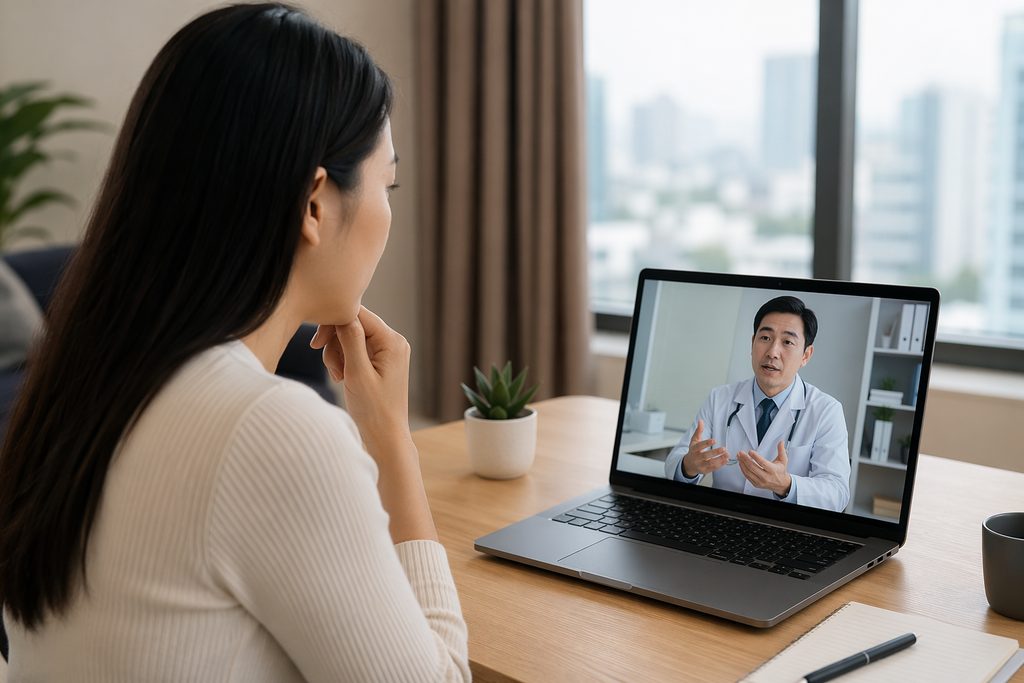
Remote Vision Consultation in China: Eye Review Before Travel
You have probably heard that getting a serious eye condition evaluated means waiting months for a specialist and then paying a small fortune for the privilege. That is true in many Western healthcare systems. But the idea that you have to physically fly to another country just to find out whether a Chinese hospital can help you? That assumption is quietly becoming obsolete.
The remote eye consultation China cost is far lower than most international patients expect, typically ranging from $100 to $800 depending on whether you need a standard review or a top-specialist video session. What matters more is what happens before you ever book a flight: a written analysis of your existing scans, a live conversation with an ophthalmology team, and a clear recommendation on whether travel is even necessary. This article explains how that process works, what it costs, what records you need, and what an online ophthalmologist review before travel can realistically tell you.
Key Takeaways
- A remote eye consultation in China costs between $100 and $800, with written second opinions from top specialists typically priced from $300 to $500.
- Chinese ophthalmology departments at Fudan-ranked hospitals handle patient volumes that dwarf most Western centers, giving reviewers deep exposure to rare and advanced pathology.
- You cannot get a prescription or a surgical guarantee from a remote review — it is a triage, planning, and confidence-building step, not a substitute for an in-person exam.
- Most hospitals require specific imaging (OCT, fundus photography, visual field tests) before a remote ophthalmologist will commit to an opinion.
The Problem: Waiting Months for Answers While Vision Deteriorates
In Canada, the median wait time between a general practitioner referral and an ophthalmology consultation reached 37.1 weeks in 2023, according to the Fraser Institute’s annual survey of specialist wait times. That is more than eight months. In the United Kingdom, the Royal College of Ophthalmologists reported in 2022 that over 650,000 patients were waiting for ophthalmology appointments, with nearly 25,000 waiting more than a year. Ireland is worse: some public patients wait three years for a first cataract assessment.
For someone with progressive glaucoma, unexplained vision loss, or a complex retinal condition, these timelines are not just inconvenient. They are dangerous. Visual field loss from untreated glaucoma is irreversible. Diabetic retinopathy advances silently. A patient who suspects something is wrong cannot simply wait eight months for confirmation.
Private options in Western markets exist, but they carry their own friction. A private ophthalmology consultation in London runs £200 to £400. In New York, a comprehensive eye exam with a retinal specialist can exceed $500 before any imaging. And even then, you are getting one opinion from one clinician who may see a fraction of the case volume that a major Chinese center handles.
Why a Remote Review from a Chinese Eye Center Makes Sense
Clinical Volume Produces Pattern Recognition You Cannot Buy
Zhongshan Ophthalmic Center at Sun Yat-sen University in Guangzhou performs over 120,000 surgeries annually. That is one hospital. The Eye and ENT Hospital of Fudan University in Shanghai handles more than 800,000 outpatient visits per year. These are not abstract numbers — they mean the specialists reviewing your scans have seen more variations of macular degeneration, more unusual presentations of uveitis, and more complex retinal detachments than most Western ophthalmologists will encounter in a decade.
Volume matters in ophthalmology because so much of diagnosis is visual pattern recognition. A clinician who reviews 200 fundus photographs a week develops an eye for subtle pathology that a clinician seeing 20 a week cannot match. That is not a criticism of Western ophthalmologists. It is a structural reality of China’s centralized, high-volume hospital system. And it is precisely the kind of expertise you want when a remote review is your only option before committing to travel.
Cost Structure: Why the Numbers Are What They Are
Let us address the obvious question: why is the remote eye consultation China cost so much lower than a comparable private consultation in the United States or Europe? The answer is structural, not qualitative. Chinese public hospitals operate on thin margins and enormous throughput. A top ophthalmologist in Shanghai earns a fraction of what a comparable specialist earns in Boston or London. Hospital infrastructure is amortized across patient volumes that Western systems cannot replicate. Administrative overhead is leaner.
The result is that a written second opinion from a senior ophthalmologist at a Fudan-ranked hospital costs roughly $300 to $500. A video consultation with the same specialist runs $500 to $800. A standard video consultation through an international department or a private international hospital typically lands between $100 and $300. These are reference prices — the final figure depends on the hospital, the specialist’s seniority, and the complexity of your case. But the range holds across most of the 340+ top-ranked hospitals we work with.
How Does Remote Vision Consultation Work in China: A Step-by-Step Walkthrough
The process is more structured than many patients expect. Here is what actually happens when you send eye test results to a Chinese hospital online.
Step 1: Records Collection and Translation
You cannot send a folder of JPEGs and expect a useful review. The hospital needs specific, high-resolution imaging. For most retinal conditions, that means an OCT (optical coherence tomography) scan, fundus photographs, and a visual field test if glaucoma is suspected. For corneal issues, topography maps are essential. If you have had prior surgery, the operative notes matter as much as the images.
Records in English, German, French, or Arabic generally need translation into Chinese for the reviewing specialist. This is not a formality — a mistranslated medication name or a mislabeled eye (OD vs. OS) can derail the entire consultation. Our team handles this translation as part of the coordination process.
Step 2: Hospital and Specialist Matching
Not every Chinese hospital accepts international remote consultations. The ones that do tend to fall into two categories: public tertiary hospitals with international departments, and private international hospitals like United Family or Jiahui that are built for cross-border care. The right choice depends on your condition. A complex vitreoretinal case might be best served by Zhongshan Ophthalmic Center. A pediatric strabismus question might go to the Eye and ENT Hospital of Fudan University. A general second opinion could go to any of the major centers in Shanghai or Guangzhou.
Step 3: Written Review or Live Video Consultation
Two formats exist. A written second opinion means the specialist reviews your records, writes a structured analysis, and delivers a document covering likely diagnosis, recommended next steps, and whether in-person evaluation in China is warranted. This costs $300 to $500 and takes anywhere from three to ten business days depending on the hospital’s queue.
A video consultation adds a live conversation. You speak directly with the ophthalmology team, explain your symptoms in your own words, and hear their reasoning in real time. This is the better option if you have specific questions about surgical candidacy or if your case is atypical. Top-specialist video consultations run $500 to $800. Standard video consultations through international departments cost $100 to $300.
Practical tip: If you are unsure which format you need, start with the written review. It is cheaper, it creates a permanent document you can share with your local doctor, and it tells you whether a live conversation would add value. Many patients upgrade to video only after the written review raises specific questions.
Can I Get a Second Opinion from a China Eye Doctor Without Traveling?
This happens in roughly 20 to 30 percent of cases we coordinate. The specialist will specify exactly what is missing — often a particular OCT slice, a visual field test, or corneal topography. You then request those items from your local provider and resubmit. The consultation fee typically covers one round of record review; additional rounds may incur a smaller supplementary fee. You are not charged again at the full rate.
You can book the online consultation, but surgery the same week is unrealistic. Chinese public hospitals require an in-person outpatient visit before any surgical scheduling. That means at least one trip for examination and surgical planning, then a separate admission for the procedure itself. The remote review shortens this process by confirming candidacy in advance, but it does not eliminate the in-person requirement. Plan for at least two weeks in China if surgery is the goal.
Some international insurance plans cover telemedicine and second-opinion services, especially if the consultation is recommended by your primary specialist. Private international hospitals in China are more likely to provide the itemized documentation insurers require. Public hospital international departments usually provide a receipt but not the detailed coding some insurers demand. Check with your insurer before committing. If reimbursement matters to you, the private route is often simpler.
Retinal conditions, glaucoma, and corneal pathology translate well to remote review because they rely heavily on imaging. OCT, fundus photography, and visual field testing capture most of what the specialist needs. Conditions that require dynamic examination — strabismus, some forms of uveitis, and early cataract assessment — are less suited to remote evaluation. A good coordinator will tell you honestly whether your specific case is a good candidate before you spend money on a consultation.
Your Next Step
If you are considering a remote vision consultation in China, the first step is not a payment. It is a conversation about your case. China Medical Services helps international patients navigate Chinese ophthalmology departments — we collect and translate your records, match you with an appropriate specialist, and coordinate the consultation. We are not a hospital and we do not provide diagnoses. What we provide is clarity: whether a remote review makes sense for your situation, what it will cost, and what you can realistically expect from it. Start with a free consultation and we will help you figure out the rest.
Frequently Asked Questions
Yes. The hospitals used for international patients are JCI-accredited and follow the same international safety standards as top hospitals in the US and Europe. Surgical teams perform high volumes of procedures — often more than their Western counterparts — which studies show leads to better outcomes.
Costs vary by procedure and hospital, but international patients typically save 40-80% compared to US prices — even when factoring in travel and accommodation. A consultation with our team will give you an exact, all-inclusive quote with no hidden fees.
Send us your existing medical reports to get started. We handle everything from hospital selection and appointment scheduling to visa assistance and post-operative recovery planning. Your medical records are reviewed by the specialist before you even book a flight.
For more medical information and treatment options in China, visit chinamedservices.com (China Medical Services).
