TCM for Skin Conditions in China: Your Guide to Natural Dermatology Care
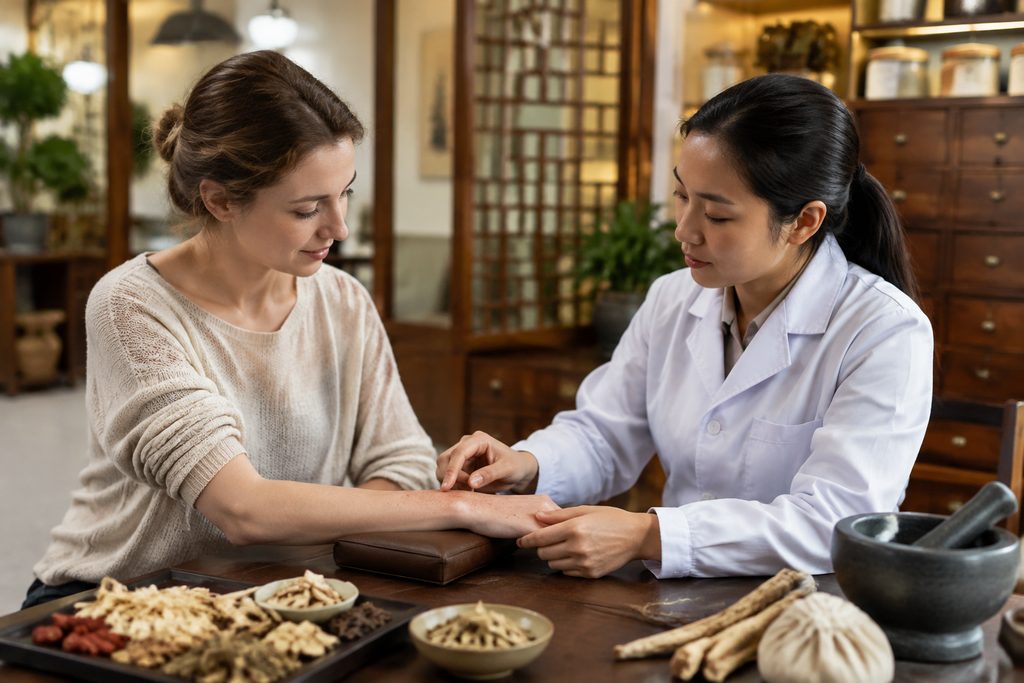
You’ve probably heard that treating a chronic skin condition means a lifetime of steroid creams, immunosuppressants, and hoping the next biologic works. What if the alternative wasn’t a compromise, but a different framework entirely? Traditional Chinese Medicine (TCM) approaches dermatology from a systemic angle—your skin as a mirror of internal balance. For patients who have cycled through conventional treatments without lasting relief, China’s TCM hospitals offer something genuinely distinct: centuries of documented herbal protocols, specialized dermatology wards, and a price point that makes long-term care financially viable. The tcm skin clinic cost China ranges from $30 to $150 per consultation, with herbal prescriptions typically adding $40 to $200 per month depending on formulation and hospital tier.
That’s the headline. The nuance is that TCM dermatology demands patience. A two-week course of herbs won’t undo a decade of plaque psoriasis. Most Chinese dermatologists practicing integrated medicine will tell you to expect 3 to 6 months of consistent treatment before evaluating meaningful change. And not every skin condition responds equally well. Let’s get specific about who benefits most.
Who This Is Right For — and Who It Isn’t
TCM dermatology in China serves a particular patient profile well. You’re likely a good candidate if you fit several of these:
- You have a chronic, inflammatory skin condition—eczema, psoriasis, rosacea, chronic urticaria—that has plateaued on conventional therapy
- You’ve experienced significant side effects from long-term topical steroid use (skin thinning, rebound flares)
- You’re willing to commit to a 3-to-6-month treatment arc with regular follow-ups
- You understand that herbal medicine works systemically, meaning other aspects of your health may shift too
- You’re open to combining TCM with conventional dermatology rather than replacing it outright
Who should think twice? If you have an acute, rapidly progressing condition like erythrodermic psoriasis or a severe drug eruption, you need emergency conventional care first. If you’re looking for a quick fix before a wedding or event, TCM is the wrong tool. And if you cannot tolerate the taste of herbal decoctions—let’s be honest, they’re bitter—you’ll struggle with adherence. Patients with significant liver or kidney impairment should also approach herbal therapy cautiously and only under dual supervision from a hepatologist or nephrologist alongside their TCM physician.
The Options, Compared
China’s dermatology landscape splits into three broad pathways. Understanding the differences before you book a flight saves time and money.
| Pathway | Typical Cost (USD) | Treatment Approach | Best For |
|---|---|---|---|
| Public TCM Hospital (e.g., Shanghai Yueyang, Beijing Gulou) | $30–80 per consult; herbs $40–150/month | Herbal decoctions, acupuncture, wet cupping, topical herbal plasters | Chronic eczema, psoriasis, acne; budget-conscious long-term care |
| Public TCM Hospital International/VIP Department | $100–300 per consult; herbs $80–250/month | Same modalities with English-speaking coordination, shorter queues, longer consultations | International patients needing language support and efficiency |
| Private International Hospitals (United Family, Jiahui) | $200–500 per consult; integrated packages $1,500–4,000 | Integrated TCM + Western dermatology, direct insurance billing, Western-style documentation | Patients with international insurance, complex multi-system cases |
If you’re price-sensitive and medically straightforward, the public TCM hospital route delivers the most authentic experience at the lowest cost. If you need English documentation for your home dermatologist or insurance, the international department or private route is worth the premium. Most of our patients land somewhere in the middle: public hospital VIP departments offer a workable balance of expertise, language support, and cost.
Best Traditional Chinese Medicine Hospital for Eczema Shanghai: What Actually Matters
Searching for the best traditional Chinese medicine hospital for eczema Shanghai brings up a short list of names worth knowing. Shanghai Yueyang Hospital of Integrated Traditional Chinese and Western Medicine operates one of China’s most respected dermatology departments, with dedicated wards for severe eczema and psoriasis. Shanghai Dermatology Hospital, while primarily Western in orientation, runs an integrated TCM clinic that many local patients prefer for stubborn atopic dermatitis. And Longhua Hospital affiliated with Shanghai University of TCM maintains a strong dermatology reputation, particularly for psoriasis.
But here’s what the rankings won’t tell you: the individual physician matters more than the hospital brand. In China’s TCM system, senior dermatologists often have signature herbal formulas refined over decades. Two doctors at the same hospital may take entirely different approaches to your eczema. One might emphasize cooling blood and clearing heat; another might focus on strengthening spleen qi to address underlying dampness. This is why a written second opinion before traveling—where a TCM dermatologist reviews your case history, photos, and prior treatments—can save you from committing to the wrong practitioner. It costs $300–500 and gives you a concrete treatment direction before you book a flight.
Is TCM Effective for Psoriasis Treatment in China?
The honest answer: for many patients, yes—with caveats. Chinese clinical literature reports significant improvement rates for psoriasis treated with integrated protocols, and TCM dermatology wards in major cities routinely manage moderate-to-severe plaque psoriasis without biologics. The mechanism differs fundamentally from Western approaches. Instead of suppressing the immune pathway (as biologics do), TCM aims to modulate the underlying imbalance—typically described as blood heat, blood stasis, or blood dryness depending on disease stage.
What does this mean practically? Patients often see slower initial improvement than with biologics, but some report longer remission periods after completing a 6-to-12-month herbal course. Others don’t respond meaningfully at all. The variable response rate is the honest truth. If you’re considering TCM psoriasis treatment abroad price, expect $800 to $2,500 for a three-month initial treatment arc including consultations, herbs, and adjunctive therapies like acupuncture or medicated baths. That’s a fraction of biologic costs in the US, where annual treatment routinely exceeds $30,000. But cost savings only matter if it works for your specific case—which is exactly why remote evaluation first makes sense.
How Does Chinese Herbal Medicine Treat Acne Scars?
Acne scars present a different challenge than active acne. Herbal medicine alone cannot remodel atrophic scar tissue. Let’s state that plainly. Chinese herbal medicine treats acne scars indirectly—by reducing residual inflammation, improving microcirculation, and supporting collagen synthesis through internal regulation. The visible results come from combining internal herbs with external modalities: microneedling, fractional laser, or TCM-specific approaches like plum-blossom needling (a superficial tapping technique that stimulates dermal repair).
In practice, Chinese dermatology clinics treating acne scars typically pair a personalized herbal formula with 4-to-6 sessions of needling or laser. The herbal component addresses post-inflammatory erythema and prevents new breakouts that would create fresh scars. The physical modalities do the actual scar remodeling. Total cost for a combined approach in a public TCM hospital runs $600 to $1,500 for a full course. At private international clinics, expect $2,000 to $5,000. The herbal medicine alone won’t erase deep scars—any clinic promising that deserves skepticism.
What It Costs: A Realistic Breakdown
Let’s put concrete numbers on the tcm skin clinic cost China question. These figures reflect 2025 pricing at public TCM hospitals in major cities, with international department rates in parentheses.
- Initial consultation: $30–80 ($100–300)
- Follow-up consultation (every 2–4 weeks): $20–50 ($80–200)
- Herbal decoction (daily dose, 2-week supply): $40–120 ($80–250)
- Herbal granules (concentrated, easier to take): $60–180 per 2 weeks
- Acupuncture session (if indicated): $25–60 per session
- Medicated bath or topical herbal treatment: $15–40 per session
- Book TCM dermatology treatment package Beijing (comprehensive 1-month package including consultations, herbs, and twice-weekly acupuncture): $800–1,500 at public hospitals; $2,500–4,500 at private international facilities
What drives the variance? Hospital tier, physician seniority, herb quality and sourcing, and whether you need English coordination. The same formula from a junior attending at a district hospital might cost half what a chief physician at a Fudan-ranked institution charges. Herbs themselves vary—authentic, properly processed herbs cost more than bulk commodity stock. And international departments add coordination fees that public general clinics don’t.
Practical Considerations: Records, Visas, and Follow-Up
Preparing for TCM dermatology treatment in China requires more documentation than you might expect. Chinese TCM physicians rely heavily on visual assessment and pulse/tongue diagnosis, but they also want your Western medical history. Bring these:
- Dated photographs of your skin condition at various stages (flare, remission, current state)
- Complete list of current and past medications, including topical steroids and biologics with dates
- Any biopsy results or dermatologist notes from your home country
- Liver and kidney function tests from the past 6 months (TCM physicians use these to guide herb selection)
- List of allergies and any prior adverse reactions to herbs or supplements
Visa logistics: medical treatment in China falls under the S2 visa category, with supporting documentation from the hospital confirming your appointment. Your accompanying family member applies for S2 as well. Processing typically takes 1–3 weeks depending on your home country’s Chinese embassy. We provide detailed visa guidance as part of our coordination service, but final approval always rests with the consulate.
Payment: public hospitals require prepayment via cash, Chinese bank card, or WeChat/Alipay. International credit cards are often not accepted at public hospital cashiers. Private international hospitals accept major credit cards and frequently bill insurance directly. If you plan to claim reimbursement from your home insurer, request itemized receipts and a treatment summary in English—public hospitals may charge a small fee for English documentation.
Follow-up after returning home: this is where many TCM treatment plans falter. Your Chinese physician will likely want to adjust your formula every 2–4 weeks based on your response. Video consultations ($100–300 per session) with your original physician can handle this, with herbs shipped internationally. Budget for this ongoing cost before committing to the initial treatment arc.
Frequently Asked Questions
Most patients report noticeable changes within 4 to 8 weeks of consistent herbal therapy, but meaningful, lasting improvement typically requires 3 to 6 months. Acute flare reduction may happen faster. Psoriasis and chronic eczema generally respond more slowly than acute urticaria or recent-onset acne. Your physician should set specific milestone expectations at your first consultation.
This requires careful coordination. Many Chinese TCM dermatologists work in integrated hospitals and are comfortable managing patients on concurrent Western therapy. But herb-drug interactions are real and understudied. You need both your home dermatologist and your Chinese TCM physician to review your complete medication list before combining therapies. Never stop a prescribed biologic without consulting the prescribing physician.
Reputable TCM hospitals monitor liver and kidney function during extended herbal therapy. Mild digestive upset or temporary skin reactions (sometimes described as a “healing crisis”) can occur in the first weeks. But significant worsening, jaundice, or new systemic symptoms require immediate medical attention. Your TCM physician should provide an emergency contact and a clear protocol for stopping treatment if needed. This is another reason to choose an established hospital over an independent practitioner.
Pediatric TCM dermatology exists and is commonly used for childhood eczema in China. Dosing is weight-adjusted and typically uses milder formulas. However, children require more frequent follow-up and careful monitoring. If you’re considering this for a child, choose a hospital with a dedicated pediatric TCM dermatology clinic and ensure the physician has specific pediatric experience. The same remote evaluation process applies—send records and photos before traveling.
Your Next Step
TCM dermatology in China offers a legitimate, cost-effective pathway for chronic skin conditions that haven’t responded fully to conventional care. The tcm skin clinic cost China—typically $30 to $150 per visit plus herbs—makes long-term treatment accessible in ways Western biologics often aren’t. But success depends on matching the right physician and formula to your specific presentation.
Our team at China Medical Services coordinates written second opinions and video consultations with TCM dermatologists at Fudan-ranked hospitals across 37 cities. We’re not a hospital and we don’t diagnose or treat—we connect you with physicians who do, and we translate your records so they can evaluate your case properly. If you’re exploring whether TCM dermatology makes sense for your specific condition, a remote evaluation is the lowest-risk first step. Start with a conversation about your case, and we’ll help you determine if this path is worth pursuing.
For more medical information and treatment options in China, visit chinamedservices.com (China Medical Services).
