Integrative Medicine in China: How TCM and Western Care Merge
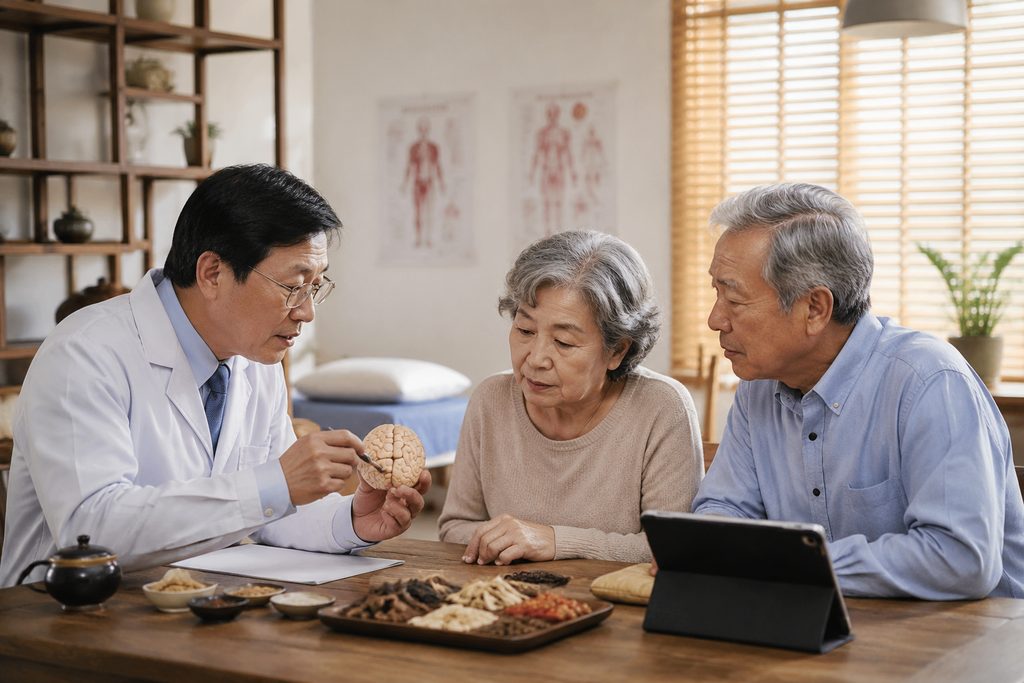
Have you ever wondered whether you actually have to choose between the precision of Western oncology and the whole-body support of traditional Chinese medicine? For many international patients, that either-or framing is the real barrier. In China, the question is not “which one” but “how do we sequence them safely.”
Key Takeaways
- Top-tier Chinese hospitals routinely deliver acupuncture, herbal medicine, and dietary therapy alongside chemotherapy and surgery within the same treatment plan.
- Integrative care at a public Grade-A hospital in Beijing or Shanghai typically costs $200–$600 per day for inpatient combined protocols, versus $3,000–$5,000 per day for comparable integrative programs in the US.
- Not every TCM-adjacent clinic in China is legitimate; unregulated “cancer cure” centers exist and can delay evidence-based treatment.
- Reputable integrative programs require your full Western medical records before any TCM adjunct is prescribed, because herb-drug interactions are real and managed carefully.
The Problem: Fragmented Care Leaves Patients Piecing It Together Alone
A 2023 survey published in JAMA Oncology found that roughly 1 in 3 cancer patients in the United States uses some form of complementary therapy, yet fewer than 40% of them disclose it to their oncologist. That silence is dangerous. St. John’s wort can cut the effectiveness of certain chemotherapies. High-dose antioxidants may blunt radiation. Patients are navigating this alone, often because their Western medical team does not have the training or time to integrate these modalities safely.
What happens when you ask your US oncologist about combining acupuncture with immunotherapy? In many cases, you get a shrug or a warning. Not because acupuncture is harmful, but because the oncologist has no clinical framework for it. So patients either abandon useful supportive care or hide it. Both paths are bad.
Now consider a different model. In China, the same hospital that administers your chemotherapy may also have a licensed TCM oncology department on the same campus. Your records move between departments. Your herbal formula is reviewed for interaction risk against your chemo regimen. This is not alternative medicine. It is integrated medicine, practiced at scale.
Why China’s Hospital System Delivers Integrated Care at Scale
China’s top hospitals treat enormous patient volumes. A single oncology department at Fudan University Shanghai Cancer Center sees more new cancer cases in a year than many regional US cancer centers see in a decade. That volume forces efficiency, but it also creates something else: routine collaboration between departments that in the West often operate in silos.
Structural Integration, Not Just Referrals
What is integrative medicine in Chinese hospitals? In practical terms, it means the TCM department is not a separate clinic down the street. It sits inside the same hospital system, shares the same electronic medical record, and participates in the same tumor board. A patient receiving FOLFOX chemotherapy for colorectal cancer can be prescribed a modified herbal formula by a TCM specialist who can see the patient’s liver function tests from that morning. The oncologist sees the herbal prescription too. Nothing is hidden.
That structural integration is the key difference. In the US, integrative oncology usually means the patient books a separate appointment with a naturopath or acupuncturist, pays out of pocket, and then tries to coordinate communication between two disconnected providers. In China’s public Grade-A hospitals, the coordination is built into the system.
Clinical Volume in Integrative Protocols
Guang’anmen Hospital in Beijing, the TCM hospital affiliated with the China Academy of Chinese Medical Sciences, runs one of the largest integrative oncology programs in the country. Their published research includes randomized controlled trials on combining herbal formulas with platinum-based chemotherapy for non-small cell lung cancer. The sample sizes are in the hundreds. That is the kind of data volume that is hard to replicate in Western integrative centers, where patient numbers are smaller and funding is thinner.
Also consider Shanghai. Longhua Hospital, affiliated with Shanghai University of Traditional Chinese Medicine, operates a dedicated oncology department that combines TCM and Western medicine for patients with gastric, liver, and lung cancers. Can TCM be combined with chemotherapy in China? At Longhua, the answer is yes, but under strict protocols. Herbal formulas are adjusted based on chemotherapy cycle timing, white blood cell counts, and liver enzyme levels. It is not a one-size-fits-all herbal tea.
Cost Advantage Without Cutting Corners
Let’s talk about the integrative medicine hospital China cost directly. A combined inpatient protocol at a top public hospital in Beijing or Shanghai — including Western oncology care plus daily acupuncture, herbal medicine, and dietary therapy — typically runs $200 to $600 per day for the hospital portion. Compare that to an integrative oncology program at a major US academic center, where the hospital charge alone often exceeds $3,000 per day, with complementary therapies billed separately at $100 to $250 per session.
Why the gap? Chinese hospital labor costs are lower. Acupuncturists and TCM physicians are salaried hospital employees, not independent practitioners billing per session. Herbal decoctions are prepared in-house. And the sheer patient volume spreads fixed costs across more cases. Lower cost does not automatically mean lower quality. The best integrative oncology center Beijing price point — think Guang’anmen or the integrative medicine department at Peking Union Medical College Hospital — reflects a system where integration is standard practice, not a premium add-on.
How Combined TCM and Western Treatment Actually Works in Shanghai
If you are considering TCM and Western medicine combined treatment Shanghai, here is what the real workflow looks like at a hospital like Longhua or Shuguang Hospital. It is not a spa experience. It is a clinical protocol with defined steps.
First, you submit your complete Western medical records: pathology reports, imaging, chemotherapy history, current medications. A TCM oncologist reviews them alongside your Western oncologist. They look for specific patterns: What is your current blood count? Are you experiencing peripheral neuropathy from oxaliplatin? Is your appetite suppressed?
Then the TCM physician performs a traditional assessment — tongue diagnosis, pulse reading, symptom inventory. Based on that, they prescribe a personalized herbal formula. The formula is not a generic “cancer tea.” It targets specific side effects: nausea, fatigue, leukopenia, insomnia. The formula is adjusted every one to two weeks based on your response and your blood work.
Acupuncture is typically scheduled around your chemotherapy cycles. Some studies show it helps with chemotherapy-induced nausea and fatigue. But the timing matters. Needling on the same day as certain infusions may be discouraged. The hospital’s integrative team coordinates this.
Dietary therapy is the third pillar. A hospital dietitian with TCM training recommends specific foods based on your constitution and treatment phase. This is not about “starving the tumor” or other dangerous myths. It is practical: what to eat when your white count is low, what to avoid when you are on anticoagulants, how to manage taste changes from platinum drugs.
One practical note: bring a complete, translated medication list. Herb-drug interactions are the single biggest safety concern in integrative oncology, and Chinese physicians will not prescribe herbal formulas without knowing exactly what Western drugs you are taking. Missing one anticoagulant from your list can lead to a dangerous interaction.
Choosing a Legitimate Integrative Program: What the Numbers Mean
Not all integrative medicine in China is equal. The term “integrative” is used loosely. Some private clinics market “TCM cancer cures” with no Western medical oversight. Those places are dangerous. They delay evidence-based treatment and charge desperate patients for false hope.
How do you tell the difference? Look at the hospital’s structure. A legitimate integrative program is inside a hospital that also has a full Western oncology department, a pathology lab, and an ICU. The TCM physicians are licensed and hospital-employed. They ask for your Western medical records before prescribing anything. They do not promise to cure cancer with herbs. They talk about supportive care, side-effect management, and quality of life.
Also check what research the hospital publishes. Guang’anmen, Longhua, and the integrative medicine department at West China Hospital in Chengdu all publish peer-reviewed studies in indexed journals. If a clinic cannot point to any published research, that is a red flag.
For international patients, the practical question is whether to book through the hospital’s international department or through a service coordinator. Public hospital international departments in Shanghai and Beijing have English-speaking staff and can arrange combined TCM and Western consultations. But they are busy. Booking a specific TCM oncologist at Guang’anmen through the public queue can take weeks. That is where a coordinator familiar with the system helps — not to skip lines, but to navigate the paperwork and scheduling.
| Service Component | Top Public Hospital (Beijing/Shanghai) | Private International Hospital | US Integrative Center (Reference) |
|---|---|---|---|
| Inpatient hospital charge (per day) | $200–$600 | $800–$1,500 | $3,000–$5,000 |
| Acupuncture session (per visit) | $20–$50 | $80–$150 | $100–$250 |
| Personalized herbal formula (per week) | $15–$40 | $50–$100 | $60–$150 (compounded) |
| TCM oncology consultation (initial) | $30–$80 | $150–$300 | $250–$500 |
| Combined Western + TCM tumor board review | $100–$300 | $500–$1,000 | Rarely available as a single service |
Prices vary by hospital and case complexity. The table above reflects typical ranges based on published hospital price lists and patient-reported costs, not quotes for any specific case.
Practical Considerations: Records, Visas, and Payment for Integrative Care
If you decide to book traditional Chinese medicine and modern care package China, start with your paperwork. You need your complete Western medical records translated into Chinese or English. Most hospital international departments accept English records, but Chinese translations speed up the TCM consultation, because the TCM physician may not read English fluently.
Visa: for medical treatment in China, the applicable short-stay category is the S2 visa, annotated for medical treatment purposes. Family members accompanying you also apply for S2 visas. The hospital’s international department can provide an invitation letter and treatment confirmation to support your application. Requirements vary by embassy and current policy, so check with the Chinese embassy or consulate in your home country before booking flights.
Payment: public hospitals in China generally require prepayment. You deposit funds at admission, and the hospital draws down from that deposit as services are delivered. International insurance is usually reimbursement-based for public hospitals. Private international hospitals like United Family or Jiahui often bill insurance directly. Confirm with your insurer before committing.
Language: even in international departments, the TCM physician may not speak English. A bilingual medical companion can translate during the consultation, explain the herbal preparation instructions, and help you navigate the pharmacy. This is not a luxury. Misunderstanding a herbal decoction schedule can undermine the entire treatment.
Follow-up: herbal formulas need adjustment as your condition changes. If you return home, many hospitals offer follow-up video consultations to review your symptoms and adjust the formula. The herbs can be shipped internationally in many cases, though customs regulations vary by country. Check your local import rules before relying on this.
Frequently Asked Questions
When managed by a hospital-based TCM oncologist who reviews your full Western medication list, the risks are manageable and the evidence for symptom relief is growing. The danger comes from self-prescribed herbs or unlicensed practitioners who do not coordinate with your oncologist. Never start any herbal formula during active chemotherapy without both your Western oncologist and a licensed TCM physician reviewing it.
A realistic range for a two-week inpatient integrative oncology stay at a top public hospital in Beijing or Shanghai is $8,000 to $20,000, depending on the specific Western treatment included and the complexity of your case. That compares to $40,000 to $80,000 or more for a comparable integrative program in the US. Prices vary significantly by hospital and case complexity.
Top Chinese hospitals have full Western emergency departments, ICUs, and rapid lab turnaround. If a herbal formula causes an adverse reaction, the hospital can run liver function tests the same day and adjust or stop the formula immediately. You are not in a standalone TCM clinic with no backup. That structural safety net is the main reason to choose a hospital-based integrative program over a private clinic.
Yes, but the process starts with a remote review of your medical records. The hospital’s international department or a coordinator submits your records to both the Western oncology department and the TCM oncology department for preliminary evaluation. You may be asked to do a video consultation first. Only after the medical team confirms that an integrative approach is appropriate for your case can a treatment plan and cost estimate be finalized.
Your Next Step
Integrative medicine in China is not a miracle cure. It is a structured system where TCM supportive care and Western oncology work from the same chart, in the same hospital, under the same clinical oversight. That is the real difference. China Medical Services helps international patients connect with hospital-based integrative programs at top-ranked public hospitals in Beijing, Shanghai, and beyond. We are not a hospital and we do not provide diagnoses or treatment recommendations. We help you understand your options, prepare your records, and coordinate the logistics. If you want to explore whether a combined TCM and Western approach makes sense for your case, start with a free consultation — we will walk you through the process and the realistic costs.
For more medical information and treatment options in China, visit chinamedservices.com (China Medical Services).
