Shoulder Surgery in China: A Practical Guide to Rotator Cuff Repair Costs and Care
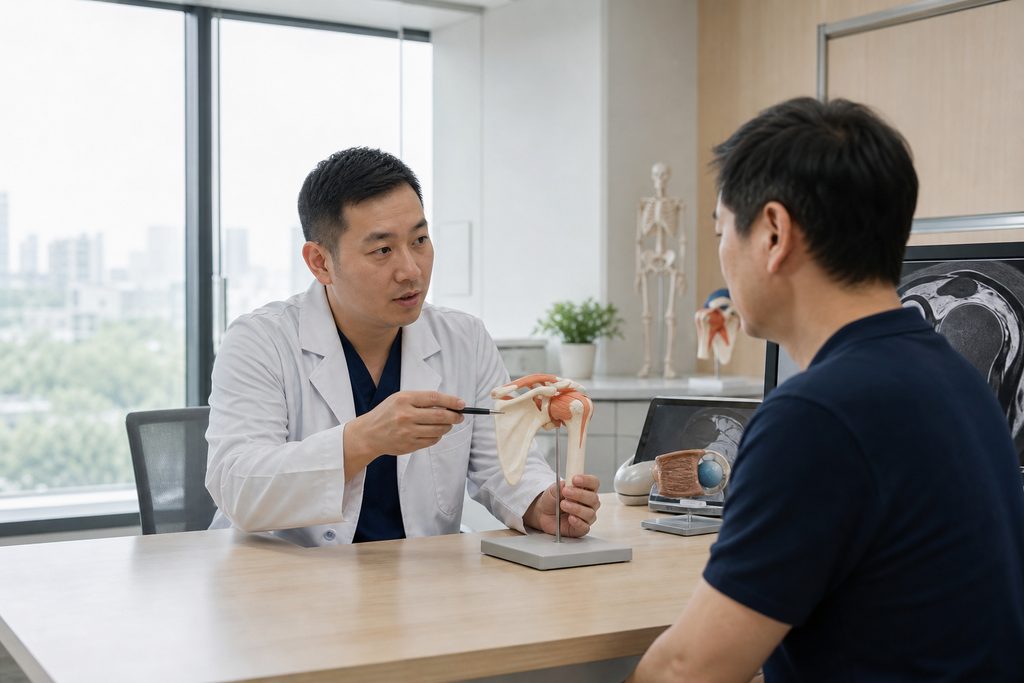
When 47-year-old Daniel tore his supraspinatus tendon during a weekend climbing trip in Colorado, his orthopedic surgeon laid out the numbers: arthroscopic rotator cuff repair, $18,000 to $34,000 out of pocket with his high-deductible plan, plus a four-month wait for the procedure. Daniel started searching. That search led him to questions about shoulder surgery cost China, where the same procedure at a top-tier public hospital typically runs between $4,000 and $9,000. The price gap is real. So is the complexity of navigating a foreign healthcare system. Our team at China Medical Services exists precisely for patients like Daniel—people who need accurate information before making a decision that affects their shoulder, their mobility, and their wallet.
How This Actually Works, Step by Step
The process for a foreign patient seeking rotator cuff repair in China follows a clear sequence. It starts with documents, not flights.
First, you send us your existing imaging and reports. That means the MRI of the affected shoulder, the orthopedic surgeon’s notes, and any prior treatment records. We translate these into Chinese and submit them to the orthopedic department at a hospital matched to your case. A specialist reviews the file. Within 3 to 7 business days, you receive a written assessment: whether surgery is indicated, which technique they recommend, and an estimated cost range.
If the assessment confirms surgery is appropriate, the next step is a video consultation. You speak directly with the orthopedic team. You explain your symptoms, your activity goals, your concerns. They walk you through the procedure, the expected hospital stay, and the rehabilitation protocol. This consultation costs between $300 and $800 depending on the specialist’s seniority. And here is a detail that matters: any consultation fee you pay is credited in full toward on-the-ground coordination services if you proceed with treatment in China within 90 days. It is a one-time credit, applied to the coordination fee only, never to hospital charges.
After the video consultation, if you decide to move forward, we handle appointment booking, visa documentation support, and arrival logistics. You fly to China. You have your pre-operative evaluation in person. Surgery happens. You stay for initial recovery and follow-up, then return home with a structured rehabilitation plan.
What Rotator Cuff Repair Actually Costs in China
The shoulder surgery cost China varies by hospital tier, city, and surgical complexity. A straightforward arthroscopic repair of a small to medium tear at a top public hospital in Beijing or Shanghai runs $4,000 to $7,000. A complex repair involving multiple tendons, or a revision surgery, can reach $9,000 to $12,000. Private international hospitals charge more—typically $12,000 to $20,000—but offer English-speaking staff, direct insurance billing, and Western-style amenities.
Compare that to the United States, where the average cash price for arthroscopic rotator cuff repair sits between $15,000 and $35,000 depending on geography and facility. In the United Kingdom, private payers face £8,000 to £12,000. Germany and Switzerland run €10,000 to €18,000. The cost advantage in China is substantial, even after adding flights and accommodation.
| Procedure | China Top Public Hospital | China Private International | United States (Cash Price) |
|---|---|---|---|
| Arthroscopic rotator cuff repair (small-medium tear) | $4,000–$7,000 | $12,000–$18,000 | $15,000–$28,000 |
| Complex multi-tendon repair or revision | $7,000–$12,000 | $16,000–$22,000 | $22,000–$40,000 |
| Shoulder arthroscopy (diagnostic + debridement) | $2,500–$4,500 | $6,000–$10,000 | $8,000–$15,000 |
These ranges are estimates. Final pricing depends on the specific hospital, the surgeon’s seniority, the implant materials used, and your individual case complexity. Always confirm the quote in writing before traveling.
What about rotator cuff repair price Shanghai specifically? Shanghai’s top orthopedic centers—including Zhongshan Hospital Fudan University and Shanghai Sixth People’s Hospital—are known for high surgical volume in sports medicine. Expect pricing at the lower-to-middle end of the ranges above for public hospital international departments. The international VIP channels at these hospitals charge roughly 1.5 to 2 times the standard public rate, which still lands well below Western private pricing.
Where to Find the Best Hospital for Shoulder Surgery Beijing
If you are asking about the best hospital for shoulder surgery Beijing, the answer depends on what you prioritize. Beijing is home to 21 of the Fudan-ranked top 100 hospitals—the highest concentration in China. For orthopedics and sports medicine, Peking University Third Hospital (PUTH) carries an outstanding reputation. Its sports medicine institute handles a large volume of arthroscopic shoulder procedures annually. Peking Union Medical College Hospital (PUMCH) offers a strong orthopedic department with an international medical services division that handles foreign patients routinely.
For patients who prefer a private international hospital experience, Beijing United Family Hospital and Jiahui International Hospital provide JCI-accredited care with English-speaking staff and direct insurance billing. The trade-off is price: expect to pay two to three times the public hospital international department rate.
Our recommendation depends on your case. A young athlete with a single-tendon tear may do very well at a high-volume public sports medicine center. A patient with significant comorbidities or a revision case may prefer the coordination and communication ease of a private international hospital. We discuss this honestly during the initial consultation.
A Realistic Timeline
International medical travel is not fast. Anyone promising a next-week surgery date is not being honest about how Chinese public hospitals operate. Here is what a realistic timeline looks like for rotator cuff repair in China:
| Stage | What Happens | Typical Duration |
|---|---|---|
| Week 1 | You send MRI and medical records; we translate and submit to hospital | 3–5 business days |
| Week 2 | Specialist reviews file; written second opinion issued | 5–7 business days |
| Week 3 | Video consultation with orthopedic team | 1–2 weeks scheduling lead time |
| Week 4–6 | S2 visa application with hospital invitation letter | 5–15 business days depending on embassy |
| Week 6–8 | Travel to China; in-person pre-op evaluation and imaging | 2–3 days |
| Week 8 | Surgery | 1 day (arthroscopic, outpatient or 1–2 night stay) |
| Week 8–10 | Initial post-op follow-up, suture removal, first rehab session | 7–14 days in China |
| Month 3 | Return home; continue rehab protocol; remote follow-up | Ongoing |
People forget the waiting steps. Document translation takes days. Specialist review takes days. Visa processing takes days. A realistic total timeline from first contact to surgery is 6 to 10 weeks. If you need surgery urgently, say within two weeks, China is not the right choice. If you have flexibility, the savings justify the wait.
What Can Go Wrong — and What Happens Then
Honesty matters here. Things can go wrong. Here are the realistic failure modes and what recourse exists.
The specialist reviews your file and says surgery is not indicated. This happens more often than you would think. A tear that looked surgical on a Western MRI may be judged as manageable with conservative treatment by a Chinese specialist, or vice versa. If surgery is declined, you have paid for a written second opinion—$300 to $500—and you now have clarity. You have not paid for flights or made irreversible commitments.
You arrive and the hospital changes the price. Chinese public hospitals require prepayment, and final costs can shift based on intraoperative findings. If the surgeon discovers a larger tear than the MRI showed, the implant cost changes. We mitigate this by getting written quotes and having the surgeon explain possible intraoperative variables during the video consultation. But the risk cannot be eliminated entirely.
Communication breaks down. Public hospital staff in China, even in international departments, may have limited English. This is precisely why our bilingual medical companion service exists—from $300 per day, a companion handles registration, payment, wayfinding, and translation throughout your hospital visits. Without this, a non-Chinese-speaking patient in a busy Chinese hospital is genuinely lost.
Post-operative complications after you return home. A rotator cuff repair has a known re-tear rate—studies report 5% to 40% depending on tear size, patient age, and tissue quality. If you experience a re-tear after returning home, you will need local follow-up care. Your Chinese surgeon can provide records and imaging for your home orthopedic team. We can also arrange remote video follow-ups with the original surgical team.
Is Shoulder Surgery Safe in China? What the Numbers Say
The question is shoulder surgery safe in China deserves a direct answer. Yes, when performed at a top-tier hospital by an experienced arthroscopic surgeon. The caveat is that China’s healthcare system is enormously stratified. The top 5% of hospitals—the roughly 340+ institutions in our database, drawn from the Fudan rankings and JCI accreditations—operate at a standard comparable to good Western centers. The bottom tier does not. You would not choose a random hospital in rural China any more than you would choose a random strip-mall surgery center in rural America.
Volume matters in arthroscopic surgery. Chinese top-tier sports medicine departments perform hundreds of shoulder arthroscopies annually. High-volume surgeons have lower complication rates—that is a consistent finding across surgical literature, not specific to China. The key is selecting a hospital from the orthopedics top 10 rankings and verifying the individual surgeon’s experience during your video consultation.
Infection rates at top Chinese public hospitals are low, generally reported between 0.5% and 2% for arthroscopic procedures, consistent with international benchmarks. The bigger practical risk for foreign patients is not clinical—it is logistical. Language barriers, payment systems, and unfamiliar processes cause more problems than the surgery itself. That is a solvable problem with proper coordination.
Practical Considerations: Records, Visa, Payment, and Follow-Up
Let us get specific about what you need to prepare.
Medical records. You need a recent shoulder MRI (within 3 months ideally), the radiologist’s report, your orthopedic surgeon’s clinical notes, and a list of current medications. All documents must be translated to Chinese. We handle that translation as part of the coordination service.
Visa. Foreign patients traveling to China for medical treatment apply for an S2 visa, which covers short stays for private affairs including medical treatment. The hospital provides an invitation letter and treatment confirmation documents. Family members accompanying you also apply for S2 visas. The M visa is for commercial and trade activities—it is not for medical travel. Processing times vary by embassy; allow at least two to three weeks.
Payment. Chinese public hospitals require prepayment. You deposit funds at admission, and the hospital draws down against that deposit. International credit cards are accepted at international departments and private hospitals, but not always at standard public counters. Bank transfers and cash are reliable fallbacks. Insurance reimbursement is typically retrospective: you pay first, then submit claims to your insurer. Private international hospitals with direct billing arrangements are the exception.
Language. Without Chinese language ability, you will struggle at every step—registration, payment, pharmacy, imaging, discharge. A bilingual companion is not a luxury in this context. It is the difference between a manageable experience and a deeply stressful one.
Follow-up at home. Rotator cuff rehabilitation is a 6-to-12-month process. The surgery is the beginning, not the end. Your Chinese surgeon will provide a written rehab protocol. You need a local physical therapist at home who is willing to follow that protocol. Confirm this before you travel. Remote video follow-ups with the Chinese team are available and recommended at the 3-month and 6-month marks.
How long is recovery after rotator cuff surgery? The honest answer: longer than most patients expect. You will wear a sling for 4 to 6 weeks. Passive range-of-motion exercises begin within the first week under supervision. Active motion starts around week 6 to 8. Strength training begins at month 3. Full return to overhead sports or heavy lifting takes 6 to 12 months. The re-tear risk is highest in the first 3 months, which is why compliance with the sling and rehab protocol matters enormously.
Frequently Asked Questions
Yes, through the remote evaluation pathway. You send your MRI and records, complete a video consultation, and receive a surgical plan and quote. The in-person pre-operative evaluation happens after you arrive, typically 2 to 3 days before surgery. This is the standard model for international patients at Chinese public hospital international departments.
That is valuable information, not a problem. You now have two independent opinions. If they disagree, a third consultation or a multidisciplinary review may be warranted. You are never obligated to proceed with surgery in China. The remote evaluation is designed to give you clarity before you commit to travel.
Most Western insurers treat Chinese hospital care as out-of-network. You pay upfront and submit claims for reimbursement. Some international insurance plans and expatriate policies have direct billing arrangements with JCI-accredited private hospitals in China, such as United Family or Jiahui. Check with your insurer before committing.
Our database covers 340+ top-ranked hospitals across 37 Chinese cities, selected from the Fudan University hospital rankings—which evaluate the top 5% of China’s 35,000+ hospitals—and JCI accreditations. Every hospital we recommend has a verifiable track record. You can cross-check any hospital’s Fudan ranking tier and JCI status independently.
Revision rotator cuff surgery is more complex and more expensive than primary repair. If a revision is needed, you can return to the same Chinese surgical team or seek care at home. Your Chinese medical records belong to you and will be provided in both Chinese and English for your home physicians.
Your Next Step
Rotator cuff surgery in China is not for everyone. But for patients facing long wait times or high out-of-pocket costs at home, it is a legitimate option worth evaluating seriously. Our team at China Medical Services connects international patients with top-tier Chinese orthopedic departments—we handle translation, appointment coordination, visa documentation support, and bilingual companionship throughout your stay. We do not perform surgery, and we do not guarantee outcomes. What we do is make a complex foreign healthcare system navigable.
If you have an MRI and a diagnosis, request a free consultation to discuss your case. We will tell you honestly whether China makes sense for your shoulder—and if it does, we will walk you through every step from here to recovery.
For more medical information and treatment options in China, visit chinamedservices.com (China Medical Services).
