Shoulder Surgery in China: Why Americans Fly for Rotator Cuff Repair
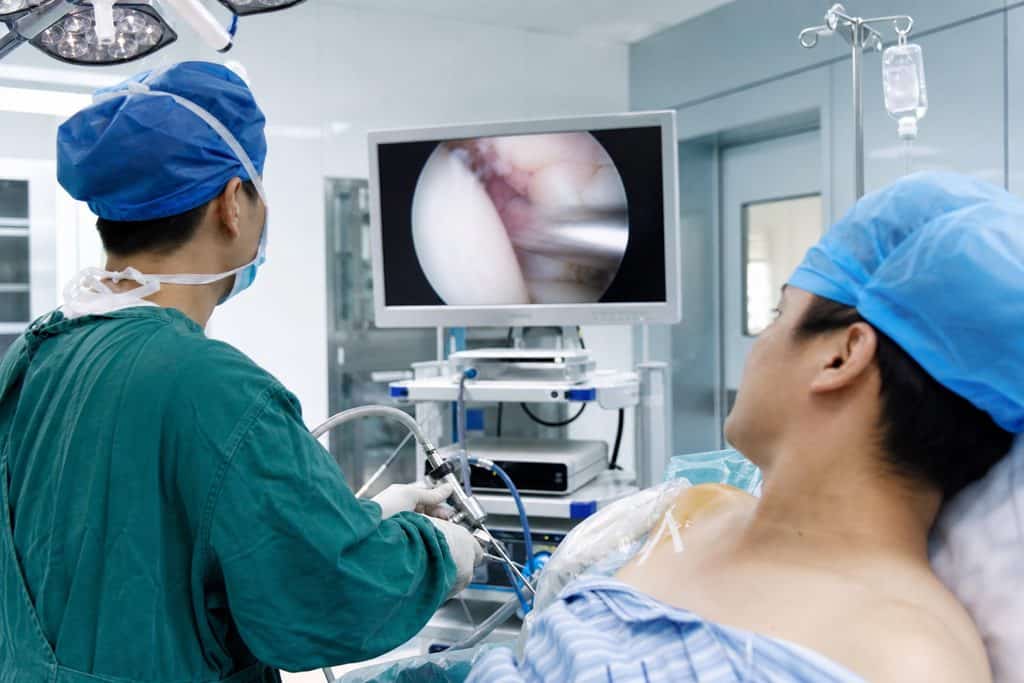
How This Actually Works, Step by Step
You have been living with that dull, persistent ache for months. Maybe it wakes you up at night when you roll onto your side. Reaching into the back seat of the car makes you wince. Your MRI confirms a full-thickness supraspinatus tear. Your local orthopedic surgeon recommends arthroscopic repair. Then you see the estimate. Even with decent insurance, your out-of-pocket share sits somewhere north of $10,000. Without insurance, the bill can sail past $25,000. So you start typing into Google: shoulder surgery cost China.
We see this search every week. Our team at China Medical Services helps patients work through a process that feels opaque from 7,000 miles away. Here is the actual sequence.
You send us your existing imaging and reports. That means the MRI images themselves — the DICOM files, not just the radiologist’s summary — plus any surgical notes if this is a revision case. A Chinese orthopedic team reviews them remotely. Within five to seven business days, you receive a written second opinion. It lays out whether they concur with your local diagnosis, what technique they would use, how many similar cases their department handles annually, and a preliminary cost estimate. No guesswork. No glossy brochure promises.
If the plan makes sense, we move to video consultation. You speak directly with the surgeon who would operate on you. You ask the hard questions. What percentage of your rotator cuff repairs remain intact at two years? What is your retear rate for tears larger than three centimeters? How many arthroscopic shoulder procedures did your department perform last year? The answers either build your confidence or they do not. You are under no obligation at this stage.
Only after you decide to proceed do we coordinate scheduling. This is where the real logistics begin — visa paperwork, travel dates that align with both the surgeon’s OR block time and your recovery window, and a clear understanding of what you need to bring.
Why Americans Are Looking at China for Rotator Cuff Repair
At hospitals ranked in the Fudan University hospital rankings — the top 5% of China’s 35,000-plus hospitals — safety protocols and infection control standards are comparable to Western academic medical centers. Published infection rates for arthroscopic shoulder procedures at these institutions fall below 0.5%. The variable is not the hospital tier. It is whether you are at a tier-1 center or an unranked facility. Our network includes only ranked hospitals and accredited private international hospitals precisely because safety data at lower-tier hospitals is less transparent. You should ask any hospital you consider for their department-specific surgical site infection rate and their 30-day readmission rate. A credible institution will provide these numbers.
Most domestic U.S. health plans do not cover elective surgery abroad. Some self-funded employer plans and a growing number of medical tourism facilitators offer cross-border coverage or reimbursement arrangements. Medicare does not cover care outside the United States except in very narrow emergency circumstances near the border. You should assume you will pay out of pocket and investigate whether your plan offers any out-of-network international reimbursement before committing. The hospital will provide an itemized receipt and medical records suitable for insurance submission, but reimbursement is between you and your insurer.
Your Chinese surgeon remains available for telemedicine consultation to review new imaging and discuss whether a problem requires intervention. But the physical care transfers to your local orthopedic surgeon. This is the hardest part of cross-border surgery, and you should not minimize it. If a retear or infection develops months later, you will need a U.S. surgeon willing to take over care. Some surgeons are reluctant to manage another surgeon’s complication. Before you travel, ask your local orthopedist directly: “If I have surgery abroad and develop a problem, will you see me?” Get a clear answer.
Your Next Step
Flying to another country for shoulder surgery is not a casual decision. The cost savings are real. So are the logistical challenges. The patients who have the smoothest experience are the ones who ask hard questions early, plan their rehab before they pack, and accept that no surgical outcome is guaranteed regardless of where the procedure is performed.
Our team at China Medical Services does not perform surgery. We do not make clinical recommendations. What we do is connect you with orthopedic departments that meet objective quality benchmarks, coordinate the documentation and scheduling that would otherwise overwhelm you, and provide on-the-ground support so you are not navigating a foreign hospital system alone. If you want to understand whether your specific shoulder problem is a good fit for treatment in China, start with a written second opinion. The process is low-commitment, and the analysis gives you a concrete basis for deciding whether to take the next step.
Learn more about how we work at our patient coordination page.
Frequently Asked Questions
Yes. The hospitals used for international patients are JCI-accredited and follow the same international safety standards as top hospitals in the US and Europe. Surgical teams perform high volumes of procedures — often more than their Western counterparts — which studies show leads to better outcomes.
Costs vary by procedure and hospital, but international patients typically save 40-80% compared to US prices — even when factoring in travel and accommodation. A consultation with our team will give you an exact, all-inclusive quote with no hidden fees.
Send us your existing medical reports to get started. We handle everything from hospital selection and appointment scheduling to visa assistance and post-operative recovery planning. Your medical records are reviewed by the specialist before you even book a flight.
For more medical information and treatment options in China, visit chinamedservices.com (China Medical Services).
