Cancer Treatment in Shanghai: A Companion Service for International Patients
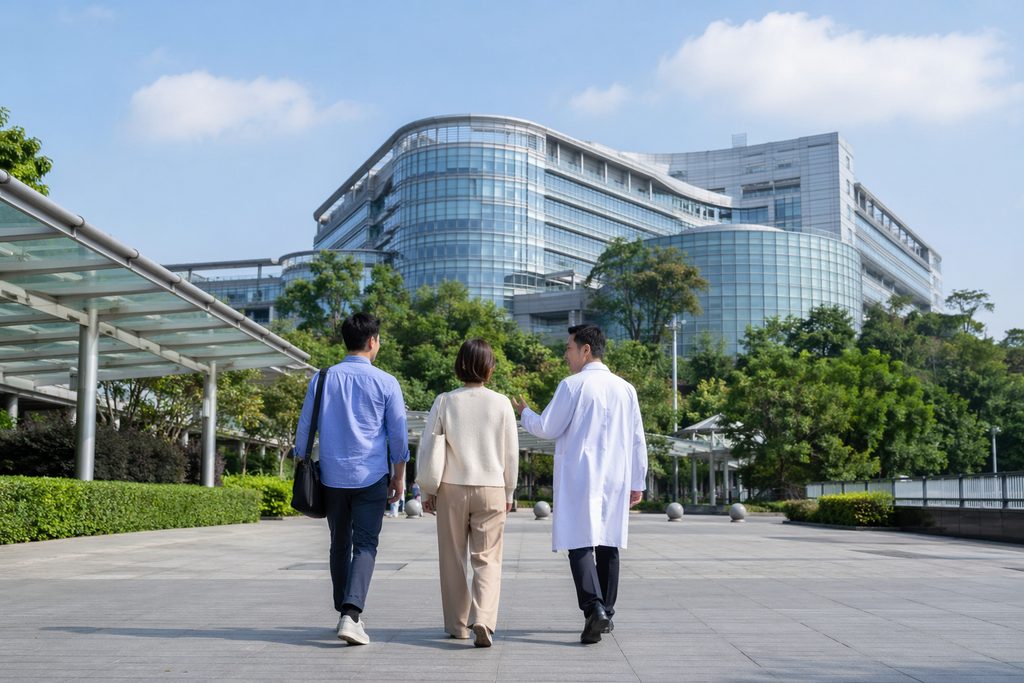
When 42-year-old Michael first heard the diagnosis, he had no idea where to start looking for treatment. His oncologist in Manchester recommended starting chemotherapy within six weeks. The NHS wait time for his specific protocol was projected at eleven weeks. So Michael did what a growing number of Western patients do: he started researching the cancer treatment cost Shanghai hospitals offer, and whether a foreigner could realistically navigate that system. He found our team at China Medical Services through a forum post. Three weeks later, he was sitting in a consultation room at a Fudan-ranked oncology department with a Mandarin-speaking companion beside him.
Cancer Treatment in Shanghai: The Short Answer
Shanghai offers comprehensive cancer care at roughly 20–40% of the out-of-pocket cost you would face in the United States for comparable protocols. A standard chemotherapy cycle that bills at $15,000–$25,000 in the U.S. often runs $3,000–$7,000 at a top Shanghai public hospital’s international department. Surgery costs show even wider gaps. A lung lobectomy at a Shanghai tertiary hospital typically costs $8,000–$15,000, versus $60,000–$120,000 in America. But the real question is not just price. It is whether you can access the right specialist, communicate clearly, and coordinate the logistics from abroad. That is where the system gets complicated. And that is where a companion service changes the experience.
Who This Is Right For — and Who It Isn’t
Not every cancer patient should board a long-haul flight to Shanghai. Some should stay close to home. Others will find Shanghai genuinely better for their situation.
You are likely a good candidate if:
- You have a confirmed diagnosis and your current system has long wait times for surgery or radiation.
- You are paying out of pocket, or your insurer reimburses international treatment retrospectively.
- You need a second opinion from a high-volume oncology team before committing to a protocol.
- You are stable enough to travel — your oncologist at home has cleared you for long-distance flights.
- You want access to treatment modalities that are approved and widely used in China but less available where you live, such as certain targeted therapies or interventional radiology approaches.
You should probably not pursue treatment in Shanghai if:
- You are in an active medical crisis, such as unstable vital signs or severe pain requiring immediate hospitalization.
- Your cancer requires a clinical trial that is only open at your home institution.
- You cannot be away from your support system for at least 2–4 weeks.
- Your insurance requires in-network treatment and will not reimburse international claims.
- You expect a concierge to guarantee a specific surgeon or a specific surgery date. We never promise that. We coordinate. We do not control hospital scheduling.
The Options, Compared
Patients researching medical tourism for cancer patients China usually weigh three paths: staying home, traveling to a private international hospital in Shanghai, or using a public hospital’s international department. Each has a distinct profile.
| Factor | Stay in Home Country | Shanghai Private International Hospital | Shanghai Public Hospital International Dept. |
|---|---|---|---|
| Typical chemo cycle cost | $15,000–$25,000 (U.S.) | $5,000–$10,000 | $3,000–$7,000 |
| English-speaking staff | Yes | Yes, fully | Partial — companion recommended |
| Insurance direct billing | Usually yes | Often yes (JCI-accredited) | Rarely — pay upfront, claim later |
| Access to Fudan-ranked oncology teams | Varies by country | Limited | Yes — core strength |
| Wait time for surgery | Weeks to months | Days to 2 weeks | 1–3 weeks via international channel |
| Cost multiplier vs. U.S. | 1x | 0.3–0.5x | 0.2–0.4x |
Private international hospitals in Shanghai — such as United Family, Jiahui, and Parkway — offer Western-style care with English-speaking doctors and direct insurance billing. That comfort comes at a price premium. The public hospital international departments give you access to the same senior specialists who treat thousands of cases annually, at lower cost, but with more administrative friction. That friction is exactly what a bilingual companion absorbs.
Best Oncology Hospital China for Foreigners: What Shanghai Actually Offers
Shanghai hosts 18 hospitals on the Fudan University national hospital ranking. That is the second-highest concentration in China, behind Beijing. Several of these institutions are ranked among China’s top 10 for oncology, meaning their oncology departments appear on the Fudan specialty reputation list. Zhongshan Hospital Fudan University, Ruijin Hospital, and Fudan University Shanghai Cancer Center are the names that come up most often when international patients ask about best oncology hospital China for foreigners.
What makes these departments different from a typical Western cancer center? Volume. A single-day outpatient clinic at one of these hospitals may see 8,000–12,000 patients. That scale means the oncology teams have seen rare presentations that a regional hospital in Europe might encounter once a year. It also means the system is not built around hand-holding. You will not get a nurse navigator calling you to remind you of appointments. You need someone on the ground. That is the honest trade-off.
Shanghai’s broader hospital landscape is mapped on our city page, where we break down the difference between public teaching hospitals, TCM centers, and private international facilities.
How Much Is Chemotherapy in Shanghai? Breaking Down the Numbers
The question we hear most is direct: how much is chemotherapy in Shanghai? The answer depends on the drug regimen, the hospital tier, and whether you go through the standard public channel or the international department.
For a conventional doublet chemotherapy regimen — say, carboplatin plus paclitaxel — a single cycle at a public hospital international department typically costs $1,800–$4,000, including drug costs, administration, and basic monitoring. At a private international hospital, the same cycle runs $3,500–$7,000. Targeted therapies cost more. A cycle of trastuzumab-based therapy for HER2-positive breast cancer can run $4,000–$8,000 in Shanghai, depending on dosage and whether the drug is locally manufactured or imported. Immunotherapy with PD-1 inhibitors has become dramatically cheaper in China since domestic manufacturers entered the market. A single dose of a domestic PD-1 inhibitor can cost $800–$1,500, versus $5,000–$10,000 for imported equivalents in Western markets.
These figures are ranges. Final quotes vary by hospital and case complexity. The cancer treatment cost Shanghai patients actually pay depends on staging, comorbidities, and whether the hospital requires additional imaging or biomarker testing before initiating therapy.
Practical Considerations: Records, Visas, and Follow-Up
You cannot book a cancer treatment package in Shanghai the way you book a hotel room. The pathway is consult-first. Here is what it actually involves.
Medical records. You will need a complete medical file: pathology report, imaging (CT, MRI, PET-CT), surgical notes if applicable, and a summary letter from your current oncologist. These must be translated into Chinese for the hospital review. Our team handles certified medical translation as part of case management.
Visa category. For medical treatment in China, the applicable visa is the S2 short-stay visa, endorsed for medical purposes. Family members accompanying you also apply for S2. Stays over 180 days require an S1 visa. The M visa is for commercial and trade activities — it is not a medical visa and should not be used for treatment. Requirements vary by embassy, and you will need supporting documents from the hospital, such as an invitation letter or treatment confirmation.
Payment. Public hospitals require prepayment. You deposit funds at admission or before each treatment cycle, and the hospital deducts from that balance. Private international hospitals may bill insurers directly if they have a direct-billing agreement with your provider. Most Western insurers reimburse retrospectively for public hospital international departments, meaning you pay upfront and file a claim after returning home.
Language. Even in international departments, not every staff member speaks English. Radiology technicians, phlebotomists, and billing clerks often speak Mandarin only. A bilingual companion handles registration, queue management, payment, and translation during consultations and procedures. That is the core of what we do.
Follow-up after returning home. Your Shanghai oncologist will issue a treatment summary and a recommended follow-up schedule in English. You bring this to your home oncologist. The two teams rarely communicate directly unless you coordinate it. We can facilitate a written handoff document, but ongoing care transfers back to your local system.
Is Cancer Treatment in China Safe? A Straight Answer
Safety is the question every patient asks eventually. Is cancer treatment in China safe? The honest answer: at top-tier Fudan-ranked hospitals, the clinical safety standards are comparable to major Western centers. These hospitals publish outcomes in peer-reviewed journals. They run clinical trials that meet international Good Clinical Practice standards. Their oncology departments treat volumes that most Western centers cannot match.
But safety is not uniform across the system. There are over 35,000 hospitals in China. The quality gap between the top 5% and the rest is enormous. That is why we only coordinate with hospitals that appear on the Fudan ranking or hold JCI accreditation. We do not work with facilities that cannot demonstrate verifiable quality metrics.
There are real risks to acknowledge. Infection control protocols vary. Hospital food, visitor policies, and nursing ratios differ from Western expectations. You will not get a private room by default in a public hospital. You may share a ward. The pace is faster, the communication more direct, and the administrative burden heavier. A companion does not eliminate these realities. It makes them manageable.
Frequently Asked Questions
You cannot book a full treatment package remotely. The standard pathway is: submit your records for a written second opinion or video consultation first. The oncology team reviews your case and issues a treatment recommendation. If you decide to proceed, we coordinate scheduling for your first in-person consultation. Surgery or chemotherapy begins only after the specialist has examined you in person and confirmed the plan. Any service promising a fixed-price package with guaranteed dates before you land is not operating through legitimate hospital channels.
For a six-cycle chemotherapy course at a public hospital international department, budget $15,000–$30,000 for treatment alone. Surgery adds $8,000–$20,000 depending on the procedure. Radiation therapy runs $5,000–$15,000 for a standard course. Add $3,000–$6,000 per month for accommodation, food, and local transport. Companion services start from $300 per day. These are planning figures, not quotes. Your actual cancer treatment cost Shanghai depends on your specific diagnosis and the hospital’s current pricing.
Top Shanghai oncology departments have emergency departments and intensive care units on site. Your treating team manages complications directly. If you require care that is only available in your home country, your hospital will stabilize you and issue a fit-to-fly assessment. Travel insurance with medical evacuation coverage is strongly recommended. We can help coordinate emergency contacts, but we are not a medical provider and do not make clinical decisions.
Most oncologists respect second opinions from high-volume international centers, especially when the institution is Fudan-ranked and the documentation is thorough. Ask your Shanghai team to provide a detailed English-language treatment summary with dosing, imaging, and pathology references. Some home oncologists may want to review the plan before you travel. We encourage patients to share the written second opinion with their local team before making travel decisions.
Your Next Step
Michael completed his chemotherapy in Shanghai over four months. He returned to Manchester with a treatment summary, a follow-up plan, and no medical debt. That outcome is not guaranteed for everyone. But it is possible for more patients than realize it.
We are China Medical Services. We are not a hospital. We do not diagnose, treat, or promise outcomes. What we do is coordinate: hospital matching, record translation, appointment scheduling, bilingual companionship, and visa guidance. If you are weighing treatment in Shanghai, start with a free consultation. Tell us your diagnosis, your current situation, and your goals. We will tell you honestly whether Shanghai makes sense for you — and if it does, we will show you the path. Start with a free consultation.
For more medical information and treatment options in China, visit chinamedservices.com (China Medical Services).
