Wellness and Longevity Retreat in China: Our Companion Service Explained
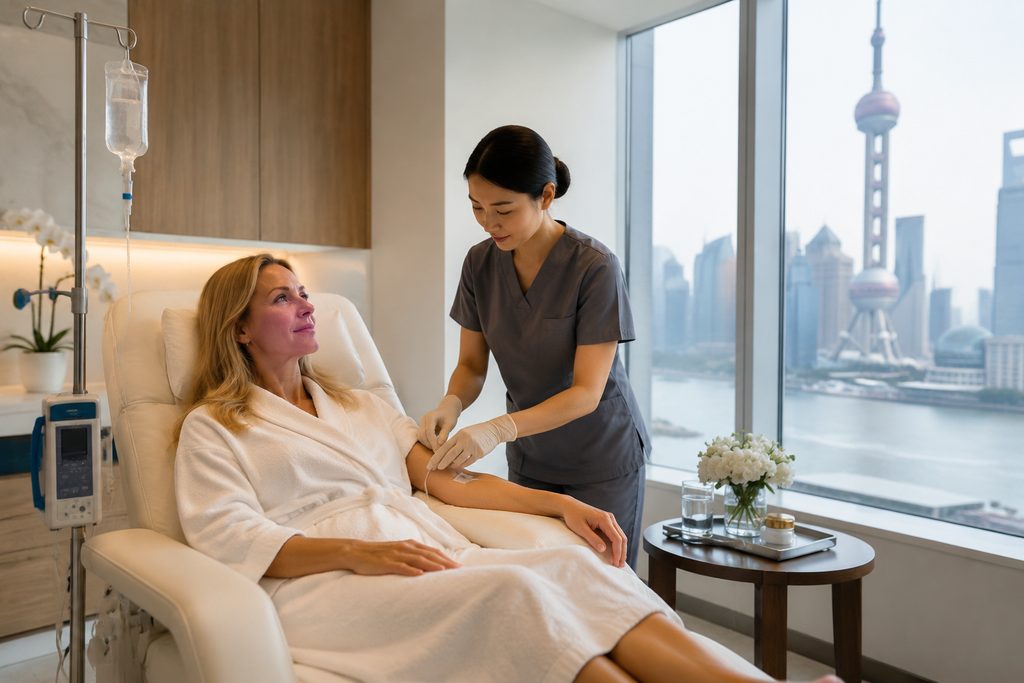
You’ve probably heard that a wellness retreat means either a punishing boot camp or a luxury spa with no medical substance. The reality sits somewhere far more interesting — especially in China, where hospitals run programs that blend diagnostic rigor with genuine rest. A longevity retreat in China typically costs between $1,500 and $15,000 per week depending on the hospital tier, the depth of medical screening, and whether you add one-on-one companion support. That range is wide for a reason. The programs are not standardized, and what you actually get varies enormously by city and institution.
What most foreigners don’t realize is that China’s top-tier hospitals — the same ones ranked in the Fudan Hospital Rankings — operate preventive health and anti-aging departments that are almost invisible to overseas patients. They don’t market internationally. They don’t have English booking portals. They simply exist, running at full capacity for domestic patients who know how to navigate the system. That’s where the gap is. And that’s where a companion service changes the equation.
What a Longevity Retreat in China Actually Includes
The phrase “longevity retreat” gets thrown around loosely. In China, these programs fall into three broad categories, and the longevity retreat China cost tracks closely with which category you choose. The first is a hospital-based executive health screening package — essentially a comprehensive physical that runs over two to five days, often including advanced imaging, cardiac stress testing, tumor marker panels, and consultations with specialists. The second is a traditional Chinese medicine (TCM) wellness program, which might involve acupuncture, herbal formulation, dietary therapy, and qigong or tai chi instruction over one to four weeks. The third is a hybrid anti-aging and preventive medicine program offered through hospital international departments or private clinics, combining Western diagnostics with TCM modalities.
What is included in a Chinese wellness retreat package? That depends entirely on the institution. A typical hospital-based package at a top-tier public hospital’s international department includes the medical screening itself, physician consultations, basic accommodation coordination, and a written health report. It may not include meals, transportation, or translation. A private hospital package — at facilities like United Family or Jiahui — often bundles everything: airport pickup, English-speaking nursing staff, hotel-grade rooms, all meals, and a dedicated care coordinator. The price difference reflects that service layer, not necessarily better medicine.
Who This Is Right For — and Who It Isn’t
Let’s be direct about eligibility, because booking the wrong program wastes money and time. A longevity retreat in China makes the most sense for a specific profile of traveler.
Good candidates:
- Adults aged 40 to 75 who want a comprehensive health baseline before making lifestyle or medication changes
- People with a family history of cardiovascular disease, metabolic disorders, or certain cancers who want advanced screening at a fraction of Western prices
- Those already interested in TCM and willing to commit to a structured program rather than a one-off acupuncture session
- Travelers who plan to be in China anyway for business or family reasons and want to add a health component
- Executives or retirees who value time efficiency and are comfortable paying for coordination support
Poor candidates:
- Anyone with an acute, undiagnosed symptom that needs immediate diagnostic workup — a retreat is not an emergency pathway
- People with unstable chronic conditions (uncontrolled hypertension, brittle diabetes, recent cardiac events) who should be under direct specialist care at home first
- Those expecting a “cure” for aging — no program reverses biological aging, and any institution claiming otherwise should be avoided
- Travelers with limited mobility who cannot manage the physical demands of daily hospital visits and walking between departments
Is traditional Chinese medicine retreat safe for seniors? Generally yes, with caveats. Acupuncture and herbal medicine have good safety profiles when administered by licensed practitioners at accredited hospitals. But seniors on multiple medications need a pharmacist review for herb-drug interactions — a step many retreat programs skip unless you insist. We always recommend requesting a medication reconciliation before starting any herbal regimen.
The Options, Compared
Three genuine pathways exist for a foreigner seeking a longevity retreat in China. Here’s how they stack up.
| Factor | Public Hospital International Dept | Private International Hospital | TCM Specialty Hospital |
|---|---|---|---|
| Weekly cost range | $1,500 – $4,000 | $5,000 – $15,000 | $2,000 – $6,000 |
| Medical depth | High — full diagnostic capability | Moderate — screening plus wellness | Moderate — TCM-focused, limited Western imaging |
| English support | Variable — often limited | Standard — English-speaking staff | Rare — interpreter usually needed |
| Accommodation | Nearby hotel, self-arranged | On-site or partner hotel, bundled | Basic on-site or nearby |
| Insurance billing | Usually self-pay, reimbursement later | Direct billing common | Self-pay |
| Best for | Serious preventive screening on a budget | Comfort, convenience, minimal stress | Deep TCM immersion, chronic condition support |
Which column fits you? If your priority is medical rigor and you’re comfortable with some logistical friction, the public hospital international department delivers the most diagnostic value per dollar. If you want a seamless experience and are willing to pay for it, a private international hospital is the right call. If your goal is specifically to explore TCM for chronic pain, sleep, or stress, a TCM specialty hospital or the TCM department within a larger hospital makes sense. Many patients combine two: a two-day medical screening at a public hospital followed by a TCM program.
Best Wellness Retreats in China for Foreigners: Where to Look
Not every city offers the same quality. The Fudan-ranked top hospitals cluster in a handful of urban centers, and that’s where the strongest longevity programs live. Beijing and Shanghai dominate, with 21 and 18 top-100 hospitals respectively, followed by Guangzhou with 10. For a foreigner, Shanghai is often the most practical entry point — it has the highest concentration of English-speaking medical staff, the most developed private hospital sector, and the smoothest international flight connections. Beijing offers deeper access to China’s most prestigious institutions, including Peking Union Medical College Hospital, but the language barrier is steeper. Guangzhou and Chengdu are worth considering for TCM-focused retreats, given their strong traditions in herbal medicine and integrative care.
What makes a program genuinely good for foreigners? Three things: an international department with staff who answer emails in English, a published package with itemized inclusions, and a track record of hosting overseas patients. If a hospital can’t produce a written package description in English, that’s a signal. Not a dealbreaker — but a signal that you’ll need more coordination support.
Booking an Anti-Aging Program in Shanghai: The Companion Service Question
So you’ve decided to book an anti-aging program in Shanghai. The companion service question comes down to one thing: how much friction you’re willing to tolerate. Shanghai’s top hospitals see over 10,000 outpatient visits per day at the largest facilities. Registration counters, payment windows, lab collection points, and imaging departments are spread across massive campuses. Signage is increasingly bilingual, but staff at the ground level often are not. If you speak zero Mandarin and you’re navigating this alone, expect to lose hours — sometimes entire days — to avoidable confusion.
A bilingual medical companion handles the mechanics: registration, queue management, payment, wayfinding, translation during consultations, and follow-up scheduling. The service starts from $300 per day. That’s not an access fee — it’s labor. The companion doesn’t get you a faster appointment or a better doctor. They make sure you don’t miss the appointment you already have because you couldn’t find Building 7, Floor 3, Window 14. For medical tourism wellness packages in China with a personal assistant, the value is time recovery and stress reduction. That’s it. But for many patients, that’s everything.
Can you do it without a companion? Yes. Thousands of foreigners do every year. If you’re comfortable with translation apps, patient with queues, and willing to ask for help repeatedly, you can manage. The companion service is for people who’d rather spend their energy on the medical experience itself, not the logistics around it.
What It Costs: Breaking Down the Numbers
The longevity retreat China cost breaks into three layers: the medical program, the logistics, and the optional coordination. Let’s put real numbers on each.
Medical program: A two-day executive health screening at a top public hospital’s international department typically runs $800 to $2,500. A five-day comprehensive program with advanced imaging (cardiac CT, whole-body MRI, endoscopy) ranges from $3,000 to $8,000. A two-week TCM wellness program with daily acupuncture, herbal consultation, and dietary therapy costs $2,000 to $6,000. Private hospital packages that bundle everything start around $5,000 per week and can exceed $15,000 at the high end.
Logistics: Round-trip airport transfer runs $200. Hotel accommodation near a major Shanghai hospital costs $80 to $250 per night depending on tier. Meals are inexpensive by Western standards — $20 to $50 per day for good quality food. Internal transportation via taxi or ride-hailing is $10 to $30 per day.
Coordination: A written second opinion from a top hospital specialist costs $300 to $500. A video consultation with a specialist runs $100 to $300 for standard international department physicians, or $500 to $800 for top-tier experts. Full VIP end-to-end coordination — which includes companion service, appointment scheduling, and logistics management — ranges from $5,000 to $8,000 for a complete retreat experience. Any consultation fee is credited in full toward on-the-ground coordination if you proceed within 90 days.
What drives the variance? Hospital tier, depth of imaging, whether you choose public or private, the number of specialist consultations included, and the season. Prices are generally stable year-round, but hotel costs spike during major trade fairs in Shanghai and Guangzhou.
Practical Considerations: Visa, Payment, Records, and Follow-Up
You’ll need an S2 visa for medical treatment in China. Not an M visa — that’s for commercial and trade activities, and it is not appropriate for medical travel. The S2 covers short stays for private affairs including medical treatment. Your family members traveling with you apply for the same category. The hospital or clinic will provide an invitation letter and treatment confirmation document, which you submit with your visa application. Requirements change, so verify with the Chinese embassy or consulate in your country before booking flights. We can guide you on documentation, but we never guarantee visa approval — that decision rests entirely with the consular officer.
Payment is another friction point. Public hospitals require prepayment for packages, typically via bank transfer, UnionPay, or cash. International credit cards are not universally accepted at public hospital counters, though international departments are improving. Private international hospitals accept major credit cards and often bill insurance directly. If you’re using international health insurance, confirm coverage before you travel — many policies exclude preventive or wellness programs, and almost none cover TCM modalities. Self-pay is the default assumption.
Bring your existing medical records. A longevity retreat is more valuable when the physicians can compare your current results against your baseline. Bring recent lab work, imaging reports, medication lists, and any specialist notes. Digital copies are fine. If records aren’t in English or Chinese, arrange translation before you arrive.
Follow-up after you return home matters more than most people expect. The retreat produces a report — often 20 to 40 pages — with findings and recommendations. That report needs to reach your primary care physician. We can help you understand the report while you’re in China, but the ongoing management of any findings happens with your doctors at home. No Chinese program replaces your local care team.
Frequently Asked Questions
For a serious program at a top-tier hospital, budget $4,000 to $12,000 per week including medical screening, accommodation, meals, and local transportation. A companion service adds $300 per day. Private hospital packages with everything bundled start around $5,000 per week and climb from there. The final number depends on how deep the diagnostics go and which city you choose.
Yes, with conditions. Licensed TCM practitioners at accredited hospitals follow safety protocols, and acupuncture has a very low adverse event rate when performed properly. The real risk for seniors is herb-drug interaction — many herbal formulas affect liver enzymes that metabolize prescription medications. Insist on a pharmacist review of your medication list before starting any herbal regimen. If a program refuses that request, walk away.
This happens more often than retreat marketing suggests. A comprehensive screening in a 60-year-old has a meaningful chance of finding something that needs follow-up — a lung nodule, elevated cardiac calcium score, abnormal lab value. If that happens, you’re already in the right place. The hospital can arrange immediate specialist consultation, and you can decide whether to pursue further workup in China or return home. We help coordinate that transition, but the medical decisions remain between you and the physicians. No one should pressure you into immediate treatment.
Yes, but expect friction. Private international hospitals are designed for English-speaking patients and you’ll manage fine. Public hospital international departments vary — some have excellent English support, others have a single staff member who handles foreign patients. A companion service eliminates the language variable entirely. Without one, a translation app and patience will get you through, but at a real cost in time and energy.
You should apply for an S2 visa with a medical treatment annotation. Entering on a tourist visa (L category) for medical treatment is technically possible for short visits, but it creates problems if complications extend your stay or if the hospital requires documentation that your visa category doesn’t support. The S2 is the correct category, and the hospital’s invitation letter supports the application. Always check current consular requirements before booking.
Your Next Step
A longevity retreat in China offers something genuinely hard to find elsewhere: top-tier diagnostic depth at a fraction of Western prices, combined with access to TCM modalities that most Western systems don’t offer at all. But the value only materializes if you choose the right program and navigate the logistics competently. That’s what we do. China Medical Services is not a hospital, and we don’t diagnose or treat anything. We connect international patients with China’s 340+ top-ranked hospitals across 37 cities, and we handle the coordination — appointments, translation, companion support, and the hundreds of small logistics that make or break a medical trip. If you’re considering a longevity retreat in China, start with a free consultation. Tell us your health goals, your timeline, and your budget. We’ll tell you honestly whether China is the right fit, and if it is, we’ll map out a program that makes sense for you. No pressure, no obligation — just a clear-eyed conversation about what’s possible.
For more medical information and treatment options in China, visit chinamedservices.com (China Medical Services).
